

Leavitt insists that hike in gas prices is 'temporary' and assures rapid price drop
The White House press secretary opened the briefing by addressing concerns regarding the recent increase in gas prices experienced by many Americans over the past week.
"The recent increase in oil and gas prices is temporary, and this operation will result in lower gas prices in the long term. Once the national security objectives of Operation Epic Fury are fully achieved, Americans will see oil and gas prices drop rapidly, potentially even lower than they were prior to the start of the operation."
Here's a recap of the day so far
The Pentagon confirmed that since the beginning of the US-Israel conflict, 140 US service members have been wounded. Department of Defense spokesperson Sean Parnell stated,
"The vast majority of these injuries have been minor, and 108 service members have already returned to duty."
During a White House press briefing, Karoline Leavitt reiterated that the recent gas price hike since the onset of the war is "temporary" and assured a rapid price drop. She also mentioned that the US military is "drawing up additional options" following President Donald Trump’s directive to maintain the openness of the Strait of Hormuz. This follows Trump’s warning to Iran to face consequences "twenty times harder" if the regime obstructs oil flow through this critical waterway.
At a Pentagon press conference, Defense Secretary Pete Hegseth described Tuesday as the "most intense day of strikes inside Iran" but did not specify when military actions might conclude. He emphasized,
"We do so on our timeline and at our choosing."
Hegseth asserted that the United States is "winning" the conflict and assured that the military campaign is not open-ended, stating,
"This is not 2003…It’s not protracted. We’re not allowing mission creep."
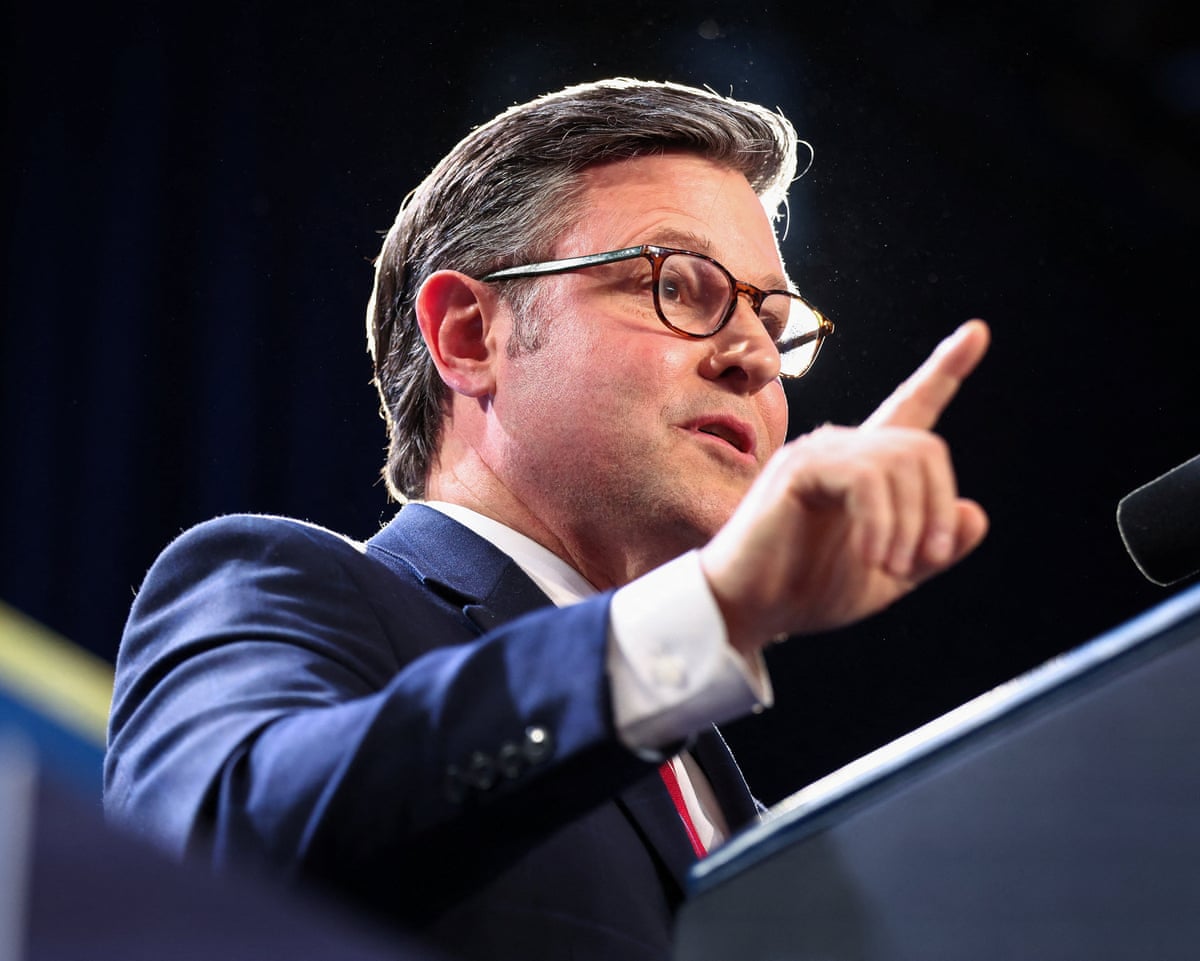
At the House Republican policy conference in Doral, Florida, Speaker Mike Johnson declined to condemn Congressman Andy Ogles’ Islamophobic remarks on social media. Ogles, representing Tennessee’s fifth congressional district, posted on X that "Muslims don’t belong in America" earlier this week. When questioned by reporters, Johnson justified Ogles’ comments by referring to concerns about the "demand to impose Sharia law," calling it a "real issue," though he acknowledged it was "a different language than I would use."
Following statements from President Trump to CBS News suggesting the US-Israel conflict with Iran could end "very soon," oil prices rebounded on Tuesday. Brent crude fell just below $90 a barrel, down 9.9% to $89.22, after surging past $100 a barrel on Monday morning, marking the highest price in four years.
Pentagon says that 140 US service members injured since beginning of Operation Epic Fury
The Pentagon confirmed that since the start of the US-Israel conflict, 140 US service members have been wounded. Department of Defense spokesperson Sean Parnell noted,
"The vast majority of these injuries have been minor, and 108 service members have already returned to duty. Eight service members remain listed as severely injured and are receiving the highest level of medical care."
Earlier, press secretary Karoline Leavitt stated she could not confirm the exact number of injured personnel but indicated it was "within that ballpark."
US asks Israel to stop strikes on Iran’s energy infrastructure - report
The United States has requested that Israel halt strikes on Iran’s energy infrastructure, according to three sources familiar with the matter, marking the first instance of the US restraining its ally since the conflict began 11 days ago.
Washington conveyed this message at a senior political level and directly to IDF Chief of Staff Eyal Zamir, Axios reported, citing an Israeli official.
Axios detailed three reasons for the US request: a desire to cooperate with Iran’s oil sector post-conflict (similar to Trump’s approach with Venezuela); concerns that the strikes could harm the Iranian public; and fears that such attacks might provoke extensive Iranian retaliatory strikes on energy infrastructure across Gulf states.
This development follows an Israeli bombing of fuel storage facilities that blanketed Tehran—a city of approximately 10 million people—in smoke over the weekend, prompting urgent health warnings for residents.
Iran has appealed to the United Nations to condemn the US and Israel for what it calls a "manifest environmental crime."
During the press briefing, Karoline Leavitt stated that President Trump will ultimately decide when Iran reaches a state of "unconditional surrender." She clarified the meaning of this condition after the president indicated that only then would the military operation conclude, explaining,
"He’s not claiming the Iranian regime is going to come out and say that themselves. What the president means is that Iran’s threats will no longer be backed by a ballistic missile arsenal that protects them from building a nuclear bomb in their country."
Leavitt confirmed that the Pentagon will release a comprehensive report on its investigation into the bombing of an Iranian girls’ school that resulted in at least 175 deaths.
President Trump has attributed responsibility for the attack to Iran, suggesting the regime might have used Tomahawk missiles. However, a video analyzed by journalist Tess McClure shows a US Tomahawk missile striking the Iranian naval base adjacent to a primary school in Minab, indicating US responsibility for the strike.
Leavitt stated,

"As the president said yesterday, he will accept the conclusion of this investigation,"
without specifying when the report will be released.
US Navy has not escorted a vessel through Strait of Hormuz, White House confirms
Karoline Leavitt addressed a question regarding a previous claim by Trump’s energy secretary that the US Navy had escorted an oil tanker through the Strait of Hormuz, a post that was deleted shortly after being published on X.
"I know the post was taken down pretty quickly, and I can confirm that the US Navy has not escorted a tanker or a vessel at this time, though of course that’s an option the president has said he will absolutely utilize if and when necessary at the appropriate time."
Responding to a report that approximately 150 US service members have been injured since military operations began, Leavitt said she could not confirm the exact figure but noted it was "within that ballpark." She did not provide further details regarding the lifting of oil sanctions.
On Friday, Treasury Secretary Scott Bessent announced that India had received a 30-day waiver to purchase Russian oil to mitigate disruptions caused by the US-Israel strikes.
Leavitt informed reporters that there are no new announcements concerning the lifting of sanctions.
Leavitt says US military is 'drawing up additional options' to keep Strait of Hormuz open, amid disruptions to oil supply chain
Leavitt emphasized that the president and his energy team are closely monitoring oil market fluctuations, which have seen recent surges and declines.
She noted that the US military is "drawing up additional options" following President Trump’s directive to maintain the Strait of Hormuz’s openness, adding,
"I will not broadcast what those options look like, but just know the president is not afraid to use them."
Leavitt reported that US forces have struck 5,000 enemy targets since the commencement of Operation Epic Fury. She highlighted that the regime’s ballistic missile attacks have decreased by more than 90%, and drone attacks have declined by approximately 85%.
Later, White House press secretary Karoline Leavitt is scheduled to brief reporters, with updates to be provided accordingly.
Speaker Mike Johnson reiterated that the SAVE America Act remains a top priority for GOP lawmakers. The legislation, which has passed the Republican-controlled House, has stalled in the Senate.
The bill would require proof of citizenship for voter registration and voter ID for casting ballots. However, Johnson aims to further revise the legislation to limit mail-in voting with certain exceptions and to include unrelated provisions banning transgender individuals from participating in women’s sports and prohibiting gender-affirming surgeries for minors.
Johnson commented on the bill’s Senate prospects, stating,
"Why is [it] not passing in the Senate? Because no Democrat will go along with that. Every Republican is in favor of those principles,"
while noting that Senate Majority Leader John Thune is "looking at all other avenues" to advance the bill.
Thune appeared to temper expectations regarding bypassing the 60-vote threshold, stating,
"The votes aren’t there, one, to nuke the filibuster, and the votes aren’t there for a talking filibuster. It’s just a reality."
Mike Johnson refuses to condemn GOP congressman's Islamophobic social media posts
At the House Republican policy conference in Doral, Florida, Speaker Mike Johnson declined to condemn Congressman Andy Ogles’ Islamophobic posts on social media.
Ogles, representing Tennessee’s fifth congressional district, posted on X that "Muslims don’t belong in America." He has repeatedly criticized the Muslim faith, asserting it conflicts with American values. His Islamophobic views have been reflected in proposed legislation that would ban immigration from several Muslim-majority countries, including Iran, Syria, and Libya.
When questioned by reporters about Ogles’ comments, Johnson responded,
"There is a lot of energy in the country, and a lot of popular sentiment that the demand to impose Sharia law in America is a serious problem. That what animates this. That’s the language that people use, it’s a different language than I would use."
He further claimed, without providing evidence, that the imposition of Sharia law—the Islamic legal system enforced to varying degrees across Muslim-majority countries—is a "real issue."
Johnson added,
"When you seek to come to a country and not assimilate…that is the conflict. It is not about people as Muslims, it’s about those who seek to impose a belief system that is in direct conflict with the constitution."


