

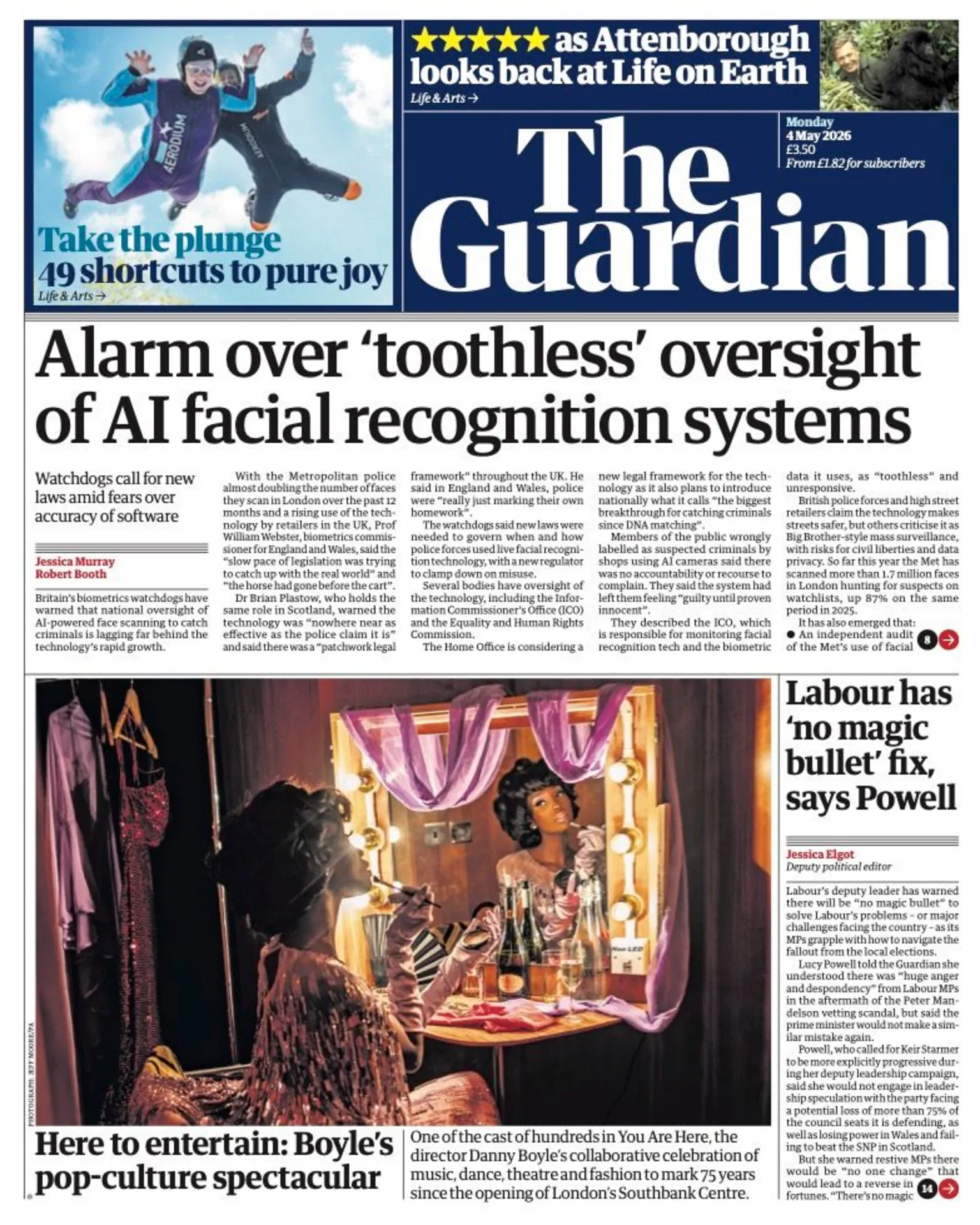
Concerns Over Facial Recognition Technology
highlights concerns regarding facial recognition technology, which is extensively used by numerous police forces and an increasing number of retailers. Scotland's biometrics commissioner informs the paper that the technology is
"nowhere near as effective as the police claim it is". Alongside his counterpart in England and Wales, he advocates for new legislation to regulate the use and application of this technology, as well as the establishment of a new regulatory body to prevent misuse.
Defence Funding and Weaponry
Gen Sir Richard Barrons, co-author of the strategic defence review, tells The Times that the armed forces will lack funding for new weapons until 2030. He states there is
"just about" enough funding for tanks and helicopters but not enough for unmanned or AI-assisted weaponry. However, an army source disputes this, informing the paper that funds are already being allocated to rapid procurement programmes.

Labour Conditions for World Cup Football Production
The Sun reports an investigation revealing that workers in Pakistan manufacturing the official Adidas football for the upcoming World Cup earn as little as £26 per week. The most expensive version of the ball retails at £130. The paper headlines this story as "The Beautiful Shame." Adidas responds by stating that all its products are produced under fair and safe working conditions.

New Injectable Cancer Drug Rolled Out
Several newspapers cover the introduction of a new injectable form of a cancer drug across the NHS. A senior doctor tells the Daily Telegraph that the injection will provide a
"lifeline"to thousands of patients, enabling them to live more freely without spending extensive hours in hospital. The Mirror’s editorial comments,
"This shows what happens when innovation meets determination".
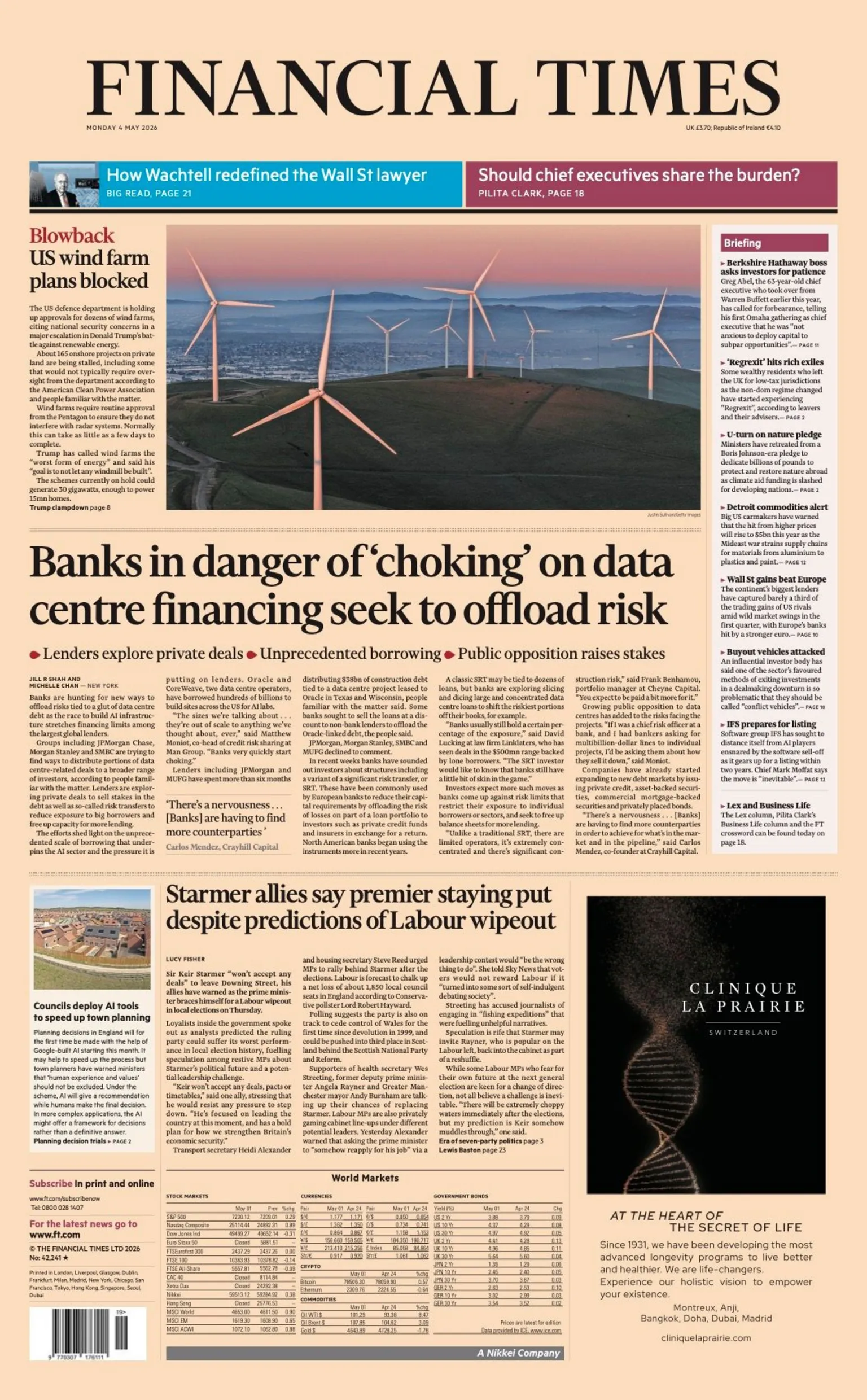
Financial Strain of AI Data Centres
The Financial Times features the significant costs involved in financing the construction of data centres necessary for artificial intelligence development. The paper reports that banks are being pushed to their financial limits and are exploring methods to distribute and mitigate risk. It describes the borrowing scale for AI labs as
"unprecedented".
UK’s First Artificial Nose Developed
The Daily Mail announces that scientists at Newcastle University have created the UK’s first "artificial nose." This device is designed to be installed inside refrigerators to detect environmental changes in food and alert users when food is nearing spoilage. The paper remarks that this development is
"not to be sniffed at".


