Traditional Banana Cultivation Preserves Rio’s Pedra Branca State Park
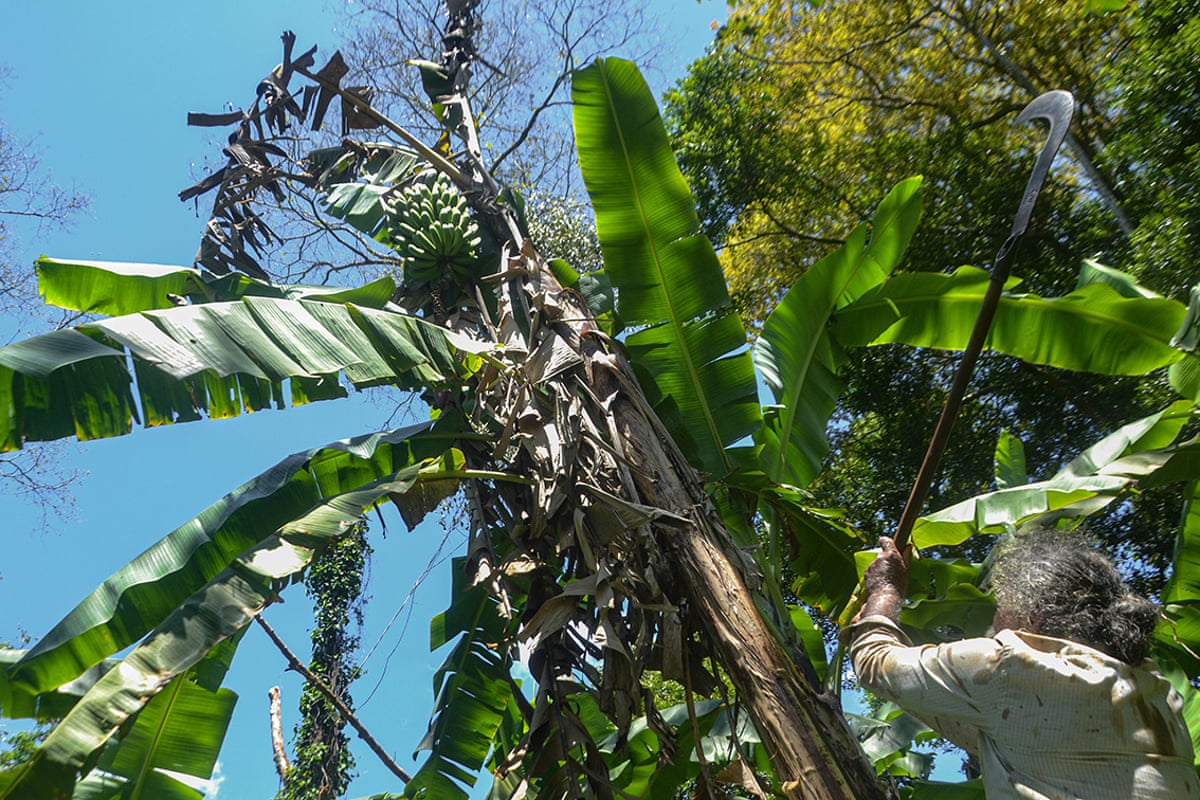
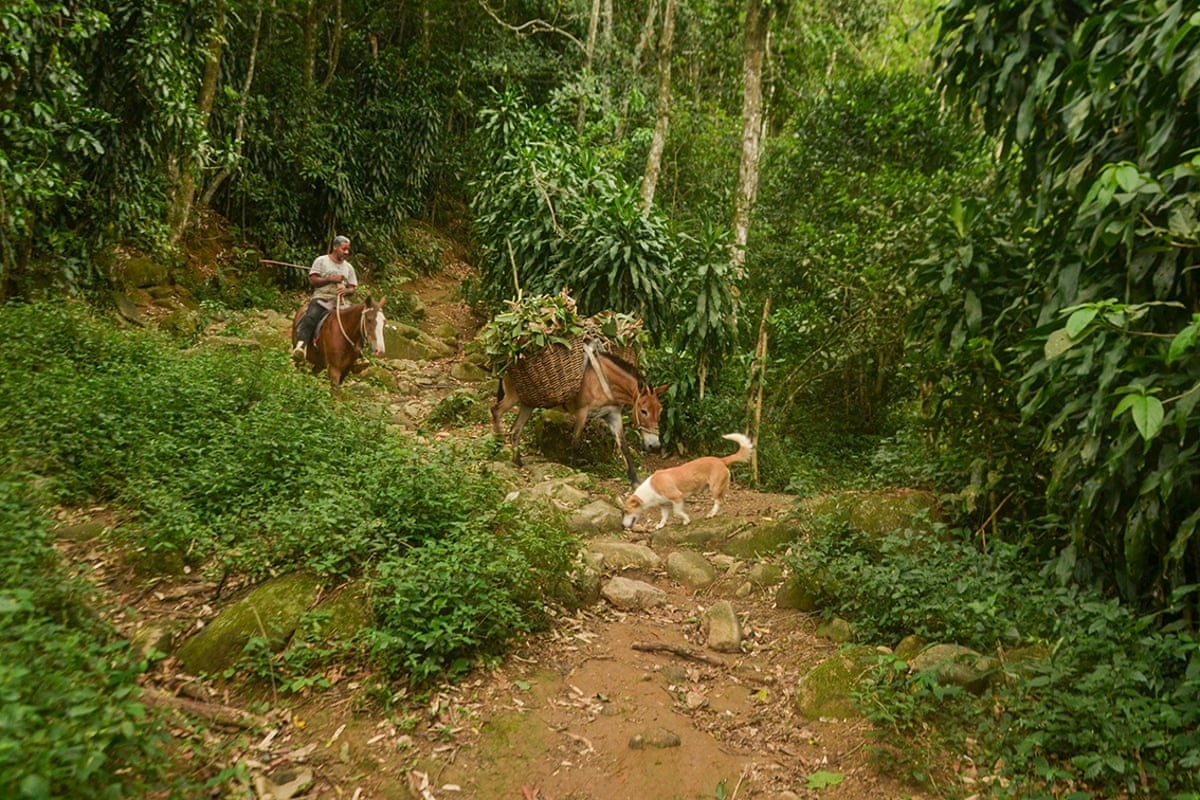
In the hills of Vargem Grande, located in the south-west zone of Rio de Janeiro city, brothers Jorge and Ubirajara Cardia break the silence with the sound of their scythes. From their community, they harvest bananas using methods passed down from their ancestors. Each week, they select bunches of prata, maçã, and Cavendish bananas, cut them down, and transport the freshly harvested fruit on the backs of their mules down the hillside.
They traverse approximately 5km (3 miles) along sloping forest paths originally opened by the Indigenous Tupinambá people and enslaved workers of African descent.
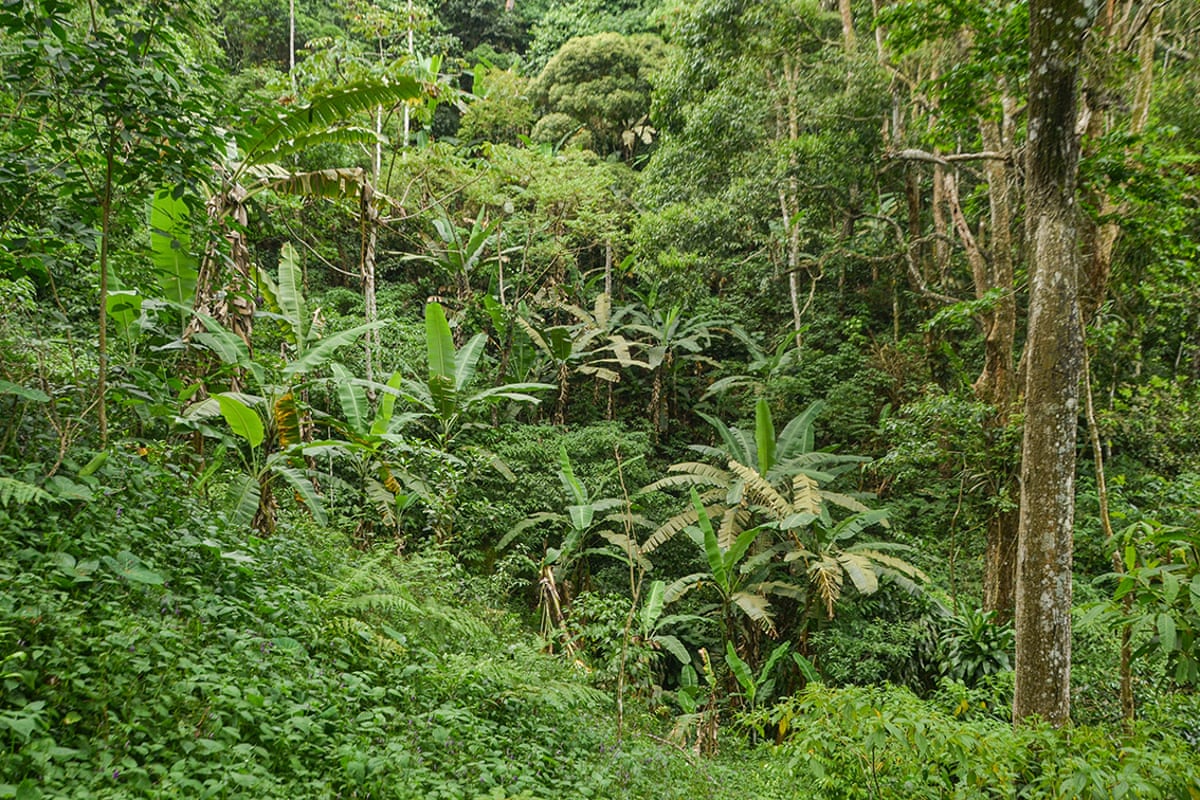
The extensive banana groves cultivated by quilombola communities and traditional farmers are located within the Pedra Branca state park, a designated conservation area. The banana growing tradition provides these communities not only with financial and food security but also plays a crucial role in preserving the park’s biodiversity.
Through a crop culture passed down over generations and evolving into an agroforestry system—integrating trees and shrubs with crops and livestock—banana growers contribute to restoring and maintaining the park’s diverse ecosystem. Pedra Branca state park, part of the Atlantic Forest biome, encompasses 17 Rio neighbourhoods and is considered the world’s largest urban forest.
“In agroforestry, the management of banana crops demands less work, and we save time as we only need to prune the banana plant. Then, nature, with its own rhythm, does all the rest,”Jorge Cardia explains.
Bananas, originally from south-east Asia and the west Pacific, were introduced to Brazil in the 16th century. Within Pedra Branca state park, banana plants are abundant and robust, forming a living green tapestry interwoven with various native and exotic tree species such as embaúba, carrapeta, jacatirão, and jabuticaba.
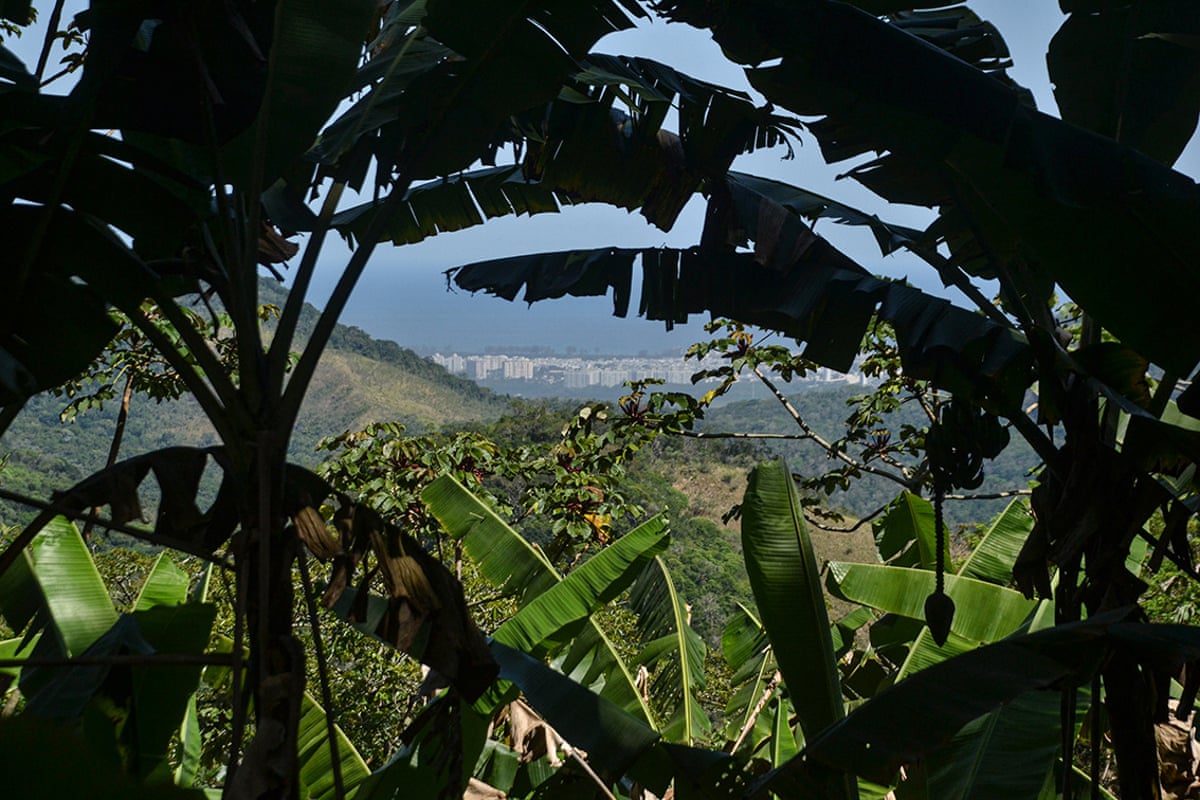
This landscape exists because of agroforestry, an agricultural system that promotes the integration of crop species, animals, and trees, contrasting with agribusiness and monoculture practices. Jorge refers to it as
“agriculture of life”because this method cherishes the forest, water, and the living space.
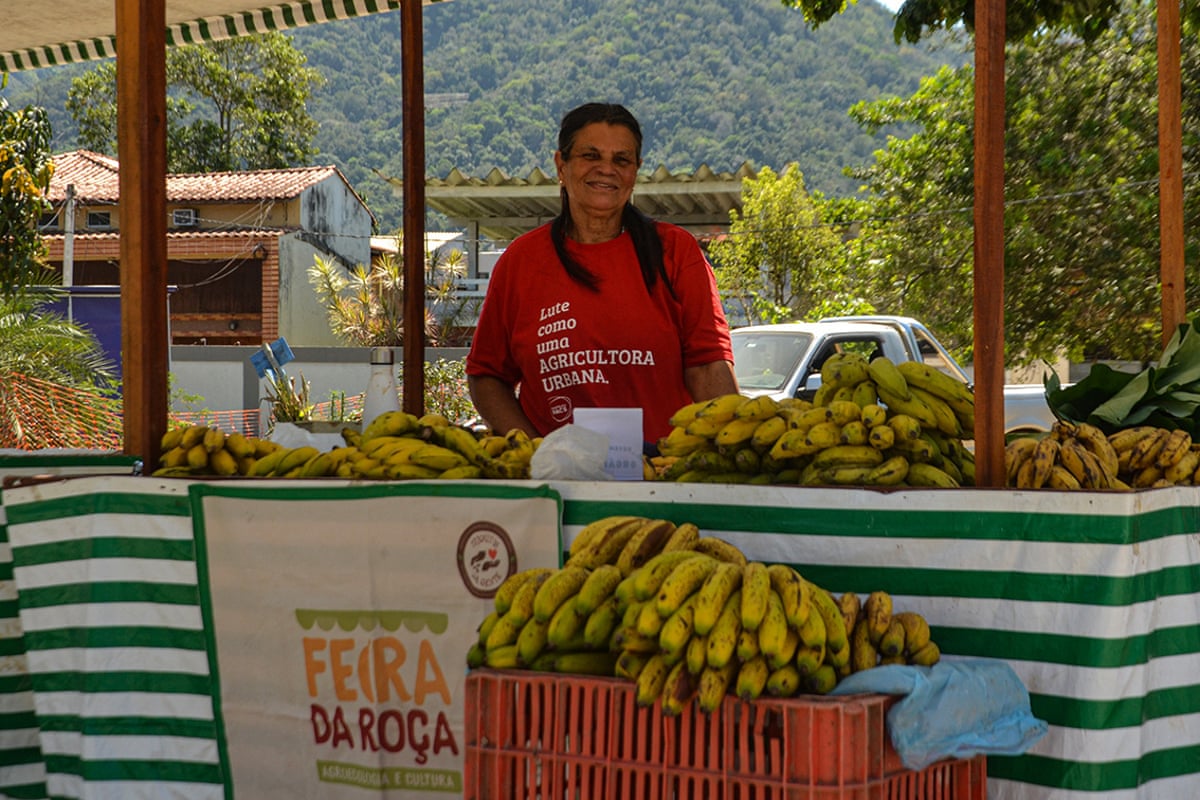
Sarah Rubia Nunes, also from a family of banana growers, manages AgroVargem, an organisation of small-scale farmers living and producing within the state park. AgroVargem operates a local market where they sell approximately 250-300kgs (500-660lbs) of bananas weekly.
“Agroecology is no longer only about growing crops; it is a way of living. It is about the way I choose the world I want to live in,”Nunes states.
Ubirajara recalls that historically, the landscape consisted of
“banana groves here, forest there,”but over time,
“everything gradually blended.”Today, banana growers are regarded as caretakers of the urban forest. However, their role has not always been acknowledged positively.
When Pedra Branca state park was established as a conservation area in 1974 to protect its 12,500 hectares (30,888 acres) of forest, its regulations prohibited farmers, many of whom lived within the park, from using the land or planting exotic species, including bananas, which were considered harmful to native flora.
Authorities initially planned to relocate residents outside the park, but the community remained. What was intended as a temporary situation became permanent, and local banana growers adapted to the environment.
Over time, the ecosystem also adjusted. Species that create little shade, such as embaúba and grandiúva, thrived alongside banana plants, which require significant light. This coexistence led to the emergence of the region’s agroforestry systems.

Annelise Fernandez, an environmental sciences professor at the Rural Federal University of Rio de Janeiro, explains that the tension between public authorities and farmers living in the park arises from a reluctance to recognise traditional communities’ role in ecosystem preservation.
“Parks are generally created in a very unilateral way, causing forced eviction and deterritorialising the communities. A more effective solution is to reconcile land rights and environmental conservation,”Fernandez says.
“Often, these areas are preserved enough to become parks precisely because of communities that have long been living harmoniously with the ecosystem.”
Nunes emphasises the importance of traditional banana growers in preserving Pedra Branca state park:
“They have never destroyed the forest. Quite the contrary; as they manage it for their subsistence, they end up preserving it.”
According to the Food and Agriculture Organization of the United Nations (FAO), agroforestry systems can sequester up to 50% more carbon than conventional agriculture, improve soil health, water management, and livelihood resilience, thereby helping to mitigate climate change.
After decades of advocacy for land rights, in 2010 the State Institute of the Environment, which manages the park, officially recognised traditional farmers as conservation agents.
In November 2023, President Luiz Inácio Lula da Silva issued a decree establishing a framework for coexistence between conservation efforts and quilombola communities’ ways of living, culture, and land integrity.
Despite these advances, banana growers face challenges from real estate speculation around Pedra Branca. The park borders increasingly urbanised areas where new middle-class condominiums exert pressure on the forest and its natural resources, threatening the Atlantic Forest remnants and waterways in Rio’s west zone.
“If you ask me what’s most harmful to the forest, [I’d say] it’s the real estate speculation surrounding the park, draining its water resources. The condos literally canalise the park’s rivers,”says Luz Stella Rodríguez Cáceres, an anthropology and geography specialist from Rio de Janeiro Federal University (UFRJ).
To protect farmers in Pedra Branca, Rodríguez Cáceres advocates for their inclusion in FAO’s Globally Important Agricultural Heritage Systems (GIAHS). This designation would recognise banana growers as income-generating communities and s of the forest.
“This is a crucial framework to food heritage and agroforestry systems,”Rodríguez adds.
Nunes views preserving the land and the community’s sustainable lifestyle as an act of resistance.
“Agro-ecological family farming is resisting the delusional expansion of agribusiness and monoculture,”he says, recalling the pandemic period when markets risked running out of stock and highlighting pesticide overuse in agribusiness.
“In times of crisis,”he concludes,
“it is the family farming that feeds the city.”