

German Drivers and the Autobahn Speed Debate
Driving at high speeds is often described as part of "the German DNA" by enthusiasts of the autobahn, the only democratic country without a universal motorway speed limit. Despite mounting environmental and political pressures, many German motorists remain opposed to introducing a blanket speed restriction. However, public support for such measures has been gradually increasing.
For Lutz Leif Linden, president of the Automobile Club of Germany (AvD), the appeal of driving fast on the autobahn is not about seeking death-defying thrills but about experiencing freedom and appreciating technological mastery. He describes his relationship with high-speed driving as "almost loving." Linden has reached speeds of up to 400 km/h (249 mph) on the road, noting,
"It's like an airplane. You are faster than an Airbus at start."
Germany currently imposes speed limits on approximately 70% of its autobahn network, while the remaining sections allow motorists to drive faster than the recommended guideline of 130 km/h (80 mph). The debate over implementing a nationwide speed limit has persisted for decades, symbolizing the tension between collective environmental benefits and individual freedoms in a country where cars, especially fast ones, hold cultural significance.
Opposition to speed limits is often compared to the United States' attachment to firearms, with many Germans viewing unrestricted speed as a fundamental right. Nonetheless, the International Energy Agency (IEA) recently urged drivers worldwide to reduce speeds to mitigate the impact of the current energy crisis, the most severe in history.
Political and Public Responses
Despite growing public support, political resistance remains strong. In Bavaria, home to major car manufacturers like BMW and Audi, the Christian Social Union (CSU) campaigned in 2020 with the slogan:
"Tempolimit? Nein, danke!"Christian Lindner, a former finance minister known for driving a Porsche, dismissed the speed limit debate as "nonsensical" during the 2022 energy crisis. Similarly, Friedrich Merz, the centre-right chancellor, called the proposal "purely symbolic." The IEA's recent calls for speed reductions have largely been ignored within Germany.
Critics of a general speed limit argue that it is unnecessary and that rural roads pose greater dangers. Some suggest that speed limits should be adaptive, varying according to traffic and weather conditions. Advocates for high-speed driving highlight the time saved on long journeys and the personal freedom to choose driving speeds.
Ariane Lattke, president of the German Women’s Automobile Club, describes the experience of driving fast under ideal conditions as entering a "flow state." She explains,
"When you're in the right car, the road is clear, and you can really open it up, you enter a kind of flow state. You're fully focused, keeping an eye on everything around you, and your mind becomes clear. Calm and in control. It feels like your brain is working faster."
Research Findings on Speed Limits
Research has highlighted the potential benefits of reducing speeds in terms of economic savings, fuel consumption, and safety. A 2023 study estimated that implementing a 130 km/h speed limit could yield nearly €1 billion annually in societal benefits. In 2024, the German Environment Agency reported that such a limit would reduce greenhouse gas emissions from road transport by 2.2%, along with a slight decrease in other harmful air pollutants.

In October 2025, the first comprehensive study on speed limits in half a century found that a 130 km/h limit would not significantly reduce fatalities on motorways. However, a stricter limit of 120 km/h could lower motorway deaths by 36%.
Shifting Public Opinion
Public sentiment appears to be evolving. A 2024 YouGov survey revealed that a majority of voters from all major parties, except the far-right Alternative für Deutschland and the market-liberal Free Democrats, support a general speed limit. Among members of the ADAC, Germany's largest motorists' association, support for a speed limit has increased over the past decade, reaching 55% in the previous year.
On a recent Thursday, as regional transport ministers convened across Germany's federal states, various civil society organizations leveraged the ongoing oil crisis to advocate for change. Environmental groups, police unions, and others called for a nationwide motorway speed limit, along with limits of 80 km/h outside urban areas and 30 km/h within cities.
Historical Context of Germany's Car Culture
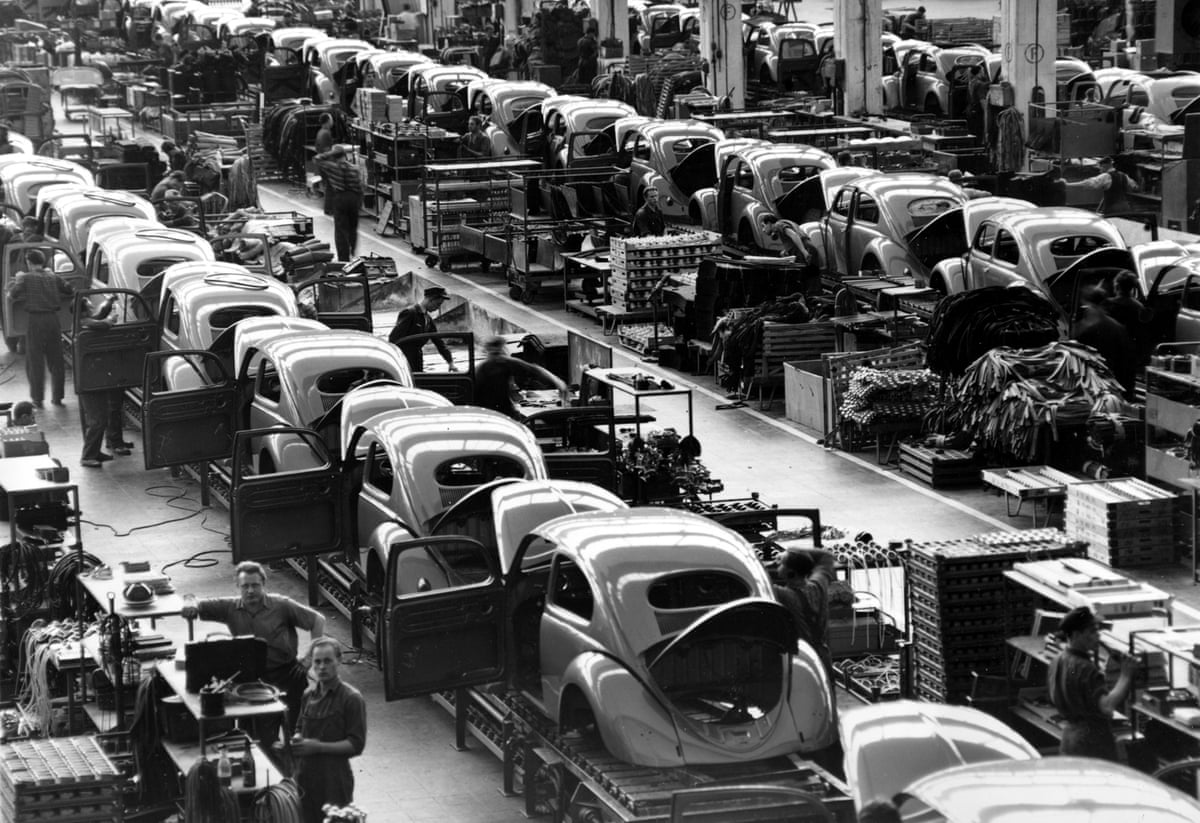
Germany's affinity for automobiles dates back to the late 19th century when Carl Benz patented the first gas-powered vehicle. However, it was after World War II that motor vehicles became deeply embedded in the national identity. The success of the German automotive industry generated employment, expanded citizens' mobility, and contributed tax revenues that supported a prosperous welfare state.
Speed played a significant role in this success. The "Made in Germany" brand, renowned worldwide for quality and precision engineering, was enhanced by customers traveling to Germany to purchase fast cars, test their capabilities on unrestricted motorways, and then export them to countries where such speeds were prohibited.
Climate activist Luisa Neubauer from Fridays for Future acknowledges the rationale for speed limits, stating,
"The tempolimit itself is the most reasonable thing to do because the absence of it kills people, very plainly. But it would be the end of the mentality that we need fast cars … Germany must be the beacon that keeps up that hope, even if it's just pretend."
Industry Challenges and Perspectives
The German automotive industry currently faces challenges including high energy costs and competition from Chinese electric vehicle manufacturers, leading to factory closures and job losses. Germany has been at the forefront of efforts to implement an EU ban on the sale of combustion engine cars starting in 2035.
A spokesperson for the VDA, Germany's largest car lobby, described the environmental impact of a blanket speed limit as "minimal" and "increasingly insignificant" as the vehicle fleet transitions to electric models. The spokesperson stated,
"It is clear that sections of motorway with an increased risk of accidents, high traffic volumes or roadworks should be subject to a speed limit. But this does not require a general, rigid speed limit on open-road sections of the motorway."


