

Cooking with Angela Hartnett: Mastering Poached Chicken
Angela Hartnett’s home kitchen is a unique space that defies replication, no matter how many Le Creuset pots one might acquire. Located in a basement in east London, it exudes a relaxed, timeless atmosphere reminiscent of a villa in a novel. Yet, it also carries the expertise of a Michelin-starred chef who has been cooking since her early days working in her family’s fish and chip shop over 40 years ago. Now 57, Hartnett’s kitchen is meticulously organized, with every utensil placed exactly where one’s hand instinctively reaches, and all tools perfectly sized for their tasks.
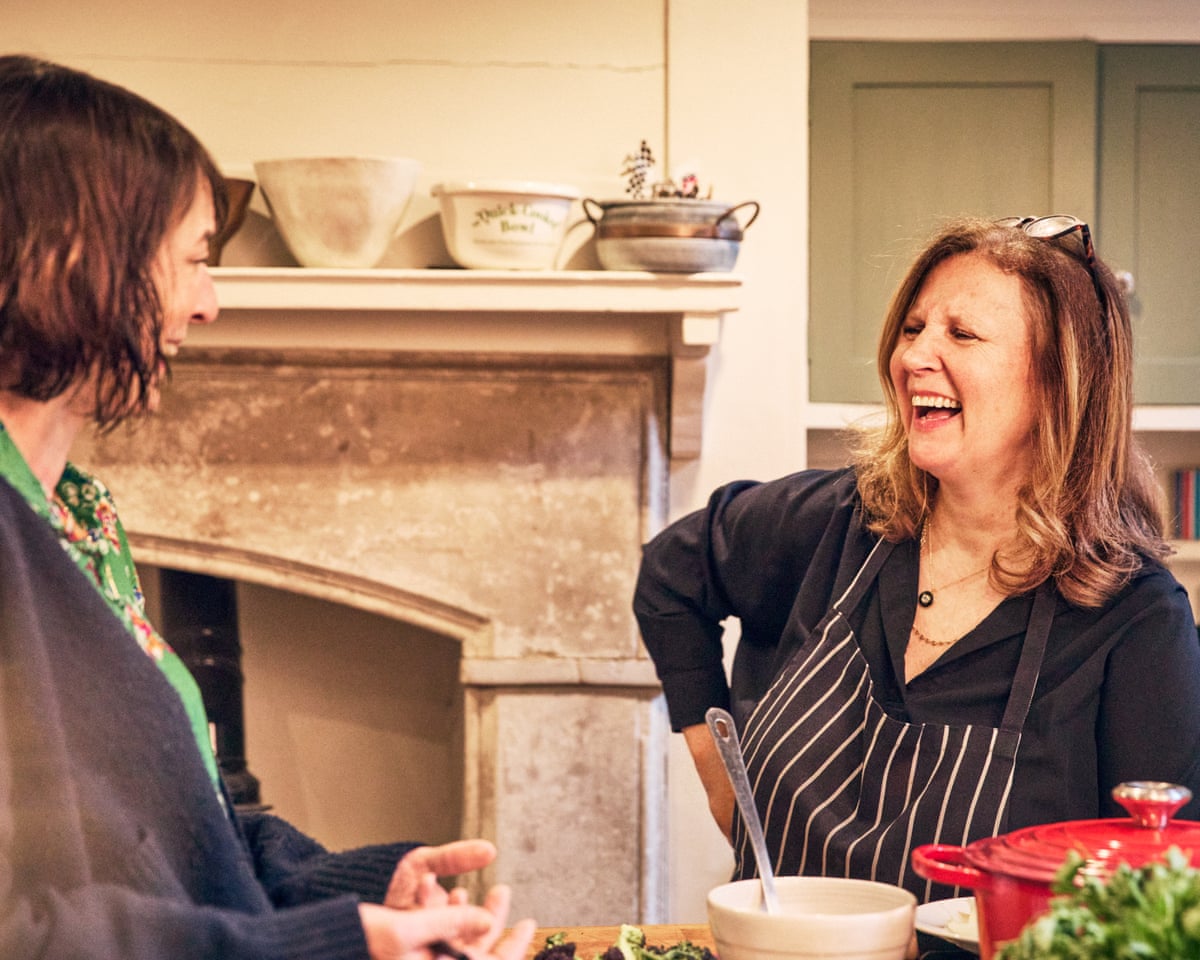
Today, Hartnett is preparing poached chicken with spring vegetables. While the dish appears simple, it embodies a fundamental paradox of cooking: the simpler the dish, with fewer ingredients and less fuss, the easier it is to make mistakes. Poached chicken can often appear pale and unappetizing, resembling over-washed fabric, though it may still taste good. Cooking it too quickly can cause the skin to wrinkle away from the meat, creating an unappealing texture. Reflecting on past errors with this dish highlights how challenging it can be to achieve the ideal result. The question arises: how does a chef make such a straightforward dish appear elegant, vivid, and perfectly balanced?
The first key difference lies not in the tools or ingredients, but in the tempo. Hartnett’s movements are continuous yet unhurried, demonstrating a calm fluidity that results in evenly shaped vegetables and a clean cooking process without splashing or mishaps. Known for her composed demeanor, Hartnett contrasts with the loud, aggressive kitchen culture often associated with Michelin-starred chefs. She remarks,
“People associate Michelin with machismo. It might have been once, but not any more, and I certainly don’t think that just because you run an aggressive kitchen, you’re a better chef.”
Choosing the Right Chicken and Preparation
“Look, the key is buying a good chicken,”Hartnett emphasizes. In poaching, there is no room for error. Proper jointing of the chicken with a very sharp knife is essential, even though recipes rarely mention it. Hartnett assesses new chefs in her kitchens—both the upscale one near the Ritz and her four more casual establishments—by the condition of their knives and their dexterity, joking about the risk of finger injuries. Jointing doesn’t affect flavor but allows the chicken to fit better in the pan, enables cooking drumsticks separately for less time, and prevents an amateurish splayed appearance.
Spring Vegetables and Sourcing
The spring vegetables are cooked separately from the chicken. Only sturdy vegetables such as carrots, onions, celery, and garlic are poached alongside the bird. Hartnett and her husband, also a chef whom she met in a kitchen, prioritize British-grown produce. She explains that her husband becomes upset if she brings home anything not grown in Britain, citing reasons including food miles, sustainability, and the superior taste of British farmed goods.
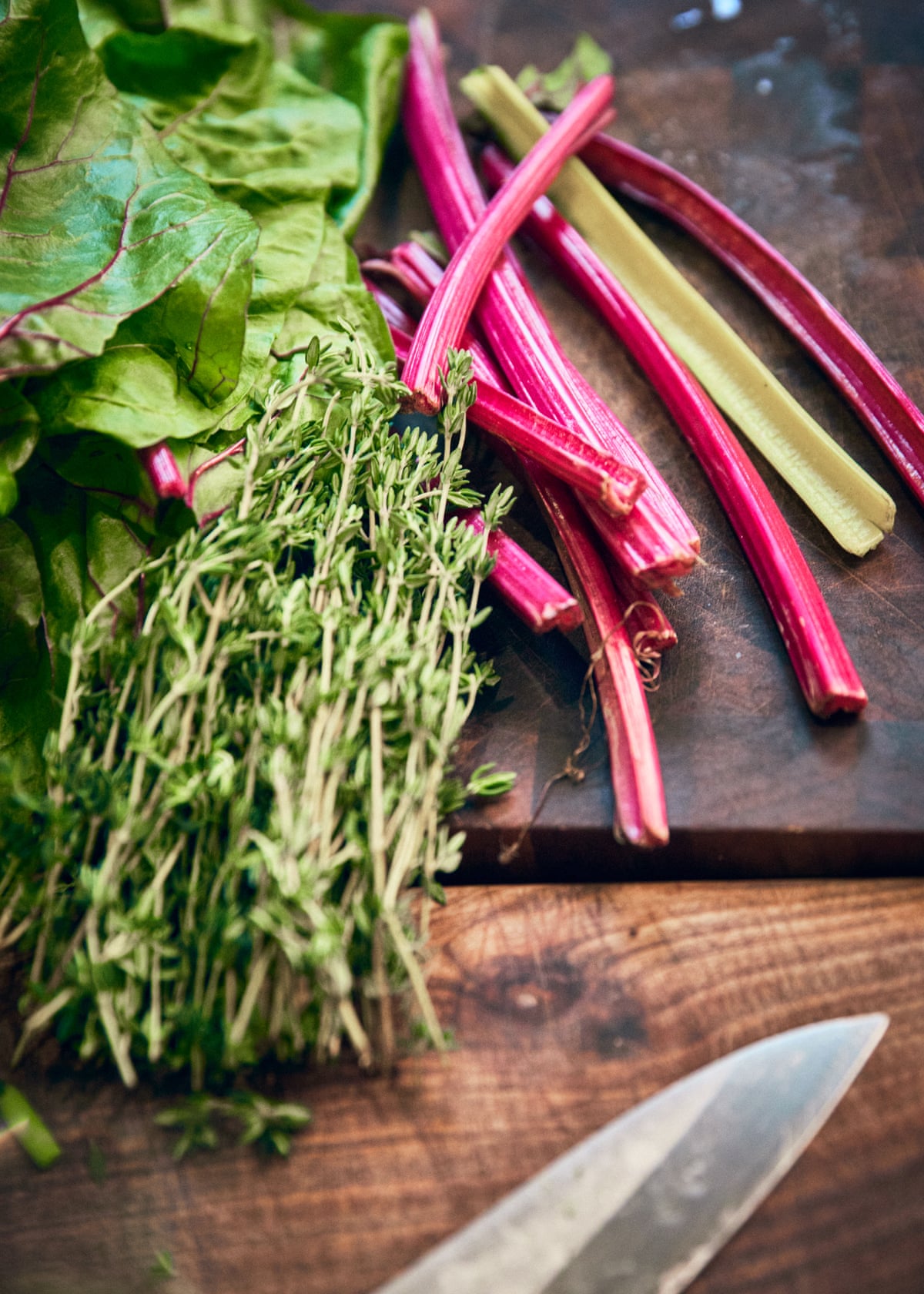
Carrots are cut on a slant for aesthetic appeal, though Hartnett admits she cannot explain why. Celery is cut into smaller chunks to avoid stringiness, making it easier to eat in one bite. Grelot onions, resembling large spring onions and sometimes purple, are mild, sweet, and stylish. Thyme is added in a casual manner, reflecting Hartnett’s relaxed approach.
Salting and Cooking Technique
Salting the poaching water is crucial. Hartnett advises multiplying the usual amount of salt by five, imagining a “pinch” as a large handful. She reassures that this is necessary because the water volume is significant, covering the chicken by about an inch. Hartnett’s fondness for salt is personal; she recalls her father’s enthusiastic salting inspired by Keith Floyd’s 1980s cooking show, where salt was thrown into poaching water until it tasted like the sea.
Hartnett recounts a formative experience visiting Michel Bras in France, where she encountered his signature gargouillou salad—a simple yet refined dish of multiple herbs and vegetables prepared in ham stock. She notes the importance of seasonality, terroir, and the dedication required to source ingredients, illustrating the depth behind seemingly simple dishes.
As the poaching water reaches a boil, foam appears on the surface and must be skimmed off. Hartnett admits to disliking this task, likening it to peeling a quail’s egg, but advises a relaxed attitude:
“It’s not going to kill you, a little bit of impurity,”she says, noting that impurities settle at the bottom when draining. She distinguishes between natural and precision cooks, preferring an instinctive approach over meticulous weighing of ingredients.
Hartnett shares humorous anecdotes about recipe misinterpretations, such as a Christmas stuffing recipe calling for “five kilos of spinach,” which led to readers buying excessive amounts. She emphasizes understanding cooking terms like simmering, describing it as a gentle but noticeable bubbling, not a rolling boil or an almost still state.
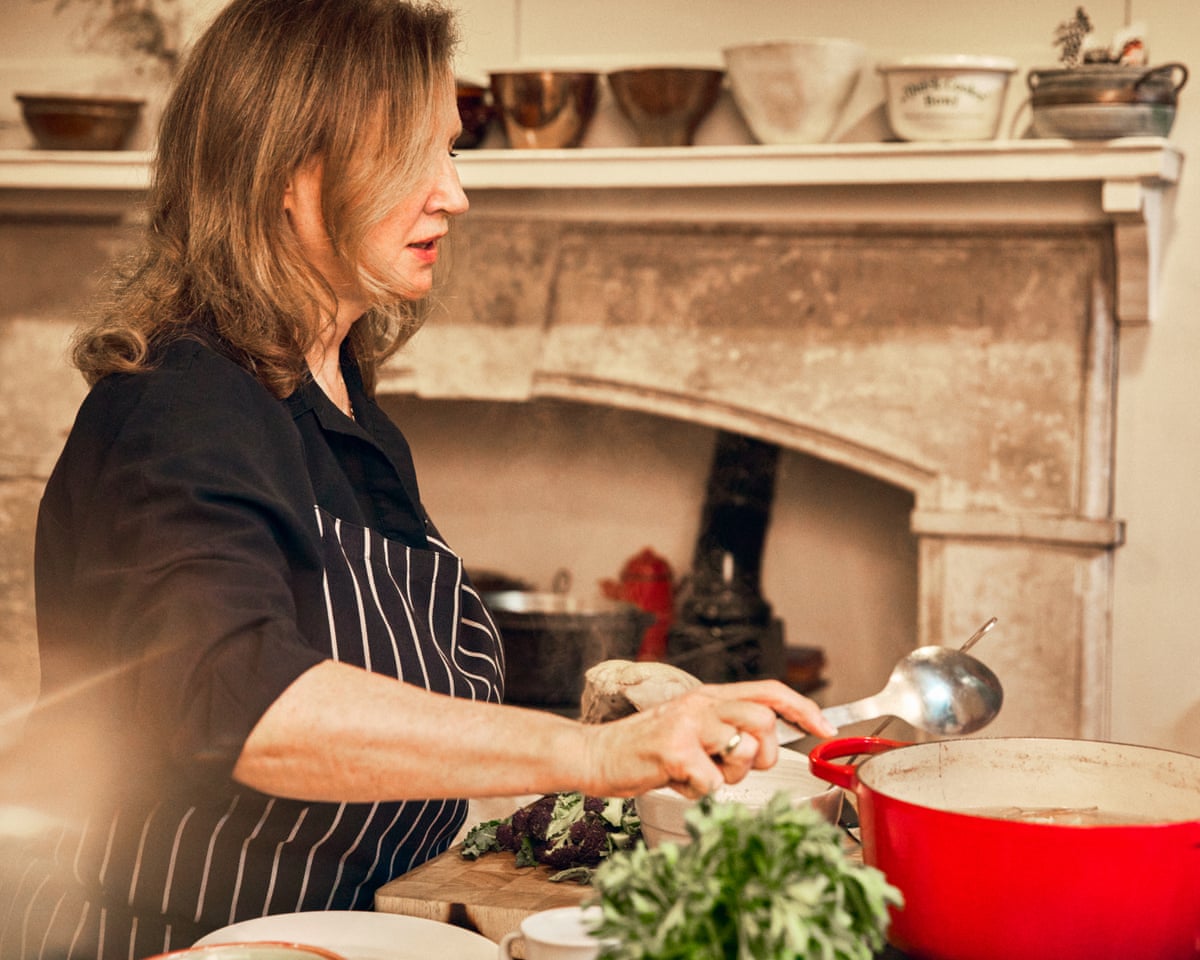
After about 50 minutes of poaching, Hartnett tests the chicken thighs for doneness by feel, finding them still too soft. By this time, the stock has developed an excellent flavor.
Communicating About Food

Aside from cooking, Hartnett co-hosts a podcast with Nick Grimshaw, where they interview celebrities while she cooks. Originally a Waitrose promotion, it has grown to become one of the largest branded podcasts in Europe or possibly the world. Interestingly, they avoid excessive discussion about food, yet listeners are drawn to the dishes. Hartnett explains her attitude:
“I love my job, I love cooking, I love food, and I love eating out and I love eating in, but I don’t need to talk about it 24/7. You go out with other chefs and they want to spend an evening on the virtues of a carrot, and I’m like: give me strength.”
Seasonal Vegetables and Presentation
Hartnett advises flexibility with spring vegetables, noting that peas, broad beans, and asparagus may be too early in the season, though a few asparagus might be acceptable. For the recipe, she chose seasonal vegetables including chard, leeks, carrots, sprouting broccoli, and radishes.
Blanching the vegetables is a quick process, lasting about three minutes. After cooking, the vegetables are mixed with olive oil, herbs, and a touch of lemon to create a flavorful base. Hartnett cautions against undercooking vegetables, as they lose flavor when too al dente.
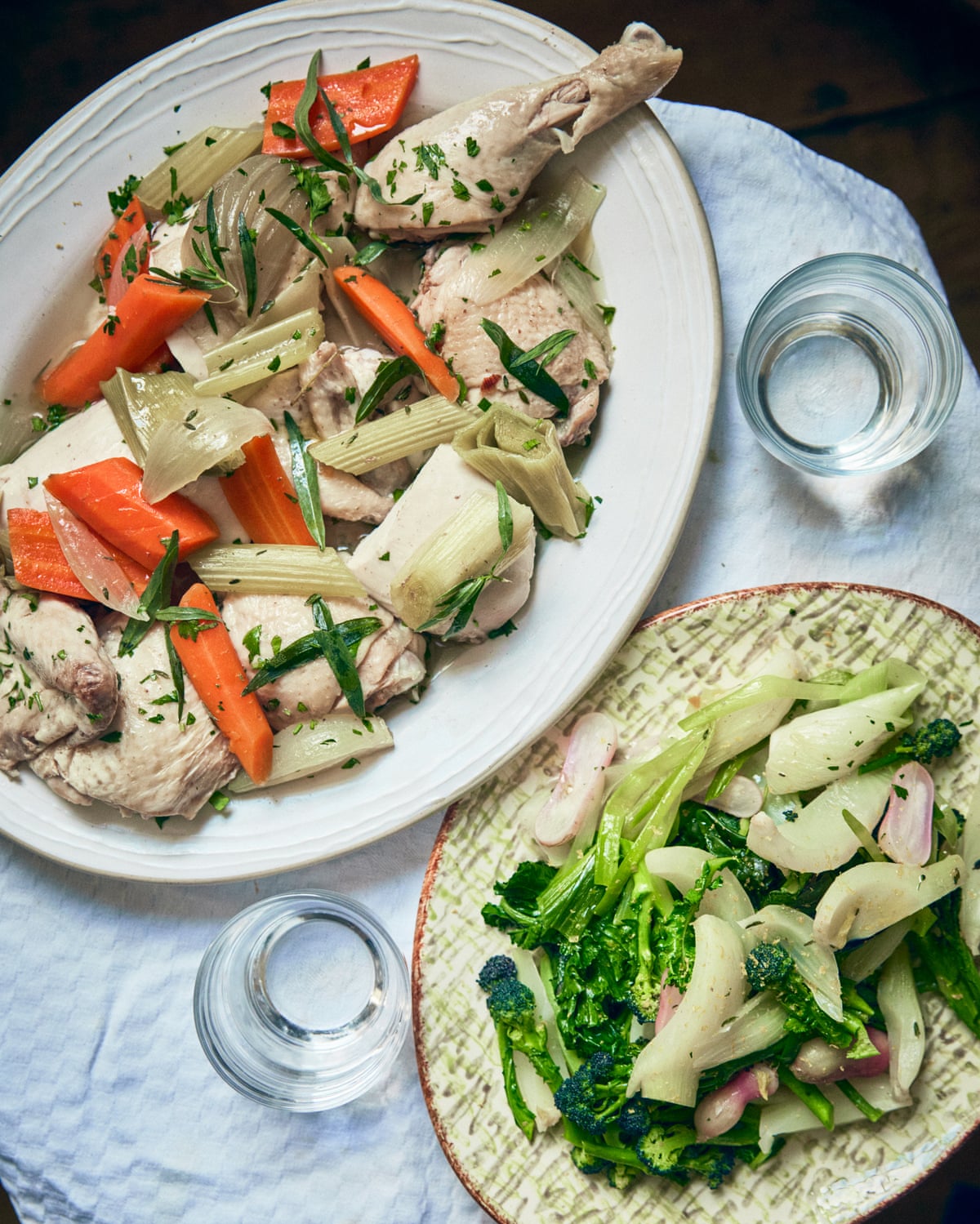
The chicken is arranged artfully on the serving dish. More vegetables can be added on top for visual appeal. The stock can be reduced and finished with butter, but Hartnett advises against making a flour-based gravy, which would conflict with the desired aesthetic of “timeless Italian elegance” rather than a hearty pub roast. Parsley and finishing oil complete the dish.
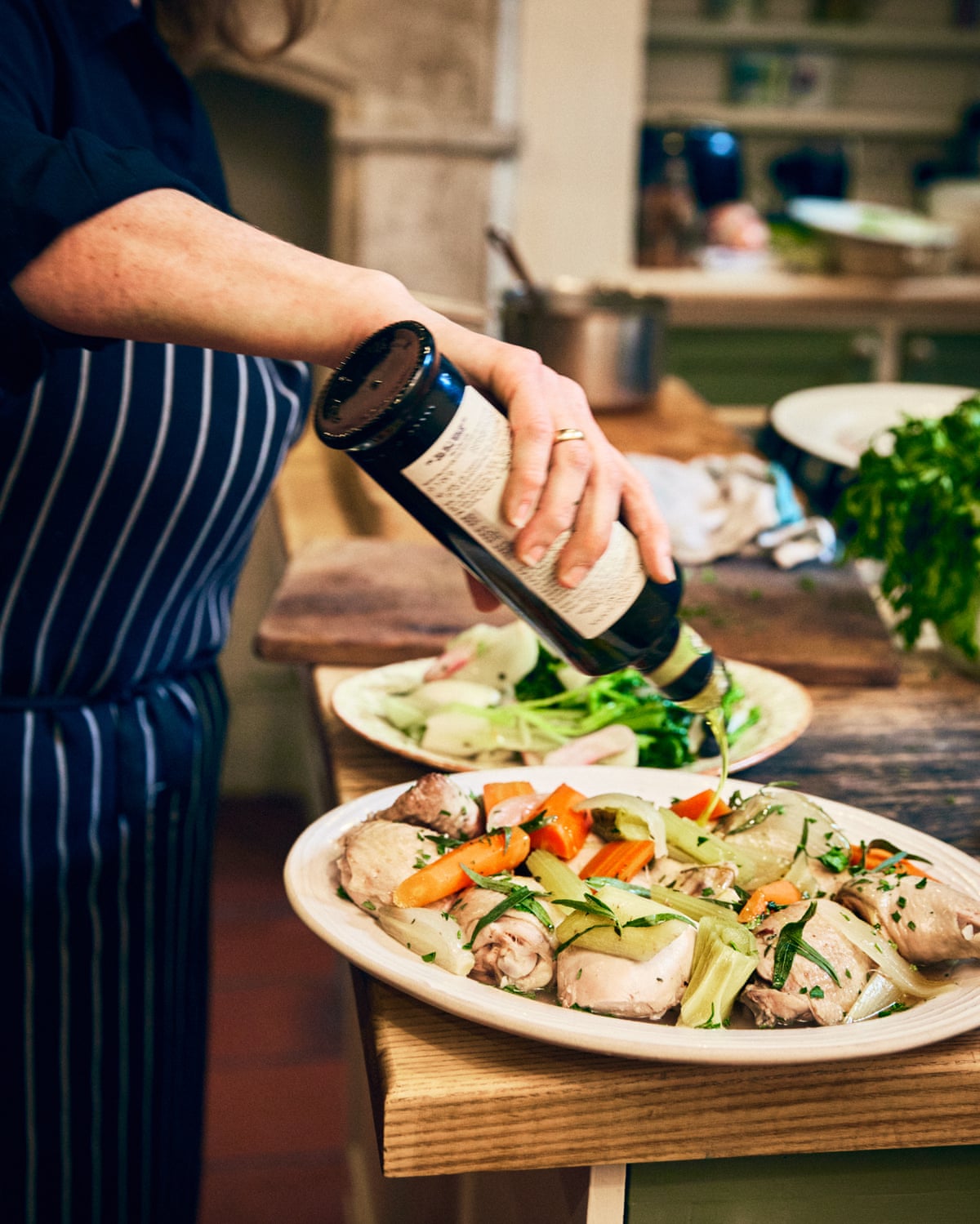
Hartnett reflects on the differences between her home cooking and her restaurant Murano:
“If I was comparing what I do at Murano with what I’d do at home, it’s a bit more technical, there’s a bit more finesse, for want of a better word, but the flavours are the same. Even at Murano, we don’t have dishes that have 15 ingredients in them. You just want a beautiful, finished plate of food.”
Her Favourite Utensil: The Spider
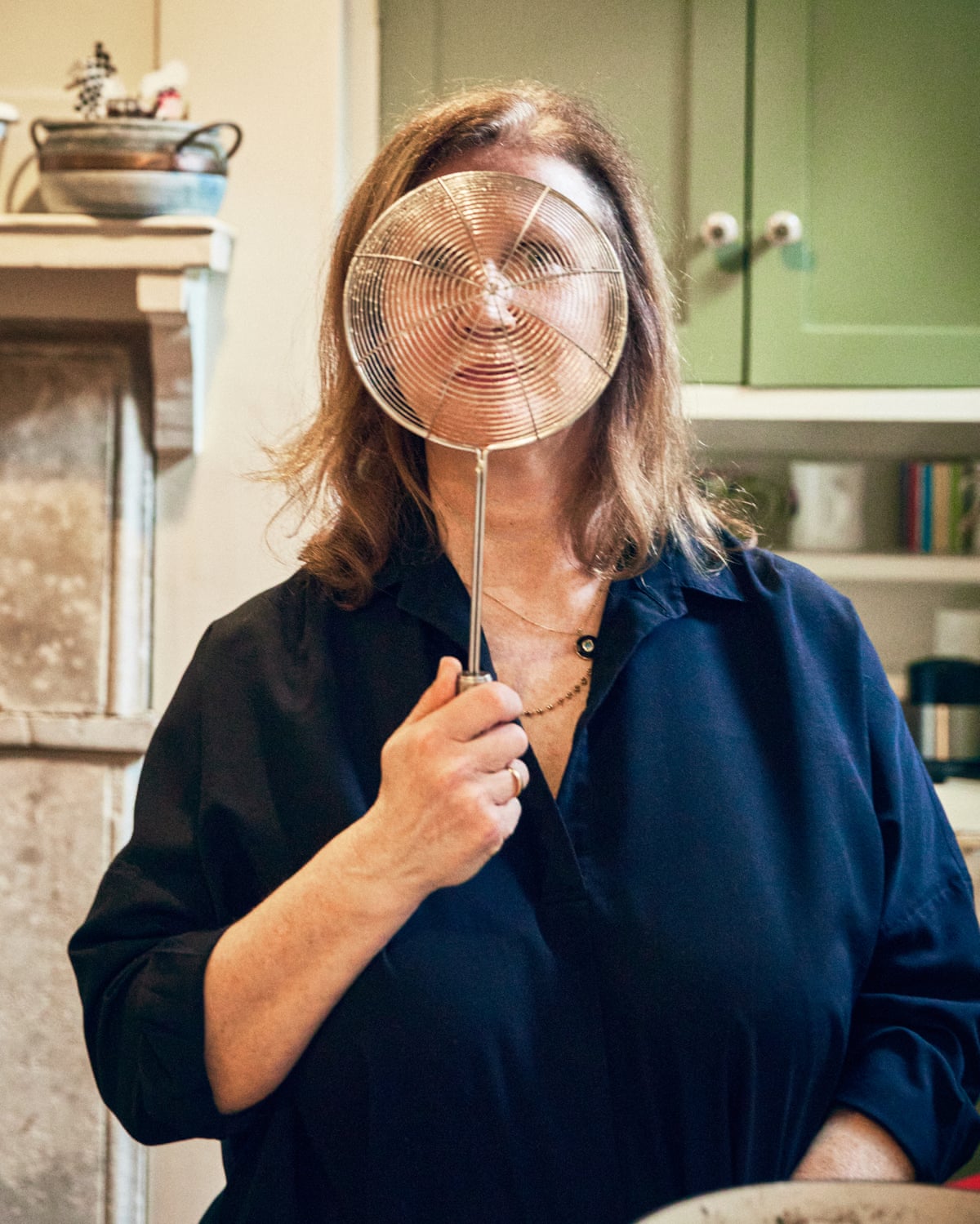
Hartnett’s preferred kitchen tool is the spider, a utensil that lies between a slotted spoon and a small sieve. It is ideal for tasks such as retrieving vegetables from poaching water or removing bouquet garni and bay leaves. Its shallow design allows easy maneuvering, and the concentric cage prevents picking up small items like peppercorns unintentionally. Hartnett appreciates its aesthetic appeal and recommends having it in multiple sizes.
The Recipe: Poached Chicken with Vegetables
This recipe is perfect for entertaining, offering brilliant flavors from a simple preparation. The key is to select the best quality chicken and poach it in water along with fresh vegetables, allowing the chicken’s natural fat to enrich the dish.
- 1 whole chicken (about 1.5–2kg)
- 2 carrots, peeled and cut into large chunks
- 2 celery sticks, cut into large chunks
- 1 white onion, quartered
- 1 small garlic bulb, halved horizontally
- 2 thyme sprigs
- 15g salted butter
- A handful of flat-leaf parsley, chopped
For the vegetables:
- 1 bunch (about 400g) asparagus
- 200g peas in their pods
- 200g broad beans in their pods
- Extra-virgin olive oil
- A few mint leaves
- Sea salt
Place the chicken in a large pan, cover with cold water, and heat over medium. Bring to a slow boil, then reduce to a simmer and skim off any foam.
Add the poaching vegetables and thyme, cooking for 50–60 minutes at a low simmer until the chicken is fully cooked.
Shortly before the chicken is done, prepare the vegetables by snapping off the woody ends of the asparagus and shelling the peas and broad beans. Boil the asparagus in salted water for one minute, then add the peas and broad beans and cook for an additional three minutes until tender.
Remove the vegetables with a slotted spoon, place in a bowl, and dress with olive oil, mint leaves, and sea salt.
Drain the chicken and vegetables with a slotted spoon and transfer to a serving dish.
Pour several ladlefuls of the poaching stock into a small pan and reduce over medium heat for three minutes until slightly thickened. Stir in the butter and parsley to create a sauce, then pour over the chicken and vegetables before serving.
Extracted from The Weekend Cook by Angela Hartnett (Bloomsbury, £26).


