

Top Players Continue Prize Money Protest at Wimbledon
World number one Jannik Sinner is among the leading players participating in ongoing protests regarding prize money distribution in tennis.
Many of the sport's top athletes plan to extend their protest at Wimbledon by further limiting media engagements, despite the tournament recently announcing a 20% increase in prize money, raising the total prize fund to £64.2 million.
Leading figures, including world number ones Aryna Sabalenka and Jannik Sinner, intend to reduce the time allocated for media interactions during the upcoming media weekend and impose a 15-minute limit on post-match interviews throughout the first week of the Championships, which commence on Monday.
Reigning men's champion Sinner has stated that the issue centers on "respect," while Sabalenka emphasizes the need for both parties to collaborate to find "mutually beneficial solutions."
Following the announcement, the All England Club (AELTC) expressed being "surprised and disappointed" by the players' decision. BBC pundit Andrew Castle, commenting during Wimbledon qualifying coverage, described the players' actions as "tone deaf."
This raises questions about the players' specific demands, the nature of their protests at Wimbledon, and the reasonableness of their requests.
Players to Expand Prize Money Protest at Wimbledon
What Do the Players Want?
Players are advocating for a larger proportion of Grand Slam revenues to be allocated to prize money. They also seek contributions to their benefit funds and greater involvement in decisions such as scheduling.
The primary target set by players is for each Grand Slam to dedicate 16% of its revenue to prize money this year, increasing to 22% by 2030.
They argue that a higher revenue share is justified given their significant role in the tournaments' financial success, with an emphasis on distributing more funds throughout the draws.
Player welfare is another concern, particularly regarding Grand Slam contributions to pension, healthcare, and maternity benefits.
Additionally, players desire increased consultation on key issues, including scheduling, late-night matches, and tournament length.
Meetings between players and Grand Slam representatives have occurred; however, no progress has been made on benefit contributions. Players declined a meeting at Indian Wells in March intended to discuss forming a Grand Slam player council.
How Far Short Are Grand Slams From Demands?
Using last year's revenue of £427 million and adjusting for inflation, the players' demand for 16% of revenue to be allocated to prize money would translate to over £70 million at Wimbledon in 2026.
This figure represents a 34% increase over the £53.5 million prize money offered in 2025.
Instead, Wimbledon increased this year's prize fund by 20%, marking the largest annual increase in the tournament's history, totaling £64.2 million.
This includes £3.6 million for the singles champions and £80,000 for first-round losers but remains approximately £7 million less than the players' expectations.
Players Welcome 'Genuine Step Forward' on Wimbledon Pay
Prize money rose by 9.5% at this year's French Open and by 16% at the Australian Open in January.
At Roland Garros, players protested by limiting media duties to 15 minutes, symbolizing the 15% of revenue the French Open currently allocates to prize money.
Tennis Australia's total revenue in 2025 was A$697.2 million (£346.21 million), with the Australian Open prize fund representing about 15% of that amount.
Discussions are ongoing with executives from the US Tennis Association (USTA) as they finalize their prize money offer for the US Open, which begins on 30 August.
What Happened at the French Open - and What Awaits at Wimbledon?
Sabalenka was among the players protesting prize money at this year's French Open by cutting short a pre-tournament news conference.
Other leading players, including top-ranked men's player Sinner and four-time French Open champion Iga Swiatek, also adhered to a 'work-to-rule' approach during a pre-tournament media day.
At Wimbledon, players plan to intensify their protest by limiting media time during the pre-tournament weekend and restricting post-match appearances to 15 minutes during the first week.

Primary broadcast partners such as the BBC and ESPN are expected to be most affected.
The 15-minute limit reflects the approximate 15% of revenue currently allocated to prize money across the four Grand Slam tournaments.
Despite this, players have acknowledged Wimbledon's 20% prize money increase as a "genuine and significant step forward."
Speaking to on Friday, AELTC chief executive Sally Bolton expressed hope that players might reconsider their protest.
"I think the important thing is to get round the table," she said.
"We want to make sure that we are ourselves working hard, but working really hard with the players to find the right future for the sport, and the kind of action we're seeing at the moment is not helping us get to a better place for the sport.
"We're keen to continue that engagement, and we'd love to get the player council established, so we can have those direct conversations."
What Are the Rules Around Player Media Commitments?
Grand Slam regulations require all main-draw players to participate in "feature media opportunities" before and during tournaments to enhance engagement with the sport.
Media sessions allow players to share their views on their performances and provide valuable exposure to media and fans.
At Roland Garros, many protesting players conducted a press conference followed by a single television interview.
Players may be fined up to £50,000 for failing to appear without a valid reason communicated to governing bodies.
Those who met their core commitments at the French Open but limited their media time to 15 minutes were not penalized.
What Else Do Grand Slam Tournaments Provide?
Grand Slam organizers argue that revenue figures can be misleading due to the substantial costs of running major tournaments and investments in warm-up events, facilities, and player amenities.
All four Grand Slams have made significant investments in their venues and infrastructure recently. The AELTC's ongoing nine-figure refurbishment of its Millennium Building includes major upgrades to player gyms, recovery areas, lounges, and restaurants.
Similarly, the USTA is constructing a $250 million (£189.7 million) player performance center featuring expanded warm-up areas, locker rooms, and dining facilities.
The Slams also invest heavily in warm-up tournaments; the AELTC reports spending over £60 million supporting grass-court events since 2019, alongside contributions to grassroots tennis in their countries.
Each Slam contributes $750,000 (£572,302) annually to the Grand Slam Player Development Programme, which has supported major winners such as Elena Rybakina, Li Na, and Gustavo Kuerten.
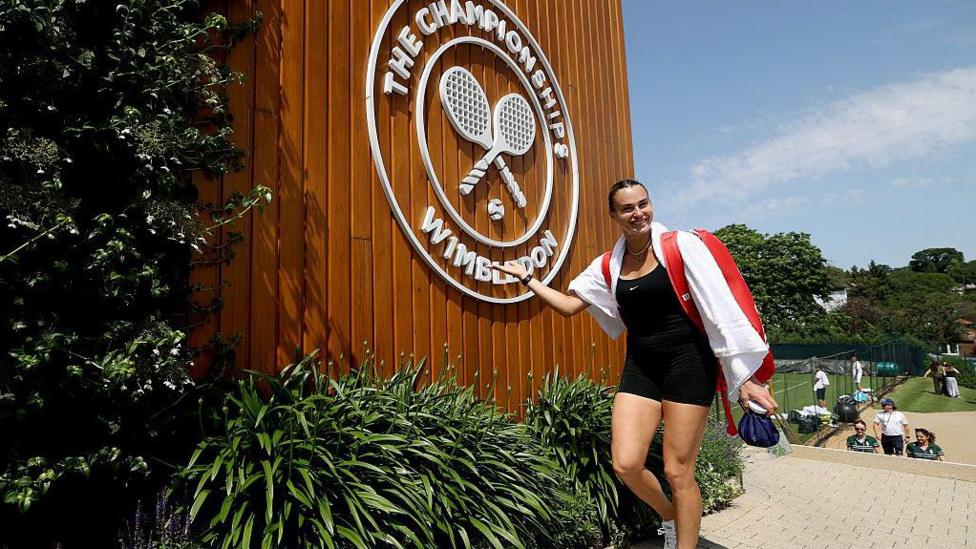
World number one Aryna Sabalenka has reached the semi-finals at Wimbledon three times.
'Players Feel Emboldened' - Analysis
The decision to escalate protests despite a 20% annual prize money increase indicates the confidence of players and their representatives.
Given that the average UK employee currently receives a 3.4% annual pay rise and first-round losers at Wimbledon earn £80,000, public sympathy may be limited.
However, for players, the issue extends beyond annual increases to securing a larger share of the revenue they help generate for the All England Club.
The AELTC counters that revenue figures do not account for costs or investments in infrastructure and other grass-court events.
Players remain determined and are willing to sacrifice media opportunities, especially if they can avoid fines.
While the French Open's prize money increase was in single digits, players received 16% of revenue at the Australian Open and expect the US Open to match or exceed the 20% rise offered last year.
They are gradually achieving their pay goals but continue to seek an additional 1.5% of revenue annually until 2030.
These figures may not be universally accepted, raising the question of whether negotiations can resolve the issue or if it will devolve into a bluffing contest involving strike threats, potentially more credible than before.
- Live scores, results and order of play
- Get tennis news sent straight to your phone


