Epstein Files Confirm Elite Immunity and Networks
The millions of files released last Friday by the US Department of Justice offer extensive material for journalists, conspiracy theorists, and the public to examine. The contents are deeply troubling.
What provokes particular outrage is not only Jeffrey Epstein’s well-documented predatory behavior but also the routine elite conduct revealed in the documents. They depict a world many have long suspected exists: an informal global network of powerful, ultra-wealthy individuals who know each other, assist one another, and shield each other from accountability for their misconduct.
While the files may not conclusively answer questions such as whether Epstein’s famous associates participated in his sex trafficking or if his 2019 death in custody was truly a suicide, conspiracy theorists may feel somewhat vindicated. Matthew Dallek, a political historian at George Washington University, noted that although the documents do not reveal a criminal conspiracy, they confirm the core belief of many conspiracy theories: elites receive special treatment and are protected from rules that apply to others, reflecting broad corruption.
The newly released material represents the largest, and possibly final, tranche of the so-called Epstein files, although the government reportedly holds up to 3 million more pages under seal. Even this portion deepens the remarkable web of connections between Epstein and members of the global elite, including politicians, royalty, US cabinet secretaries, and prominent financiers.
It is important to note that being mentioned in the files does not automatically imply wrongdoing or awareness of Epstein’s crimes. The documents contain unverified allegations collected by the Department of Justice. Epstein was known as a relentless networker who sought to associate with every powerful individual he could.
Nonetheless, Epstein’s often typo-ridden emails and text messages provide a revealing and grim insight into how elites interact privately. Many of Epstein’s influential acquaintances maintained friendly relations with him years after his 2008 plea deal for soliciting an underage girl, despite ongoing allegations from survivors.
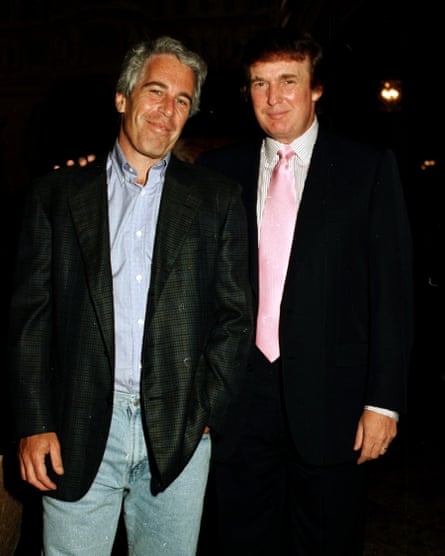
Donald Trump’s long-standing friendship with Epstein is well documented and reportedly ended around 2004; the new files do not appear to implicate Trump in wrongdoing. However, they highlight Epstein’s social ties with other members of Trump’s circle, including current US Secretary of Commerce Howard Lutnick, who is recorded as visiting Epstein’s private island in 2012. Lutnick denies this, stating to the New York Times,
“I spent zero time with him.”
Wealth, Power, and Back-Channel Influence
The files offer an unflattering view of how wealth is accumulated and power brokered. Epstein, a private individual with no formal accountability, engaged in continuous back-channel interventions in political and business affairs. These included advising former Israeli Prime Minister Ehud Barak on post-premiership financial ventures; assisting an Indian businessman in efforts involving Jared Kushner; attempting to meet high-ranking Kremlin officials; and conducting unofficial diplomacy without formal appointments.

Names often favored by conspiracy theorists—such as Rothschild, Rockefeller, and Soros—appear occasionally in mundane contexts, reinforcing the perception that powerful individuals are interconnected.
The files undermine public political commitments, suggesting that beyond a certain level of wealth or fame, ideological differences are overridden by elite self-interest. This reveals a form of class solidarity, though not the one Marxists might expect.
Epstein, a convicted sex offender and Democratic donor, was nonetheless assisted by figures such as Steve Bannon, a self-described opponent of the liberal elite, who reportedly provided Epstein with media training to rehabilitate his image. Similarly, left-wing academic Noam Chomsky, a critic of capitalism, was known to have traveled with Epstein and exchanged friendly advice. This illustrates that some prominent populist outsiders are deeply embedded within elite circles.

(Neither Chomsky nor Bannon have publicly commented on the new files; Chomsky suffered a debilitating stroke in 2023.)
The Reality Behind the Conspiracy Theories
The extensive international conspiracy many imagined does exist, but in a more prosaic form. Epstein was a member of the Trilateral Commission, an elite nongovernmental organization founded by David Rockefeller in 1973 to promote international cooperation. His membership, granted in the 1990s, was reportedly in recognition of generous donations rather than any secretive rituals.
Money and intra-elite social trust were typically sufficient for Epstein to gain access to exclusive circles. Tech companies accepted investments from a convicted sex offender, and investment banks managed his funds. Peter Thiel reportedly advised Epstein on potential investments in Palantir, though Palantir stated it was unaware of Epstein ever investing or holding shares in the company.
Epstein was professionally an investment manager specializing in tax avoidance, helping wealthy clients conceal assets—sometimes legally—thereby increasing their wealth and his own.
This dynamic encapsulates the world depicted by the files but has not fully satisfied those skeptical of how Epstein, a college dropout and failed math teacher from Coney Island, amassed such wealth accompanied by butlers and private helipads. Many have speculated on social media and in articles whether Epstein’s wealth stemmed from sexual blackmail of other elites.
While this remains a possibility, it overlooks a simpler explanation: blackmail may not have been necessary. A detailed 8,000-word investigation by the New York Times described Epstein as a charismatic operator skilled at identifying and seducing useful elites and exploiting their vulnerabilities. He thrived on wealthy patrons’ generosity and sometimes stole from them. Essentially, he was a conman operating on an unusually ambitious scale, adept at manipulating a system designed for people like him.
Political Reactions and Public Interest
The American right’s response to the latest file release has been subdued, ironically given the right’s role in sustaining public attention on the story. After Epstein’s death, right-wing figures expressed anger over government opacity and speculated about Democratic elites’ involvement in Epstein’s exploitation of women and girls. Trump, campaigning for the 2024 presidency, repeatedly promised to release the files publicly.
However, after assuming office and failing to release the files—and as it became clear that Trump and associates might be named or face conflicts of interest—the right-wing media ecosystem grew confused and frustrated. Currently, interest appears to have waned except regarding Bill and Hillary Clinton, who recently testified before Congress about Epstein. On this major conspiracy theory, which they partially anticipated, right-wing commentators have largely fallen silent.
Matthew D Taylor, a scholar of contemporary Christian nationalism, explained,
“The way that rightwing media functions today is creating conditions under which it’s very hard for these folks to even comment on the Epstein files.”
He attributes this partly to reluctance to antagonize the administration and partly to audience capture:
“The audience just doesn’t want bad news about Trump Republicans.”
It is unfortunate that the MAGA movement’s focus has shifted away from the Epstein files. Regardless of the motivations behind their attention, it briefly highlighted a world deserving of scrutiny. Ultimately, the central figures were not shadowy New World Order masterminds but rather elite socializers, con artists, mutual back-scratchers, and hedonists operating within a system whose special rules they assumed would never require explanation to outsiders.