

Costumed Candidates at UK Elections: A Longstanding Tradition
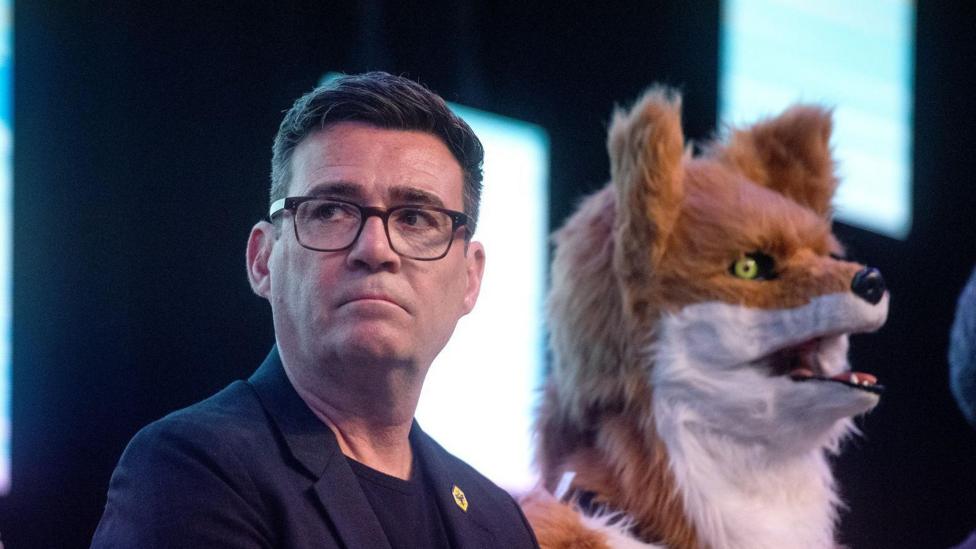
Andy Burnham, who aspires to become the next prime minister, stood alongside a man dressed as a fox and an "intergalactic space warrior" with a bin for a face when he was declared the winner of the Makerfield by-election.
These costumed individuals were not seen as unusual by the public and supporters, as Count Binface, the fox, and another candidate, Howling Laud Hope, all shook hands with Labour's Burnham before his victory speech.
Eccentric scenes like these have become common in British politics. Candidates often run for various reasons, but their satirical campaigns frequently highlight serious issues, sometimes influencing future legislation.
Advocacy Through Costume: Rob Pownall's Campaign
Rob Pownall, who primarily runs Protect the Wild, an organization advocating for British wildlife, recently ran for the Makerfield seat dressed as a fox.
"It was a brilliant display of British democracy in action,"
Pownall said, viewing costumed candidacies as part of Britain's "unique eccentric energy."
This was not his first candidacy; in May, he ran for the Scottish Parliament dressed as a giant gannet to call for an end to the Guga hunt, a centuries-old Hebridean tradition involving the hunting of the bird.
During the by-election, Pownall used his platform to advocate for animal rights and took the opportunity to speak to Burnham about protecting British wildlife.
"I urged him if he is to become prime minister to actually do something to protect animals - whether to finally end fox hunting for good or committing to a complete end to the badger cull."
Count Binface and Other Eccentric Candidates
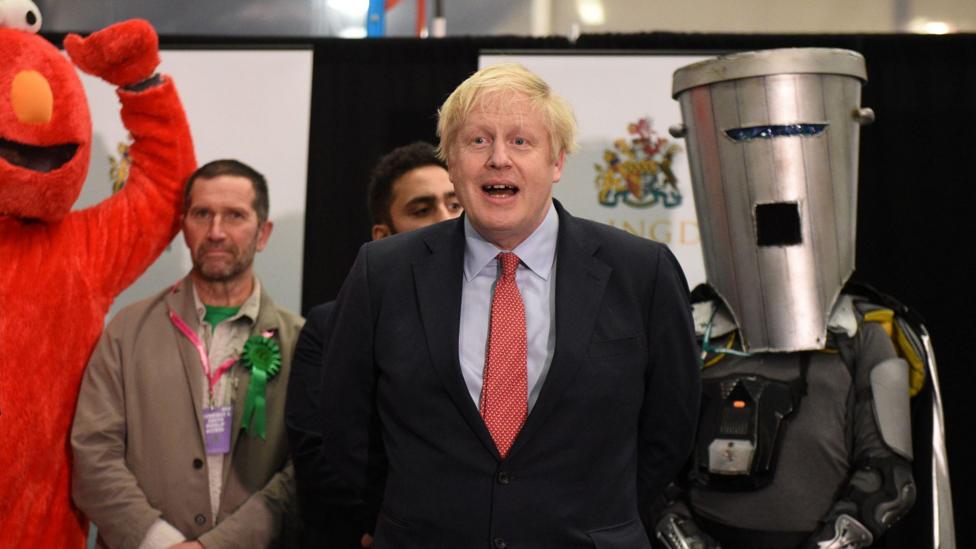
Count Binface is another character who has regularly appeared alongside prominent politicians such as former prime ministers Rishi Sunak, Boris Johnson, Theresa May, and London Mayor Sadiq Khan.
He has become a familiar figure in elections, with a manifesto for Makerfield published on his website that includes policies such as "being the UK's entrant at Eurovision 2027" and "wifi on trains that works. Also trains that work."
During the 2019 election, then-prime minister Boris Johnson won as the MP for Uxbridge with Count Binface and Bobby "Elmo" Smith behind him.
Speaking to , Count Binface explained his reasons for running, which included:
"rephase the traffic lights on Liverpool road", "price cap Wigan kebabs at £2" and "build at least one affordable house".
"I believe elected mayors should serve out their terms before they're eligible to stand for parliament,"
he added. The BBC has contacted him for comment.
Currently, it costs £500 to run as a candidate in elections. Candidates who poll above 5% of the total valid votes receive their deposit back.
Howling Laud Hope and The Official Monster Raving Loony Party
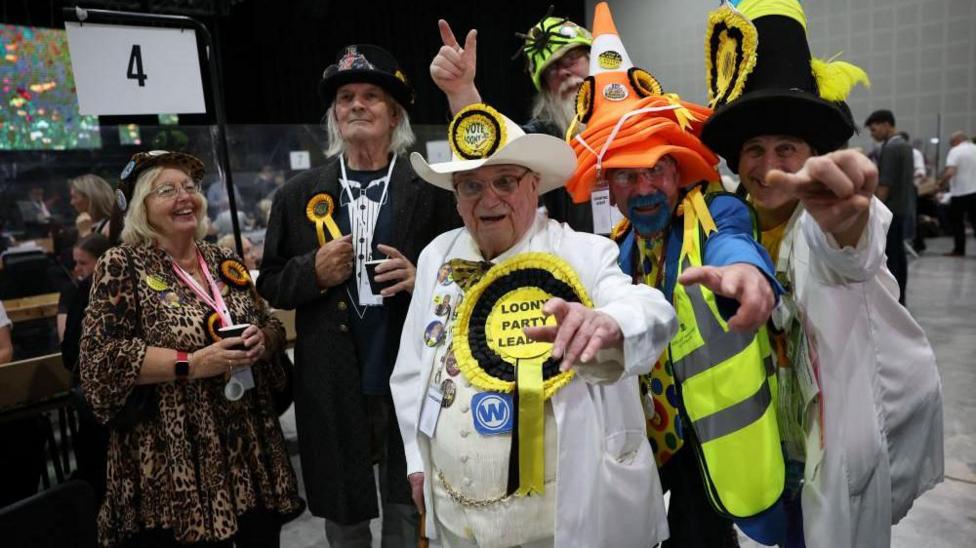
Alan "Howling Laud" Hope, leader of The Official Monster Raving Loony Party, was another costumed candidate in Makerfield. He has been a key figure in the tradition of running in costume for over 40 years.

Hope has previously run against former prime ministers David Cameron, Boris Johnson, and Theresa May, and told the BBC he has stood for election at least 38 times.
The party has fielded more than 200 candidates over the years.
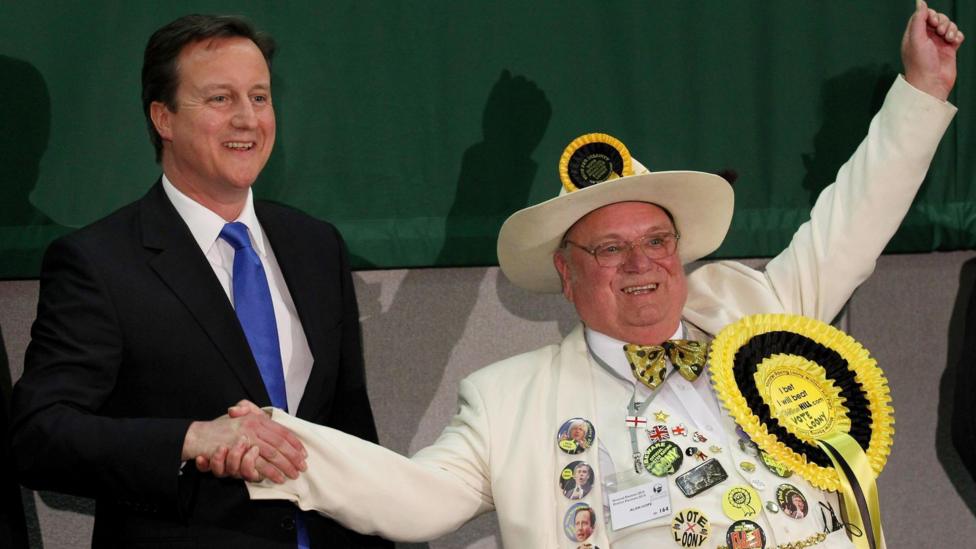
In 2010, then-prime minister David Cameron shook hands with Alan "Howling Laud" Hope.
The party was established in 1982 by Hope and the late David Sutch, also known as Screaming Lord Sutch.
Sutch, a rock 'n' roll musician, first ran in 1963 in the Stratford by-election and also stood against former prime minister Harold Wilson in the 1966 election. He ran for a total of 41 parliamentary seats.
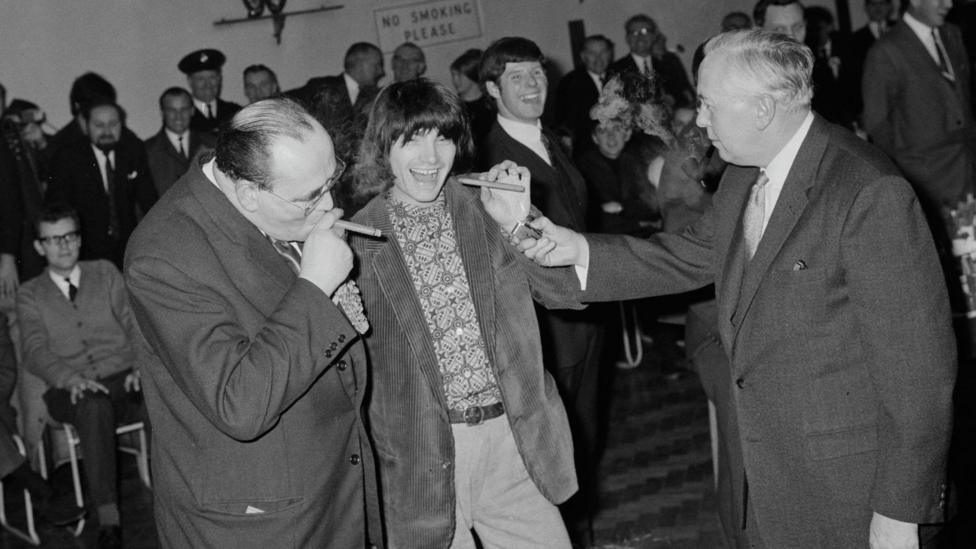
In 1966, Conservative candidate Thomas Lyrian Hobday, David 'Screaming Lord Sutch', and then-prime minister Harold Wilson shared cigars after the Huyton election results.
The Party's Impact on Legislation
While The Official Monster Raving Loony Party removes members who have a chance of winning an election, some of its policies have become law.
For example, throughout the 1980s, the party campaigned for pubs to remain open during the day rather than closing in the afternoons, a change implemented in 2005.
The party also advocated for lowering the voting age to 16 since its formation. Currently, 16 and 17-year-olds can vote in certain elections in Scotland and Wales.
Labour introduced a bill in February to lower the voting age to 16 for all UK citizens.
Election Deposit Rules and Historical Context
In 1985, the Conservative government led by Margaret Thatcher, whom Sutch also ran against, introduced a law requiring candidates who poll less than 5% of the total valid votes to lose their deposit.
However, a year later, then-home office minister David Mellor admitted the policy had not been effective, as candidates including Sutch ran in the 1986 Fulham by-election in costume.
Sutch commented on the election atmosphere at the time:
"[The election] took place against a backdrop of a lot of people dressed like idiots, behaving like idiots and waving idiotic slogans,"
"I think we probably are just going to have to live with this."
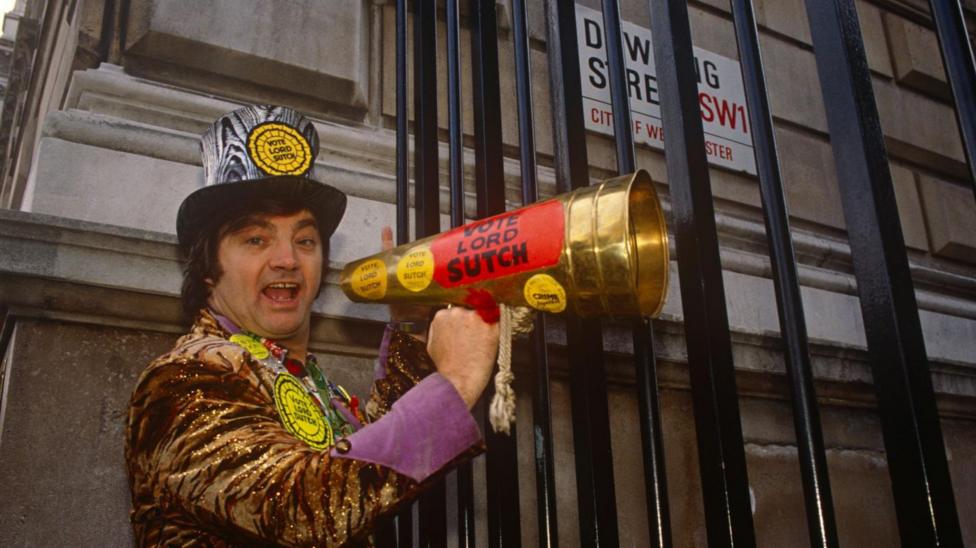
Screaming Lord Sutch was photographed in 1992 outside the gates of Downing Street.
- What is Burnham's path to becoming Labour leader and PM?
- Sir John Curtice: Burnham's win against Reform represents remarkable personal success
- Who is Andy Burnham? Returning MP who wants to be prime minister


