

Water Safety Warning Amid Heatwave Fatalities
Authorities have urged the public to exercise caution following multiple fatalities linked to water-related incidents during the recent heatwave.
The Royal Life Saving Society (RLSS) released a statement after several deaths, predominantly involving children, highlighting that "warmer weather unfortunately sees an increase in accidental drownings."
The RLSS emphasized that despite higher air temperatures, water temperatures remain very cold, posing risks such as cold water shock, which can make swimming difficult and hinder individuals from exiting the water safely.
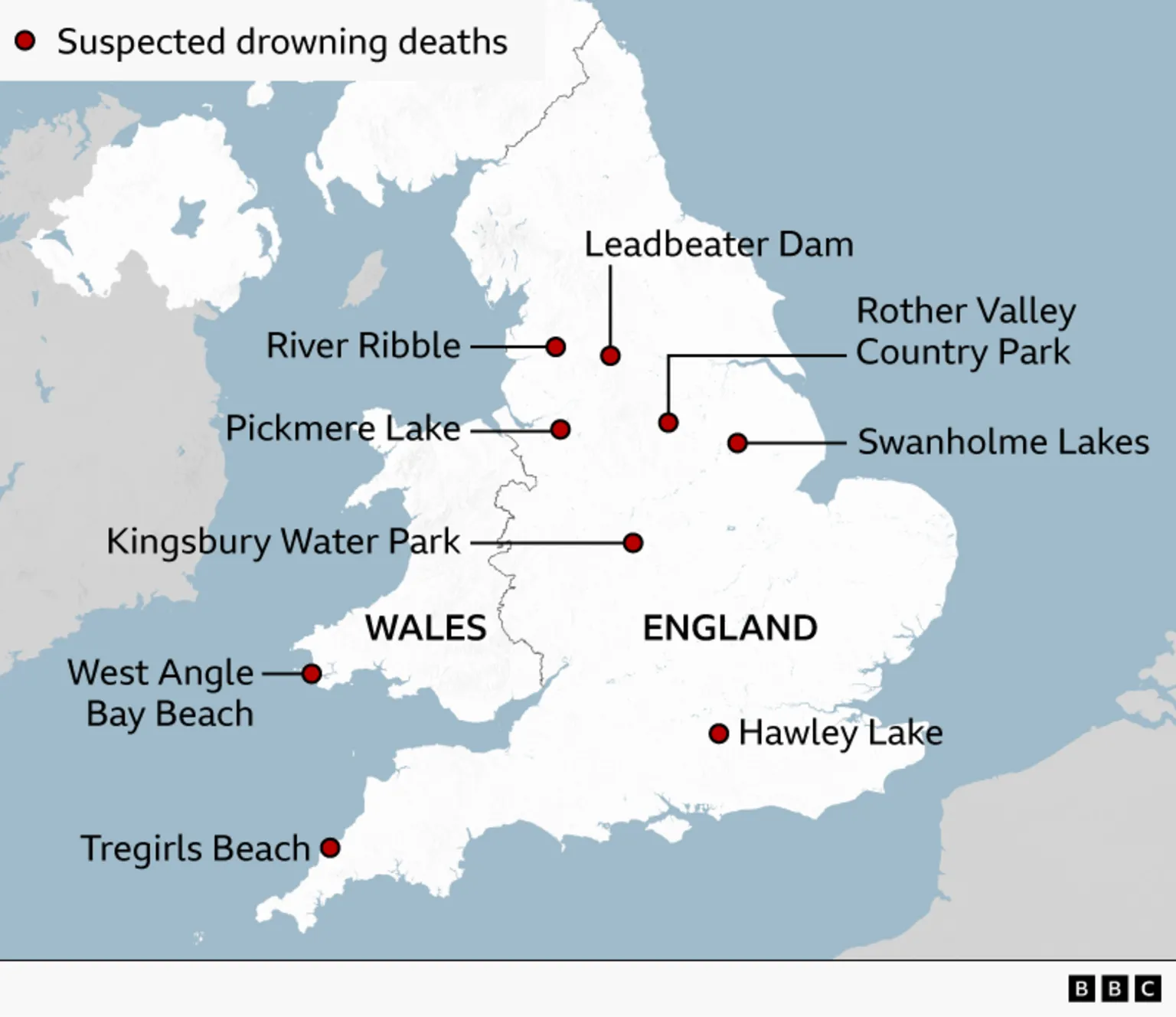
In total, during the period of elevated temperatures, at least seven young people have lost their lives in water incidents, alongside a man in his 60s and a woman in her 70s.
Weather Outlook and Safety Recommendations
Wednesday is expected to bring relief from the record-breaking heat as cooler air moves across northern and eastern regions of England.
A prominent drowning prevention network has advised swimming in locations supervised by lifeguards whenever possible and recommends entering the water gradually to minimize the risk of cold water shock.
Expert Advice on Responding to Water Emergencies
During an interview on BBC Breakfast on Wednesday morning, Jim Bridge from the Water Safety Partnership provided guidance for individuals who find themselves struggling in the water.
"So lie on your back with your head back, with your ears submerged, use your arms and legs to stabilise yourself and just let your breathing come back to a normal breathing pattern."
"And when you're feeling confident that you've gotten used to the water and your breathing's normal, you can shout for help or swim to save yourself."


