

Cooler Temperatures in Some Areas This Weekend Amid Ongoing Heatwave
Temperatures in certain parts of the UK will feel noticeably cooler this weekend; however, the heatwave is expected to continue, with heat health alerts still active for nearly all of England.
A strengthening north-easterly wind will cause the hottest areas to shift from south-east England further westward across the West Midlands and south-east Wales.
On Friday, temperatures exceeded 35°C, marking a record for the most days above 35°C in a calendar year, bringing the total so far in 2026 to six. Additionally, the number of days with temperatures above 34°C reached nine, another record. Parts of Scotland also entered a heatwave after experiencing at least three consecutive days with temperatures of 25°C or higher.
Amber and yellow heat health alerts issued by the UK Health Security Agency (UKHSA) remain in effect across large portions of England until 21:00 BST on Sunday.
Five water companies have announced hosepipe bans due to a lack of rainfall and increased water demand, affecting over five million people.
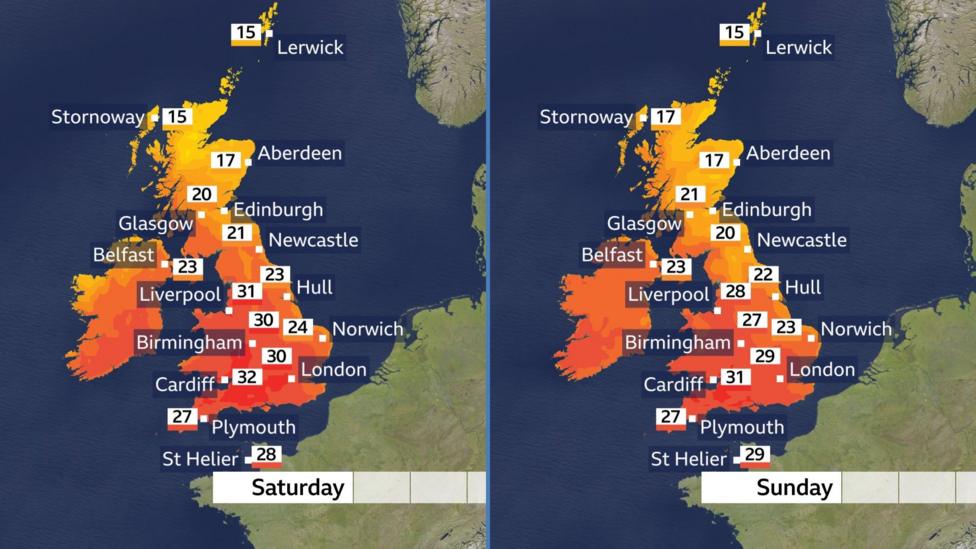
How Hot Will It Be This Weekend?
On Friday, the maximum temperature recorded in England was 35.2°C at Coton-in-the-Elms, Derbyshire, while Usk, Monmouthshire, recorded the highest temperature in Wales at 34.3°C.
Threave, Dumfries and Galloway, recorded Scotland's highest temperature at 29.7°C, and Killowen, County Down, Northern Ireland, reached 27.4°C.
On Saturday, the highest temperatures are expected in the West Midlands, south-east Wales, and parts of southern England, reaching up to 33°C.
A brisk north-easterly wind will cause eastern parts of England to experience a drop in temperatures.
North Sea coasts from Northumberland to Suffolk may remain cloudy and misty on Saturday but are expected to be sunnier on Sunday.
Scotland and Northern Ireland will also experience increased cloud cover.
Showers in eastern Scotland are expected to dissipate by Sunday, allowing for more sunshine.
Temperatures will reach 23 or 24°C at best, with eastern Scotland being cooler.
On Sunday, as the wind strengthens, temperatures in England and Wales will be a few degrees lower but could still reach 30°C in southern England.
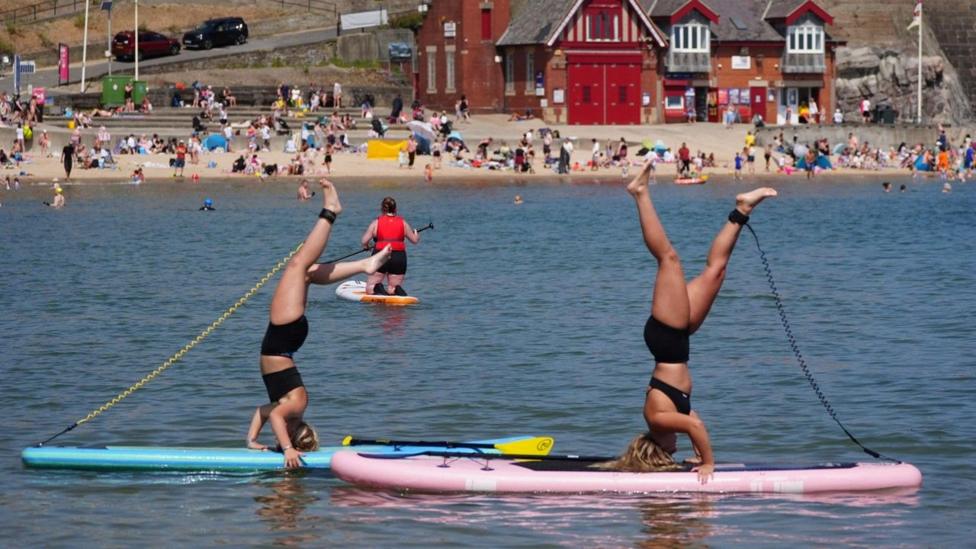
People have been finding all sorts of ways to cool down
When Will the Heatwave Be Over?
These weather changes do not indicate the end of the heatwave.
Temperatures are expected to rise again next week. Although it will not be as hot as the past seven days, the heatwave criteria could be met in more parts of the UK by Wednesday or Thursday.

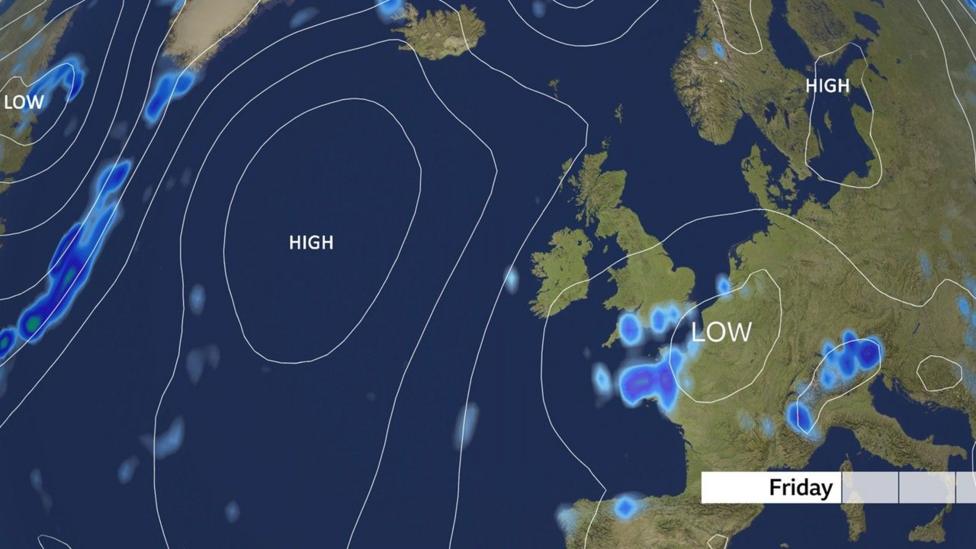
High pressure will remain centred north of the UK, and the brisk east to north-easterly winds will gradually lessen, allowing warmer air from northern France to move back into southern England. Here, temperatures are expected to reach 32 or 33°C.
Current forecasts suggest that some location in the UK will experience temperatures of 30°C or more for 12 consecutive days, but this streak could end by next weekend.
Will There Be Any Rain?
Low pressure could bring some welcome rain by the end of next week.
For most areas, the answer is no.
However, with lower pressure situated on the other side of the English Channel, the far south-west of England could see some showers on Monday. These showers are expected to dissipate as they move further north on Tuesday.
The likelihood of rain increases towards the end of the week, primarily affecting southern parts of England, and possibly only briefly.
Most downpours may occur over the nearby continent as high pressure is forecast to build back across the UK next weekend from the Atlantic. This would bring cooler winds but no rain.
Looking further ahead, temperatures are likely to remain above average, with some hot days expected, especially in central, southern, and eastern regions.
Dry weather will predominate, with occasional rain mostly affecting northern areas.
According to the Met Office's three-month outlook, near-average rainfall is expected for July, August, and September, with significant regional variations.
Less Rain and More Hosepipe Bans
Millions of people across south-east England will be affected by hosepipe bans due to concerns over insufficient rainfall.
Anglian Water has introduced its first hosepipe ban in a decade, applying to customers in the east of England, starting at 01:00 BST on Saturday.
A ban affecting one million households supplied by Southern Water in Hampshire and the Isle of Wight has also come into effect. South East Water has implemented its own restrictions.
On Thursday, Cambridge Water announced its first hosepipe ban in 30 years.
The winter months from December 2025 through February 2026 brought 13% more rainfall than average across the UK overall. However, regional differences were significant: England received 42% more than average, while Scotland experienced 14% below average.
The spring that followed was overall 14% below the long-term meteorological average for rainfall in the UK, with considerable regional variation.
Northern England received 90% of its average rainfall, whereas southern England had just 50%.
Some areas in south-east and east England saw approximately one-third of their average seasonal rainfall, including Suffolk (33%), Kent (33%), Essex (34%), Cambridgeshire (35%), and the City of London (36%).


