

Distinct Subspecies Status of British Swallowtail Confirmed
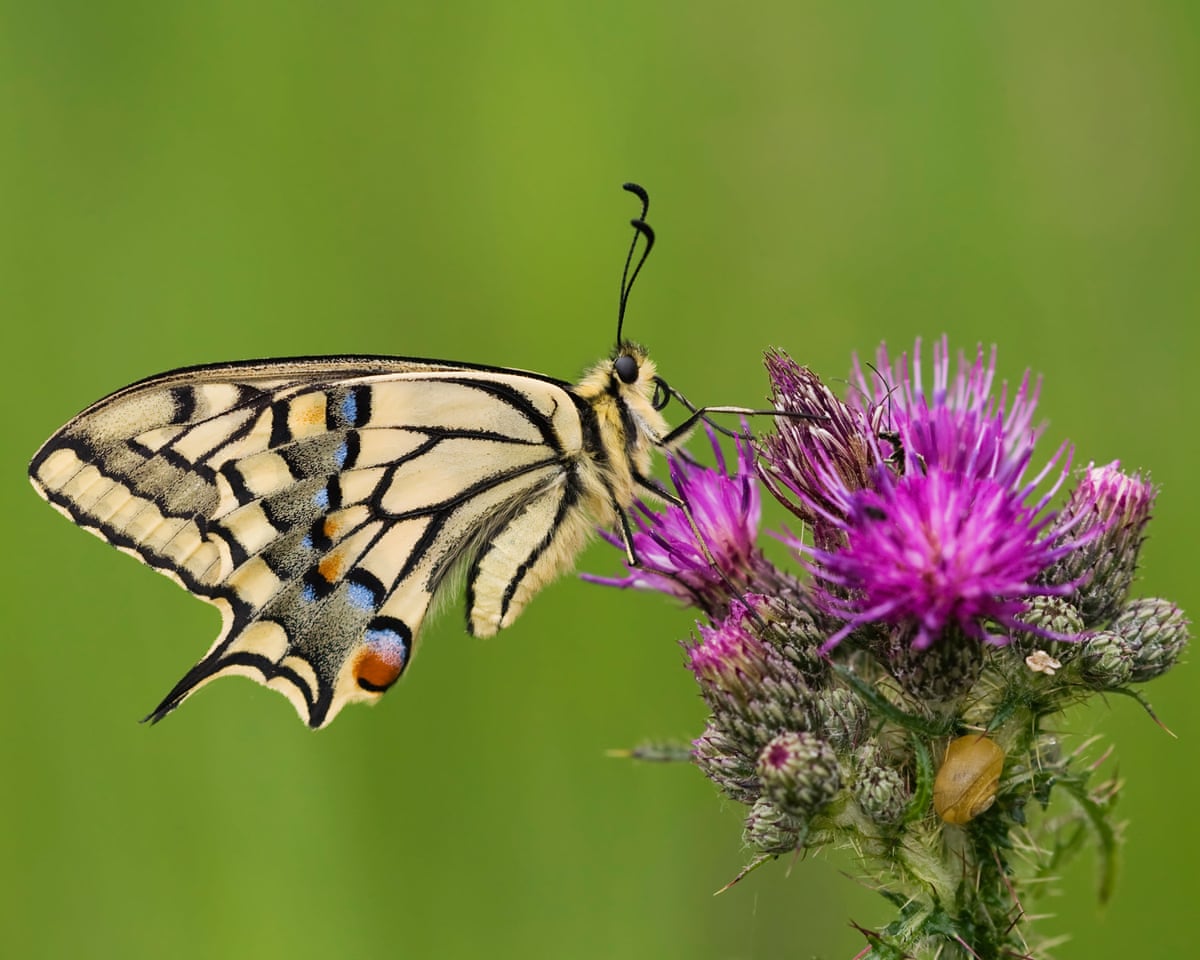
The endangered swallowtail butterfly Papilio machaon britannicus, which breeds regularly only in Britain’s Norfolk Broads, has been identified as a distinct subspecies for at least 200,000 years, according to recent research.
Smaller, darker in coloration, and significantly rarer than its continental counterpart, britannicus was previously believed to have developed its unique characteristics during its isolation in the wetlands of eastern England over the past 8,000 years, following the flooding of Doggerland.
However, new genetic analysis indicates that britannicus is a wetland specialist that may have historically inhabited a broader range of northern European wetlands, diverging from its continental relatives between 200,000 and 1.7 million years ago.
Genomic Insights and Conservation Implications
The study, which involved whole-genome sequencing of swallowtail populations across Europe and was recently published, detected some signs of inbreeding within britannicus populations but found no evidence of harmful mutations affecting their viability.
This discovery is expected to significantly influence conservation strategies for the species in Britain. Some butterfly experts have proposed introducing the more common continental swallowtail, Papilio machaon gorganus, whose caterpillars feed on a variety of plants such as fennel and wild carrot, to increase butterfly populations in Britain. There is concern this could lead to hybridization, potentially causing the unique britannicus subspecies to disappear.

Mark Collins, president of the Butterfly Conservation organization and co-author of the study, emphasized the genetic distinctiveness of britannicus as justification for intensified conservation efforts. He noted that britannicus is endemic to Britain and vulnerable to extinction due to rising sea levels driven by global warming, which threaten its freshwater wetland habitats.
“We’re looking at a relict population in the Norfolk Broads that’s not just a relict for Britain but a relict from a once much wider distribution in wetlands across Europe,” Collins said. “Britannicus is part of our own natural heritage, it’s protected by law for good reason because it’s a unique thing, and we should not allow it to be wiped out.”
Habitat Specialization and Environmental Threats
In the wild, britannicus caterpillars feed exclusively on milk parsley, a rare wetland plant, which contributes to the butterfly’s scarcity in Britain.
Both the butterfly and milk parsley face threats from rising sea levels that cause salinization of the Norfolk Broads, England’s largest freshwater wetland. Most of Britain’s breeding populations exist at or below sea level, and the increasing intrusion of salty water poses a significant risk. Consequently, long-term conservation may require translocating the species to new wetland sites that are protected from sea level rise.
Meanwhile, climate change is enabling the continental swallowtail to reach Britain more frequently. It is now regularly observed in Kent and Sussex and often successfully breeds in these counties during favorable summers.
Future Prospects and Conservation Strategies
While some lepidopterists believe that hybridization between the continental subspecies and britannicus is inevitable, potentially leading to the latter’s disappearance, Collins expressed optimism about the survival of britannicus if wetlands are preserved and managed appropriately.
“There’s every chance that the specialist wetland subspecies could survive into the future with the general swallowtail species, gorganus, flying around the wider countryside,” he said. “Hybridisation may occur on the fringes but britannicus could endure if we preserve our wetlands.
“We know now we are dealing with a distinctive butterfly that must be conserved. We need to urgently identify the best sites to make sure we can grow milk parsley there and introduce the butterfly and it will thrive, whether that’s in Suffolk, in Somerset or sites in Yorkshire. That’s a project we have in our sights.”
Public Engagement and Invertebrate Conservation
Nominations are currently open for ’s 2026 invertebrate of the year competition. Readers are invited to nominate their favorite species from the 1.3 million known invertebrate species, such as the fen raft spider or the tongue-biting louse. Nominations must be submitted before midnight on Monday, 13 July.


