

Record Increase in Children Receiving SEND Support
The number of children receiving support for special educational needs and disabilities (SEND) has risen sharply to a new record high, according to government data.
Between January 2025 and January 2026, there was a 12.5% increase in children with education, health and care plans (EHCPs), the legal documents that specify the support they are entitled to.
This represents the highest year-on-year increase since EHCPs were introduced over a decade ago, with the total number now exceeding 700,000.
A Department for Education (DfE) spokesperson commented on the figures, stating they "show the scale of the challenge we inherited," and noted an investment of £4 billion to integrate specialist support into mainstream schools.
"We're building a system where every school can support every child to thrive, while ensuring those with the greatest needs get the specialist help they need," the spokesperson said.
Families of children requiring more support than mainstream schools typically provide can apply for an EHCP, which guarantees additional assistance for those in need.
During the 2025 calendar year, over 110,000 new EHCPs were issued. The figures include children and young people up to the age of 25.
However, the proportion of plans issued within the statutory 20-week timeframe has declined slightly, with fewer than half being completed on time.
The number of children and young people with EHCPs attending mainstream schools has also risen by over 15% compared to the previous year, with nearly half of those with EHCPs now enrolled in mainstream education.
This increase follows the government's announcement earlier this year of plans to reform the SEND system, focusing on enhancing inclusivity in mainstream schools for children with SEND.
'I want him to be the best he can be'
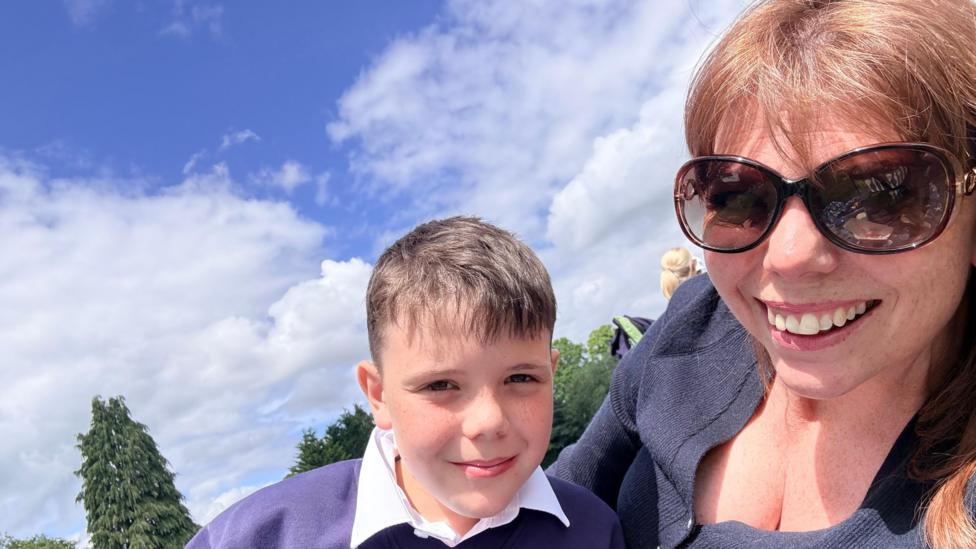
Karen Quinn is currently navigating the EHCP process for her 11-year-old son, Adam, who will begin secondary school in September. She emphasizes the importance of having an EHCP in place before this transition.
Adam is autistic and has ADHD and dyslexia. Karen describes him as very bright but facing challenges with writing and emotional regulation. Now in Year 6, Adam has been suspended several times and is struggling at school.
Karen expressed frustration with the SEND support process, stating it "wastes so much of their one little childhood that they have." After submitting the EHCP paperwork in February, the council agreed to assess Adam in May, which was a couple of months later than expected.

"It's not massive delays, but every delay is going to impact the transition to high school," she said.
Karen noted that the EHCP would need to be issued by the end of June to meet the 20-week statutory target but doubts it will be ready in time for September.
"I just want him to get the help that he needs to be the best that he can be," she added.
Helyn Clack, cabinet member for children, families and lifelong learning at Surrey County Council, stated,
"While we cannot comment on the circumstances of individual children, EHCP assessments are governed by national legislation and are considered on a case-by-case basis.
We would encourage any family with concerns to contact us directly so we can provide clear advice and ensure the appropriate support is considered."
Government SEND Reform Plans
Under the government's SEND reform plans announced in spring, fewer children will qualify for EHCPs from 2030 onward.
Instead, all children with SEND—currently more than 1.8 million—will receive individual support plans (ISPs), with EHCPs reserved for those with the most complex needs.
Families and campaigners have expressed concerns that this change could "strip away" legal rights to support, but the government maintains that this will not occur.
The government’s consultation on these reform plans closed in May.
Additionally, new guidance has been issued on establishing inclusion bases within mainstream schools. These are dedicated spaces offering targeted teaching and specialist support for children who need it, intended to address inconsistent and patchy provision that can lead to children feeling excluded from the wider school community.
Education Secretary Bridget Phillipson told the Today programme that she believes every young person should be able to attend their local school "with their friends" and receive a "brilliant education."
She acknowledged that high-quality provision for SEND pupils has been a "postcode lottery," but stated that the reforms aim to resolve this issue.
Jolanta Lasota, chief executive of the Ambitious About Autism charity, highlighted that the school environment significantly affects a young person's ability to attend, learn, and achieve.
However, she noted that children they consulted were "uncertain" whether inclusion bases would help them feel supported and included in mainstream schools or become another setting where they are "separated, excluded and disengaged."
Matt Wrack, general secretary of the NASUWT teaching union, criticized the government for issuing guidance on inclusion before releasing the "long-awaited response to the SEND consultation."
He said the government was "passing the buck to overstretched schools and overburdened teachers," adding that schools are being asked to adapt without clear expectations of what an inclusive school must provide.
The DfE acknowledged that the SEND system had been "stretched to breaking point," and stated that its investment would help "train every teacher to better support children with SEND, and give schools the expertise and resources to meet needs earlier."
Additional reporting by Rahib Khan.


