

For the next five weeks, I'm going to have several new phones.
That's because I'll be exploring the online worlds of six fictional voters.
I want to see how things play out online as we approach a landmark Senedd election.
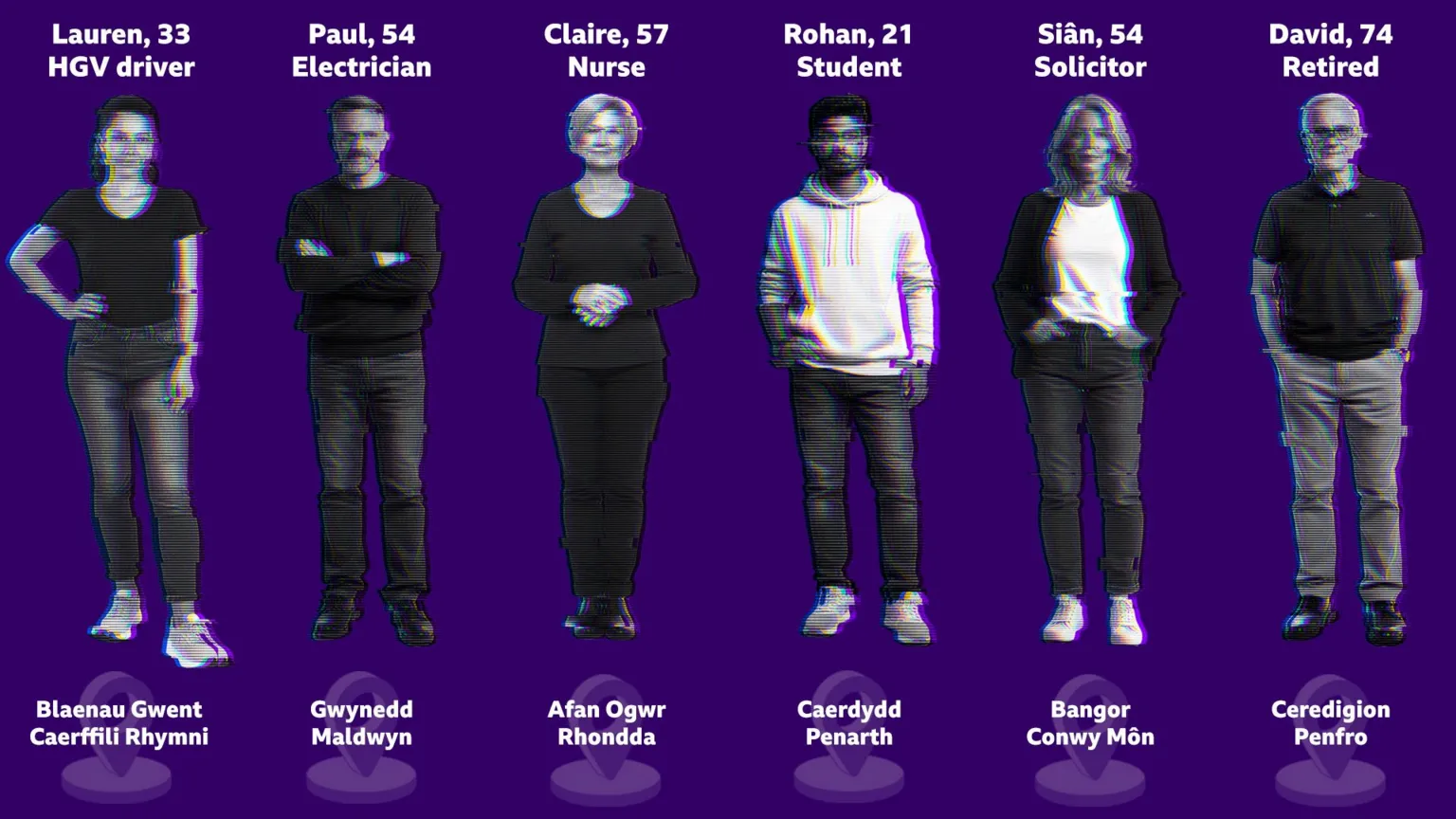
So I'll be scrolling the social media feeds of Lauren, Paul, Claire, Rohan, Siân and David, six fictional voters I've created based on data and analysis from the National Centre for Social Research.
I'm calling them undercover voters, a phrase coined by BBC social media investigations correspondent Marianna Spring, who originally came up with this idea and used it in experiments for the Americast podcast and the 2024 UK General Election.
The profiles can't represent every Welsh voter, and charting what they see isn't a scientific exercise, but it will give us a glimpse into the types of content people are being shown.
Who are the undercover voters?
From now until 7 May, you'll likely see politicians knocking on doors and attending debates to try and win votes, but you might also notice parties, campaigners and voters fighting it out online too.
Social media algorithms are sophisticated, and what's on your feed can vary wildly from someone else's; a lot of the content is targeted based on your interests and online profile.
That's why I've got help from these six made-up people.
Each of them broadly represents a different group of voters with different beliefs and political views, and they're all based in different parts of Wales.
I'll be keeping track of what they're all seeing on YouTube, Facebook, TikTok, Snapchat, Instagram and X.
Why are we doing this?
In Wales, 52% of adults use social media as a source of news, according to Ofcom's 2025 News Consumption Survey.
It also found that, despite BBC One being the single top news source, Facebook was a close second and Instagram and YouTube were also in the top 10.
TikTok, X and Whatsapp were also in the mix, above some traditional TV channels and newspapers.
But apps like these aren't single sources of news.
They represent a whole mix of content from news outlets, influencers, commentators, everyday people, party political groups and more.

This can be thought-provoking or entertaining, and often holds power to account in the same way mainstream journalists do.
But it can be difficult to know what is real, and Artificial Intellegence (AI) is now in the mix too. Last month I investigated and found examples of political deepfakes being circulated on Facebook.
So we've chosen some of the most-used platforms and will see how their offerings differ for each of our voters with their various opinions, lifestyles and locations.
How will it work?
The six voters are based on research by the National Centre for Social Research (Natcen).
Natcen came up with six categories of Welsh voter, with the aim of representing a broad spread of opinions and beliefs across the electorate.
This included, but was not limited to, an indication of how old each of them might be, what their beliefs are, and what sort of job they might do.
I took these and added more depth to each profile to make them more human - adding details of their lives and interests. Their images are created using AI.
I also placed each in a different Welsh constituency based on Natcen's recommendations.
Then I created accounts for them on the main social media platforms, and fed in details of their general interests outside of politics.
They don't have any friends or followers and don't post anything but they interact with whatever comes up on their feed by liking posts, watching videos and following pages.
You'll see these fictional voters' faces popping up over the next few weeks as part of BBC Wales' election coverage, as I see what makes it onto their feeds.
I don't know what I'll see but I'll be keeping a close eye out for anything that sheds light on how they would be experiencing the run-up to this Senedd election.

Get involved with BBC Wales Your Voice Live
BBC Wales Your Voice Live: Ask the Leader wants you to be in the audience and put your questions to the leaders of Wales' parties.


