

Middle East Crisis Update
Welcome to ’s ongoing coverage of the Middle East crisis.
Donald Trump announced a pause in the US effort to while the US aims to finalise a deal with Iran. In a social media post on Tuesday evening, the president stated he was temporarily halting the campaign to allow space for diplomatic efforts to reach a settlement with Iran to end the conflict.
Trump explained the decision was made
“based on the request of Pakistan and other Countries, the tremendous Military Success that we have had during the Campaign against the Country of and, additionally, the fact that Great Progress has been made toward a Complete and Final Agreement with Representatives of Iran.”
He also noted that the US blockade of vessels departing Iranian ports would remain in effect.
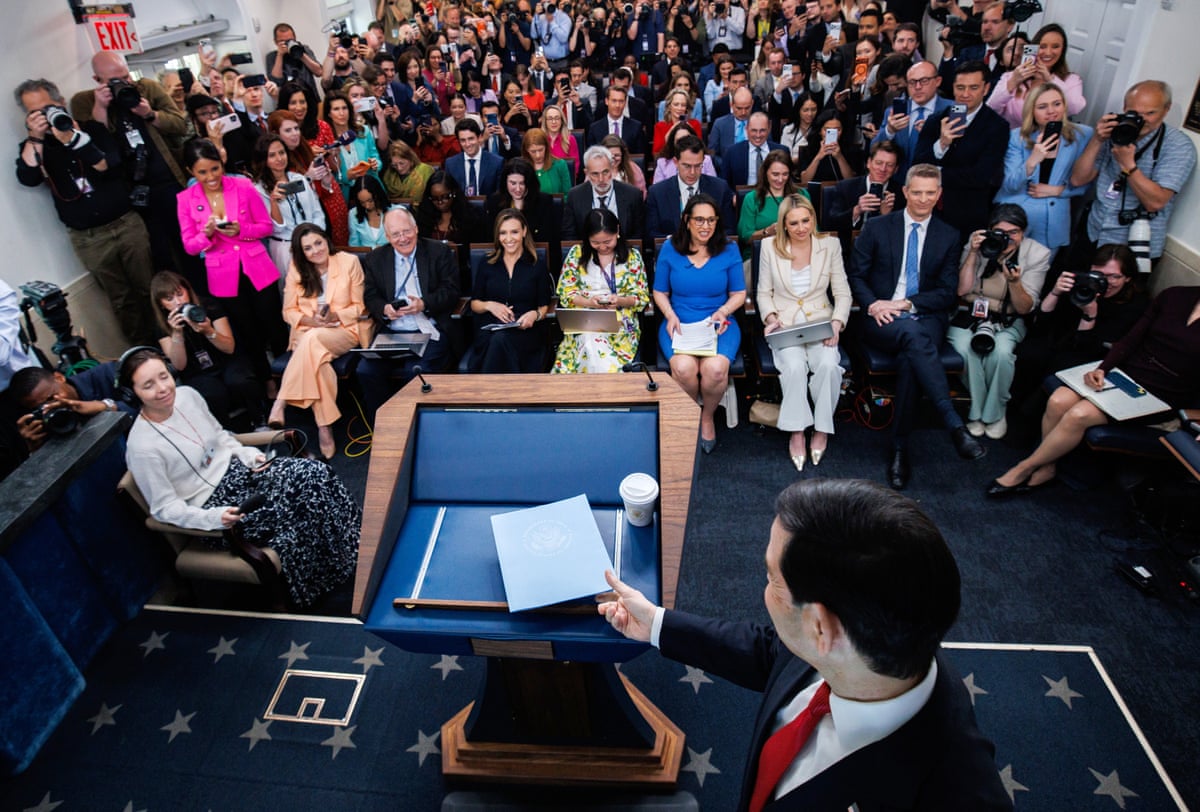
US Secretary of State Marco Rubio declared that the military objectives of the so-called “Operation Epic Fury” have been achieved and that the offensive phase of the war with Iran is
“over”.Speaking at a White House press briefing, Rubio emphasized that ongoing US military actions in the Strait of Hormuz are
“defensive”and part of a separate operation. This aligns with the Trump administration’s position that congressional approval is not required to continue military engagement against Iran. Rubio told reporters,
“There’s no shooting unless we’re shot at first,”and urged Iran to
“make the sensible choice”by negotiating a deal.
With the ceasefire’s status uncertain, Trump declined to specify what would constitute a violation, stating only that Iran understands
“what not to do”.This statement follows heightened tensions after both sides exchanged fire in the Strait of Hormuz on Monday. When asked for clarification, Trump responded,
“Well, you’ll find out because I’ll let you know. They know what to do, or what not to do more importantly.”
Prior to Trump’s announcement, Defense Secretary Pete Hegseth asserted that “Project Freedom” had enabled the US to gain control of the strait, despite Iran’s claims that it has strengthened its hold over the waterway and thousands of cargo ships remain stranded.
Rubio characterized the US operation in the Strait of Hormuz as a rescue mission, stating that Iran had left thousands of mariners
“for dead”.He added that the US was attempting to reopen the strait
“as a favour to the world”,omitting that the closure is a consequence of the war initiated by the US.
Diplomatic Engagements and Regional Developments
Iranian Foreign Minister Abbas Araghchi met with his Chinese counterpart Wang Yi in Beijing on Wednesday morning, according to the official Xinhua news agency, which did not provide further details. This marks Araghchi’s first visit to China since the conflict began. China’s significant economic and political ties with Tehran position it as a key influencer in the situation.
Meanwhile, the UK maritime authority reported that a cargo vessel was struck by an
“unknown projectile”in the critical waterway.
For the second consecutive day, the United Arab Emirates announced that its air defenses had intercepted missiles and drones originating from Iran. Tehran has not issued an immediate response. This follows the UAE’s report of intercepting 15 Iranian missiles and four drones the previous day.
Iran Foreign Minister Flies to China for Talks
Iranian Foreign Minister Abbas Araghchi held discussions with China’s top diplomat Wang Yi in Beijing on Wednesday, as reported by China’s Xinhua news agency, which did not disclose details of the talks.
Iran’s Fars news agency stated that Araghchi would
“discuss bilateral relations and regional and international developments with his Chinese counterpart”.
On Tuesday, US Secretary of State Marco Rubio expressed hope that Beijing would urge Tehran to ease its control over the Strait of Hormuz.
China typically imports over 80% of Iran’s oil, which accounts for approximately 12% of China’s overall oil supply.


