

Ukraine’s President Advocates NATO Membership Amid Ongoing Conflict
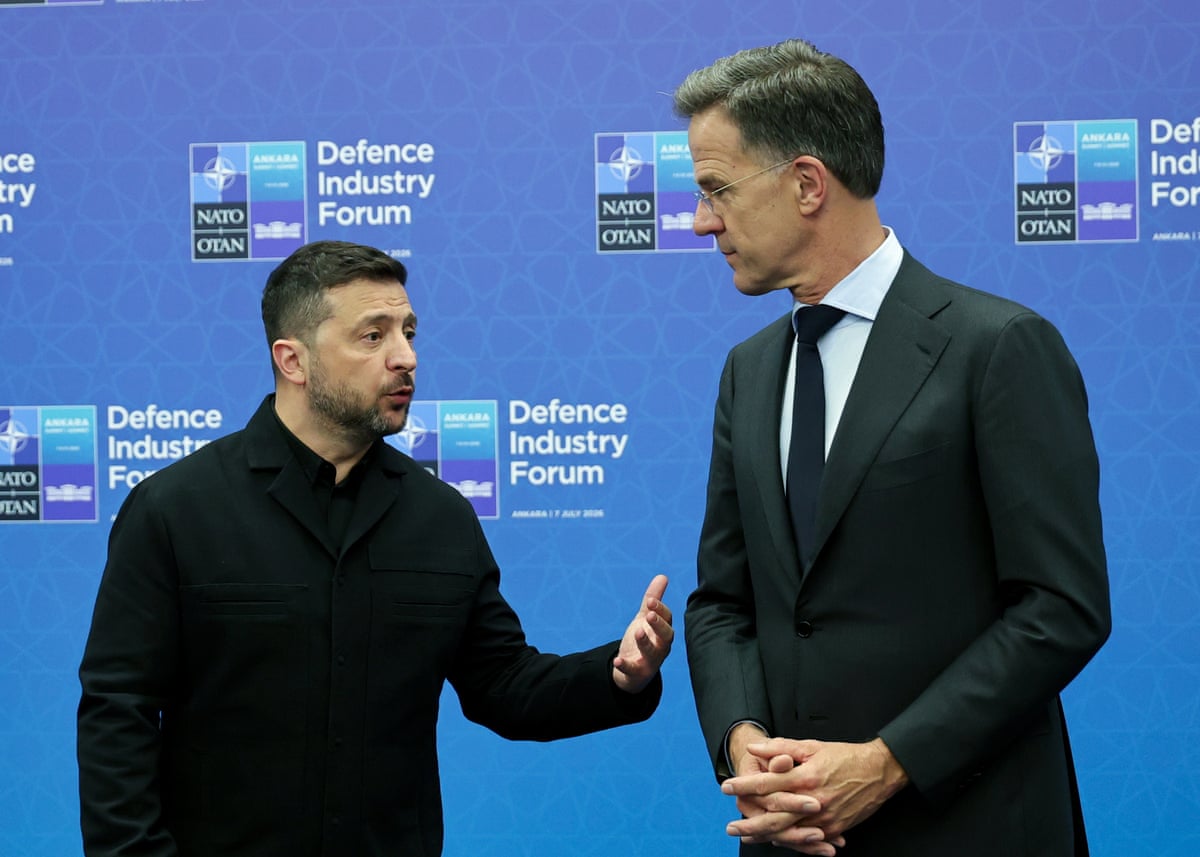
Volodymyr Zelenskyy has called for Ukraine to be granted membership in NATO during the alliance’s annual summit, emphasizing that excluding a nation that has developed substantial defensive capabilities through its prolonged conflict with Russia would be unjust.
The Ukrainian leader stated that his country has produced nearly all the necessary weaponry and now primarily requires European assistance to develop an alternative to the US Patriot missile system for ballistic missile defense.
“I have a question for you. Do you really believe it? Do you really believe it would be right to leave outside, a country and a people with this level of defensive capability?” Zelenskyy said at NATO’s defence industry forum.
“If we already have these capabilities, if Ukrainians already know how to fight like this, then it does make sense for these capabilities to become a part of the alliance’s collective defence that would make all of us stronger,” he added.
Current State of the Conflict and NATO Membership Prospects
Ukraine is now in the fifth year of resisting the invasion by its larger neighbor. The conflict has reached a stage where Russian advances have slowed significantly, and Kyiv is capable of targeting economic sites deep within Russian territory, including Siberia.
A senior NATO official reported that Russian forces advanced approximately 3.79 square kilometers per day in June, which is about one-quarter of the pace from a year earlier. The invading forces continue to endure substantial losses, estimated at 30,000 to 35,000 casualties monthly.
Despite these developments, Ukraine’s aspiration to join NATO remains distant. Some allies, including the United States, are reluctant to admit a country currently engaged in armed conflict with nuclear-armed Russia into the Western military alliance.
Diplomatic Engagements at the NATO Summit
Zelenskyy is scheduled to attend a leaders’ dinner on Tuesday evening at the Turkish presidential palace complex in Ankara and will meet with Donald Trump for a bilateral discussion on Wednesday.
Over the weekend, Trump spoke separately with both Zelenskyy and Russian President Vladimir Putin amid increasing hopes that the US president might revive mediation efforts to resolve the war. Trump remarked,
“I think they both want to make a deal. ... I think we’re going to get it settled, hopefully soon,”
as he met with Turkish President Recep Tayyip Erdoğan.

Transformation of Ukraine’s Military and Industrial Capabilities
Zelenskyy highlighted how the prolonged war has significantly enhanced Ukraine’s industrial and military capacities. He noted that on Monday, Ukrainian drones successfully penetrated Russian defenses and struck an oil refinery in Omsk, Siberia, approximately 1,680 miles (2,700 kilometers) from the Ukrainian border.
“We have completely eliminated the very idea of Russia having a strategic rear,”Zelenskyy stated during his speech at the NATO forum. He explained that Russia had long assumed its vast territory provided safe zones for military-industrial production beyond the reach of neighboring countries.
He described new Ukrainian missiles and drones as embodying “the technology of fighting at a distance,” representing “a revolutionary change” in warfare. However, he added,
“we take no pride in this,”emphasizing that these advancements were compelled by the necessity to defend Ukraine’s sovereignty, people, and children.
Ukraine has achieved an interception rate exceeding 90% against Shahed drones, Zelenskyy reported, and is enhancing its capacity to neutralize incoming cruise missiles. Nonetheless, he acknowledged that Russia’s most formidable weapon remains a significant challenge.
Challenges in Ballistic Missile Defense and Need for European Capabilities
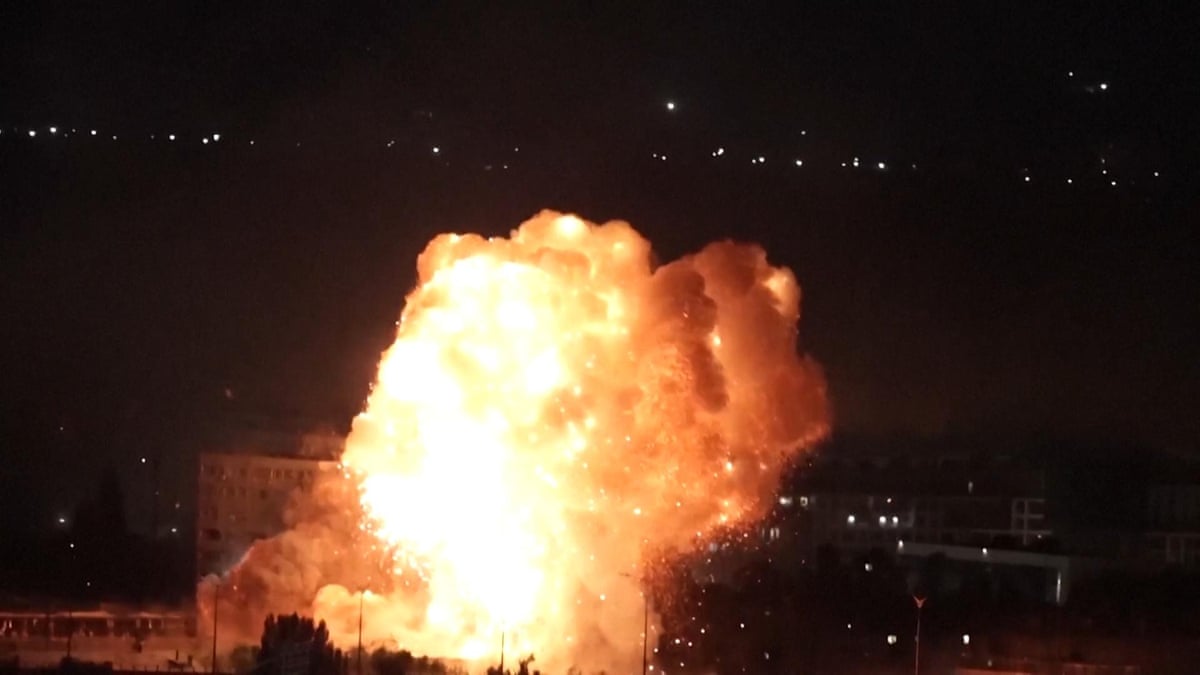
On Monday, Russia launched a ballistic missile attack against Ukraine. None of the missiles were intercepted due to a shortage of US Patriot interceptors, whose stocks have been severely depleted following the US military action against Iran in the spring, which escalated conflicts in the Middle East.
“The one thing we still need to do here in Europe is build a strong defence against Russian ballistic missiles,”Zelenskyy asserted, adding,
“I believe Europe urgently needs its own capability to produce anti-ballistic systems and the missiles they require,”citing insufficient availability of US Patriot systems.
The Center for Strategic and International Studies estimates that between 1,060 and 1,430 Patriot interceptor missiles were expended during the Iran conflict. Each interceptor requires two years to manufacture, with Lockheed Martin producing approximately 600 units annually of the advanced PAC-3 variant.
Russian Offensive and Ukrainian Countermeasures
Russia has been increasing production of missiles and drones. A senior NATO official disclosed at the summit that in May alone, Russia launched about 8,300 munitions against Ukraine, including 8,150 drones and 211 missiles. Ukraine responded by deploying 10,000 long-range drones targeting Russian territory during the same period.
The official noted that Ukraine’s deep strike campaign has disabled roughly 20% of Russia’s oil refining capacity. Furthermore, the use of medium-range drones to disrupt Russian logistics has weakened Moscow’s control over Crimea.
“We’ve all seen the reports about state of emergency being declared in Crimea,”the official added.
Arms Deals and Increased Defense Spending Among NATO Members
Zelenskyy spoke at a NATO industry event where alliance members announced arms deals exceeding $50 billion, supported by increased defense budgets agreed upon under pressure from former US President Donald Trump. A year ago, NATO members committed to raising defense spending to 3.5% of GDP by 2035.


