

US Arms Supply Strains Impact NATO Allies
Wars in Iran and Ukraine have significantly depleted US missile stockpiles, creating a gap in military resources for NATO allies in Europe. Concerns are rising that the US defence industrial base may no longer be able to provide the weapons it pledged, forcing European countries to explore alternative means to arm and defend themselves.
As the NATO summit convenes in Ankara, Turkey, the US aims to address European defence spending and concerns regarding the Trump administration’s future commitment to the alliance.
This year, the US has delayed or cancelled deliveries of critical arms shipments to countries in Europe, including Tomahawk cruise missiles, Himars mobile rocket artillery, and Patriot Advanced Capability-3 (PAC-3) missiles. The US reportedly used an estimated 50% of its PAC-3 missile stockpile through April during its conflict with Iran.
These weapons are vital for countering missile threats in Ukraine and would be essential for Europe’s defence in the event of armed conflict with Russia.
Following a Russian bombardment that injured dozens in Ukraine on Monday, President Volodymyr Zelenskyy reported that approximately 23 ballistic missiles launched in a salvo, alongside other missiles and drones, were not intercepted.
“The reason for this is precisely the insufficient supply of interceptor missiles,” Zelenskyy wrote. “It is very important that the world, especially America and our European partners, come out of the NATO summit in Ankara with strong decisions to support our defence of the sky, and hence, the protection of ordinary people’s lives.”
These shortages have caused frustration in European capitals, which have sought to avoid direct confrontation with the Trump administration to preserve transatlantic relations.
One European diplomat explained,
“There are five or six problems at once contributing to this,”citing dwindling stocks from the wars in Iran and Ukraine, the strategic shift of defence resources from Europe to Asia, and the prioritisation of interceptor replenishment for allies such as Israel.
“We know that we are not customer number one.”
The Trump administration had demanded increased European defence spending, with much of the funds directed back into purchasing American arms. However, doubts remain about whether future investments in US arms, including next-generation weapons, will be fulfilled.

Before the NATO summit, a US administration official stated,
“We’re going to have billions of dollars in announcements on the sidelines of the summit, I’m not here to preview those specifically but I think there’s a lot of really interesting co-production, building of factories, building of lines of production in Europe and the US.”
Despite these plans, diplomats warn that it will take an estimated five to ten years for Europe to develop new production lines, creating a vulnerable period before Europe can increase its own defence manufacturing while the US appears keen to reduce troop presence and other capabilities.
Approximately 20 countries are awaiting deliveries of Patriot missiles. An official has indicated that it could take 42 months for the US to replenish its own Patriot missile stockpiles, which were estimated at 2,330 before the Iran conflict, during which the US expended about half.
Phil Gordon, former national security adviser to former US Vice-President Kamala Harris, noted the competition for limited resources:
“There’s a competition when you have a finite amount of something, someone gets it and someone doesn’t.”He added that the Biden administration was also compelled to delay arms deliveries to allies due to the Ukraine war.
Regarding the NATO summit, Gordon said,
“Leaders will want to underscore why they are the most important, but they’ll also be conscious there’s not a lot they can do about it.”
On the cancellation of Tomahawk missile deliveries to Germany, he remarked,
“The US shot 1,000 Tomahawks in Iran, so like it’s not that they’re not prioritising [Germany], they don’t exist. The real conclusion from this is that Europeans are going to have to be more self-reliant and reliant on others.”
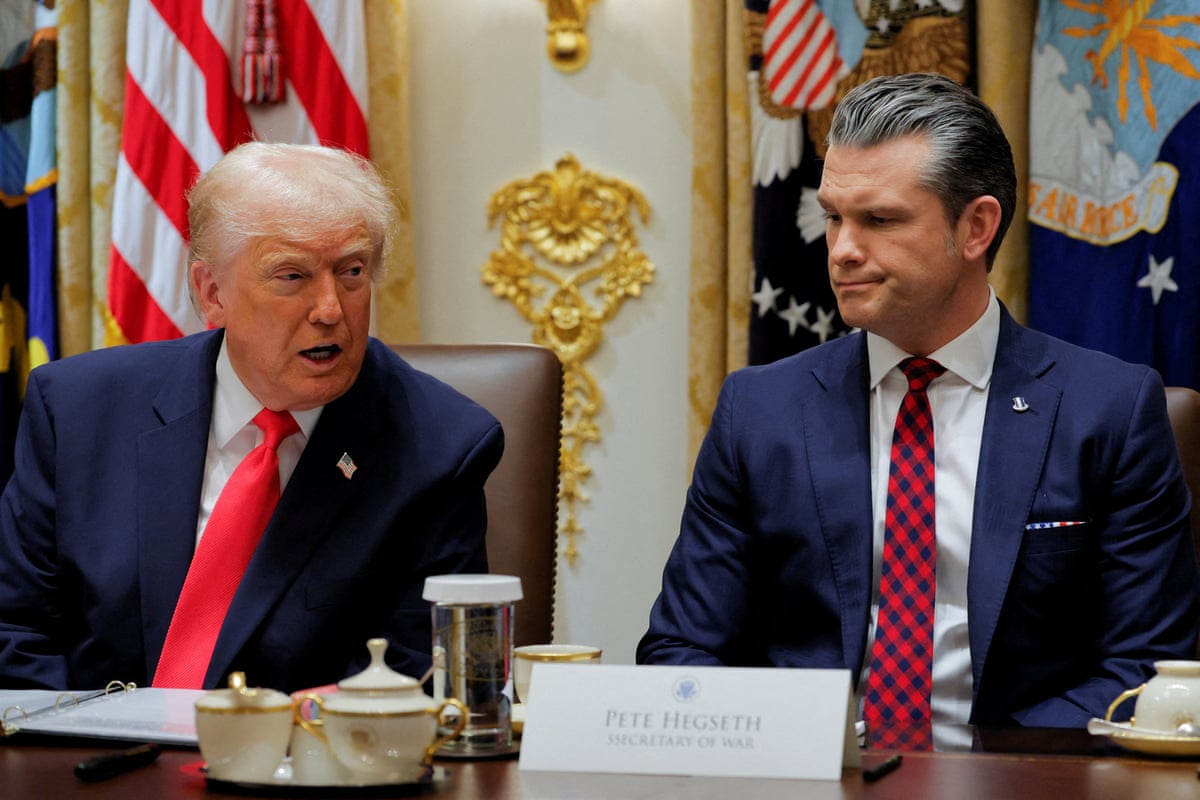
The US president, Donald Trump, left, and his secretary of defense, Pete Hegseth, have been critical of European countries’ defence budgets. Photograph: Brian Snyder/


