

China's Largest Political Gathering Concludes
The National People's Congress (NPC), China's most significant political assembly, has recently concluded. The NPC holds broad powers including legislating, amending the constitution, and approving state budgets. However, it primarily functions as a rubber-stamp body, endorsing decisions made by the senior leadership of the Chinese Communist Party behind closed doors.
Despite this, the annual sessions of the NPC alongside the Chinese People's Political Consultative Conference (CPPCC), collectively known as the "two sessions," attract close attention as they indicate the priorities of the world's second-largest economy.
Our correspondents share their key observations from this year's meetings.
China Aims to Project Stability
By Laura Bicker, China correspondent
China's ambition to become the leading global superpower largely hinges on President Xi Jinping's capacity to manage the nation's economy effectively.
In pursuit of this goal, Xi appears to be seeking greater certainty amid a volatile global environment marked by an unpredictable US presidency and ongoing conflict in the Middle East.
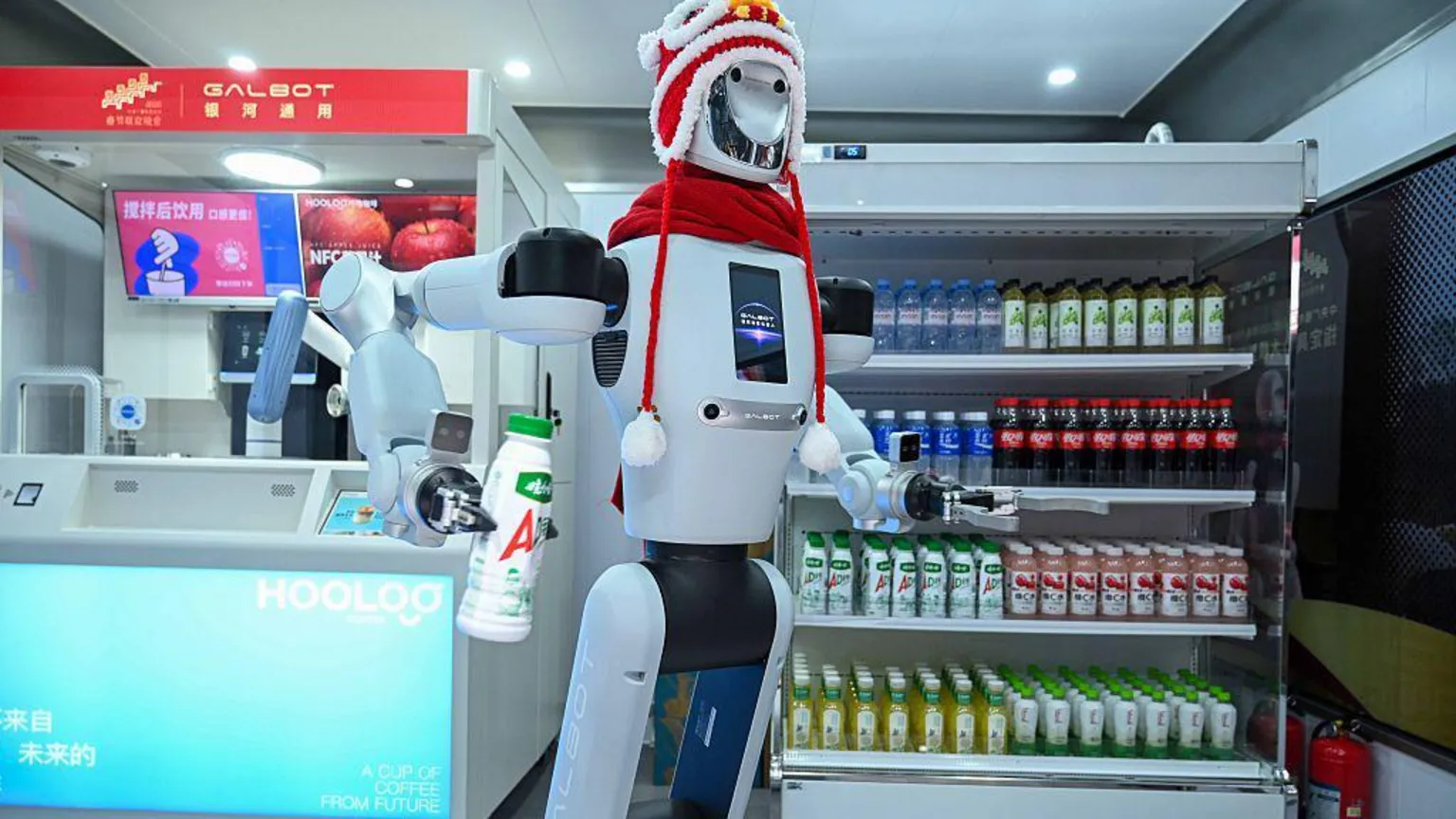
His economic policies focus on encouraging increased domestic consumption to stabilize a faltering economy. Concurrently, his drive for technological leadership aims to secure China's future by attracting global demand for advanced factory robots and artificial intelligence (AI) technologies.
Additionally, China's continued expansion in renewable energy production is designed to enhance self-sufficiency, reducing reliance on imported oil and gas from countries including Iran.
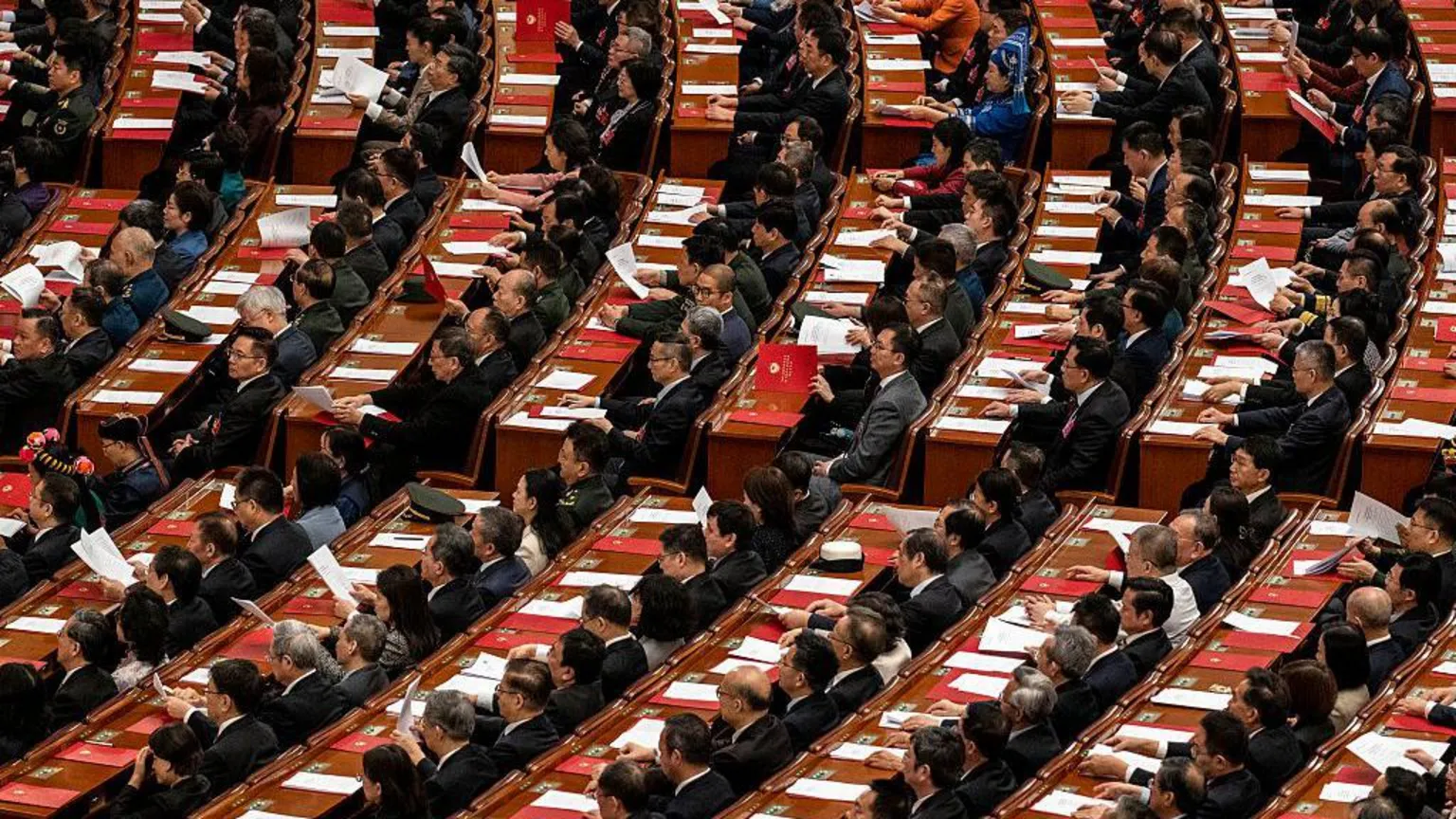
The orchestrated nature of the NPC event—from the precise performance of the band to the disciplined behavior of delegates who attentively listen and turn pages in unison—reflects a carefully controlled political environment.
The quiet, tightly managed proceedings within the Great Hall of the People contrast sharply with the dynamic and often unpredictable actions emanating from the White House, which have unsettled allies and markets through strikes on Iran.
The Chinese Communist Party seeks to present itself as a symbol of stability, committed to economic recovery and future planning.
Xi likely views China as well-positioned after successfully countering US tariffs in a trade war that ended in a truce. China's trade dominance is also drawing back previously cautious partners such as the UK and Canada.
With the geopolitical landscape shifting, Xi may perceive an opportunity for China to ascend while his counterpart in Washington faces distractions.
Nevertheless, he is aware that much depends on how China manages its economic challenges in the coming years.
Technology as the Cornerstone of China's Future
By Suranjana Tewari, Asia Business correspondent
Beijing is making significant investments in technology and innovation to propel China's next stage of economic growth.
The 15th Five-Year Plan outlines a strategy to accelerate scientific breakthroughs and integrate AI across various sectors of the economy. Technology has evolved from an economic priority to a strategic imperative amid escalating tensions with the United States.
Research and development expenditure on technology is projected to increase by approximately 7%. The government has introduced an "AI+" initiative to embed artificial intelligence into manufacturing, logistics, healthcare, and education.
China is also heavily investing in semiconductors, robotics, biotechnology, quantum computing, and emerging technologies such as 6G communications and brain-computer interfaces.

Historically, China's economic growth was driven by property and infrastructure development. However, policymakers are now shifting focus toward technological advancement and industrial upgrading. The government has set a GDP growth target of 4.5 to 5%, the lowest since 1991, indicating expectations of slower expansion.
Analysts caution that the plan may face challenges unless household consumption increases. Consumer demand in China remains low relative to other major economies, and the property market downturn has diminished wealth and confidence.
To address this, the government intends to expand childcare and eldercare services and enforce paid leave policies, aiming to alleviate financial burdens and stimulate spending.
Leaders have also indicated a readiness to increase borrowing to finance infrastructure, social welfare, and industrial projects, marking a shift from previous caution regarding rising debt levels.
However, risks persist. State-backed investments have drawn criticism, with concerns about overcapacity in sectors like electric vehicles. These developments have also sparked domestic price wars and heightened trade tensions internationally.
Experts warn that technology alone may not achieve the high-quality growth Beijing desires if consumer spending remains subdued.
For now, Beijing appears confident that AI, emerging industries, and innovation will drive the economy's next phase.
Ultimately, success may depend on whether ordinary Chinese households feel secure enough to increase their spending.
China Announces Plans to Boost Spending, Details Remain Limited
By Stephen McDonell, China correspondent
Economists have long urged China to enhance the overall health and sustainability of its economy by increasing domestic consumption and reducing dependence on exports of manufactured goods.
Therefore, the NPC leaders' pledge to "vigorously stimulate consumer demand" is likely to be welcomed.
However, many analysts question whether the proposed measures will be sufficient to effect meaningful change.
Chinese consumers traditionally prefer saving over spending, and current factors such as declining home values and high youth unemployment have further dampened their willingness to spend.
One potential approach to encourage consumption is to increase incomes. NPC spokesman Lou Qinjian mentioned plans to implement such measures in the future but did not provide specifics.
One concrete announcement was an increase in government spending on childcare, which could provide families with more disposable income, potentially enabling them to purchase necessary household goods.
Minimum retirement benefits for rural and non-working urban residents were raised by approximately $3 (£2.24) per month, a change that has been widely mocked on Chinese social media as negligible.
Other announced initiatives, such as enhanced housing support for first-time married couples, refined parental leave policies, and continued trade-in programs for replacing old household appliances, lacked detailed information.
Officials might argue that the NPC's role is to set the overall policy direction, with specific household budget support measures to follow.
Nonetheless, without detailed plans, it remains uncertain whether these proposals will significantly boost consumption.


