

Japan Votes in Snap Election
Millions of voters in Japan are participating in a snap election called by Prime Minister Sanae Takaichi, whose coalition is forecasted to secure a decisive victory.
Only months after her election by lawmakers, Takaichi opted to seek a public mandate through this election.
Current polls indicate that the Liberal Democratic Party (LDP), in coalition with the populist Japanese Innovation Party, could win up to 300 of the 465 seats in the Lower House. This would represent a significant recovery for the LDP, which lost control of both chambers of Japan's parliament last year.
The conservative leader has attracted some voters by proposing tax cuts and subsidies, although critics argue these measures could negatively impact Japan's sluggish economy.
As of a week ago, nearly 4.6 million people had cast early ballots, a 2.5% decrease from the previous 2024 election. This decline has been attributed to heavy snowfall in northern and western regions.
Observers suggest that Takaichi's personal popularity may enhance the LDP's performance in this election.
Takaichi's Political Profile and Popularity
An admirer of former UK Prime Minister Margaret Thatcher, Takaichi has long aspired to be Japan's "Iron Lady." She is a known ally of the late former Prime Minister Shinzo Abe and supports similar policies, including strong defense and nationalist positions.
Despite her traditional views on gender and family, Takaichi has gained notable popularity among young voters aged 18 to 30, according to polls. Approval ratings for her government have generally remained above 70% since she assumed office in October.
She has developed a substantial social media presence, with 2.6 million followers on X. The LDP's campaign video featuring her was streamed over 100 million times within less than ten days.
The 64-year-old has also become an unexpected fashion icon, with "sanakatsu"—a term roughly translating to "Sanae-mania"—gaining traction. The black leather tote bag she frequently carries has sold out, and the pink pen she used during her first press conference has gone viral.

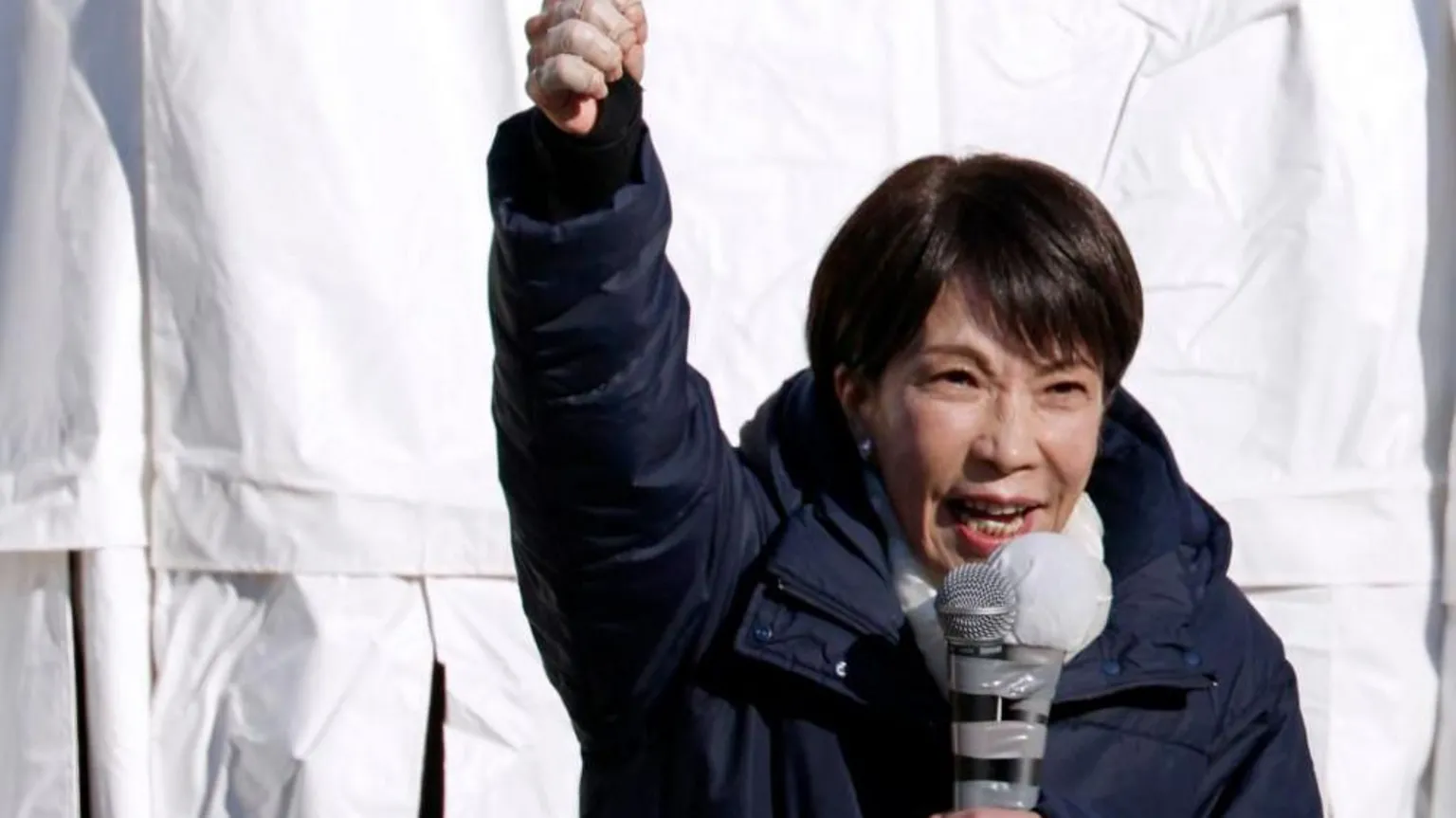
Yuiko Fujita, a sociologist at Tokyo University, contextualizes this enthusiasm within Japan's traditionally male-dominated political landscape.
"The fact that the prime minister is now a woman, someone with a different background from what people are accustomed to, creates a feeling that something is shifting," she told Nikkei Asia.
However, some experts question whether her popularity will translate into votes.
"This is not a presidential election but a parliamentary election, in which the LDP's candidates are mostly men tainted by past scandals," said Koichi Nakano, a political science professor at Sophia University, in an interview with the BBC.
Challenges Facing the LDP
Since 2023, the LDP has been embroiled in a fundraising scandal that resulted in the resignation of four cabinet ministers and a corruption investigation.
The snap election represents a gamble for Takaichi, as her party confronts a more unified opposition. The LDP's former long-term coalition partner, Komeito, has allied with the Constitutional Democratic Party of Japan to form the largest opposition bloc in the Lower House.
Another significant challenge for the LDP is convincing voters that its spending-heavy policies will not worsen Japan's financial fragility.
While the government's policy package may provide short-term relief to households, it does not address fundamental issues such as weak productivity and stagnant real wages, according to Masahiko Takeda, a senior fellow specializing in Asia at the Australian National University.
"The government's policy package may offer households short-term relief, but 'fails to address the underlying problems of weak productivity and stagnant real wages'," Takeda wrote in an article this week.
Furthermore, Takaichi has encountered difficulties in foreign and security policy, particularly due to tensions with China.
She angered Beijing, Japan's largest trading partner, late last year by suggesting that Japan could respond with its own self-defense force if China attacked Taiwan. This statement has contributed to the lowest point in the historically tense relationship between the two countries in over a decade.
Meanwhile, Takaichi has pursued closer ties with US President Donald Trump as Tokyo seeks greater stability in its relationship with Washington, its closest ally.
On Friday, Trump endorsed Takaichi in an unusual move for a US leader.


