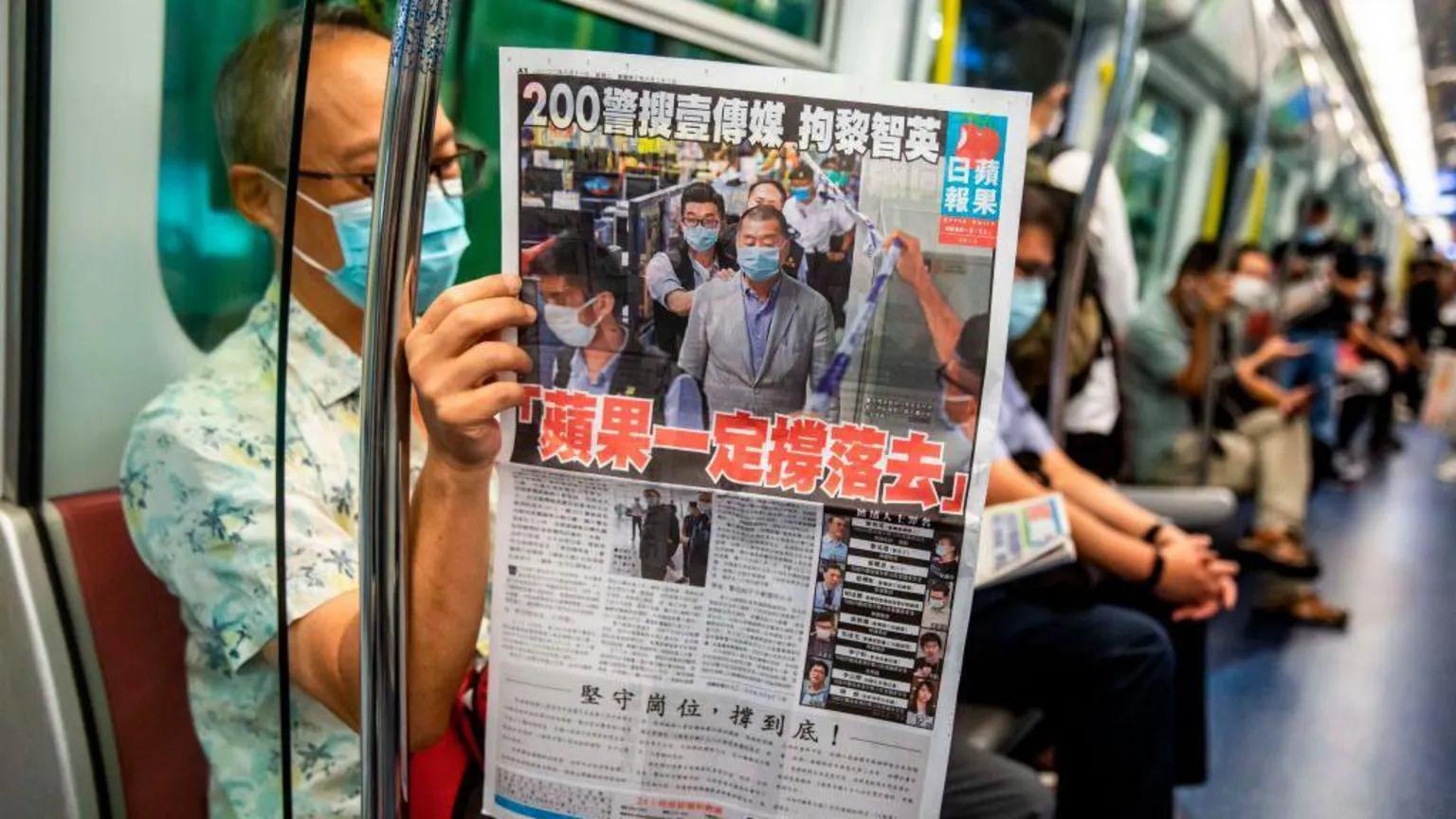
Jimmy Lai Sentenced to 20 Years for Collusion Under National Security Law
Jimmy Lai, a prominent pro-democracy media tycoon in Hong Kong, has been sentenced to 20 years in prison for colluding with foreign forces, under the city's national security law. The law, which has been widely criticized, was imposed by China following large-scale protests in 2019 demanding greater freedoms.
Human rights organizations have described the sentence as a death sentence for the 78-year-old, whose family has expressed concerns regarding his health. Conversely, Hong Kong's leader described the ruling as "deeply gratifying".
This sentence represents the most severe punishment handed down under the national security law to date. The law is defended by Chinese authorities as crucial for maintaining stability in Hong Kong.
Lai, who holds British citizenship, is the most high-profile individual among hundreds arrested under the legislation. Known for his vocal criticism of China, he used his newspaper, Apple Daily, as a platform for protest.
"It is incredibly heartbreaking,"Lai's son, Sebastien, told the BBC's Today programme. He added that he has repeatedly raised his father's imprisonment with the UK government but that "obviously my father is still in prison".
Sebastien Lai and others have criticized UK Prime Minister Keir Starmer's recent visit to China as a missed opportunity.
"The sentence signifies the total destruction of the Hong Kong legal system and the end of justice,"Sebastien said.
Hong Kong authorities and China's foreign ministry maintain that the sentencing demonstrates the city's adherence to the rule of law. The judges condemned Lai's actions as "serious and grave criminal conduct" and stated his involvement in conspiracies was among the "most serious" category.
On the morning of the sentencing, a significant police presence was observed around the court. Despite this, many of Lai's supporters gathered, some having camped outside for days in hopes of attending the hearing.
"I just wish to greet Mr Lai in person in court... That's all I ask for, because I think it will be the last time I see him,"said one supporter who had been standing in line since Thursday night.
Inside the courtroom, Lai, dressed in a white jacket and black glasses, smiled at his family and supporters. He nodded calmly as his sentence was announced. Some members of the public were heard sobbing, and his wife Teresa held back tears as she left the court.
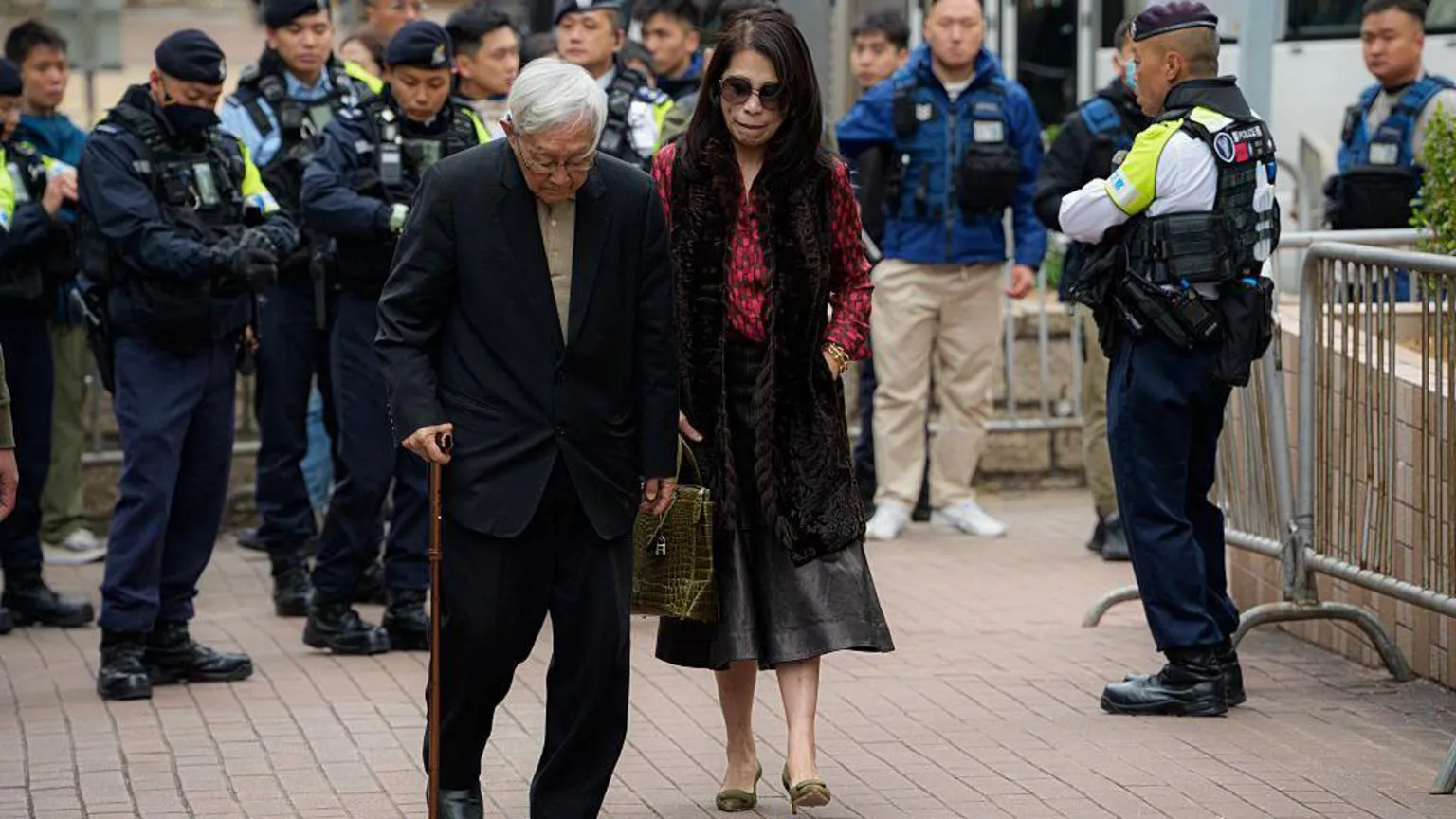
Lai has previously been convicted of fraud and unauthorized assemblies in an earlier case and has been incarcerated for more than five years.
On the same day, six former Apple Daily executives and two activists were also sentenced under the national security law, receiving prison terms ranging from six years and three months to ten years.
Lai has consistently denied the charges, asserting that he was advocating for Hong Kong's values such as the rule of law and free speech.

The case centers on a meeting Lai held with then US Vice-President Mike Pence and Secretary of State Mike Pompeo during the peak of the 2019 protests, where they discussed Hong Kong's situation.
During his testimony in November, Lai stated he had "never" used his foreign contacts to influence foreign policy on Hong Kong and was "just relaying" information about the situation.
Rights groups have condemned the sentence as "draconian" and "egregious".
"Today's egregious decision is the final nail in the coffin for freedom of the press in Hong Kong,"said Jodie Ginsberg of the Committee to Protect Journalists.
She urged the international community to "step up its pressure" to secure Lai's release, emphasizing the importance of press freedom globally.
"Lai's case shows the Chinese government's determination to crush independent journalism and silence anyone who dares to criticise the Communist Party,"said Elaine Pearson, Asia director at Human Rights Watch.
Caoilfhionn Gallagher KC, who leads Lai's international legal team but was barred from defending him in court, also called on the international community to pressure China.
"Now that this sham trial is finally over, we call on leaders from around the world to speak with one voice in their demand for China to free Jimmy Lai so he can come home to his family in London at last,"she told the BBC.
Several countries, including the UK, Australia, the European Union, and Japan, have expressed concern over the sentencing. Additionally, United Nations human rights chief Volker Turk called for Lai's release, citing his age and health issues.
China's foreign ministry spokesperson dismissed the criticism, stating that "the relevant judicial cases are purely internal affairs" of Hong Kong.
"The central government firmly supports the HKSAR government in maintaining national security and punishing criminal acts which endanger it,"the spokesperson added.
In his last interview as a free man in 2020, Lai told the BBC,
"I got everything I have because of [Hong Kong]."
"If this is payback time, this is my redemption,"he said, while out on bail.
Born in Guangzhou, China, Lai arrived in Hong Kong at age 12 as a stowaway on a fishing boat. He began working menial jobs and eventually built a multi-million dollar business empire, including the clothing brand Giordano.
Lai became a vocal democracy activist following China's crackdown on pro-democracy protesters in Beijing's Tiananmen Square in 1989.
He founded pro-democracy publications such as Apple Daily and Next magazine and regularly participated in demonstrations.