

Monday's Deadly Air Strike in Kabul
Monday's air strike on Kabul resulted in the highest number of casualties since hostilities resumed in February. Within hours of explosions echoing across the capital, both sides engaged in a war of words on social media as people sought explanations.
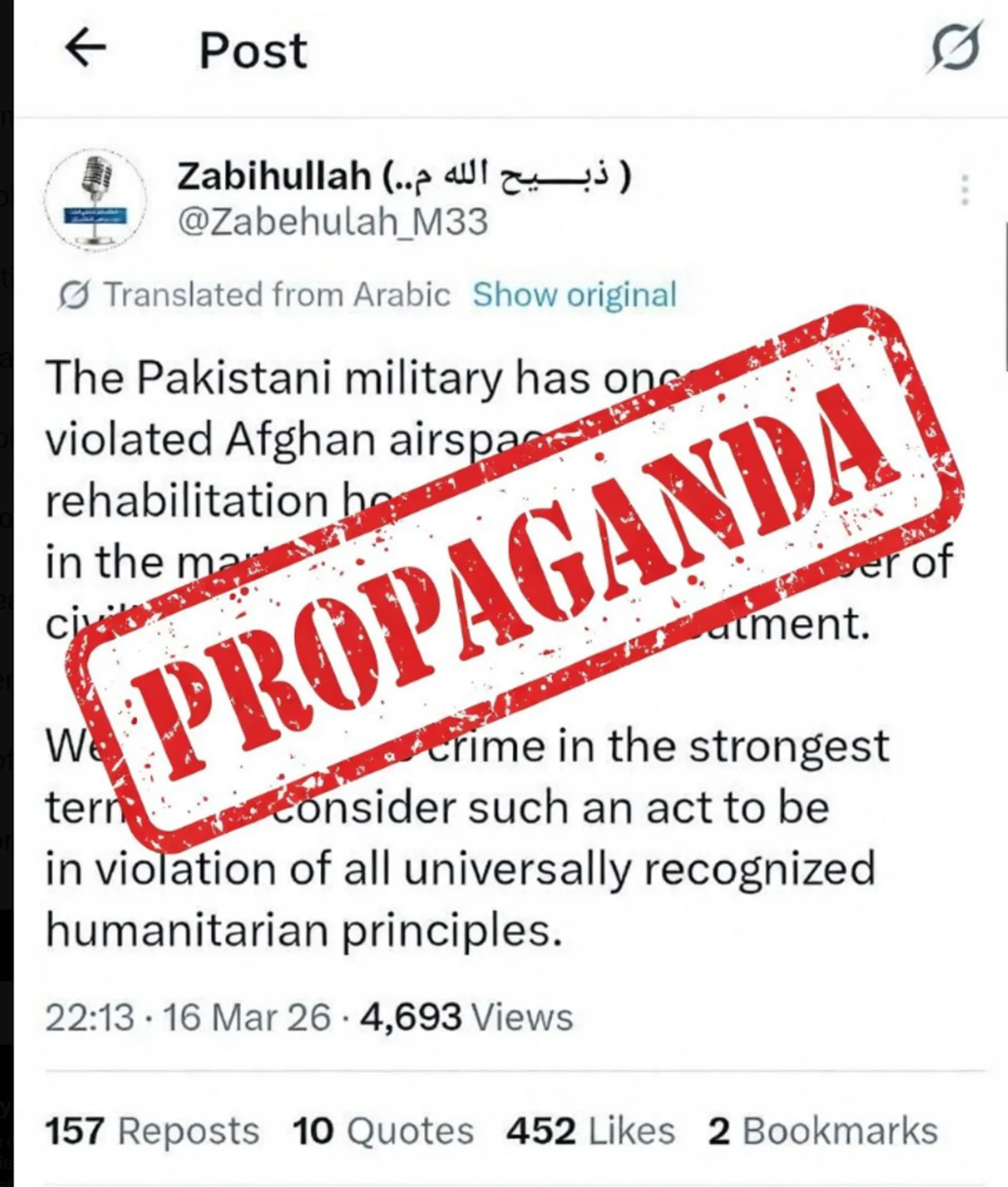
"The Pakistani military regime has once again violated Afghanistan's airspace and targeted a drug rehabilitation hospital in Kabul, resulting in the death and injury of addicts who were undergoing treatment,"posted Zabihullah Mujahid, the Taliban government's spokesperson, who added he considers such an act to be "a crime against humanity".
"On night 16 March, Pakistan precisely targeted military installations and terrorist support infrastructure including technical equipment storage and ammunition storage of Afghan Taliban and Fitna al-Khawarij (Pakistan's term used to refer to the Pakistani Taliban) in Kabul and Nangarhar that were being used against innocent Pakistani civilians,"the Pakistan Ministry of Information stated on an account called "Fact Checker MOIB", stamping "propaganda" across a picture of the Taliban spokesman's post.
"Post strike detonation of stored ammunition being used by Master Terror Proxy also fully contradicts the fake claim."
By the following morning, Afghan Taliban officials claimed the death toll from the strike exceeded 400. The BBC could not independently verify this figure but was informed by sources that more than 100 had died. The United Nations Assistance Mission to Afghanistan later confirmed 143 deaths and 119 injuries at the centre, cautioning that the numbers could rise as verification continues.
Despite media and UN reports indicating that a drug rehabilitation facility was affected, Pakistan's military has not acknowledged civilian casualties. Instead, its military spokesman issued further accusations.
"The truth is they round up drug addicts and use them as suicide bombers,"said Lt Gen Ahmed Sharif Chaudhry, Pakistan's military spokesman, in an interview days after the strike.
"If they had addicts there it was likely a training facility for bombers."
He did not provide evidence to support this claim. The BBC previously reported from the rehabilitation centre, which has operated from the former military site for a decade, speaking to addicts receiving care and treatment there in 2023.
The events of the week illustrate how the conflict has unfolded. Neither side is restraining itself militarily – with air strikes from Pakistan and drone attacks from the Taliban government – nor in their rhetoric.
These social media posts and headlines reveal how both sides perceive the conflict; former allies turned adversaries, now entrenched with little room for reconciliation.
Why Are They Fighting?
Both parties blame each other for initiating the conflict.
Pakistan frames the conflict as a fight against terrorism. Militant attacks inside Pakistan have claimed an increasing number of lives; 2025 was the most violent year in a decade for militancy, according to Islamabad-based think-tank the Centre for Research and Security Studies. Pakistan has long accused the Taliban government of harbouring militant groups within its borders that carry out attacks on Pakistan and has accused India of supporting militancy there.
Both India and the Taliban government strongly deny these allegations, stating that the militant attacks Pakistan has experienced are internal matters for Pakistan.
This denial has further angered many in Pakistan's authorities. Often within hours of an attack, Pakistan ministers link it to Afghanistan, provoking strong rebuttals from the Taliban government. After years of diplomatic efforts, Pakistan now asserts there is nothing left to discuss.
"Pakistan does not have a militancy problem,"said Mosharraf Zaidi, spokesman for Pakistan's prime minister.
"Pakistan does have an Afghan-Taliban regime problem. And Pakistan does have an India hegemony problem. We are going to solve each problem."

He emphasized there is no apology forthcoming for Pakistan's actions.
"I think that the era where you would find Pakistani analysts or Pakistani government representatives coming onto television and apologising for defending the people of Pakistan... that era is over. I think that the Western press in particular will need to get used to an assertive and crystal clear, transparent Pakistan."
When tensions escalated into violent clashes on the border and strikes on Kabul and Kandahar in October, Pakistan's military did not openly claim responsibility for air strikes.
That stance has changed. Pakistan's information minister now posts videos of strikes on social media.
The Taliban government maintains that the Pakistan Taliban is a problem created by Pakistan. They frame their actions as defending their sovereignty and responding to Pakistan's provocations.
They have previously suggested that Pakistan is coordinating with other powers, including the US, to undermine their control of the country.
"Certain military circles in Pakistan in cooperation with and at the request of major powers are trying to destabilise Afghanistan,"Mujahid said in a January interview streamed on YouTube.
Pakistan has repeatedly rejected these accusations, stating that their actions aim to make the Pakistani people safer by combating terrorism.
If attacks continue, Taliban officials have warned that Pakistan will face reciprocal actions.
"They should not think they can martyr people in Kabul, destroy the city and disturb its security while remaining safe in Islamabad,"Mullah Yaqoob, the Taliban's defence minister, told Tolo News earlier this month before Monday's attack.
"Islamabad will be targeted just as they target Kabul."
Three days before Monday's strike, Taliban defence forces claimed to have launched drones into Pakistan's capital; Pakistan said it intercepted them, calling the drones "rudimentary". Pakistan's president stated this crossed a red line.
Following Monday's strike, Zabihullah Mujahid declared there would be a "severe response". During Eid prayers, Taliban Leader Hibatullah Akhundzada did not mention Pakistan by name, but his remarks were clearly directed at the situation.
"If someone bombs us or fires rockets at us let them fire rockets, let them bomb, let them do whatever they want, by God nothing will change in us,"he said.
"They cannot destroy us with rockets and aircraft bombs."
Both parties have announced a pause in operations over Eid al-Fitr, encouraged by Saudi Arabia, Qatar, and Turkey. Mediators hope this pause will provide an opportunity to find common ground and establish a longer-lasting ceasefire, despite early accusations and denials of violations.
However, as both sides solidify their positions, testing limits with increasingly aggressive statements and attacks, the space for dialogue is diminishing.
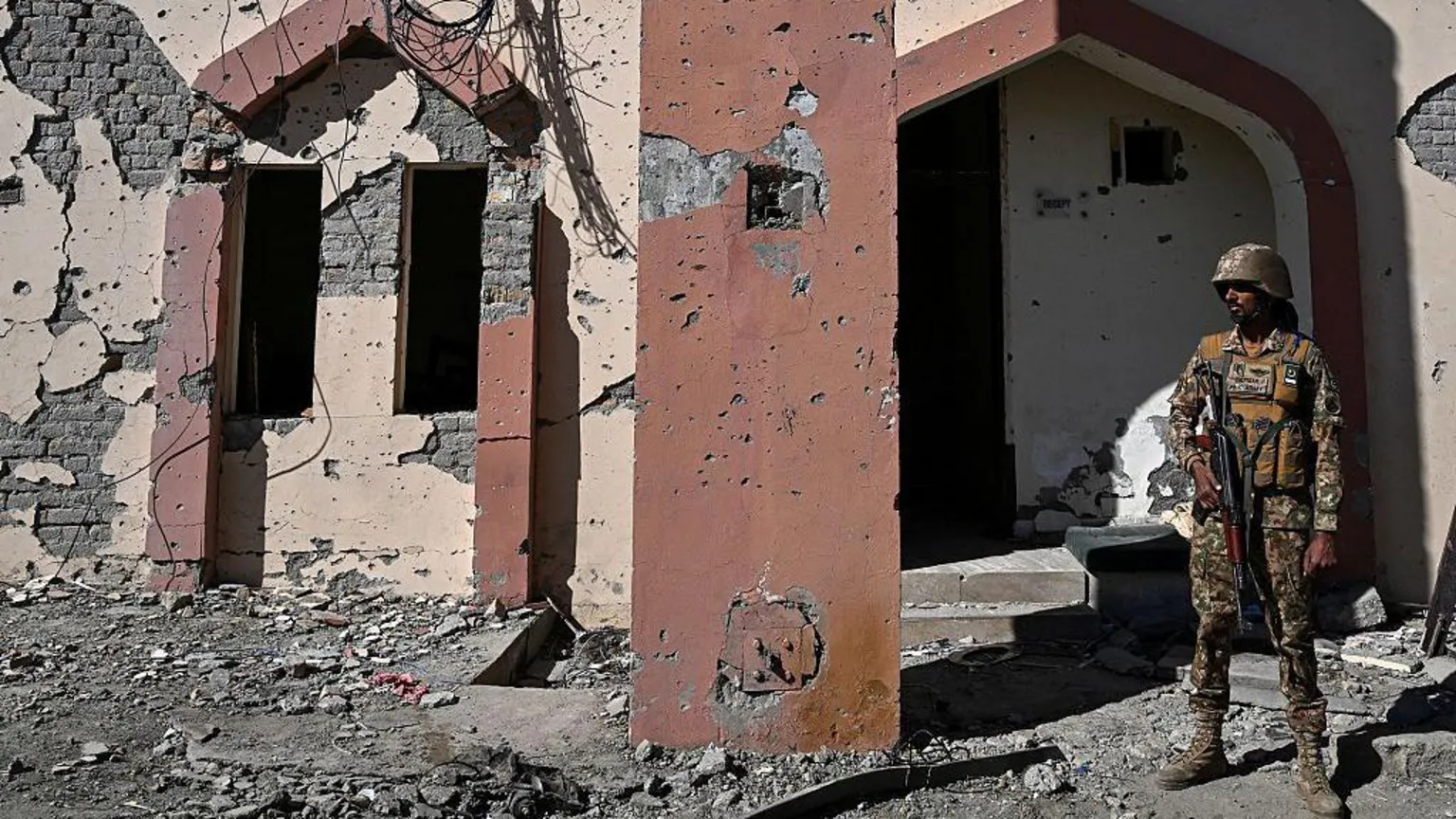
Pakistan blamed Afghan citizens for a suicide bombing targeting a military-linked school near the border, which left three people dead.


