

Living with Incontinence Years After Birth Injury
Seventeen years after the birth of her daughter, Geeta Nayar continues to experience bowel incontinence.
She sustained a third-degree tear during a forceps delivery and experienced her first episode of incontinence shortly thereafter, yet was discharged home without any support.
Geeta described how she stopped leaving her home, lost her career, and endured feelings of "shame".
Rhi, 49, who experiences similar symptoms, has kept her condition hidden from her children, fearing her son might feel responsible for the injury she sustained during his birth.
Bowel or anal incontinence, defined as the inability to control bowel movements, affects 20% of women and is most commonly caused by birth injuries, according to the British Journal of General Practice.
Both Geeta and Rhi have expressed support for new research in Wales that engages with marginalized communities to raise awareness of birth injuries and identify barriers to seeking help.
Geeta’s Experience and Challenges
Geeta anticipated that having her first child would be life-changing, but the 47-year-old revealed at a recent women’s health event in Cardiff that the severity of her injuries left her "in complete shock - physically and psychologically" after delivery.
At that time, she was unaware that factors such as her heritage and height increased her risk of obstetric anal sphincter injury (OASI).
"I suffered my first episode of total bowel incontinence the very next day, but I was discharged without any follow-up or support,"said Geeta, who lives in London.
"From then 'til now I live with pain and incontinence and that's something that's really not talked about widely - with women generally, and certainly within certain communities."
She explained that in the years following her injury, she became largely housebound to avoid the fear and shame associated with bowel incontinence.
"I stopped going out, didn't see my friends and really the saddest part was at that point I lost my career that I'd worked for nearly a decade to achieve - and that's despite having a really supportive family around me."
Rhi’s Story of Incontinence and PTSD
Rhi, from Cardiff, who blogs anonymously about her experiences, described how the difficult birth of her son 17 years ago resulted in incontinence due to an anal sphincter injury and post-traumatic stress disorder (PTSD).
"I still see that moment most days,"she said.
"I don't have the same emotional reaction to it any more, but I will never have a nice memory of his birth, and that's a horrible thing to say - and partly why I don't want to tell him the whole story."
Within 24 hours of her son’s birth, Rhi experienced bowel incontinence, and her mental health deteriorated, leading to care from the community mental health team.
When referred to a gynaecologist, she was told there was no physical issue and that her symptoms were related to her mental illness.
"And so I walked away thinking: this is my new normal,"she said.
Rhi contrasted the idealized social media images of perfect family outings with her reality, where every trip was planned around toilet availability.
"Probably 75% of them would end up in me having to get changed somewhere.
At most I had 30 seconds 'hold time' before a poo. When you're in town with your family and you need the toilet - time those 30 seconds and see where you get.
That's the reality that a lot of women with anal sphincter tears are living with."
It was only after the birth of her second child, three years later, that a colorectal surgeon diagnosed an anal sphincter tear.
Five years ago, Rhi underwent a procedure to implant a sacral nerve stimulation system, which stimulates the nerves controlling the bowel via a device under the skin.
"I went from having accidents pretty much every day, through urgency, to only once a month. It's not a miracle cure, but it's very good management."
The improvement in her condition was noticed by her young son, who remarked,
"Your eyes smile now and they didn't smile before."
Rhi shares her experiences on a blog titled "A Mum from the 'Diff" and volunteers with the Masic Foundation support group in South Wales.
She acknowledged the embarrassment surrounding discussions about such intimate health issues.
"If it was a barrier for me, I can't imagine what kind of barrier it is to other women who may have a very different cultural background or don't speak English as a first language,"she said.
Advances in Care and Research
Several maternity units across Wales and England have introduced OASI care bundles, which include conversations with pregnant women about reducing injury risk and improved examinations after vaginal birth.
Meena Ali, consultant urogynaecologist at Cardiff and Vale health board, noted that staff are now more aware and better trained to identify such issues.
"After repair we refer them to physiotherapy colleagues, who help them from the beginning - to do the exercises, teach them to avoid certain things like constipation and how to use their pelvic muscles."
Health and Care Research Wales has funded a project called Pelvic Power Partnership, which works with marginalized communities in Wales to improve access to support.
Nicky Edwards, clinical nurse specialist in pelvic health and the functional bowel service at Cardiff and Vale health board, observed that the service predominantly sees white women, suggesting others may be suffering in silence.
"It's about giving different communities a voice,"she said.
"We always adapt services to make it better for patients, but we only measure what we see in the service.
So if there's a certain demographic that aren't coming to the service, we can't make it better for them - it's only driving inequality.
We want to know why these women don't engage with the service and how can we overcome these barriers."
Geeta’s Advocacy and Call for Awareness
Eight years after her daughter’s birth, Geeta began sharing her experiences as an ambassador for the Masic Foundation.
"It was very difficult because there's taboo and stigma around bowel incontinence, but it was also empowering knowing I was contributing to making a difference for other women,"she said.
"Peer support was so important - it was the first time I'd met other women with these injuries."
Geeta returned to patient advocacy work at a law firm a few years ago and is now organizing the second South Asian Maternal Health Conference.
"My injuries were 17 years ago and I think we have slowly started to break down that taboo and stigma, but we do need to do a lot more.
We need to be educating the next generation about their pelvic health.
And to anybody experiencing any kind of incontinence, you do not need to suffer in silence - please go and see your GP and try and get a referral to a pelvic health specialist physiotherapist."
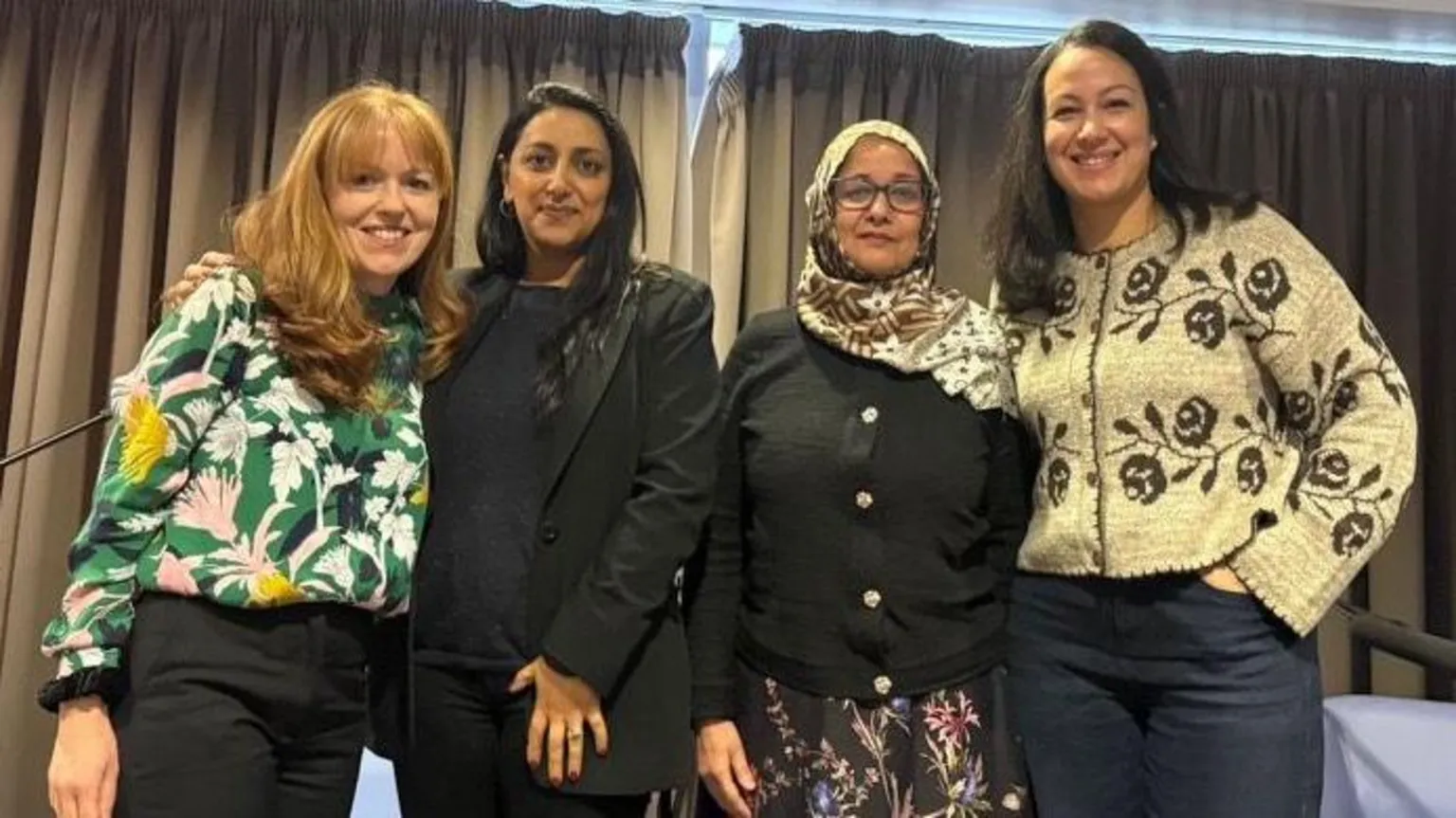

You can listen to Women's Health Explained, BBC Wales' panel discussions on women's health, recorded earlier this year, on .


