

Monitoring Asian Hornet Survival in Northern Ireland
Northern Ireland currently holds the distinction of being the most northerly location where the Asian hornet has been discovered to date.
Following the discovery of a nest in County Down last year, efforts are ongoing to prevent this invasive species from establishing itself in the region.
Instead of immediately attempting to kill or repel the insects, the Northern Ireland Environment Agency (NIEA) is encouraging the public to report any potential sightings through the Asian Hornet Watch app.
To aid in monitoring, 34 traps have been installed within a three-mile (5km) radius of the original nest site, and informational leaflets have been distributed to 20,000 local households detailing how to identify the Asian hornet.

Rose Muir, lead of the NIEA's Invasive Species Team, emphasized that monitoring will continue over the next three months regardless of the trap findings.
A Threat That Is Expanding
The Asian hornet represents a significant threat to pollinators, which are essential to global food systems.
It is believed that the species was introduced to Europe unintentionally, arriving in a shipment of pottery from China to France in 2004.
The first nest identified in the UK was in 2016, followed by the first on the island of Ireland in County Cork last summer. The nest found in Dundonald, Northern Ireland, was discovered shortly thereafter.
Climate change is facilitating the species’ ability to establish populations further north than previously possible as global temperatures rise.
Muir stated that the discovery of the Asian hornet in Northern Ireland "changed everything."
"We had written the rapid response contingency plan, hoping that we'd never need it. We knew things were advancing in GB - they had a lot of nests last year and it was getting further and further north, so there was a fair chance it was going to arrive and the risk assessments that had been done weren't really sort of alarming enough to think that it might have arrived here."
The team conducted a track and trace operation that located the nest, which was subsequently destroyed by experts.
The nest was analyzed to determine whether any queen hornets, known as gynes, had developed within it. Queens are the individual hornets responsible for establishing new nests in the following year.
However, experts were unable to confirm whether any queens had been produced that could have successfully survived the winter.
"So we're actually waiting now to see if that has happened or not," said Muir. "We don't think so, because it wasn't a very healthy nest and it was in decline, and even in a healthy nest, they reckon only 10% survive anyway. So we're hoping that the odds are for us not seeing any emerging queens."
The NIEA team has indicated there is currently "no reason" to believe other Asian hornets are present in the area, so monitoring efforts are focused on detecting and removing any queens that may emerge.
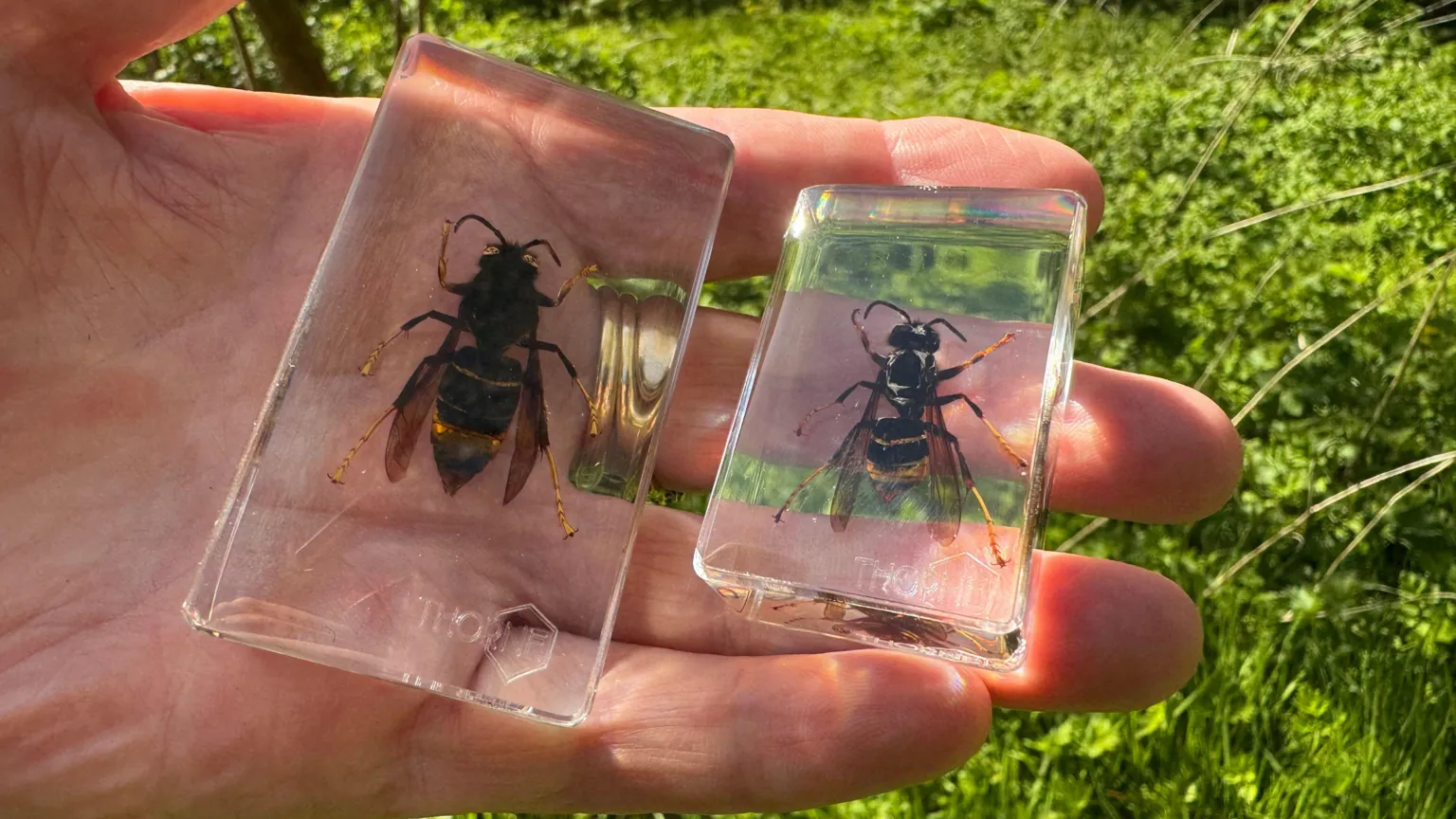
How to Identify an Asian Hornet
The Asian hornet is larger than the native wasp species and has noticeably less yellow coloring.
It is also referred to as the yellow-legged hornet due to its distinct golden-colored legs, which are particularly visible in sunlight.
Queens are larger than worker hornets and typically travel no more than three miles from the original nest when establishing new colonies.
Leaflets containing images and identification tips have been distributed to 20,000 homes within the trap zone, providing guidance on what to look for and how to report sightings.
Additional identification resources are available through the Asian Hornet Watch app and online platforms.
Why Asian Hornets Pose a Threat
Muir explained the unique nature of the Asian hornet’s diet and behavior.
"Unlike a lot of other insects, the Asian hornet actually likes to eat protein, so it will eat other creatures - as in our pollinators. If they run out of insects, they're known to go on and damage fruit crops and things like that. So they're a big, big threat to all our pollinators, not just the bees - but they are particularly partial to bees. And that obviously has huge ramifications."
Bees are vital for food security, as approximately one-third of global food production depends on their pollination activities.
First Use of Traps in Northern Ireland
The traps deployed are designed to allow insects other than Asian hornets to escape, minimizing unintended captures.
These traps have been placed around Dundonald, including locations such as the Stormont estate.
This marks the first time this specific type of trap has been utilized in the UK or Ireland.
The traps use a sweet attractant to lure Asian hornets, which are particularly hungry following winter hibernation.
All 34 traps are inspected twice weekly to monitor for any hornet activity.
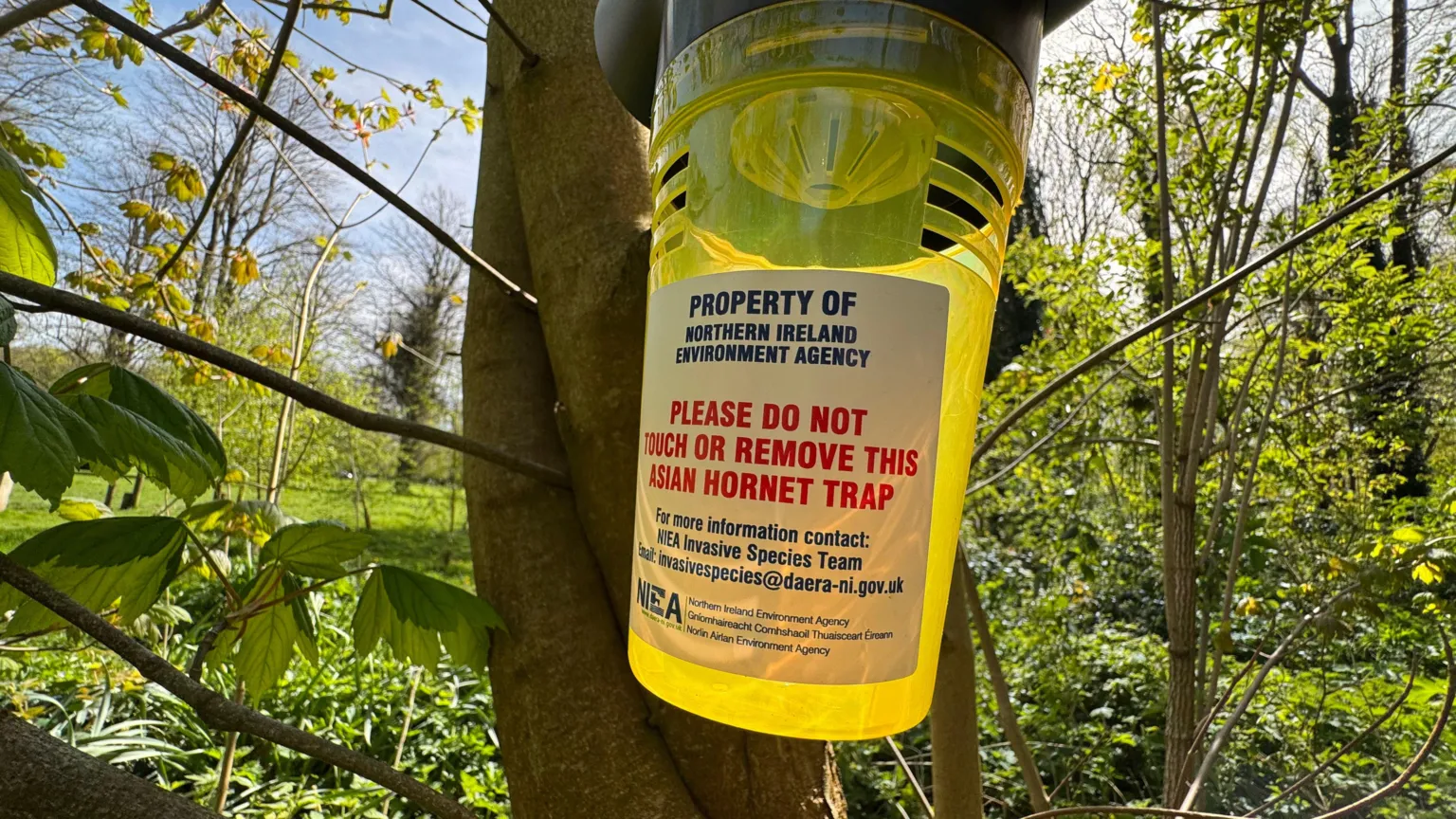
The inspectors use an app that streams live data to the invasive species team, enabling rapid response if any Asian hornet queens are detected.
Members of the public can also submit photographs of suspected sightings via the Asian Hornet Watch app, which are reviewed by the team to provide timely intervention.
Muir stressed the importance of not killing any insect but rather trapping it, submitting a photo, and awaiting guidance.
"Don't worry if it's not one - we still want to see it if you're suspicious. We still want people to put the records in."
She also cautioned against the public setting up their own traps.
"Because if people put out traps that aren't selective, they're going to end up killing more insects than the Asian hornets would, which is just counter-intuitive, and we don't want to encourage that. So please - just let us do the monitoring."


