

Iron Age Burial Treasures Unveiled
Rare artifacts discovered with a young Iron Age man buried near Alloa approximately 2,000 years ago will be exhibited publicly for the first time in a new display.
The remains of the individual, estimated to be between 17 and 25 years old, were found within a stone-lined cist at Marshill.
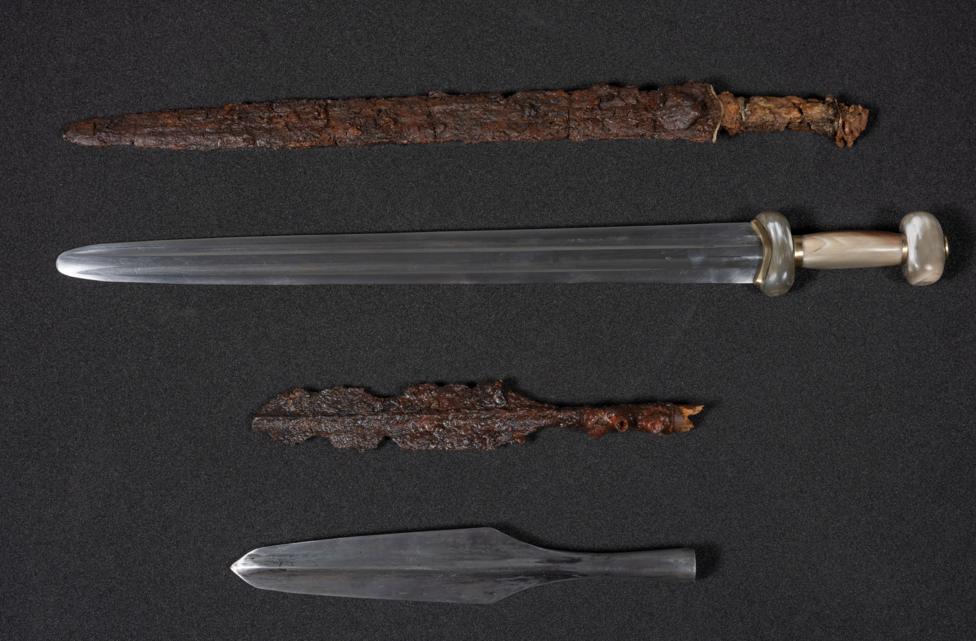
The burial included an iron sword sheathed in a leather scabbard placed across his chest, accompanied by a spear laid alongside him.
These items will be featured in the exhibition Scotland's First Warriors, which opens on Saturday at the National Museum of Scotland in Edinburgh.
The man, interred around 10-70 AD, was adorned with several ornaments, including a bronze cloak pin, a glass bead pendant, and bronze and iron rings from a belt around his waist.
Two bronze toe rings indicate he likely wore sandals, a symbol of high status during that period.
Experts suggest that the inclusion of weapons in the burial may reflect the individual's role as a warrior in life or represent how his community wished him to be perceived in the afterlife.
Replicas of the spearhead and sword have been crafted specifically for the exhibition by Ratho Byres Forge and Alan Braby.
These replicas will be displayed alongside the original artifacts to demonstrate their original appearance.

Iron Age burials in Scotland are rare, and those containing weapons are particularly uncommon.
Matthew Knight, senior curator of prehistory at National Museums Scotland, commented on the significance of the finds, stating:
"Burying people with weapons may reflect the person's role in life as a warrior, or how their community wanted them to be seen in the afterlife.
These treasured objects tell us this young man was a powerful member of his community.
Following extensive research and conservation, I am thrilled that visitors will have the opportunity to see these objects for the first time in Scotland's First Warriors."
The artifacts were uncovered by archaeologist Susan Mills in 2003 during a routine excavation of two cists.
Exhibition Details and Additional Artifacts
The free exhibition, running until 16 May next year, explores the origins of organised conflict, examining how people fought, their motivations, the impact of war on societies, and the enduring legacy of prehistoric warfare.
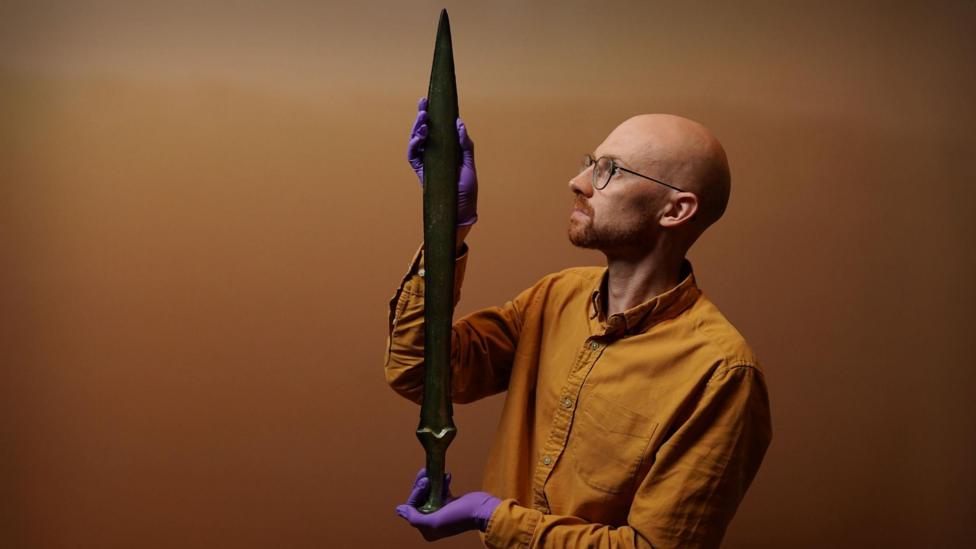
Among other notable items on display is a Bronze Age sword discovered in the north-west Highlands.
This 3,000-year-old leaf-shaped sword was found in 1896 by a gamekeeper near Inverbroom, south of Ullapool, lodged in a crack in a rock.
Matthew Knight remarked on the sword's importance:
"The remarkable sword from Inverbroom gives us a vivid window into the lives of warriors and communities living in Scotland thousands of years ago."
The sword is on loan from Aberdeen Archives, Gallery and Museums.
Julie Wood, Aberdeen City Council's chief officer for city development and regeneration, expressed enthusiasm about the exhibit, stating:
"We're delighted that this remarkable Bronze Age sword from Inverbroom will be seen by visitors as part of Scotland's First Warriors."


