

Replica of Historic Clydebuilt Ship Unveiled
A full-sized replica of Henry Bell's Comet, a small Clydebuilt ship that transformed global shipbuilding, will be officially unveiled on Saturday in Port Glasgow, the town where the original vessel was constructed over 200 years ago.
The replica represents Europe's first commercially successful steamship, launched in 1812, and will be inaugurated during Port Glasgow's annual Comet Festival.
The original Comet provided passenger sailings between Greenock, Helensburgh, and Glasgow, initiating a technological advancement race that ultimately established the Clyde as a dominant force in world shipbuilding.
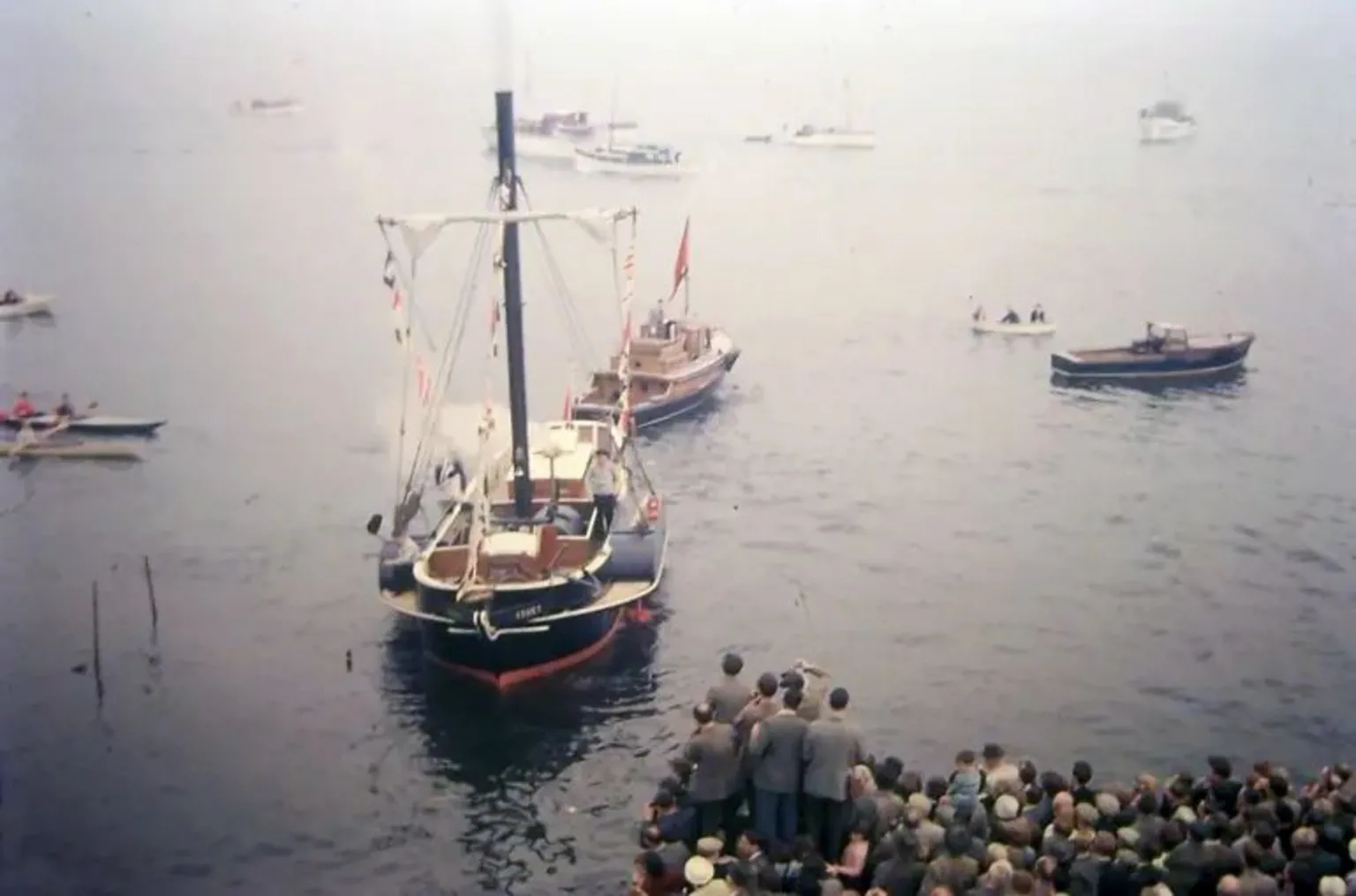
This new model replaces a previous replica built for the 150th anniversary in 1962, which was removed three years ago due to timber rot.
Retired merchant seaman Captain Murray Paterson, who has contributed to the installation of the replacement, recalls witnessing the launch of the earlier replica at age 14.
"I was saddened when I saw the state of the old replica and that it had been allowed to deteriorate but they've done a good job with the replacement," he said.
He emphasized to BBC Scotland the immense historical importance of the Comet.
"She was the forerunner of every mechanically powered ship that I've sailed in the merchant navy."

Inverclyde councillor Christopher Curley reflects on learning about the Comet's maritime significance during his childhood and hopes the new replica will inspire pride in future generations.
"My mum was a very proud Portonian - she always told me about the Comet and its place in the maritime history of Scotland and Europe and how everything developed from that," he stated.
The Ship That Started It All
In the early 19th century, James Watt's improved steam engine, developed in Greenock, was driving the industrial revolution, but its application to ships lagged behind.
Scottish engineer William Symington made a breakthrough with the steamboat Charlotte Dundas in 1803 on the Forth and Clyde canal; however, concerns about paddle wake eroding canal banks led to its early retirement.
Eight years later, Henry Bell, having studied Symington's vessel, commissioned John Wood's shipyard in Port Glasgow to build a steamship for the River Clyde.
Bell was partly motivated to facilitate transport for guests to the Baths Inn in Helensburgh, which he operated with his wife, to enjoy sea bathing, a popular health trend at the time.
Named after the Great Comet of 1811, visible to the naked eye for 260 days, the ship launched in 1812, offering passenger service between Glasgow, Greenock, and Helensburgh.
In August 1812, the first British press advertisement for a steamboat journey proclaimed, "the elegance, comfort, safety and speed of this vessel requires only to be proved."
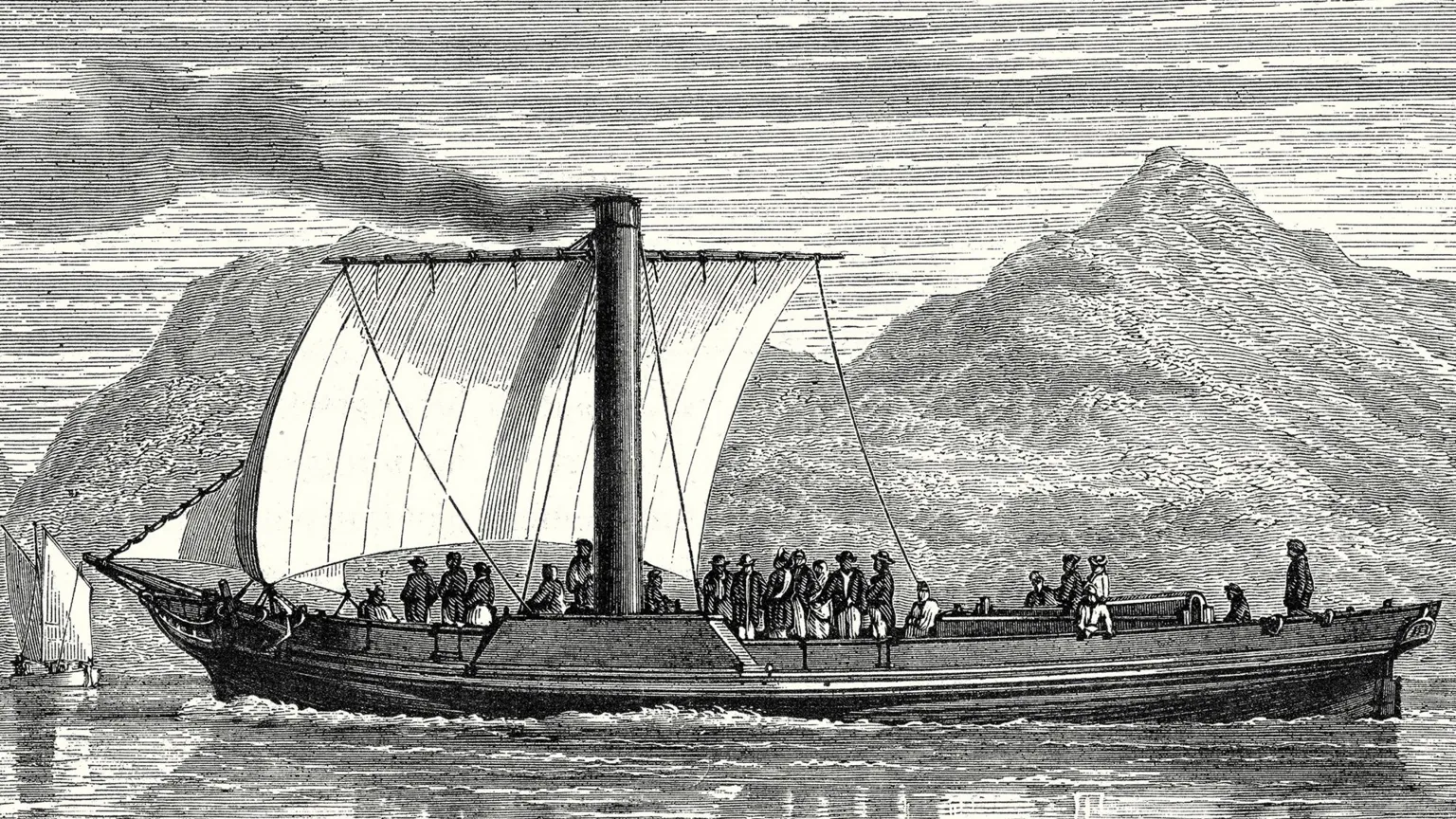
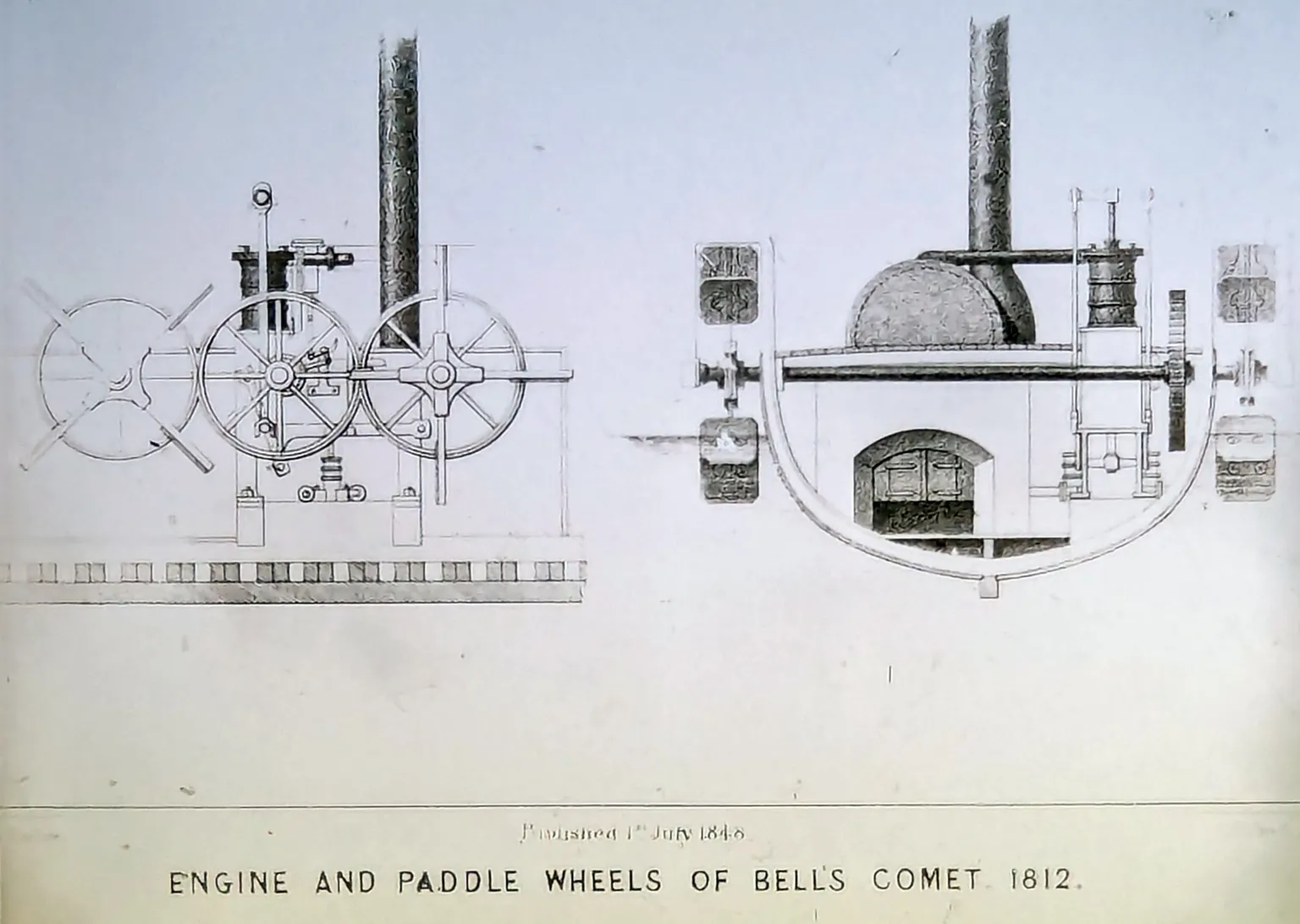
The Comet measured approximately the length of a modern bus and was powered by an engine comparable in strength to a small petrol-driven lawnmower.
Its funnel also served as a mast to hoist a sail to supplement steam propulsion, and the 23-mile journey from Glasgow's Broomielaw to Greenock took about six hours.

The service quickly became successful, inspiring others and ushering in a century of steamship innovation that established the Clyde as a shipbuilding powerhouse.
The Comet became a significant source of pride for Port Glasgow, although its historical importance has been less recognized beyond the local area.
For the ship's centenary in 1912, a three-day festival featured a parade, regatta, fairground rides, fireworks, and celebrations at the Comet Bar on John Wood Street.
The 150th anniversary in 1962 was also commemorated with parades and the construction of a working replica of Bell's vessel, funded by the Lithgow family, owners of Port Glasgow's largest shipyard.
The wooden hull was crafted by boatbuilders in Buckie, while the engine was manufactured at Greenock's Kincaid engine works and installed by Lithgow's apprentices.
Shortly after launch, the replica sailed to Helensburgh with a small crew and a dozen local dignitaries, including Sir William Lithgow, all dressed in period costume.
It is said that the hospitality in Helensburgh led some crew members to consume so much alcohol that Sir William had to assist in stoking the boiler to ensure their return journey.
Henry Bell's Comet was upgraded with a more powerful engine and lengthened in 1819, but despite these improvements, it was driven ashore and wrecked near Oban during a storm in 1820.
The original engine, designed by engineer John Robertson, was repurposed for use in a Glasgow factory and later a brewery in Greenock. It is now permanently displayed at London's Science Museum.
Three years ago, remains of the wooden hull were rediscovered submerged in 39 feet (12 meters) of water off Craignish Point, and the wreck has since been granted protected status.
Unlike the previous working replica, the new model is intended as a static display, constructed with materials designed for durability.
Specialist display and model maker Aivaf, based in Sheffield, fabricated a stainless steel structure with drainage channels and clad it with modified timber resistant to rot.
Managing director Bruce Davies explained the issues with the old replica.
"The problem with the old replica was that as a working vessel it was designed to keep the water out. So it filled up with water from above and rotted from the inside."
Davies believes the new replica is a more accurate representation than its predecessor, incorporating hull shape adjustments based on historical drawings.
The underside has been given a coppery hue, reflecting the original ship's "copper bottomed" design, which involved cladding with a thin metal layer to protect against worms and barnacles.
Port Glasgow's provost will unveil the new ship at 11:30, followed by a parade through the town culminating at Coronation Park for the free Comet Festival, featuring a gala, stalls, workshops, and various attractions until 18:00.


