

Introduction to Joyce Country and Western Lakes UNESCO Geopark
The recently designated Joyce Country and Western Lakes UNESCO Geopark, spanning Galway and Mayo, showcases a 700-million-year geological history that has shaped a distinctive landscape and a rich cultural heritage.
“If you take all these springs together in terms of flow, it’s by far the largest in Ireland, and one of the biggest systems in the world,”said Dr Benjamin Thébaudeau, geologist for the newly designated UNESCO Geopark in western Ireland.
Over several days, it became clear that this extensive system of limestone springs and caves functions as the lifeblood of the region, much like an underground train network powers a city. This is a landscape where rivers vanish into limestone fissures and subterranean lakes, and roads wind through drowned valleys beneath mountains sculpted by volcanic activity and glacial forces.
It is also the idyllic, verdant setting of western Ireland that attracted Hollywood to the village of Cong for the filming of The Quiet Man in 1952. Journeying through the geopark from central County Galway into southern County Mayo, I stayed in Cong, effectively an inland island between Lough Mask and Lough Corrib. The village’s name derives from the Irish word for “narrows,” reflecting its confined, water-bound geography and the concentration of springs that ebb and flow invisibly beneath the surface.
Water is omnipresent and rarely still. It drains from Lough Mask through swallow holes, traveling unseen for miles through limestone fissures beneath Cong, before reemerging as cold springs around the village.
“If you look in the centre, you can see the current flowing in opposite directions,”Benjamin explained, gesturing beyond the interpretive boards toward the channels where he first observed this phenomenon.
“We call it the Hatchery because of its connection to wild fish, and the springs bubble up there, right in the middle.”
Yet the geopark’s distinctiveness is not solely due to its karst terrain and glacial valleys. At its heart lies a living Gaeltacht where Irish remains a daily spoken language, embedded in place names, local conversations, and nightly sessions at the third-generation pub Tí Bhúrca in nearby Clonbur. The language flows through the landscape as an intrinsic system alongside rock, water, and soil.
Historical and Architectural Heritage
The abbey at Cong was established under Gaelic royal patronage, but its surviving stone arches bear the architectural imprint of later Norman reconstruction. In the 12th century, Ruaidrí Ua Conchobair (anglicised as Rory O’Connor), the last high king of Ireland, spent his final 15 years within these walls after political upheaval in Connacht, seeking refuge where the river meets the woods. Centuries later, Tudor rule brought harsh changes. The abbey was suppressed, and Sir Richard Bingham, the notorious lord president of Connacht, transformed Ashford Castle into a formidable administrative center, temporarily shifting the region’s political focus to Cong before authority moved westward again. In 1852, the Guinness family purchased the castle with wealth derived from their global brewing enterprise. They converted the medieval ruins into a grand Victorian hunting lodge, the luxurious retreat that exists today.
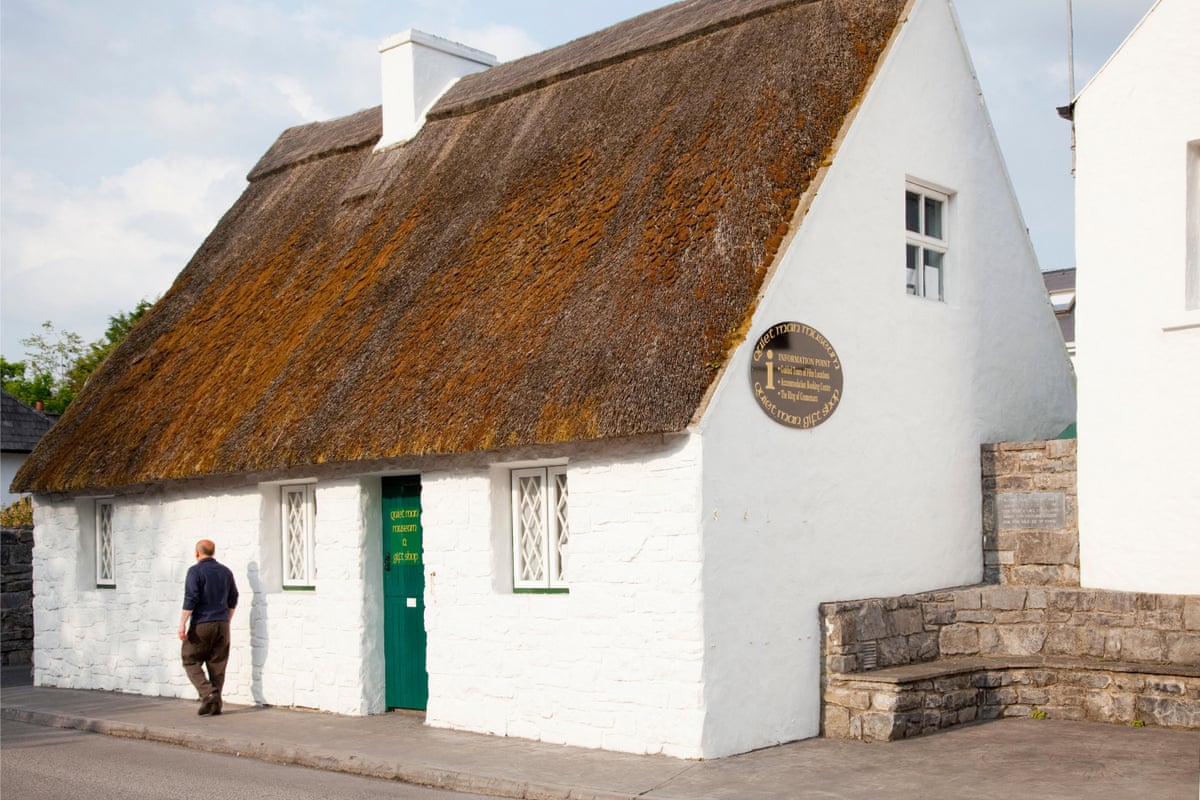
Like the geopark’s landscape, these stone landmarks endure while continually evolving, reflecting the dynamic cultural legacy of Cong village. At The Quiet Man Museum, curator Lisa Collins discussed the lasting influence of John Ford’s film. Honeymooning visitors still arrive dressed as Sean Thornton (John Wayne) and Mary Kate Danaher (Maureen O’Hara), she noted, stepping into a version of Ireland that has outlived both the film’s production and the country itself. The museum has been recognized as a European Film Academy cultural heritage site, with plans to commemorate the film’s 75th anniversary in Cong next year.
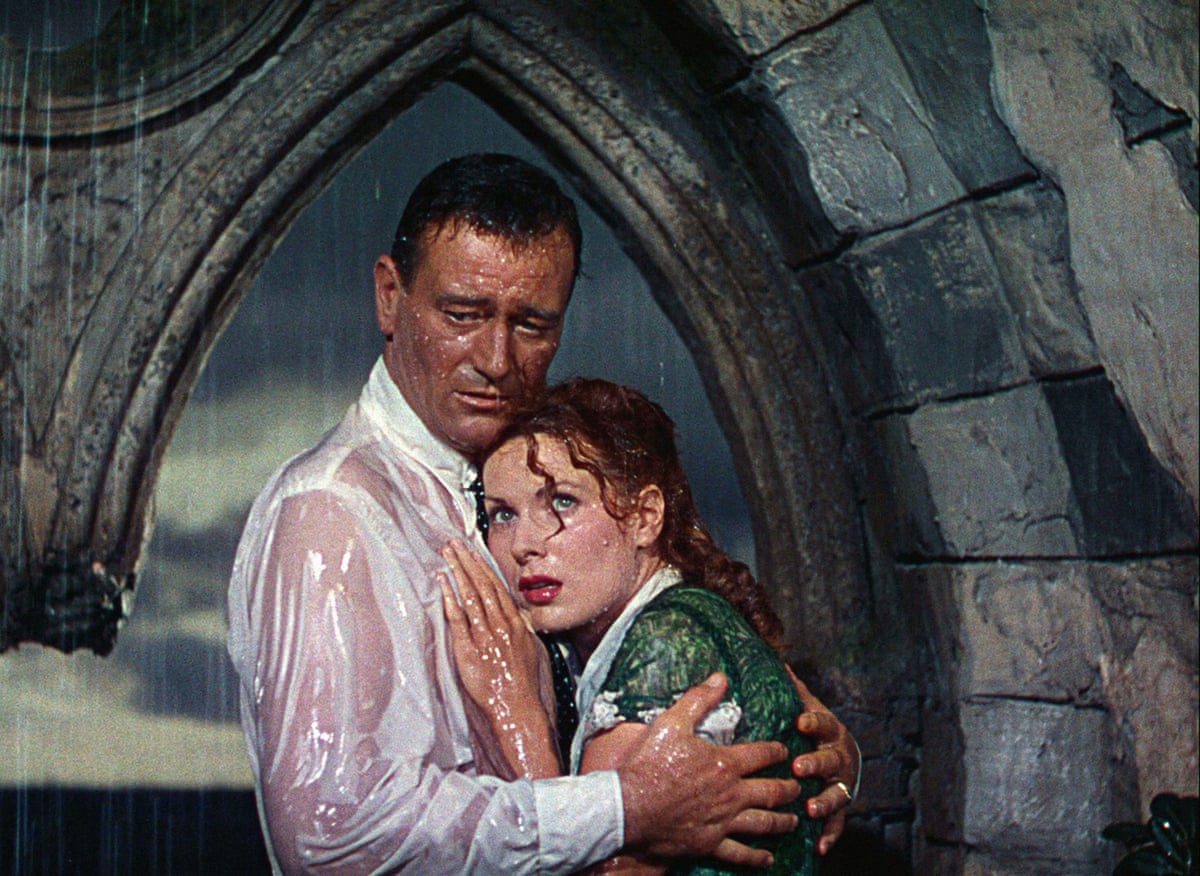
Among the exhibits is the fishing rod used by the village priest during filming on the River Cong. Kept for decades by the family of sound man Thomas A Carman before its donation to the museum, the prop evokes one of the movie’s most famous comedic scenes. In that scene, Mary Kate speaks Irish to Father Peter Lonergan as he casts for a legendary, elusive salmon. Standing by the water, she explains that she has refused to consummate the marriage while her husband sleeps in a “mála codlata,” meaning sleeping bag.
The use of the Irish language allowed the exchange to bypass 1952 censorship while remaining fully understood within the Gaeltacht where the film was shot. It served as a form of subtle communication, with meaning lying just beneath the surface.
Geological and Mythical Features
This subterranean world becomes tangible at the Pollatoomary Cave just outside the village. The entrance descends steeply into limestone via smooth, time-worn steps, leading into a narrow chasm. Below, a shallow underground river flows through darkness untouched by sunlight.

Here, the legend of the White Trout is centered around the water. The tale recounts a young woman who disappeared after the murder of her lover, followed by the appearance of a pure white trout in the cave. This echoes Father Lonergan’s mythical fish in The Quiet Man, blending myth and reality in Joyce Country and the Western Lakes.
Benjamin noted that aspects of the legend may have a basis in observation. Fish living for generations in complete darkness can lose pigmentation, becoming pale or entirely white due to their environment. Thus, the story is intertwined with geology. Additionally, fishing remains a vital practice and heritage here.
Near Ashford Castle, a salmon hatchery works to support declining wild populations. The cold spring water from the lakes should sustain fish stocks, but environmental pressures are mounting.
“Maybe we are fighting a losing battle,”Benjamin reflected.
Climate change, warming seas, and increasing stress on river systems are impacting wild Atlantic salmon. Trout are more resilient, spending their lives in local waters such as Lough Mask and Lough Corrib rather than migrating to sea.
Historical Estates and Cultural Memory
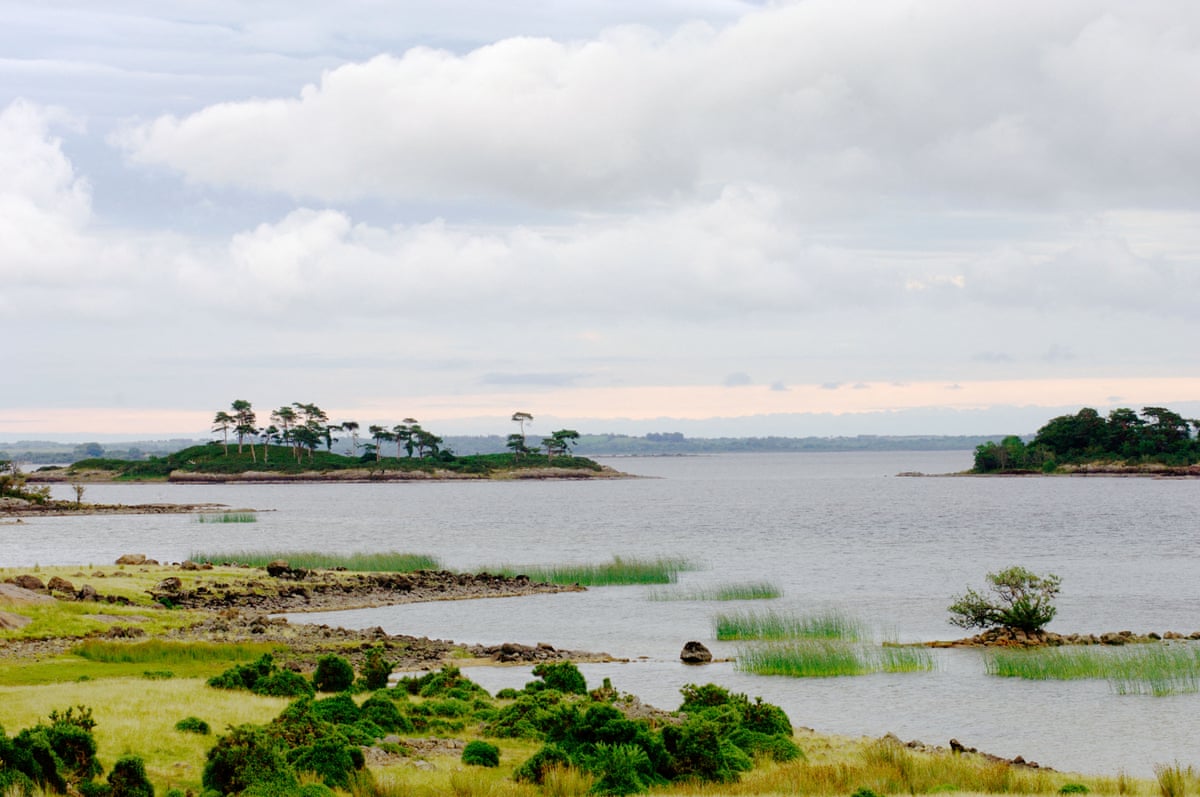
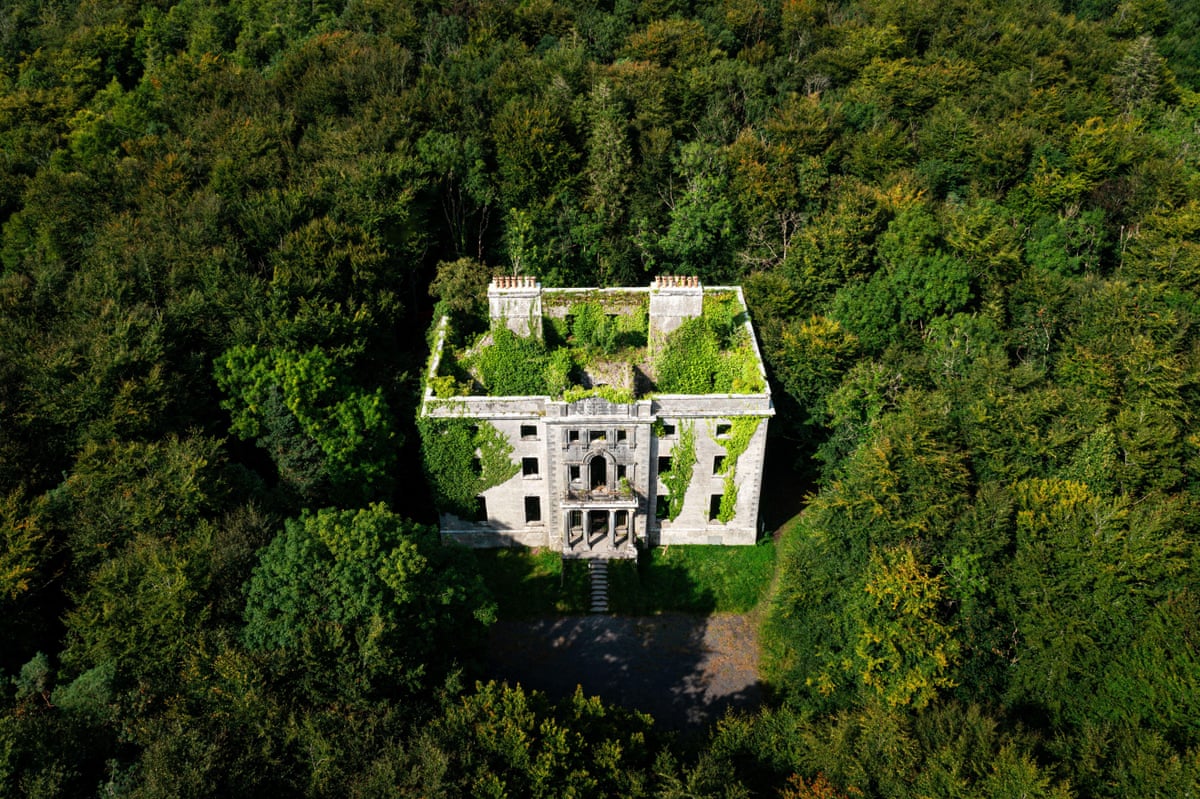
As the modern environment changes, the landscape preserves older histories at various depths. Inland at Carnacon, the ruins of the grand Moore Hall estate rise above Lough Carra, surrounded by encroaching woodland. One of the few Catholic-owned landed estates of its era, the house was linked to the great famine-era MP George Henry Moore and his notable descendants, including writer George Augustus Moore. Today, the estate is partially collapsed following destruction during the civil war, though the surrounding woods have absorbed rather than erased it. Paths weave through what was once a carefully managed demesne, revealing the estate’s geometric layout beneath moss and roots.
Nearby in Ballinrobe, another form of historical memory is embedded in language. It was here that Captain Charles Boycott, land agent for Lord Erne, became the target of organized worker resistance during the Land War of 1879. His name entered the global lexicon as a verb, detached from its local origins but still rooted in this landscape of contested land and memory. Moore Hall and Ballinrobe lie close together, yet together they illustrate different facets of the same themes: ownership, resistance, inheritance, and the gradual transformation of meaning over time.
Connemara and the Atlantic Coast
Further west in Connemara, the landscape shifts dramatically as it approaches the Atlantic. At Killary Fjord, the land opens abruptly into deep water, a glacial fjord dividing Connemara from Mayo. Here, the landscape’s hidden geological history is exposed, revealing the power of ice in carving the earth.
To the south, Glenstal Abbey appears on the hillside above Pollacappul Lough. Initially built as a private residence before becoming a Benedictine monastery, it carries a layered history of adaptation and loss. Like Moore Hall, it reflects changing ownership and identity, with the still water mirroring the landscape perfectly.
Across these locations—from Cong to Moore Hall, Ballinrobe to Killary—patterns recur in altered forms. Water disappears underground before resurfacing elsewhere. Estates become ruins. Ruins become woodland. Language conveys layered meanings. Stories endure by evolving.
Conclusion: Movement Beneath the Surface
Returning to Cong, I gained a deeper understanding of how it is part of a larger system of geological flow, historical forces, and cultural inheritance. What unites this region is not stillness, but continuous movement beneath the surface.
Above Lough Nafooey (also called Lough Finny), near the hairpin bends carved into the volcanic ash of Aill Dubh (Black Cliff), long after the road narrows into silence, a cuckoo’s call echoes across the hills, marking time in a landscape that never repeats itself exactly.
Accommodation
Accommodation was provided by The Lodge in Cong, County Mayo (twins and doubles €115 B&B, singles €70), and the Glenlo Abbey Hotel in County Galway (doubles from €120 B&B).


