Wimbledon’s Timeless Atmosphere Remains Unchanged
The atmosphere within the grounds of SW19 continues to feel distinctly separate from the outside world, a characteristic that many find appealing.
On Monday morning, a group of ten demonstrators gathered outside the main gates of the All England Club. They protested Barclays’ sponsorship of the championship, citing concerns that while Barclays provides amenities such as deckchairs, free strawberries and cream, and access to the Clubhouse by Barclays at Aorangi, it is also heavily invested in weapons manufacturers supplying the Israeli Defense Forces.
“We’re not against tennis,” one of the protesters shouted through a loudhailer. “We just want the Championships to drop Barclays.”
Inside the grounds, however, the crowd’s focus was elsewhere. Cheers of “C’mon Tim” on Centre Court drew far more attention than the protest outside. Visitors to Wimbledon generally do not concern themselves with external events beyond the venue’s boundaries.
The primary concerns for attendees in this corner of England were the conditions of players: Jack’s arm was injured, ruling him out; Emma’s foot was worse, also sidelining her. Other topics included Naomi’s warm-up attire, reportedly a kimono, and the status of the queue at the strawberries-and-cream booth, which remained long.
By midday, the queue for strawberries and cream stretched to several hundred people. By the time the last person reached the front, the protesters had left, leaving only one solitary man in a West Ham shirt holding signs, with a group of police officers nearby. His presence was largely ignored by the crowd.
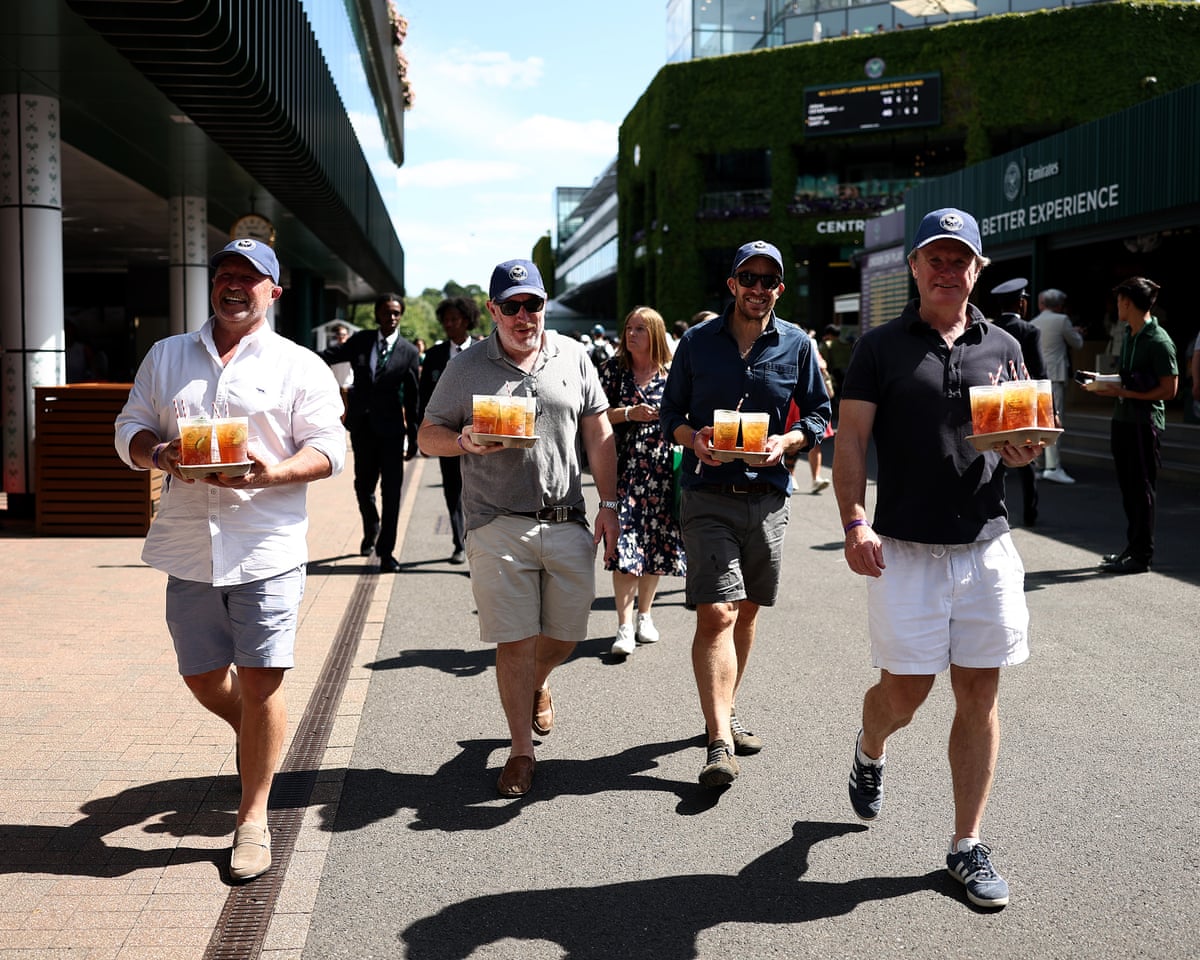
Everything at Wimbledon is meticulously maintained. Every privet hedge is trimmed, every strawberry carefully topped. The setting reflects an idealized vision of England, reminiscent of a Rotary Club event or a retired brigadier’s concept of order and decorum. Interestingly, the more the championship is polished—funded in part by the substantial revenue from debenture holders—the more it resembles other luxury sports venues. Similar merchandise and clientele can be found at places like Augusta National, with only subtle differences such as the scent of £35 candles.
Outside the grounds, Jehovah’s Witnesses were present, standing near racks of magazines featuring a cover story on coping with rising prices. Their business appeared slow. While the price of a bottle of Lanson Rosé champagne increased by £1.10 this year, those willing to spend £102 on a bottle likely did not hesitate over the price hike, nor the additional 15p on strawberries.
It is reported that the cost of debenture tickets has tripled over the past three years. Since the government exempted Centre Court debentures from legislation restricting the resale of sports tickets above face value, many who previously purchased tickets on the secondary market for a few thousand pounds have been priced out. Wealthy international buyers willing to pay significantly higher prices dominate the market, making it increasingly difficult for moderately wealthy individuals to secure Centre Court access.

The Excitement of the Outer Courts
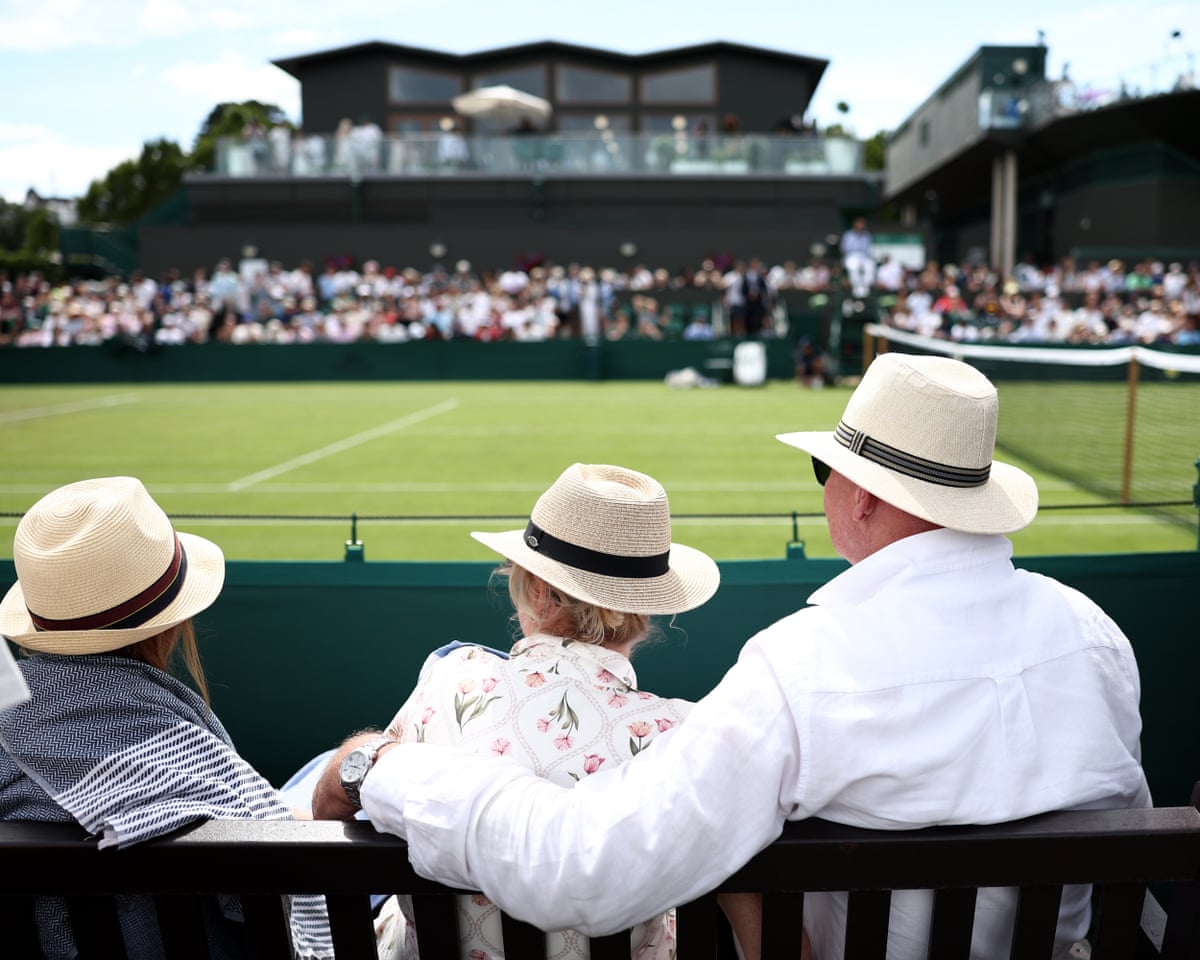
However, a lesser-known fact is that much of the excitement during the first week occurs on the outer courts. Watching a lower-ranked player from close proximity often provides a more engaging experience than viewing a top-ranked player from distant seats. Early Monday morning offered ample opportunities to observe British players competing.
On Court 18, Mika Stojsavljevic, 17, the US Open girls’ champion from two years prior, was defeated by Belinda Bencic before the coffee machines had fully warmed up. Nearby on Court 14, Max Basing, a 23-year-old ranked world No. 331, faced Japan’s Shintaro Mochizuki, ranked No. 151.
Basing was supported by a small group of fans, likely friends, who encouraged him despite his 6-3, 6-0, 1-0 deficit. An elderly spectator remarked to his wife,
“He hasn’t won a game in a while has he?”
“No, not since we got here.”
Basing managed to win a second service point to lead 30-0, prompting the old man to say,
“Comeback time.”
However, Basing then lost four consecutive points, falling 2-0 down in the third set. A Japanese fan kindly encouraged him,
“Good try Max.”
as he whistled a forehand into the net. The old man then asked his partner,
“What time did you say play started on Centre Court?”
On Court 3, another British player, Felix Gill, ranked world No. 220, was trailing 6-3, 6-3, 5-4 against Spain’s world No. 23, Rafael Jodar, upon arrival. Gill appeared visibly frustrated, expressing his displeasure with forceful serves that extended the third set to a 13th game. Other British players included Cam Norrie, who lost in five sets on Court 2, and Harriet Dart, who was defeated in three sets on Court 1.
These scenes, along with the trimmed hedges, Pimm’s, polite applause, and subtle social tensions, are quintessentially part of the Wimbledon experience, alongside traditions such as posing for photographs by the statue of Fred Perry.