

Best player
Demonstrating remarkable resilience and self-belief, Jannik Sinner overcame a significant setback from his previous French Open performance, where he experienced one of the most unexpected collapses in recent memory. At Wimbledon, he steadily gained momentum through each round, culminating in a flawless display before elevating his performance against a peak-form Alexander Zverev. Sinner’s journey to his fifth Grand Slam title highlighted notable improvements in his serve, defensive tactics, drop shots, and lobs, complementing the precise and powerful ball striking that has characterized his career.
Most courageous performance
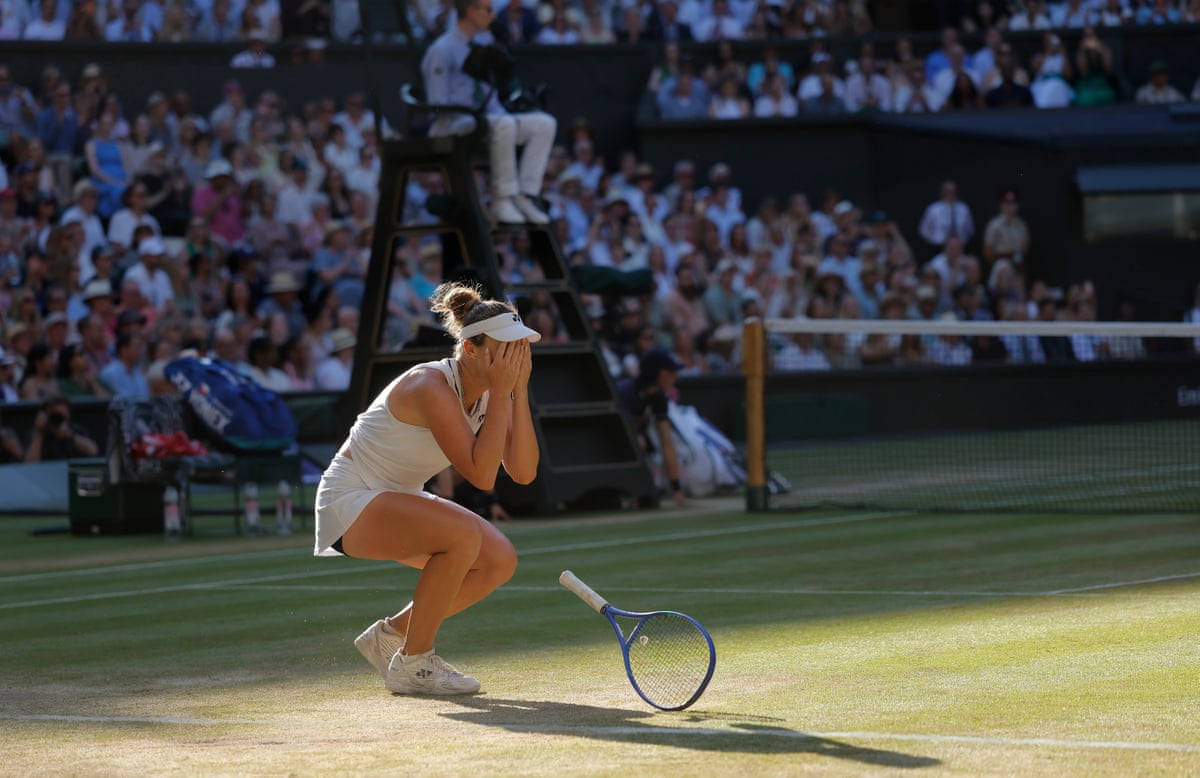
Linda Noskova exhibited exceptional determination during the Wimbledon singles final. Despite leading her compatriot Karolina Muchova 6-2, 5-2, Noskova faced a dramatic turnaround as she missed five championship points, lost five consecutive games, and was pushed into a deciding third set. During a critical moment, she left Centre Court to visit the bathroom, encountering the runner-up plate along the way. While such a sight might have unsettled many players, Noskova used it as motivation to fight back and secure victory, showcasing impressive resilience throughout her Wimbledon campaign.
Best match(es)
In the women’s round of 16, the match between tenth seed Karolina Muchova and 2024 champion Barbora Krejcikova was a masterclass in skill and strategy. The three-set encounter, ending 7-5, 5-7, 6-3 in Muchova’s favor, dispelled notions that modern tennis is dominated by relentless power hitting. Both players displayed a diverse array of shots, including precise drop shots, aggressive net play, effective slices, sharp angles, and well-timed forehands, all delivered with their distinctive effortless styles, making the match a perfect showcase of their talents.
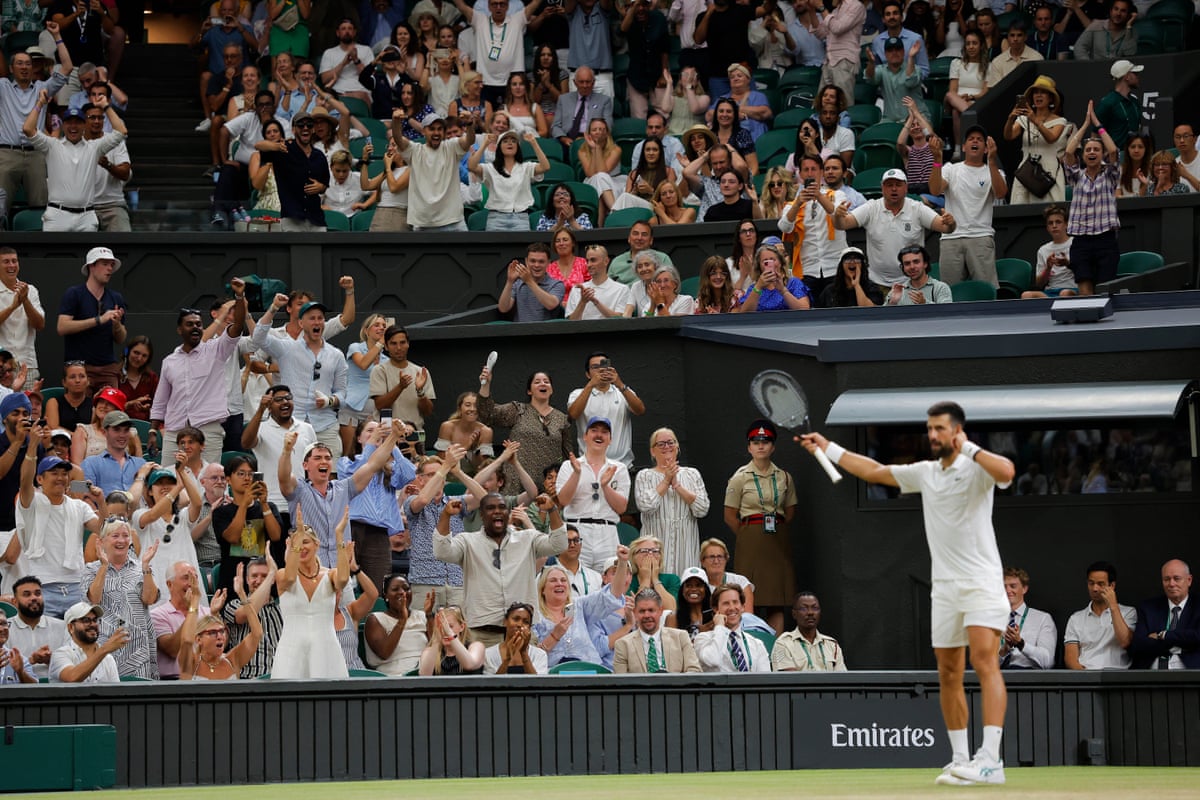
In the men’s quarter-final, Novak Djokovic engaged in a grueling five-hour and fifteen-minute battle against Felix Auger-Aliassime, who is 14 years younger. Despite the physical and mental demands, Djokovic maintained exceptional focus, particularly in the final set tie-break where he did not miss a shot, ultimately securing a remarkable victory. Although Djokovic did not win the tournament, his performance at 39 years old remains extraordinary. Auger-Aliassime also demonstrated outstanding play, serving brilliantly until the tie-break, making this match a memorable highlight and a testament to Djokovic’s enduring greatness.
Biggest surprise
Alexis Fery’s Wimbledon journey was unexpected and impressive. Entering the tournament ranked No. 114 and requiring a main draw wildcard, Fery advanced to the semi-finals alongside Novak Djokovic, Jannik Sinner, and Alexander Zverev, boosting his ranking to world No. 36. His semi-final run included two remarkable five-set comebacks and a dominant victory, demonstrating both resilience and high-quality tennis. Observers will be keen to see how Fery builds on this breakthrough performance.

Best drama
The mixed-doubles quarter-final between Jelena Ostapenko and Laura Siegemund, paired with Marcelo Arévalo and Édouard Roger-Vasselin respectively, was marked by intense rivalry and conflict. Known for their combative nature and previous clashes, tensions escalated when Siegemund received her second time violation at 7-7 in the second set tie-break after losing the first set 6-4. Siegemund criticized Ostapenko’s time-keeping and refused to shake hands post-match. The dispute continued with a prolonged argument between Ostapenko and Roger-Vasselin near the umpire’s chair, during which Ostapenko sharply remarked to Siegemund:
“Take the loss a bit better, eh? Learn how to lose.”
Most memorable quotes
Alex de Minaur, the fifth seed, candidly expressed his emotional response following a fourth-round defeat, revealing the depth of his disappointment. He reflected on the challenges of meeting his own expectations and the emotional toll of repeated losses in professional tennis:
“It breaks me inside. That’s the reality of it. Many, many hours gets put into my craft, and countless years to kind of have moments like these. To not step up to the plate, it’s truly gut wrenching. Yeah, it’s very tough.”
He further elaborated on the cumulative effect of losses and the fading of dreams:
“[The losses] just accumulate, right? And kind of the goals, the beliefs, the dreams that you have, they kind of start fading away or they feel a little bit further away than when they once were. I feel like a couple of years ago, I was definitely closer to that. Now it just feels like I’m getting a little bit further away from those dreams. I just want [a big run] to kind of happen to keep giving me that hope. If not, this is a tough, tough sport to play with no hope.”
Worst luck
Maja Chwalinska’s Wimbledon experience was marked by unfortunate circumstances. Despite debate over her receiving a main draw wildcard, she performed well and reached match point against Mananchaya Sawangkaew in the first round with a score of 6-2, 5-2. However, Chwalinska slipped on match point, injuring her ankle, and struggled with the injury throughout the remainder of the match, ultimately losing 2-6, 7-5, 6-2.
Most disappointing performance
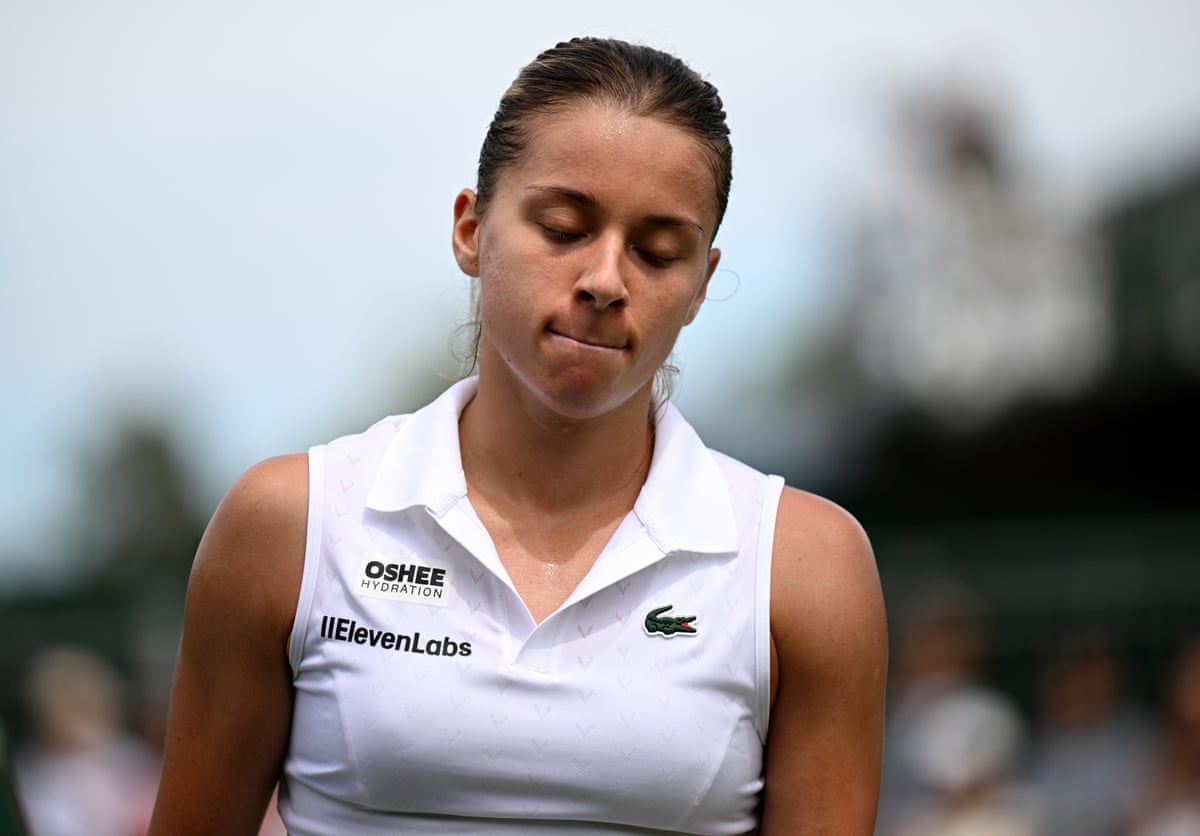
For Iga Swiatek, a former No. 1 and six-time Grand Slam champion, a third-round exit is notably disappointing. Her performance, particularly the lack of competitiveness and fight in the second set of her 7-6 (9), 6-2 loss, was concerning. Currently ranked No. 8 in the WTA and No. 12 in the race to the WTA Finals, Swiatek’s results signal potential issues that warrant attention.
The biggest enemy of progress at Wimbledon
Injuries continued to impact the tournament significantly. Serena Williams’s singles return generated excitement, but a knee injury prevented her from competing further, halting the potential revival of one of tennis’s greatest rivalries. Other notable absences due to injury included Victoria Mboko, Holger Rune, and Lorenzo Musetti, all of whom were performing well prior to their withdrawals. Additionally, Carlos Alcaraz’s ongoing absence due to a right wrist injury remains a significant concern for the men’s tour, affecting the competitive landscape of major tournaments until his return.


