

Emergence of Rafael Jodar
The 19-year-old Rafael Jodar, often dubbed the ‘new Rafa’, is the latest promising talent to emerge from Spain’s prolific tennis tradition. A year ago, Jodar was ranked near No. 700 globally while completing his freshman year at the University of Virginia. After securing several ATP Challenger titles, the level below the main ATP Tour, he chose to turn professional, foregoing his remaining college eligibility. Jodar won his first main-level ATP match at this year’s Australian Open. Following a rapid ascent in the rankings, the 19-year-old is now among the 32 seeds at the upcoming French Open, which begins Sunday.
Rivalry and Collegiate Decisions
Jodar has notably taken over the spotlight as the “next future champion,” a mantle previously associated with fellow 19-year-old Spanish player, Fonseca. Interestingly, Fonseca had also committed to playing college tennis at Virginia alongside Jodar but opted to turn professional instead. This raises speculation about the potential strength of that college team had it come to fruition.
Spain’s Tennis Dominance
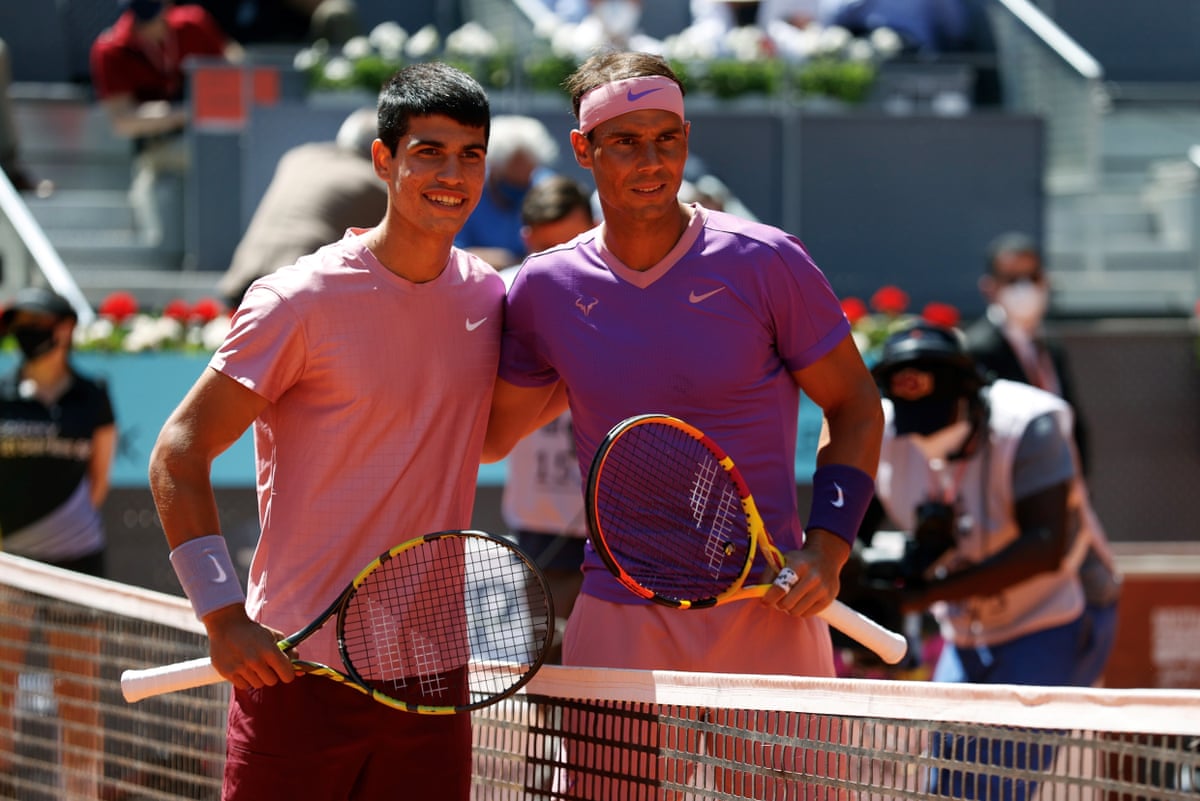
The addition of another contender to the grand slam conversation underscores Spain’s remarkable depth in men’s tennis over the past three decades. Beginning with Sergi Bruguera’s consecutive French Open titles in 1993 and 1994, Spanish men have enjoyed near-continuous dominance, with six different players securing grand slam titles. This era culminated, at least seemingly, with Rafael Nadal’s 22 major championships. Notably, just three months after Nadal’s final grand slam victory at the 2022 French Open, Carlos Alcaraz claimed his first major at the US Open that same year. Alcaraz has since won six more majors but will miss this year’s French Open due to a wrist injury.
Historical Comparison: Sweden’s Tennis Era
The only comparable period in the Open era is Sweden’s prominence in the 1970s and 80s. Björn Borg, a tennis icon, secured 11 grand slam titles over eight years starting in 1974, placing Sweden firmly on the tennis map. After Borg’s retirement following his 1981 US Open loss to John McEnroe, Mats Wilander continued the legacy, winning the 1982 French Open, the first of his seven majors. Stefan Edberg then added six grand slam titles between 1985 and 1992. Sweden’s tennis success coincided with a broader cultural influence, including the global popularity of ABBA and innovations from companies like Saab.
Playing Style and Evolution
Jodar’s aggressive style, characterized by powerful hitting and assertive point construction, challenges the stereotype that Spanish players excel only on clay courts. Nadal himself was initially labeled a clay-court specialist, a notion dispelled by his 2008 Wimbledon victory. Similarly, Alcaraz emerged as a versatile all-court player.
Origins of Spain’s Tennis Powerhouse
Spain’s rise in men’s tennis is often traced back to the early 1970s. Under the dictatorship of Francisco Franco, inspired by Manolo Santana—the first Spaniard to win a grand slam—thousands of red clay courts were constructed nationwide. This infrastructure laid the foundation for future generations of players.
Though it took a generation to bear fruit, the coaching techniques and training regimens established 50 years ago in Spain have since become standard worldwide.
Coaching Pioneers and Training Philosophy
Two coaches pivotal in shaping the Spanish men’s tennis style in the 1980s and early 1990s were Pato Alvarez (now deceased) and Lluis Bruguera, father of Sergi Bruguera. Both based in Barcelona, they developed a coaching methodology summarized by Chris Lewit, author of The Secrets of Spanish Tennis, into six core principles: movement, footwork and balance; racket speed and weapon building; consistency; defense; physical conditioning; and the importance of suffering.
The Role of Suffering in Spanish Tennis
The concept of suffering—enduring and maintaining a positive mental attitude through the challenges of each match—is a defining characteristic among recent Spanish champions. Nadal famously stated:
“You have to learn how to live with these kind of moments, and also to enjoy this suffering.”
Alcaraz echoed this sentiment:
“You have to find the joy in suffering.”
While Nadal was coached at home in Mallorca by his uncle Toni and Alcaraz trained at an academy under former coach Juan Carlos Ferrero, the hallmarks of Spanish tennis have seamlessly transitioned across generations. This emphasis on suffering and strategic point construction has facilitated the evolution from clay-court specialists like Bruguera to all-court players such as Alcaraz and Jodar.
Jodar’s Mentality and Inspiration
Jodar exemplifies this generational transfer of physical skill, tactical acumen, and mental resilience. Reflecting on Nadal, Jodar said:
“He was, I think, the best mentality wise. He never gave up in a match. He stayed there for every moment that the match was bringing him and tried to play his best tennis with the things he was doing throughout those days. I think watching him inspired me when I was younger.”
Like Nadal and Alcaraz, Jodar plays with strong confidence balanced by humility, a combination that sustains elite players’ competitive edge.
Challenges in Replicating the Spanish Model
Despite Spain’s success, few countries have fully replicated their approach. Many have attempted to adopt the Spanish style. For example, a young Andy Murray trained extensively in Barcelona under Alvarez’s guidance and credits those years with significantly shaping his development into a three-time grand slam champion.
Jose Higueras, a former Spanish professional and early product of the Spanish system in the 1970s, brought much of this methodology to the United States in the 1990s. He aimed to integrate the clay-court mentality into the American style, which traditionally emphasized a powerful serve and forehand. This approach yielded immediate success: Higueras coached Michael Chang to his sole grand slam title at the 1989 French Open and later worked with Jim Courier during the last golden era of American tennis.
Factors Beyond Methodology
While protocols and training methods are important, success also depends on attitude and innate talent. Spain has been fortunate to produce exceptional athletes like Nadal and Alcaraz, who possess a rare blend of strength and reflexes. Alongside Jodar, 20-year-old Martin Landaluce is another rising Spanish player making significant progress.
Changes in the Sport Favoring Spanish Style
The sport itself has evolved over recent decades, much to the disappointment of traditionalists who favor serve-and-volley play. Court speeds have generally slowed, with grass courts losing their former rapid pace and hard courts becoming more uniform and slower. These conditions are well-suited to the Spanish style of play, which emphasizes endurance, consistency, and tactical point construction.
Continuing the Legacy
Regardless of the various factors contributing to Spain’s dominance, the country’s production line of tennis champions shows no indication of slowing down.


