

The Complexity of Scottish Rugby Mentality
The mentality of Scottish rugby is intricate and not easily understood by everyone. It can confuse and overwhelm, requiring caution when engaging with it.
Scotland's relationship with England, and England’s perception of that relationship, is multifaceted. Head coach Gregor Townsend recently described the Calcutta Cup as his team’s biggest game of the year, a sentiment echoed by captain Sione Tuipulotu on Friday.
While it remains the biggest game, it has not always been the best indicator of Scotland’s overall performance. This dynamic shifted significantly when Townsend assumed the coaching role. His record includes four consecutive Calcutta Cup victories and five wins in eight matches—only a missed Finn Russell conversion last season prevented six wins out of eight, an impressive achievement.
In a recent newspaper column, England forward Courtney Lawes expressed his views on Scotland, stating he would be frustrated if he faced a team that only performed well against England.
"I have never understood Scotland's mentality that a bad season can be saved by winning the Calcutta Cup," Lawes said.
This perspective highlights how England views Scotland’s recent resurgence in this fixture. Historically, and perhaps until recently, winning the Calcutta Cup could redeem a poor season for Scotland. However, that is no longer the case. A season with only a victory over England in the Six Nations would now be deemed unacceptable, potentially jeopardizing Townsend’s position.
"If Scotland played every week like they do against England they would actually have a really good chance of winning the competition. It strikes me as being a major weakness in the Scottish psyche. It holds them back. No wonder they never win anything."
Scotland’s Urgency and Team Changes
Scotland has made four changes for what is described as the "biggest game of the season" against England. The team’s determination to succeed was emphasized by Tuipulotu, who described Scotland as a "desperate team" ahead of the Calcutta Cup.
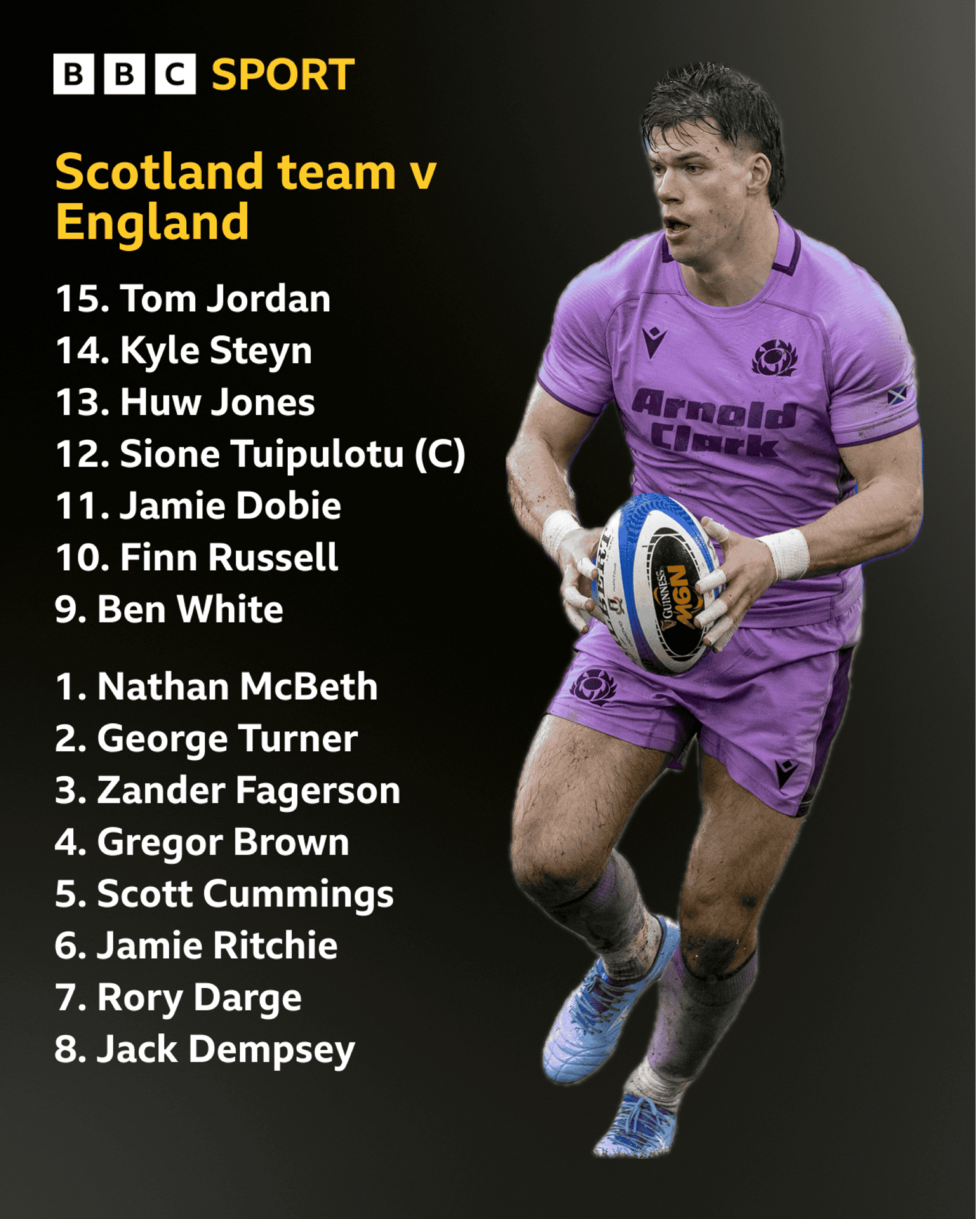
Despite the spirited nature of this rivalry, Lawes’ assessment may overstate the challenge Scotland has faced against England during Townsend’s tenure. England’s performances have not consistently tested Scotland’s true capabilities. The question remains whether Scotland’s victories are due to their own elevated play or England’s defensive disorganization and mental frailty, which Townsend’s backline has exploited.
While Scotland has not secured any major titles, Lawes is correct in noting that England themselves have had limited success. Since Townsend’s appointment in 2017, England has won only one Six Nations title and has frequently finished lower in the standings.
During this period, France, Ireland, and Wales have all achieved Grand Slams. England has not won a Grand Slam in a decade and has only two in the Six Nations’ history. Their finishes over the past eight Six Nations tournaments include one first place, two second places, two third places, one fourth place, and two fifth places. Therefore, defeating England has not been as formidable as climbing Everest.
It may be less about Scotland playing above their usual level, as Lawes suggests, and more about England’s underperformance.
However, the concern for Scotland is that England’s head coach Steve Borthwick appears to have found a winning formula. England is currently on a 12-match winning streak, with a well-organized team, strong leadership, and a deep bench. The team seems less vulnerable to the chaos Scotland aims to impose.
Upcoming Test at Murrayfield
Murrayfield will present a significant test of Scotland’s resilience. Tuipulotu highlighted Scotland’s "desperation" ahead of the Calcutta Cup.

"We're a desperate team," Scotland captain Tuipulotu said.
The Scotland squad has faced intense scrutiny following their recent loss to Italy, not just because of the defeat but due to the manner in which it occurred. Issues included weak defense, ineffective set pieces, and squandered attacking opportunities. The statistic of zero line breaks is particularly troubling and will remain a concern until Scotland can reverse their fortunes.
Saturday’s match offers an opportunity to initiate a turnaround; failure could mark the end of their championship hopes.
Impact of Key Player Absences
Tuipulotu’s comments suggest a strong response is forthcoming at Murrayfield, but Scotland faces challenges due to the absence of key players who have previously provided an X-factor.
In 2024, Scotland’s success was largely due to early exploitation of wide channels, with Blair Kinghorn’s creativity and Duhan van der Merwe’s hat-trick proving decisive. Neither player is available this time.
In previous years, Van der Merwe’s solo efforts and Darcy Graham’s involvement in critical plays were instrumental. Graham is on the bench but not in peak form. Van der Merwe, who has historically excelled against England, is the 24th man and has not been at his best for nearly a year.
England might have preferred Van der Merwe’s inclusion, as his defensive weaknesses could have been targeted by players like George Ford and Alex Mitchell.
Townsend’s selection of the back three reflects caution and current form, though some might have gambled on Van der Merwe’s potential to create unstructured chaos. Similarly, Kinghorn’s pedigree is notable despite his current form. Many of Scotland’s memorable moments against England have involved players not starting or not in the matchday squad, placing greater responsibility on Finn Russell to deliver a standout performance.
Finn Russell and Scotland’s Tactical Approach
Russell, playing for Bath, is adopting a more controlled style this season, supported by a strong forward pack and an aerially capable team. While Bath can adapt their style, expansive play has not been dominant, though Russell may seek to unleash more creativity on Saturday.
Scotland’s chances of winning a physical contest are uncertain. Their best approach is to play instinctively, balancing ambition, daring, and rapid pace rather than reckless abandon.
Despite the absence of Van der Merwe and Kinghorn, the team remains capable, with many players hailing from Glasgow. England will respect this side, which demonstrated resilience in recent autumn matches against the All Blacks and Argentina, scoring 17 and 21 unanswered points respectively, though losing both games.
Scotland’s Dual Nature
This Scotland team exhibits a split personality. Which aspect will dominate on Saturday remains unpredictable. Compared to the classic Jekyll and Hyde, Scotland’s duality is even more pronounced.
A strong reaction is anticipated, but the extent to which it will challenge a seasoned England side is uncertain.


