

After his win in the 2024 F2 Monaco feature race, Zak O'Sullivan (centre) shared the podium with current Red Bull driver Isack Hadjar and Alpine reserve driver Paul Aron
Formula 1 represents an exclusive pinnacle in motorsport that thousands of drivers across various racing categories aspire to join.
However, for the majority, this ambition remains unfulfilled. Achieving a seat in F1 demands exceptional talent, yet even the most gifted drivers often encounter significant financial barriers along their journey.
On Thursday, examined the substantial financial requirements for a young driver to progress to Formula 1, tracing the path from karting through Formula 4, the Formula Regional European Championship (Freca), Formula 3, and Formula 2.
We spoke with two British drivers who have pursued this path to gain insight into the realities of climbing the motorsport ladder.
'Motorsport inflation doesn't follow global trends'
Zak O'Sullivan, a former Williams Academy driver, was compelled to withdraw from the 2024 Formula 2 season before its conclusion due to funding difficulties.
O'Sullivan began racing at the age of eight and emphasizes that he does not "plead poverty," stating:
"I'm from a wealthy family, but not to the extent to spend millions and millions, year on year, to make it to F1.
I think anyone who competes in motorsport up to F3 level is clearly from a wealthy background because it's impossible otherwise."
Raised near Cheltenham, O'Sullivan won the 2021 GB3 Championship, which is equivalent to British F3, and was named the Autosport BRDC Young Driver of the Year on his 17th birthday.
He then advanced to the FIA Formula 3 Championship, finishing 11th in his rookie 2022 season and achieving runner-up status in 2023.
In 2024, O'Sullivan secured a seat in Formula 2, competing against drivers who have since reached F1, including Kimi Antonelli, Isack Hadjar, Oliver Bearman, Gabriel Bortoleto, and Franco Colapinto.
He won the Monaco feature race and the Belgian sprint race, but despite these successes, he had to leave the championship with three races remaining.
Reflecting on his experience, the 21-year-old said:
"Without Williams' support when I initially went into Formula 3, it would have been very, very difficult for me to even do one season."
Although part of the Williams Driver Academy, O'Sullivan was still expected to contribute a portion of his expenses.
"Williams were very aware of my financial struggles," he explained. "Of course, they only contribute a certain amount to my season and that came very early in the year, as is quite normal."
He added that ultimately it is "down to the driver to bring the funding," making sponsorships "critical" but challenging to secure.
"I think any sponsorship you get is either from an act of extraordinary kindness, or family, friends, or someone who's very, very passionate about racing or believes in the driver."
O'Sullivan described a phenomenon he terms "motorsport inflation," expressing amazement at the number of competitors able to race amid rising costs.

"There are very few regulations controlling how much you can spend," he said. "So the top teams perform the best because they have the most money.
For as long as you have people wanting to race and with the finances to race, the teams can set their price. And if people pay, they'll keep upping their price."
For instance, a top-level, race-winning kart chassis can cost over £4,000, excluding the engine.
O'Sullivan noted that during his European karting days, leading teams operated with budgets around £180,000 per year, but that figure has since risen.
"That's now up to around £300,000 with motorsport inflation, which doesn't really follow the global trends," he said.
He acknowledged the presence of elitism in motorsport:
"There's no hiding away from elitism within motorsport. There's a few cases of drivers making it without the funds but you have to be able to get to a level where you're recognised by Formula 1 teams, which is normally European karting, which is very expensive."
Having exited F2 before the end of 2024, O'Sullivan stated that "realistically" Formula 1 is no longer his objective, and he currently competes in Japan's Super Formula series.
'I have to keep up with things I don't have'
Further down the racing ladder is Maisy Creed, a promising 16-year-old driver who has already attracted attention from Formula 1 teams.
Last year, Creed won the PF International X30 junior championship, a series where F1 world champions Lewis Hamilton, Lando Norris, and Jenson Button have previously triumphed. Creed was the first female champion in the series' 32-year history.
A major focus of her career has been managing and reducing costs.
Based in Sheffield, Creed races with a second-hand chassis and a practice engine that requires rebuilding every two to three weeks, with total costs around £8,000.
"There's some engines that are just so good, that if you want to have that competitive edge, you've got to be renting a race engine as well," her father Adam explained. "If everyone else is doing it, you've got to do it as well."
Creed acknowledged that she has always been at a disadvantage due to using second-hand parts.
"If everyone's got new karts every time they're out, they have better quality things and they're faster, so I have to keep up with things that I don't have," she said.
To help reduce expenses, Creed's family has networked within the racing community to obtain parts and engineering support at discounted rates, while also seeking sponsorship through her social media presence.
Despite these challenges, she has made significant achievements, including competing at the renowned Le Mans track in the IAME Ladies Cup, which she described as her "favourite race ever."
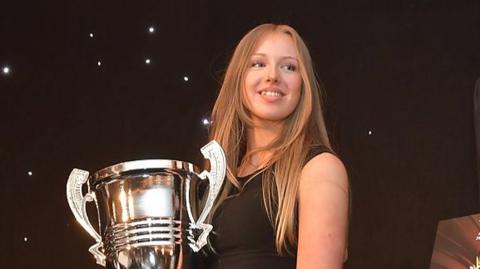
Creed highlighted tyre costs as one of the most surprising expenses in karting, with sets costing approximately £200.
"I think a lot of people don't realise how much they need to be changed," she said.
"A lot of people are changing tyres multiple times even in a day. Even the cost of the testing is something that I think people don't realise... even when you're not racing you're still paying to be on the track."
Regarding her plans for the current and upcoming seasons, Creed stated that securing a sponsor and progressing to the F1 Academy, an all-female series held during F1 weekends designed to support female drivers advancing to higher categories, are her priorities.
"I've only got the budget for three or four days of testing in the F4 car, which is to prepare me for next year and to prepare me to hopefully get the F1 Academy test at the end of the year in September," she said.
"A lot of the people that will be doing that are testing maybe 40 days."
When asked about the concern that a competitor's financial backing might outweigh her talent, Creed acknowledged this has "always been a big concern."
However, reflecting on her victory in the same series as F1 world champions Norris and Hamilton, she added:
"[It] reminds me that it's possible and they've taken the same path as me, they're doing the exact same things, so I know that I'm on the right path."


