

Steve Clarke aims to lead Scotland beyond group stage
After two matches in the World Cup, Scotland's chances of advancing from Group C remain uncertain. The team has secured three points with a 1-0 victory over Haiti and suffered a 1-0 defeat to Morocco.
This point total could suffice if Scotland avoids a heavy loss to Brazil on Wednesday at 23:00 BST. Securing a draw would almost guarantee their progression to the last 32.
What lessons have emerged from Scotland's two games in Boston before the Tartan Army travels to Miami?
Related articles include: Scotland expects: What is behind McTominay's understated World Cup?, Boston bounce sends Scotland to Miami with hope and no fear, and Referee told McGinn penalty denied as ball going out of play.
Lack of attacking thrust
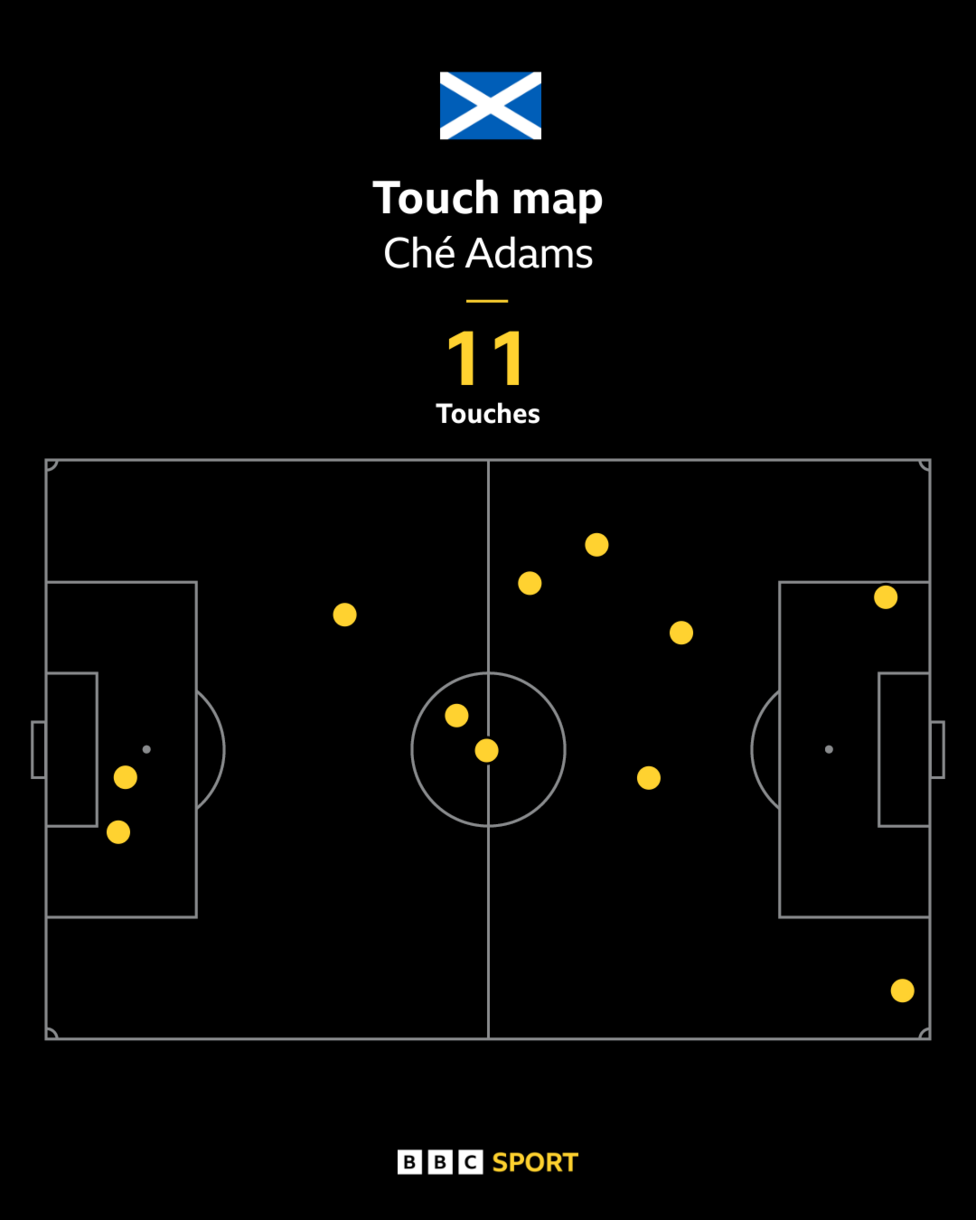
Che Adams recorded only 11 touches against Morocco.
Prior to the tournament, head coach Steve Clarke utilized a 4-4-2 formation in friendlies against Curacao and Bolivia, which yielded positive results. Scotland scored eight goals across those two matches against relatively weak opposition and appeared confident heading into the World Cup.
Clarke maintained this formation for the opening match against Haiti; however, Scotland registered fewer shots and a lower expected goals value (1.05 compared to Haiti's 1.21).
John McGinn's winning goal came via a deflection, while starting forwards Lawrence Shankland and Che Adams remained peripheral figures.
Shankland was benched against Morocco as Clarke strengthened the midfield, but Adams again struggled to influence the game. Frequently isolated upfront, Adams was unable to hold up possession or advance Scotland's play, managing only 11 touches before being replaced by Lyndon Dykes in the 71st minute. Scotland concluded the match without any shots on target.
Clarke is likely to retain the same system against Brazil, though personnel changes may occur. Dykes, Shankland, Ross Stewart, and George Hirst are contenders to lead the attack in place of Adams.
Winger Ben Gannon-Doak, who impressed against Haiti, injected much-needed energy off the bench as Scotland finished strongly against Morocco.
Another wide player, 19-year-old Findlay Curtis, has yet to debut in the World Cup but offers pace and skill. He may be considered during the upcoming match as Scotland seeks to alleviate pressure.
Defensive solidity
Despite difficulties creating significant chances in their two group matches, Scotland's defence has been largely reliable.
A single error against Morocco was costly when Ismael Saibari outpaced Grant Hanley to score the only goal within 70 seconds.

Following that early setback, Scotland's back four limited Morocco's high-quality chances.
Jack Hendry delivered an outstanding performance, using his pace and game reading to prevent further danger. His block to deny Saibari a second goal was particularly notable.
"Terrible start but the reaction to that was good," Clarke said after the match. "We had to dig in for five or 10 minutes just to get our feet in the game. This group of players, this squad, have shown that [resilience] in abundance over the years."
This resilience is encouraging for Scotland's third group game, where another strong defensive effort will be crucial.
Gunn justifies Clarke's faith
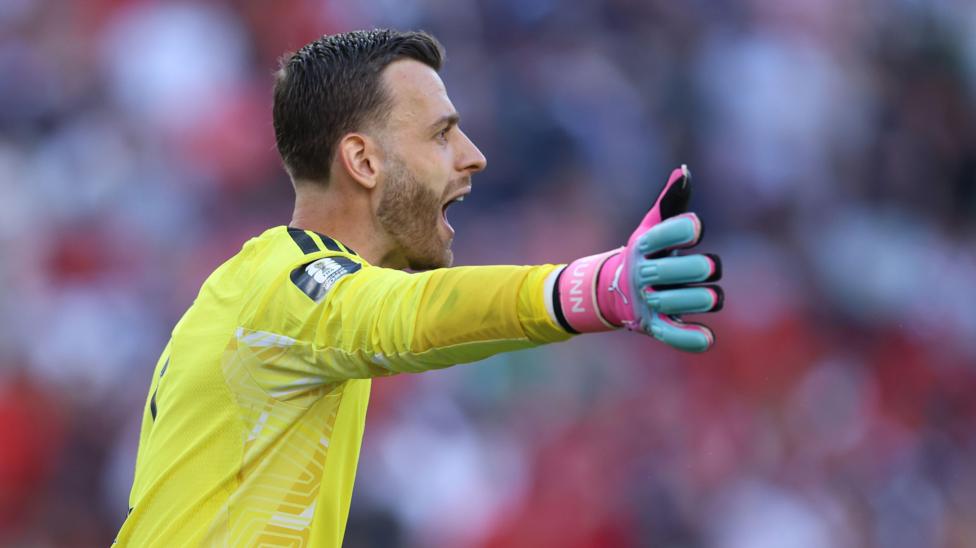
Angus Gunn was widely expected to be Scotland's first-choice goalkeeper for the tournament, but his limited playing time at Nottingham Forest last season cast some doubt.
After signing on a free transfer last summer following the expiration of his Norwich City contract, Gunn made only one club appearance, playing 45 minutes as a substitute in a 1-1 Premier League draw against Crystal Palace.
Nonetheless, Clarke selected Gunn over Craig Gordon and Liam Kelly, a decision that has proven justified so far.
A clean sheet against Haiti, despite a few tense moments, secured vital points in the quest for knockout qualification.
In the second match, Gunn was unable to stop Saibari's powerful strike but made several excellent saves to keep Scotland competitive, denying attempts from Achraf Hakimi, Bilal El Khannouss, and Chemsdine Talbi.
Similar performances will be necessary on Wednesday night.
Mixed midfield performance without Gilmour
Billy Gilmour was ruled out of the World Cup after sustaining a knee injury in a pre-tournament friendly against Curacao.
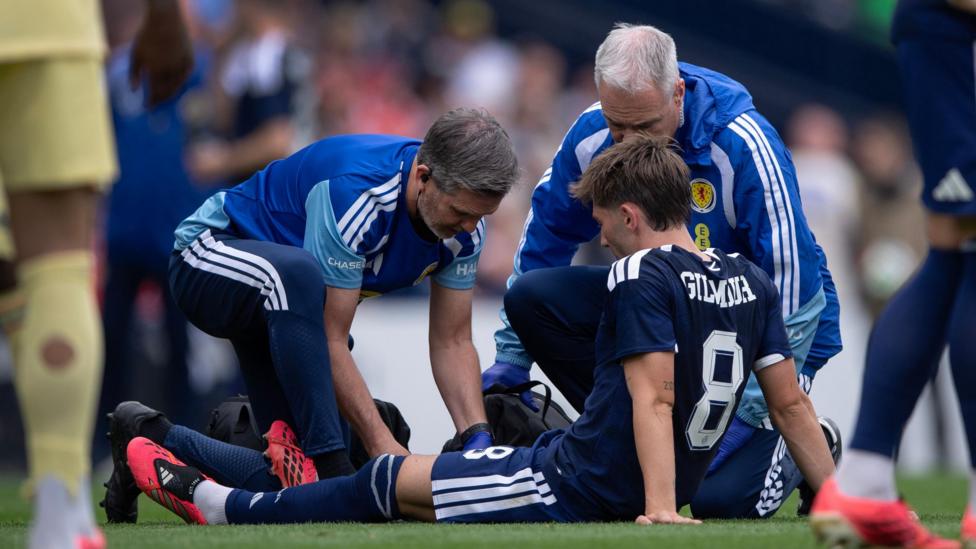
Although Gilmour remains with the squad in the United States, Scotland has missed the Napoli midfielder's calming presence in central midfield.
He suffered a knee injury during the friendly win over Curacao and was subsequently ruled out of the tournament. Manchester United youngster Tyler Fletcher was called up as his replacement.
In both matches, Scotland has struggled to maintain possession and build attacks through midfield. One of Gilmour's key strengths is his ability to receive the ball from centre-backs and advance play.
Against Haiti and Morocco, Scotland often retained possession at the back before resorting to long balls toward Adams.
Scott McTominay's subdued tournament start and Lewis Ferguson's diligent performances have been noted, but neither replicate Gilmour's style.


