

Enzo Maresca to Succeed Pep Guardiola at Manchester City
Enzo Maresca is set to replace Pep Guardiola as Manchester City manager at the end of the season.
When asked about their biggest football influences, many Premier League managers cite Pep Guardiola. As Guardiola prepares to leave Manchester City after a decade, his legacy extends far beyond the club he has managed. His tactical innovations have influenced teams across the Premier League, non-league football, and grassroots levels.
While Guardiola develops systems based on his football philosophy, his tactics are also shaped by the players available to him. This article examines how Guardiola has transformed the Premier League tactically.
Shot-Stoppers to Ball-Playing Goalkeepers and Back
Upon taking the Manchester City job, Guardiola made a bold decision to replace fan favourite Joe Hart with Claudio Bravo, and later Ederson. He sought a ball-playing goalkeeper, a concept uncommon in the Premier League at the time, and faced criticism for it.
Ten years later, it is more controversial to suggest a top-flight team does not require a goalkeeper comfortable with the ball at their feet. By the early 2020s, most Premier League clubs had transitioned from traditional shot-stoppers to goalkeepers proficient in passing, with varying success.
For example, Manchester United replaced David de Gea with Andre Onana; Arsenal swapped Aaron Ramsdale for David Raya; Chelsea moved from Edouard Mendy to Kepa Arrizabalaga and then Robert Sanchez. This trend was widespread.
However, Guardiola's long tenure at City has seen a partial reversal of this trend. The rise of man-to-man high pressing from goal-kicks has increased the risks of building play from the back, as attacking space is now higher up the pitch.
At City, Ederson—once emblematic of Guardiola's style—was replaced by Gianluigi Donnarumma, a goalkeeper less adept at passing. Donnarumma's one-on-one goalkeeping was crucial to Paris Saint-Germain's Champions League success last season, and Guardiola deemed a change in style worthwhile.
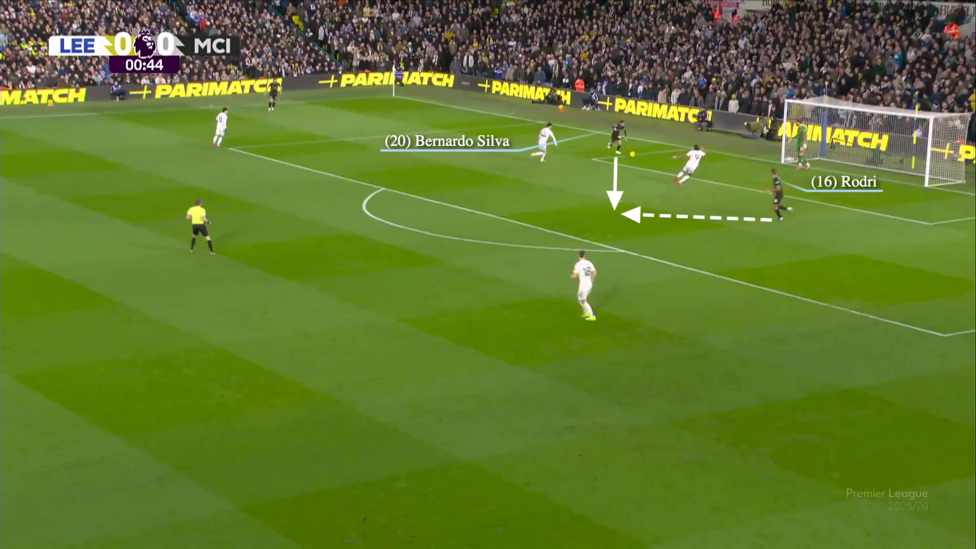
Against high-pressing teams, City have sometimes built play short by having midfielders like Bernardo Silva and Rodri drop deep to receive the ball directly from the goalkeeper. This approach resembles five-a-side football and may influence other teams in coming seasons.
City valued having an elite goalkeeper more in tight matches, a view shared by rivals. Manchester United replaced Onana with Senne Lammens, a more traditional goalkeeper, marking a full-circle moment over the decade.
To counter Leeds' high press and compensate for City's less technical goalkeeper and central defenders compared to players like Ederson, John Stones, and Aymeric Laporte, Guardiola deployed Bernardo Silva and Rodri in centre-back roles during goal-kicks.
The Ever-Evolving Use of Full-Backs
In 2018, City set a Premier League record by earning 100 points en route to Guardiola's first league title with the club. Early in the season, injuries to key signings left City short of full-back options, requiring tactical adaptation.
While much attention has been given to the squads Guardiola inherited, arguably his greatest strength is creating new tactical setups with available players, often in response to injuries.
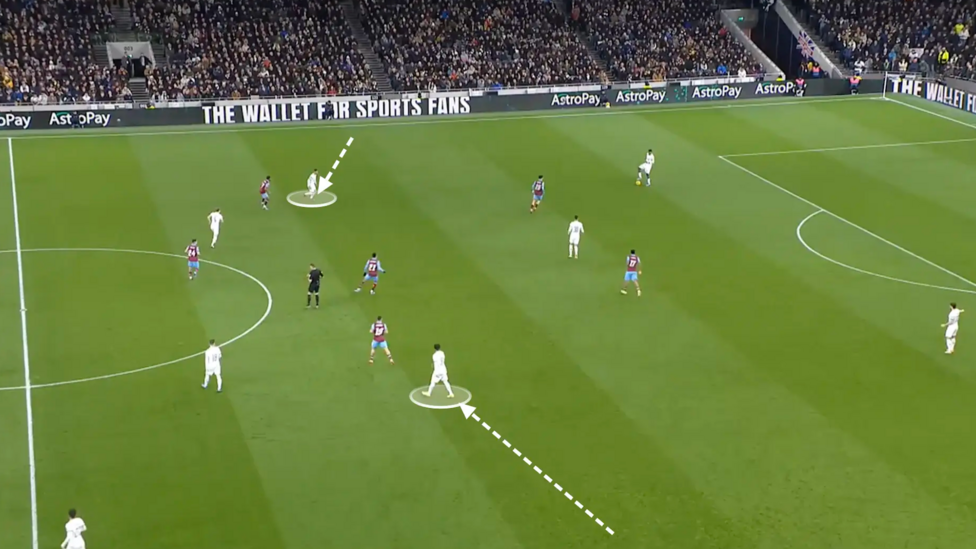
With no natural left-back available, Guardiola turned to left-footed players Oleksandr Zinchenko and Fabian Delph, noting their technical passing skills suited to playing infield. He inverted the left-back position next to the defensive midfielder, enhancing central security, improving build-up play, and allowing the left-winger to stay wide.
This approach disrupted opposition teams' defensive setups. When Mikel Arteta brought Zinchenko to Arsenal, the team played some of their most fluid football using inverted full-backs.
Guardiola admirer Ange Postecoglu employed a similar tactic at Tottenham, using Pedro Porro and Destiny Udogie as narrow full-backs alongside the defensive midfielder.
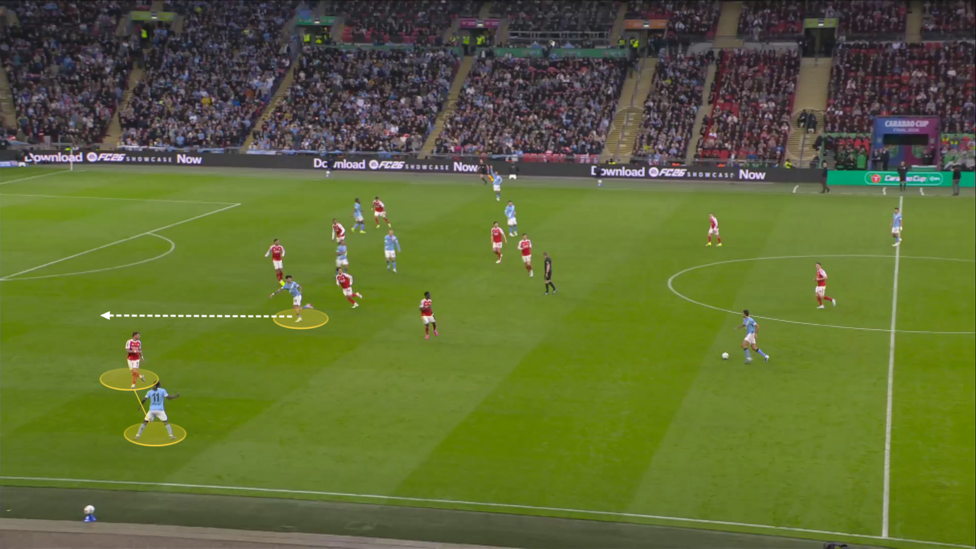
During the 2018-19 season, when Zinchenko was injured, left-footed centre-back Aymeric Laporte filled in at left-back. In City's 2022-23 treble-winning season, centre-backs Manuel Akanji and Nathan Ake played as right-back and left-back respectively, flanking Ruben Dias and John Stones, with Stones moving into midfield.
This innovation introduced the concept of using traditional centre-backs in wide defensive roles, strengthening the defense uniquely.
Newcastle's 6ft 7in defender Dan Burn has since played left-back, forming a back three on the ball and defending as a left-back out of possession.
Guardiola has also experimented with more attack-minded defenders like Joao Cancelo and now Nico O'Reilly at full-back, positioning them centrally and higher up the pitch to contribute offensively.
Managers such as Mikel Arteta and former Chelsea boss Enzo Maresca—both former Guardiola assistants—have used players like Jurrien Timber, Riccardo Calafiori, Malo Gusto, and Marc Cucurella in similarly attacking full-back roles.
The latest evolution of Guardiola's full-back role is exemplified by Nico O'Reilly, a wide defender in a back four who can step alongside the defensive midfielder during build-up, drift to the left flank to deliver crosses, or attack the box to score.
From Fast Breaks to Controlled Possession
Guardiola has consistently advocated dominating possession. Early in his managerial career at Barcelona, he admitted privately to betraying his principles in a match against Inter Milan.
Having selected Zlatan Ibrahimovic up front, he played with less possession than usual and focused on quick attacks. Soon after, he vowed to himself that even if he failed, he would do so adhering to his principles.
Under Guardiola, City have maintained high possession rates, aided by midfielders acting as inverted full-backs and technical players across the pitch. In the 2017-18 season, City averaged 71.9% possession per game and have not fallen below 60% in any subsequent season.
Winning six Premier League titles in seven seasons with this approach has made controlled, positional, high-possession football the norm.
Liverpool manager Arne Slot won the Premier League in his first season by adopting principles closer to Guardiola's than Jurgen Klopp's intense style. Similarly, Arteta's Arsenal have combined strong defensive records with ball retention.
Brighton's sustainable success model stems from coaches like Roberto de Zerbi and Fabian Hurzeler, who emphasize possession-based control.
Coaches such as Scott Parker, Vincent Kompany, and Russell Martin have also pursued this philosophy in the Premier League but have struggled due to player quality and reluctance to adapt, underscoring Guardiola's influence.
Before Guardiola, English football was known for intensity, directness, and fast counter-attacks, epitomized by Sir Alex Ferguson's Manchester United. United under Michael Carrick have leaned into these traditional counter-attacking roots, but Guardiola's significant achievement has been to enter a league shaped by Ferguson's tactics and alter the dominant style of its top teams.
Guardiola's First-Mover Advantage
Guardiola has transformed the Premier League's tactical landscape while adapting to its challenges. Contrary to perceptions that his style is rigid and imposed on the league, he maintains fundamental principles but adjusts tactics swiftly to suit new players and challenges.
His ability to adapt to player quality and exploit league weaknesses has enabled consistent success, whether employing traditional or inverted wingers and full-backs, or using false nines or natural strikers.
When other managers adopted Guardiola's methods, they often found that by the time they replicated his tactics, Guardiola and Manchester City had already evolved their approach.


