

Arsenal and PSG Secure Spots in 2026 Champions League Final
Arsenal and Paris Saint-Germain have confirmed their places in the 2026 Champions League final following victories over Atletico Madrid and Bayern Munich, respectively. The final will feature the Premier League leaders Arsenal against the reigning Champions League holders PSG.
The match is scheduled for Saturday, 30 May at Budapest's Puskas Arena, with kickoff set for 17:00 BST. UEFA announced the earlier kickoff time, a change from the traditional 20:00 start, to "enhance the matchday experience and benefit fans, teams and host cities."
This will be Arsenal's first Champions League final appearance in 20 years, while PSG will aim to defend their 2025 title.
Here is everything you need to know about the upcoming match.
Saka the Hero as Arsenal Reach First Champions League Final in 20 Years
How Can You Get Tickets?
With the Champions League final 24 days away, ticket sales are already underway and fans are urged to act quickly. Arsenal fans with first priority access can begin purchasing tickets from 13:00 on Thursday.
Only 16,824 tickets are available for Arsenal supporters, meaning many season-ticket holders may be disappointed. Priority is given to those who have attended a sufficient number of qualifying home and away games, guaranteeing them a ticket.
A second eligibility window has been established for other season-ticket holders, who must enter a ballot for a chance to purchase tickets depending on availability after the first sale.
Ticket prices are on a first-come, first-served basis, starting at 70 euros (£61). Prices increase to 180 euros (£156), 650 euros (£562), and 950 euros (£821), with some tickets offered at a reduced price for restricted views.
Approximately 4,600 tickets are available to the general public. The remaining 21,400 tickets, about a third of the stadium's capacity, are allocated to the local organizing committee, UEFA's member national associations, commercial partners, broadcasters, and the wider UEFA football community.
Where Is the Match Being Played?
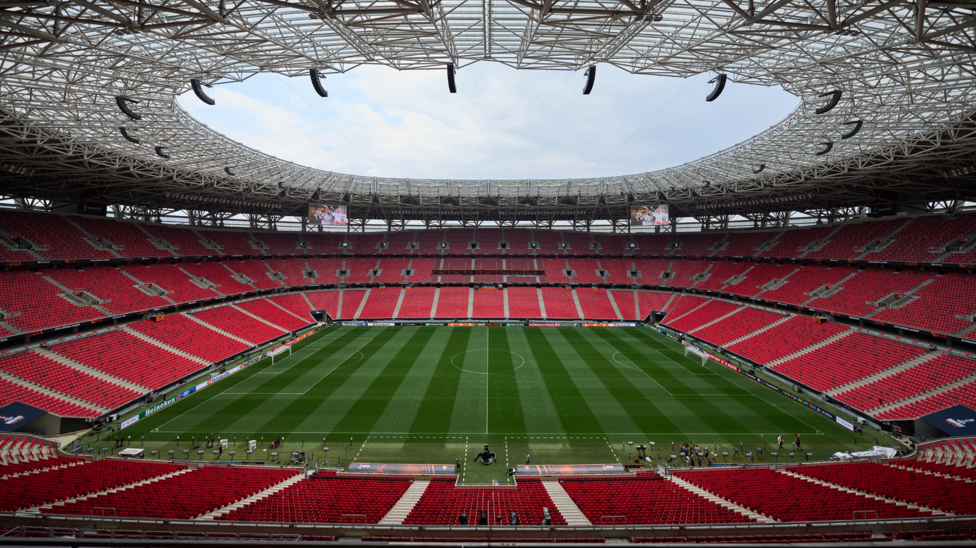
The final will be held at the Puskas Arena in Budapest, marking the first time this stadium has hosted a Champions League final.
The Puskas Arena, with a capacity of 67,000, is located in eastern Budapest and serves as the home stadium for the Hungary national football team. It is named after Ferenc Puskas, the legendary Hungarian captain, who also has FIFA's award for the best goal of the year named in his honor.
UEFA selects stadiums for major European finals through a bidding process involving football associations and stadiums. The Puskas Arena has previously hosted Champions League matches as well as the 2023 Europa League final.
What Do the Stats Say?
Arsenal's Champions League campaign has been characterized by control rather than flamboyance, reflected in their statistics. The team boasts one of Europe's most potent attacks combined with the competition's stingiest defense.

Arsenal have scored 29 goals, placing them among the top scorers, but it is their defensive record of conceding only six goals—the best in the competition—that stands out. This indicates a team that absorbs pressure effectively, applies it strategically, and rarely loses composure.
The Gunners reached the final with nine clean sheets, more than any other team in the tournament.
Despite their Premier League reputation for set-piece efficiency, Mikel Arteta's side have scored only five set-piece goals in the Champions League, highlighting a tactical shift that emphasizes adaptability to the rhythm of continental football.
In possession, Arsenal maintain a clear attacking identity, with goals distributed across various phases of play, predominantly from open play.
Arsenal's record of 11 wins underscores their control of critical moments throughout the campaign, and they remain the only unbeaten team left in the competition.
Whether they maintain this approach or adjust tactics against PSG in the final on 30 May, as they pursue their first European title, remains a key consideration for Arteta.
How Could the Tactics Make an Impact?
The final will be a rematch of last season's semi-final, which PSG won 3-1 on aggregate.
In the first leg of that semi-final, Mikel Arteta acknowledged that his pressing shape was flawed. Within the first 20 minutes, Arsenal's 4-4-2 formation was exploited by PSG's rotations. Ousmane Dembele dropped into midfield and, alongside the midfield trio, helped PSG outnumber Arsenal centrally. PSG scored the opening goal during this period at the Emirates Stadium, gaining a lead they defended successfully.
"Arteta will go into the final being aware of the positional freedom Luis Enrique affords Dembele, and provisionally may opt for the defensive tweak that worked well last season - a 4-2-3-1 shape with Odegaard deeper to support his midfield."
Despite relying more on fast attacks this season, Arsenal have found their greatest success by dominating possession high up the pitch. Atletico Madrid sat back for much of their semi-final against Arsenal but had their best moments when pressing Arsenal early and aggressively.
Similarly, PSG are expected to disrupt Arsenal's possession through high pressing, likely employing man-to-man marking. The intensity from forwards such as Dembele, Khvicha Kvaratskhelia, and Desire Doue will aim to force early turnovers and create scoring opportunities or compel Arsenal into long balls, betting on defenders like Marquinhos and Willian Pacho to win aerial duels.
With the aerially dominant Mikel Merino unavailable and Kai Havertz returning to full fitness, if Gyokeres is tasked with challenging PSG's defenders, maintaining possession may prove more difficult for Arsenal.
Against Bayern Munich, PSG frequently defended using man-to-man marking. Should they adopt this approach against Arsenal, the Gunners may seek to exploit space behind defenders by drawing them deeper with attacking movements.
Alternatively, PSG might choose to defend deeper if Arsenal dominate possession as they did last season. In those matches, goalkeeper Gianluigi Donnarumma's individual brilliance was crucial in saving PSG on multiple occasions. With Matvey Safonov in goal for PSG this season, a deep defensive setup carries increased risk.
This article is part of 's Ask Me Anything series.
More Questions Answered
- Can stats pick out the Championship play-off winner?
- How many points do you need to stay in the Premier League?
- Who has qualified for next season's Champions League?


