Charlie O'Leary's Enduring Legacy in Irish Football
When it comes to football on the island of Ireland, few have witnessed or contributed as extensively as 102-year-old Charlie O'Leary. His involvement spans decades, from serving as the Republic of Ireland's kitman at two World Cups and a European Championship to refereeing matches behind the Iron Curtain. The Dubliner holds an almost legendary status within Irish football circles.
Less widely known is O'Leary's foundational role in establishing the "street leagues," which played a crucial part in developing the talents of some of the finest players in the histories of both the Republic of Ireland and Northern Ireland.
His remarkable story is now the subject of a new film premiering at the Dublin International Film Festival on Tuesday.
Golden Era Contributions and Street Leagues Origins
As the Republic of Ireland's kitman, O'Leary was integral to the national team during its golden era, witnessing landmark victories such as Ireland's defeat of England in Stuttgart at Euro 1988 and the stunning win over Italy in New York at the 1994 World Cup.
His influence extends beyond these iconic moments through the street leagues, which he founded in East Wall, Dublin, in 1945. Charlie proposed to the local priest the idea of utilizing the parish church's juvenile sodality—a religious group for young parishioners—as the foundation for a football league.
The sodality was organized by local streets, leading to the creation of the street leagues.
"Schoolboy football hadn't been organised and there was nowhere for a young boy around 14 if he wanted to play football," Charlie explained. "At least this gave those kids at that age a chance of representing those roads in football and getting them interested. So we formed the leagues and they really cottoned on."
The leagues quickly gained popularity, spreading across Dublin by the 1950s and later to cities across the island, including Belfast.
Expansion and Impact Across Ireland
The street leagues first took hold in east Belfast, where workers from the Harland and Wolff shipyard were among the earliest participants. The leagues featured young men who would later achieve sporting greatness.
In the Republic of Ireland, notable players who emerged from the street leagues include Tony Dunne, who won the European Cup with Manchester United in 1968; Liam Brady, who secured the FA Cup with Arsenal and two Serie A titles with Juventus; and Johnny Giles, a key figure in Leeds United's successful teams of the 1960s and 1970s.
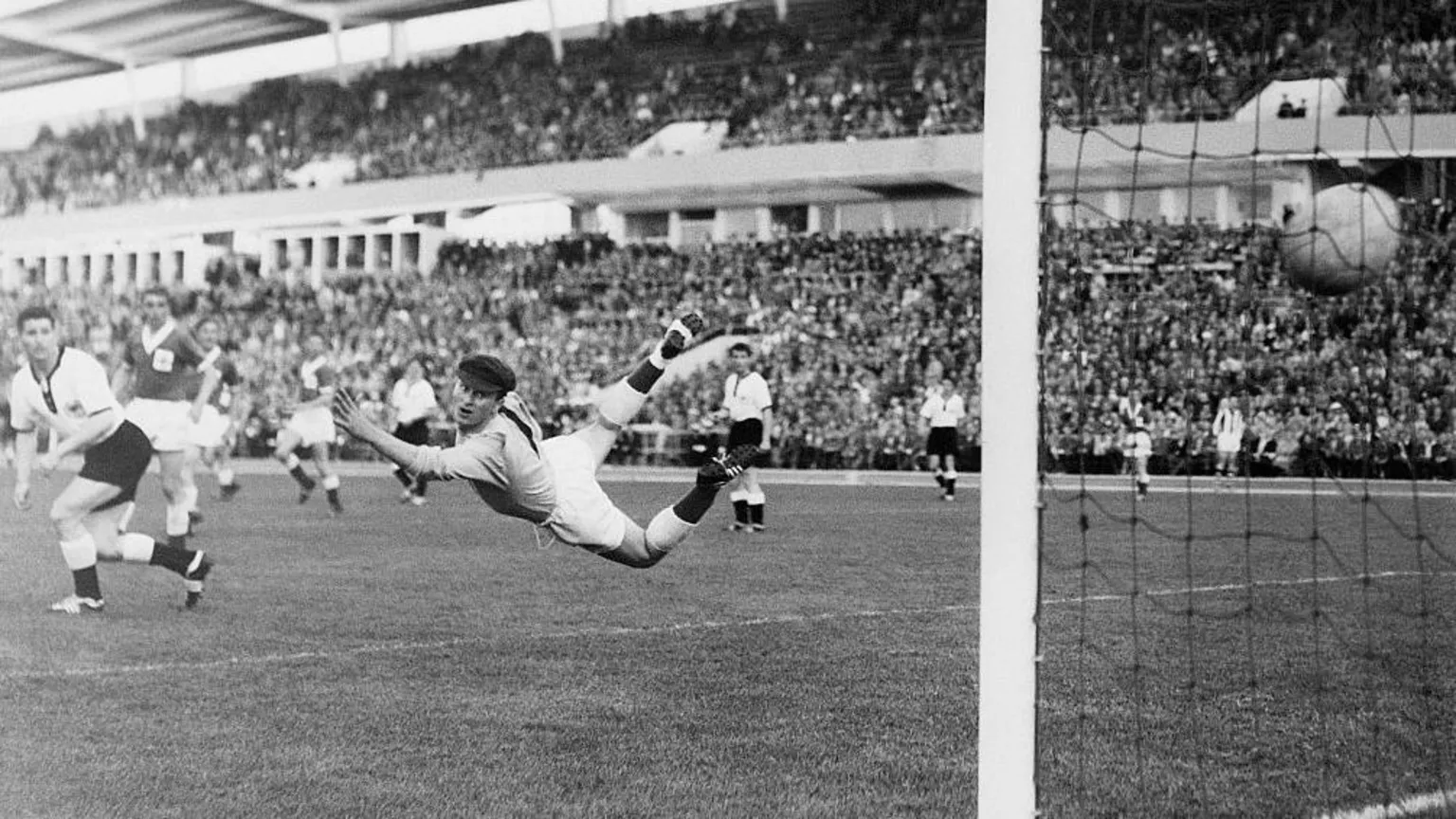
In Northern Ireland, at least three members of the 1958 World Cup squad—Harry Gregg, Bertie Peacock, and Jimmy McIlroy—had participated in the street leagues.
In subsequent years, Manchester United's Sammy McIlroy, who later managed Northern Ireland, and Jimmy Nicholl, the current Northern Ireland assistant manager, also took part in the leagues.
There was an early indication of the leagues' significance in 1957 when the Republic of Ireland B team played Romania B in Dublin.
"There was Liam Tuohy of Newcastle, Noel Payton of Leeds and Dickie Whittaker of Chelsea, all three of them standing together, shoulder to shoulder, for the national anthem," Charlie recalled. "Each of those had played, you could pull a curtain over where they lived, the houses were that close. On one day they represented Ireland and all played in the street leagues."
A Life Spanning Irish Football History
Charlie O'Leary was born just months before the Irish Free State—then the country's name—played its first international football match. His life story, which parallels the entire history of the national team, is featured in the film The Charlie O'Leary Story - From Johnny Cullen's Hill to the Olympic Stadium Rome.
Fergus Dowd, the film's producer alongside Joe Lee, emphasized the street leagues' role in providing opportunities to young people who might not have had them otherwise.
"One of the players said to Charlie it was like playing for your country, you played for your street but you were amongst friends and it was really community based," Dowd said. "I think in a sense we've really sort of lost that innocence - these kids had a jersey on, they were representing the road and their mothers and fathers were watching, so it was a massive community event. Nowadays a lot of the clubs here have their own academies whereas this grew very much organically and it was down to Charlie's idea of making it happen."
The leagues continued into the 1970s, nurturing talents such as Gerry Armstrong, who delivered Northern Ireland's greatest moment on the world stage.
Iconic Victories and Personal Highlights
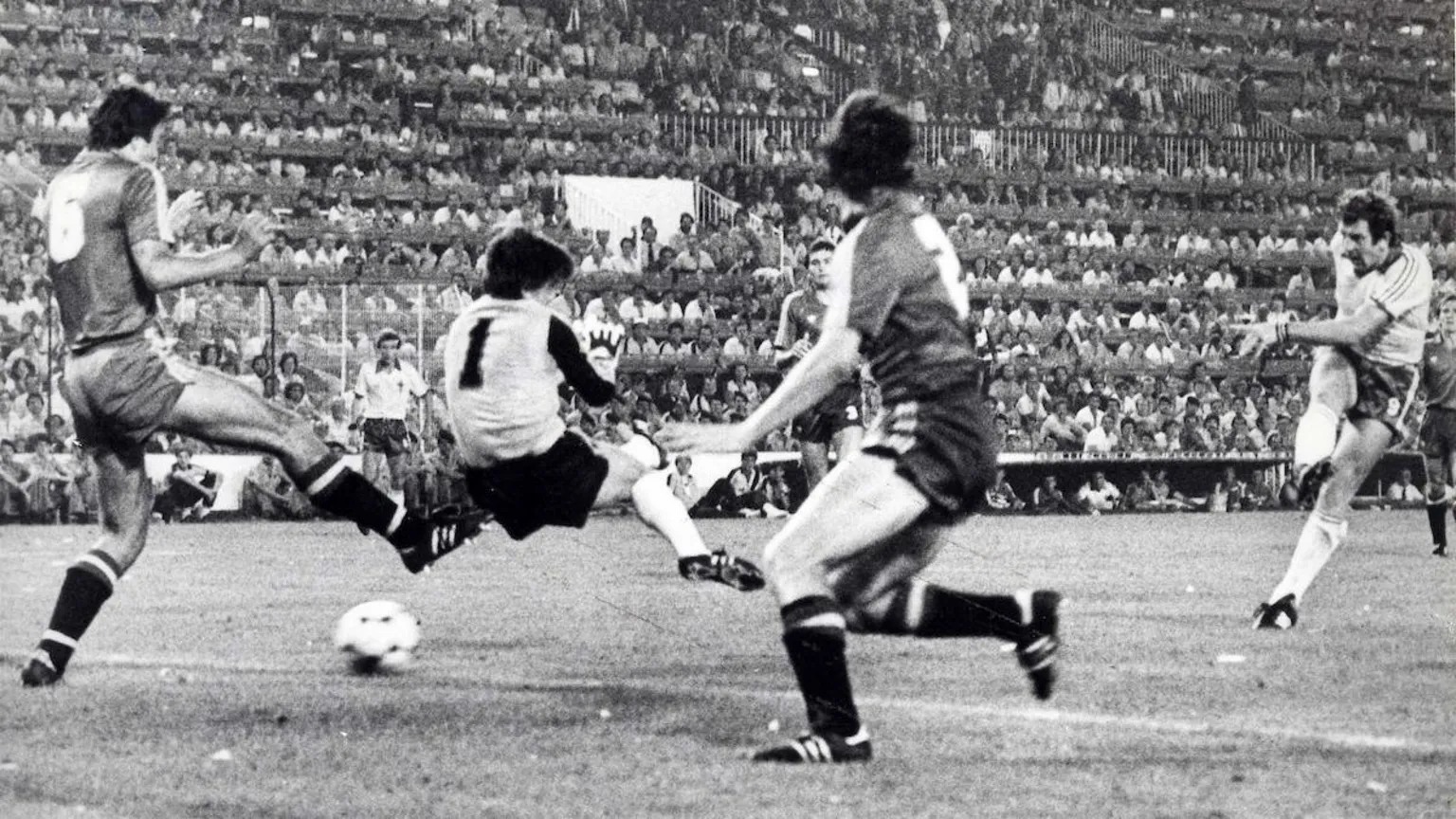
Several years after Armstrong's iconic goal secured Northern Ireland's 1-0 victory over hosts Spain in the 1982 World Cup, the Republic of Ireland celebrated a shock victory of their own. They defeated England 1-0 at Euro 1988, with Charlie watching from the dugout, having been appointed kitman two years earlier.
"I saw grown men cry," Charlie said. "There was a man who used to live next door to me and he had gone with his son and he came over to me and he was sobbing. He said 'Charlie, I can boast, I was here when we beat England'."
Six years later, Charlie was again present for another iconic win against Italy at the World Cup.
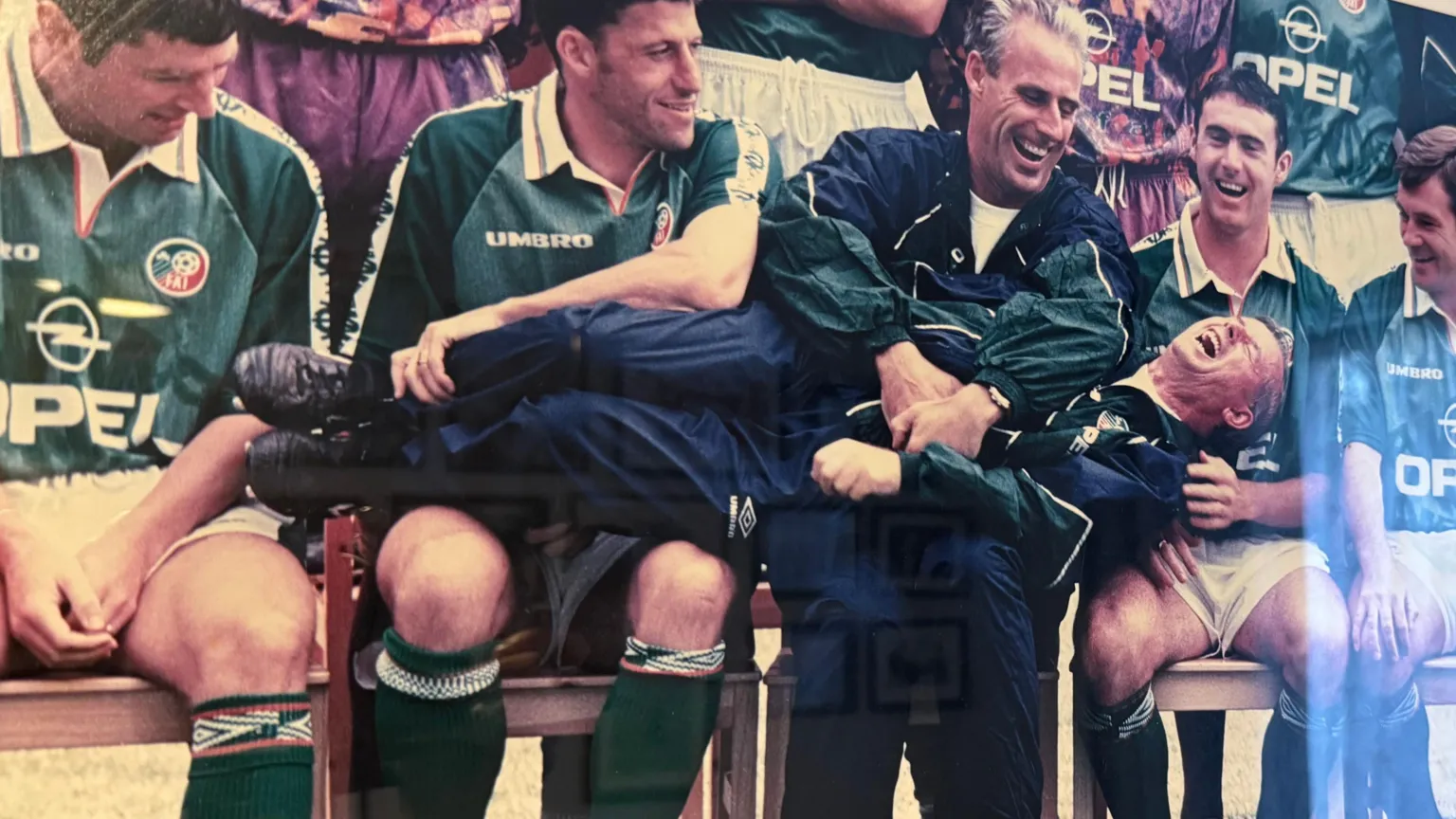
These great victories were orchestrated by Jack Charlton, whom Charlie described as the best man manager he ever worked under.
He recalled an incident when Charlton questioned him after some players were involved in a "drinking session" the previous night that ended in a "rumpus."
"He said 'I'm asking you a simple question, what happened last night?'," Charlie recounted. "I said 'boss hang on a second, if I tell you then you're involved and you've got problems to resolve. I tell you what I'll do, if I say to you everything is resolved, then it's all resolved. So Jack said, 'that's all I want to know, we'll leave it at that,' I got away with that gag every time there was a problem."
Refereeing Behind the Iron Curtain and Meeting the Pope
Beyond his backroom role during Ireland's famous victories, Charlie also refereed matches in East Germany during the Cold War, an experience he described as "a bit frightening."
When asked about his favourite moment, Charlie highlighted a deeply personal experience.
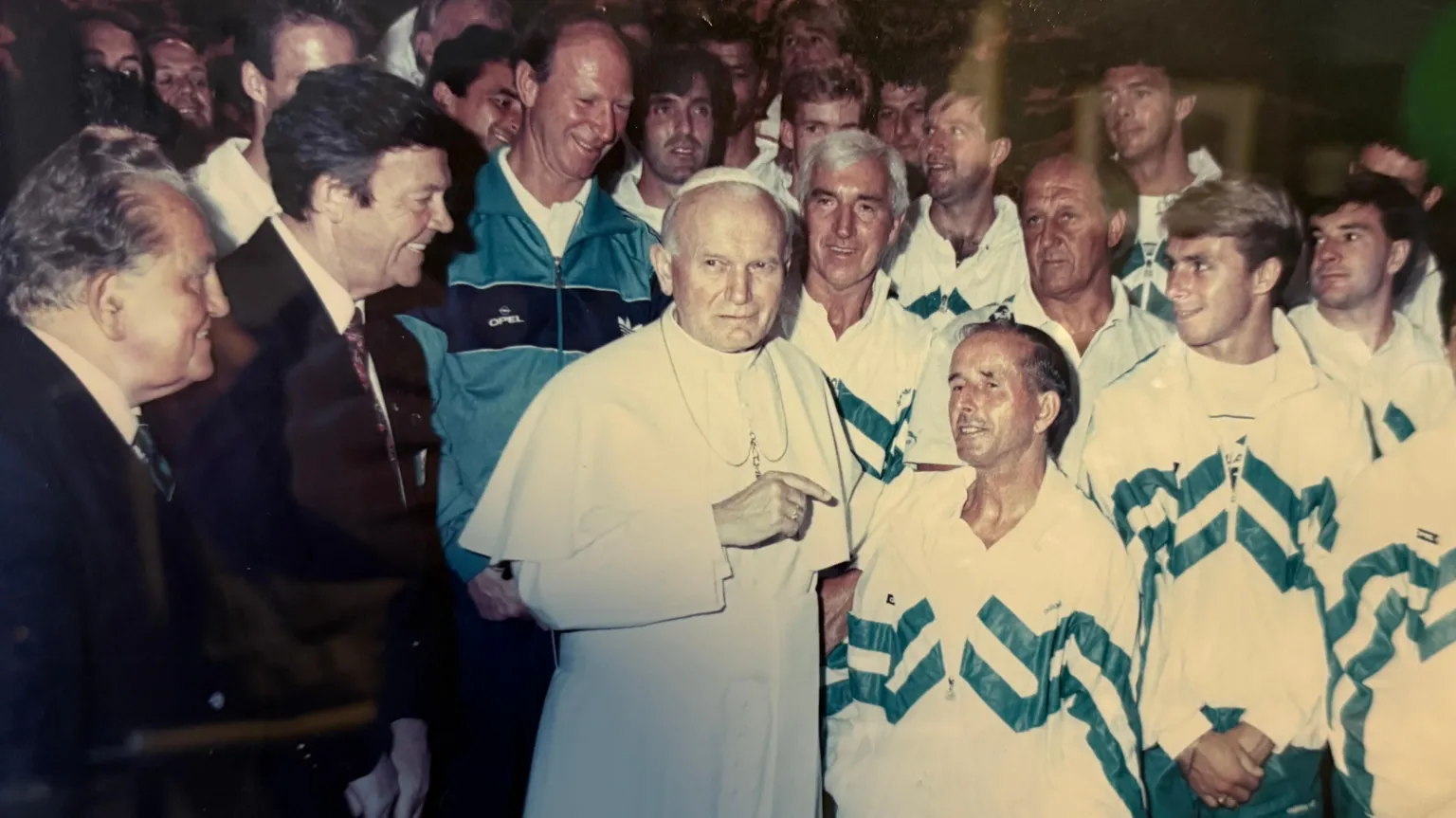
"I have to say, I'm a Roman Catholic, when we went to Italy [for the 1990 World Cup] we were brought to see the Pope," he said. "I was frozen, I couldn't speak. People say, I said this and I said that, I don't remember saying that. But that to me was the biggest thrill I ever got in my life."