

Second Test, Day Two: New Zealand 391; England 222-6
Debutant Cox Tasked with Guiding England’s Tail
Despite the challenges he faced over five years, Joe Root accepted the role of stand-in captain for England following the absence of Ben Stokes. However, the decision likely came with some reservations, recalling the difficult final phase of Root’s captaincy when his personal batting success could not halt the team’s decline.
The second day of the Test at the Oval proved testing for this significantly altered England side. After failing to restrict New Zealand’s innings earlier, England closed at 222 for six, trailing by 169 runs.
The performance of Jordan Cox, unbeaten on 22 in his debut, will be crucial in managing England’s extended tail. This task will be demanding given New Zealand’s formidable four-pronged bowling attack, spearheaded by the consistently effective Matt Henry, who executed well-devised strategies.
One notable tactic was the adjustment following Harry Brook’s aggressive footwork and an audacious square-driven six early in his innings. This prompted wicketkeeper Tom Blundell to advance to the stumps, limiting Brook’s movement, which led to Henry securing two vital lbw dismissals, removing Root (46) and Brook (24) to England’s disappointment.
New Zealand’s Strong Batting Display
The morning session was particularly frustrating for England as New Zealand added a solid 100 runs to their overnight total of 291 for seven. Glenn Phillips managed the tail effectively, overcoming a short-ball strategy that was poorly executed by England’s bowlers to achieve his maiden Test century. In doing so, Phillips became only the third New Zealander to score centuries in all three formats of international cricket.
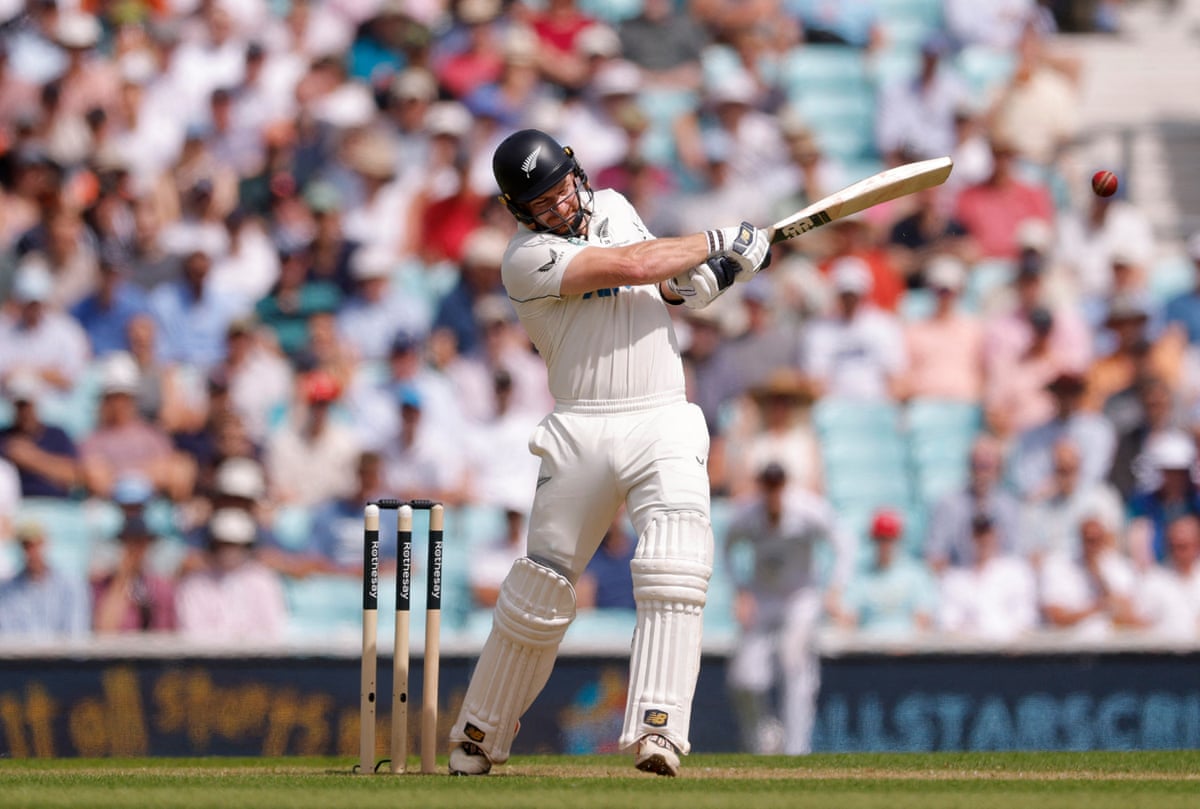
The extent to which Root influenced this outcome is debatable. While he was the acting captain on the field, stand-in captains often do not have the authority to overhaul established plans. Under Stokes’ leadership, England frequently targeted the lower order aggressively, which sometimes yielded success.

Root also had to manage a relatively inexperienced bowling attack. His most seasoned bowler, Jofra Archer, appeared fatigued after his efforts on day one and was not introduced into the attack until 90 minutes and a substantial number of runs had passed. This was not unexpected given Archer’s recent limited bowling workload, consisting mainly of four-over spells over two months.
The match situation might have differed had Ben Duckett not dropped a straightforward catch in the deep when Kyle Jamieson was on 15 runs. The catch was offered to Duckett off the bowling of Sonny Baker, a rookie bowler who was initially elated to see the ball travel directly to the fielder but was left disappointed when the catch was not held.
Jamieson capitalized on this reprieve, scoring 41 runs and forming an 87-run eighth-wicket partnership with Phillips. Phillips’ innings was commendable, especially considering he had withstood a challenging spell from Archer the previous evening and less precise bowling from Baker and Josh Tongue on the second day, eventually reaching 100 runs from 135 balls.
England’s Batting Challenges Continue
Root also faced frustration when Duckett was run out for 36 off 25 balls. Duckett appeared to be in good form on this pitch, but a miscommunication with his new opening partner, Emilio Gay, led to a non-existent single being called. Nathan Smith seized the opportunity from cover, accurately hitting the stumps to dismiss Duckett.
Rob Key, England’s director of cricket, likened Root’s temporary captaincy role to the numerous occasions he has "dug England out of a hole from 10 for two." Root returned to the crease with England at 68 for two in the afternoon session after Smith dismissed Jacob Bethell for nine with skilful wobble-seam bowling.
Gay, showing resilience, recovered from the earlier mix-up to register his second Test half-century and shared a 74-run partnership with Root. The Oval’s boundary dimensions, with square boundaries extending to the rope, complement Gay’s left-handed batting style.
However, Gay’s innings ended shortly after his milestone when he was dismissed by a fierce delivery from Will O’Rourke, a fast bowler known for making his short balls deviate sharply off the seam. The dismissal required a review, as only a couple of slip fielders noticed the ball had brushed the shoulder of Gay’s bat during the dismissal.


