

Climate Crisis Evident in Sports Amid Rising Temperatures
The ongoing climate crisis is increasingly visible in daily sports activities, highlighting the stark contrast between professional athletes and the general public during periods of extreme heat. While many avoid planned outdoor events due to the oppressive weather, elite athletes continue to perform demanding physical feats under intense conditions.
Unlike most non-athletes, who struggle with the heat and seek ways to cool down, professional sportspeople endure strenuous exertion. For instance, they sprint 22 yards wearing heavy protective gear, all while coping with relentless sweat and heat exposure.
Personally, the past week has involved figuring out how to minimize activity or perform tasks with reduced effort, often hindered by poor sleep. Conversations among friends have revolved around innovative cooling strategies, such as placing frozen water bottles in front of fans, and recounting public transport experiences as if surviving a battle.
Due to the severity of the heat, cycling to work has become hazardous, leading to a preference for staying indoors with curtains drawn, observing others exert themselves and questioning our shared human resilience.
Tennis at Eastbourne Demonstrates Athlete Resilience
The tennis tournament at Eastbourne showcased players calmly managing the heat, sitting under umbrellas, hydrating with electrolytes, and controlling their heart rates with remarkable composure. Their comfort contrasted sharply with the discomfort experienced by spectators, even those at rest.

Jack Draper, after winning his first-round match, commented on the conditions, noting that the UK heat was manageable compared to the humidity experienced on the North American circuit in late summer.
“It makes me laugh a little bit when in the UK we talk about weather warnings … when it’s just hot, it’s usually pretty manageable.”
This observation raises the question of whether British sport is beginning to accept extreme heat as a norm. Despite red weather alerts, spectators continue to attend events at Eastbourne and Roehampton, where Wimbledon qualifiers are underway. Television coverage captures dedicated fans enduring the heat, queuing for ice cream, and using fans to cool themselves. Some adopt Wimbledon’s protocol for ballboys and girls by draping towels around their necks beneath caps, creating scenes reminiscent of the French Foreign Legion.
Cricket in Bristol Implements Heat Safety Measures
In Bristol, a double-header cricket match took place under temperatures reaching 31°C. Although expected to be a sell-out, approximately 2,000 children were absent due to school closures by some councils. Nevertheless, the 3,500 attendees benefited from special provisions, including sprinklers for children to cool off and a dedicated cool room in the pavilion that was frequently used.

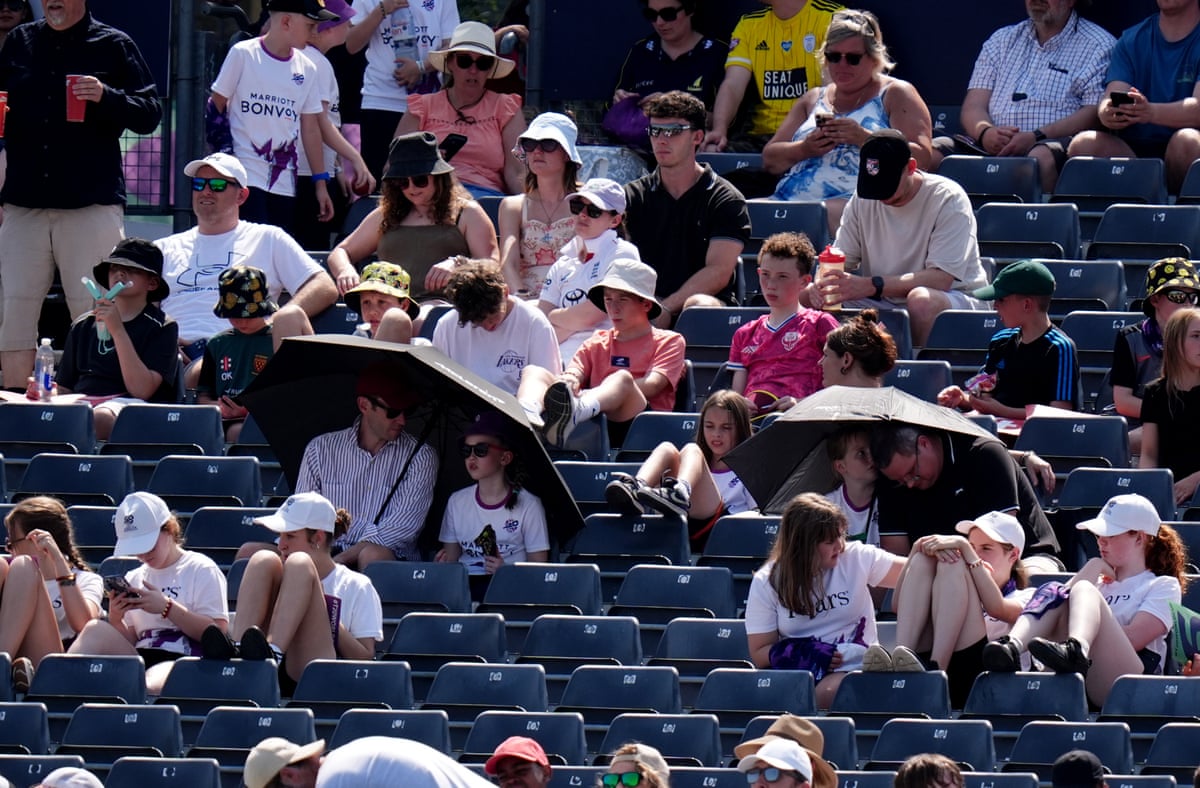
These preventive measures appeared effective, with only five visits by St John Ambulance reported during the day.
Sports Fans Adapt to Heat as New Challenge
Traditionally, British sports fans are known for enduring cold weather, such as John Motson reporting during snowstorms or cricket enthusiasts bundled in blankets early in the season. With rising temperatures, enduring heat may become the new hallmark of fan dedication.
Instead of rain delays, heat now interrupts play. For example, at Roehampton, Dan Evans was forced off the court for over an hour during his final Wimbledon appearance when a power outage disabled the electronic line-calling system, suspending play across all courts.
Changing Social Habits Reflect Heatwave Impact
On a sultry Tuesday evening, the atmosphere resembled that of southern Europe, with drinkers gathering outdoors rather than inside pubs to watch England versus Ghana, seeking any available breeze. The shift in social habits, including lighter drinks and late-night World Cup matches, suggests adaptation to the new climate reality. This raises questions about the potential for adopting siestas and extended licensing hours in the future.
Wimbledon Implements Enhanced Heat Protocols
The All England Club has learned from last year’s experience, which included amber weather warnings and incidents of heat-related spectator collapse. This year’s Wimbledon qualifiers feature additional water stations and a new shaded “guest village” to provide shelter.
Michelle Dite, the operations director, emphasizes the importance of preparation and personal responsibility in managing heat risks.
“We’re providing an environment where people are very safe. We just ask them to take personal responsibility.”
The heatwave is expected to end before the main tournament begins, with forecasted temperatures around 27°C, which previously might have been described as a “scorcher.” However, as Dite notes, handling extreme heat has become business as usual.
Sports Fans’ Attitude Mirrors Humanity’s Climate Response
This normalization of extreme heat in sports reflects a broader societal attitude characterized by a mix of optimism and fatalism. Fans often hold unrealistic hopes for positive outcomes while acknowledging the inevitability of adverse events. This duality encapsulates humanity’s complex response to the climate crisis.


