Trump says US close to ‘finishing the job’ in Iran
Donald Trump has stated that the United States is approaching the completion of its core strategic objectives in Iran and is close to “finishing the job.” He reiterated a timeline of “two to three weeks” for concluding the operation.
Following this statement, Trump criticized US allies for not participating in the operation against Iran and emphasized that they must assume responsibility for reopening the Strait of Hormuz.
In recent days, Trump has asserted that the US does not depend on the Strait of Hormuz for its oil supply and therefore will not take responsibility for reopening this critical waterway.
On Tuesday, he told reporters that the responsibility for keeping the Strait of Hormuz open lies with the countries that rely on it, stating,
“That’s not for us … That’ll be for whoever’s using the strait.”
Trump claimed that Iran was “right at the doorstep” of acquiring a nuclear weapon.
Earlier on Wednesday, the president expressed indifference regarding Iran’s stockpile of highly enriched uranium (HEU), arguing that it is stored deep underground and can be monitored by satellite.
Experts have noted that if the US-Israeli offensive against Iran ends with the Tehran government retaining control of its 440kg HEU stockpile, Iran would be significantly closer to the capability of producing nuclear warheads than if the US had pursued a potential negotiated settlement that was available when the war began on 28 February.
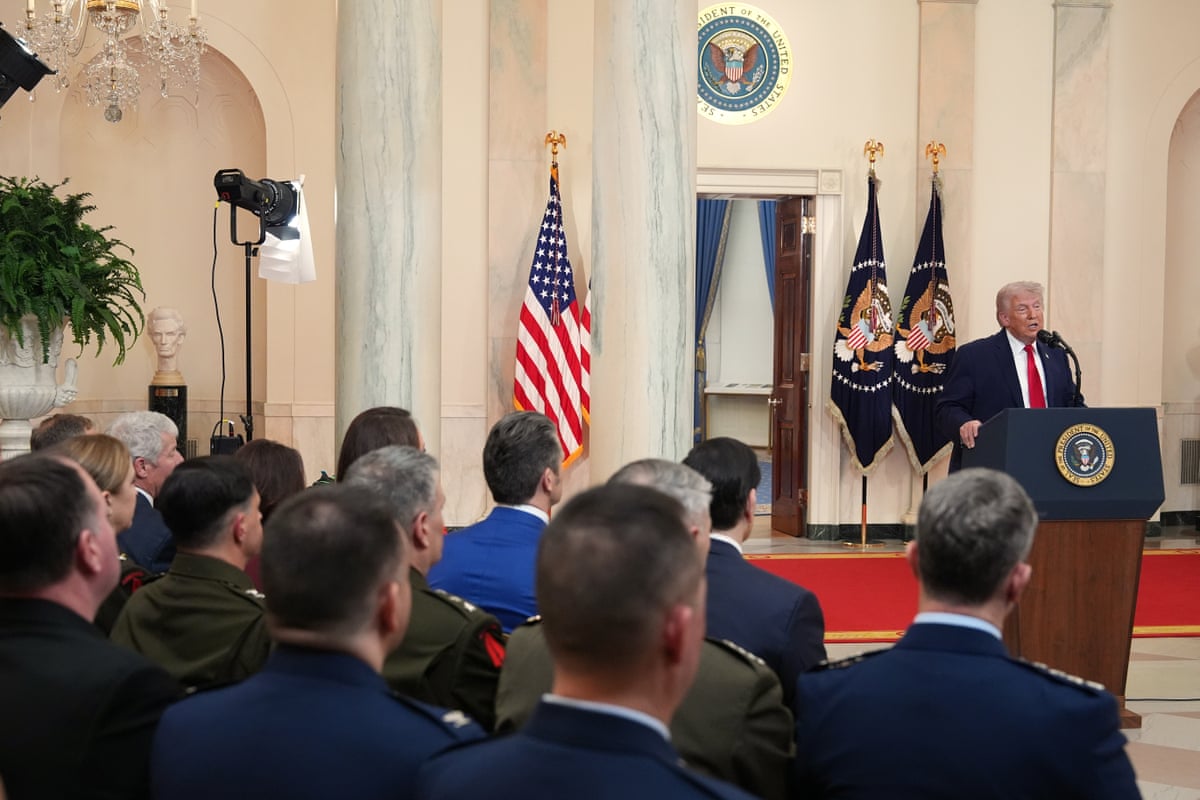
Trump makes the case for the Iran war
The president has begun outlining the rationale behind the war in Iran.
He stated,
“From the very beginning my campaign for president in 2015, I said I would never allow Iran to have a nuclear weapon. This regime has been chanting death to America, death to Israel.”
Trump reviewed his approach to Iran during his first and second terms, including his withdrawal from the 2015 nuclear deal negotiated by the Obama administration with Tehran to limit uranium enrichment.
He praised the successes achieved by the US in Iran, saying,
“Iran’s navy is gone. Their Air Force is in ruins … Very few are left.”
He also commended the operation to remove Nicolas Maduro in Venezuela in January, stating,
“We are working along Venezuela .. true partners and we are getting along incredibly well.”
Trump begins address to the nation
Donald Trump is currently delivering his address, with updates forthcoming.
As Trump prepares to speak, questions arise about the timing of this speech more than a month into the conflict. One possible reason is recent polling indicating declining support for the Iran war and his administration.
A poll released recently shows that only one-third of Americans believe Trump has a “clear plan to handle the situation in Iran.”
The poll also indicates that just 34% of Americans somewhat approve of Trump’s decision to launch the war, a decrease of 7 points from an earlier CNN poll conducted soon after operations began.
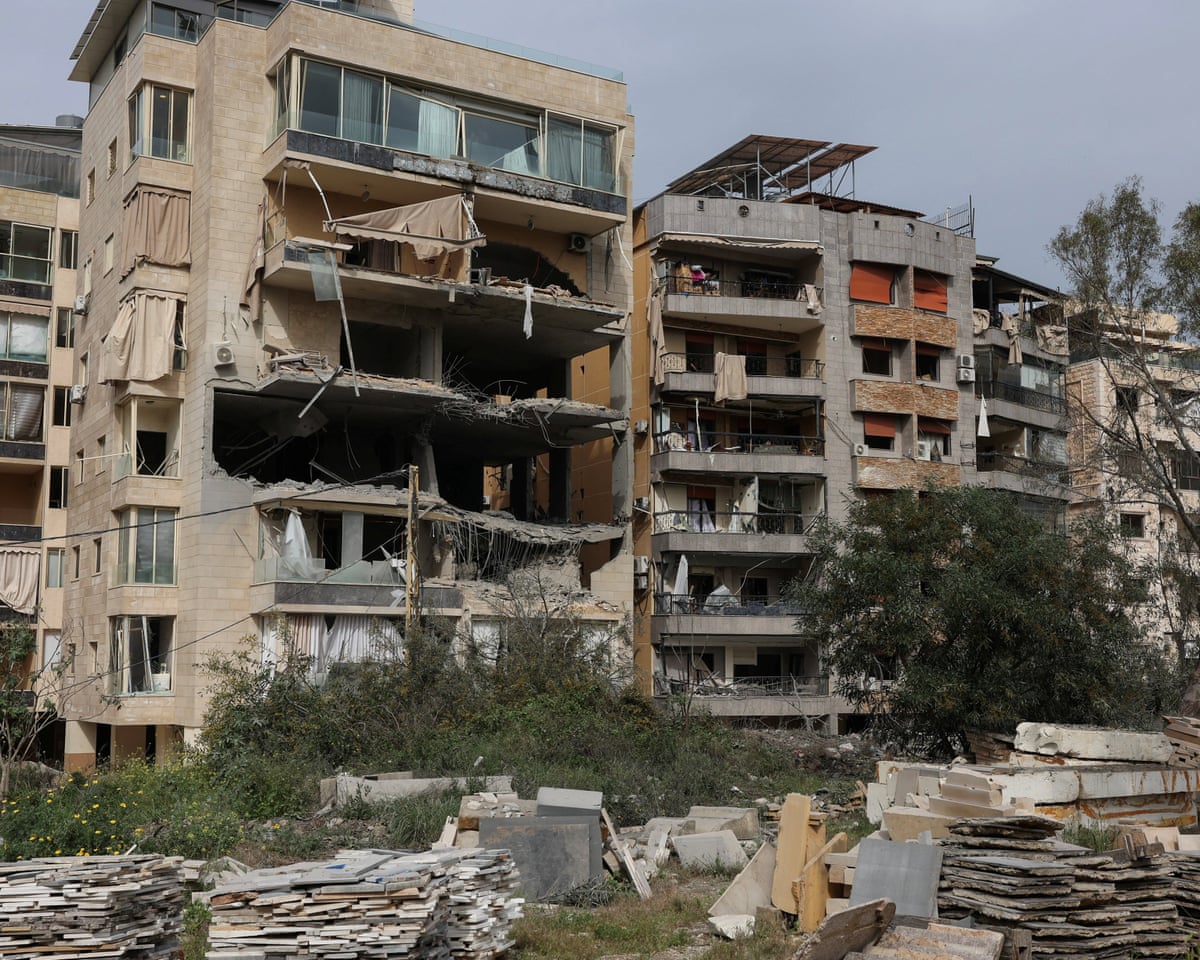
Since the war in Iran started, over 5,000 people have been killed across the Middle East, according to death tolls compiled by from various groups.
Casualties are concentrated in Iran and Lebanon but also include countries throughout the Gulf, Israel, Syria, Iraq, and the West Bank.
In Iran, the US-based rights group HRANA reported 3,519 deaths since the conflict began, including 1,598 civilians and at least 244 children. HRANA's data is sourced from field reports, local contacts, medical and emergency sources, civil society networks, open-source materials, and official statements.
Lebanese authorities report 1,318 deaths from Israeli strikes since 2 March, including at least 124 children. More than 400 Hezbollah fighters have been killed since the Lebanese armed group initiated attacks in the new war with Israel, according to two sources familiar with Hezbollah’s count. It remains unclear if the official death toll includes these fighters.
Three United Nations peacekeepers from Indonesia were killed in two separate incidents in southern Lebanon—one from a roadside explosion and another involving a projectile.
As Trump addresses the American public, US Central Command has provided an update on the ongoing conflict in Iran.

Operation Epic Fury has involved over 13,000 combat flights, striking more than 12,000 targets and damaging or destroying over 150 Iranian vessels, according to Centcom.
Despite these figures, Trump faces challenges reconciling weeks of shifting goals and contradictory messages regarding whether he is winding down or preparing to escalate military operations, while Iran continues attacks on Israel and Gulf countries.
US intelligence agencies reportedly believe Iran is currently unwilling to negotiate an end to the war. Despite the month-long bombing campaign by the US and Israel, Tehran considers itself in a strong position.
Officials speaking to The New York Times indicated that Iran does not trust the US or believe Trump is serious about negotiations.
The current conflict began while Iran was engaged in negotiations with US officials over its nuclear program. Last year, attacks on Iranian nuclear targets were launched while the US was still in discussions with Tehran.
On Wednesday, Iran rejected Trump’s claim that its leadership requested a ceasefire, calling the statement “false” and “baseless.”
Tehran has consistently stated there are no ongoing negotiations to end the war. Iran’s president, Masoud Pezeshkian, has previously said Iran has the “necessary will” for a ceasefire, but only if its adversaries guarantee hostilities will not resume.
Trump preparing to make first national address since launching Iran war a month ago
Donald Trump is minutes away from delivering his first formal address from the White House since initiating the war in the Middle East a month ago.
This comes at a critical moment for the president, who faces accusations of losing control of the conflict and doubts about achieving the war’s key objectives.
Trump continues to assert that the US has already won the war and has declined to take responsibility for the global economic consequences.
In his speech, the president will provide an operational update on Operation Epic Fury, highlighting the military’s “success in achieving all of its stated goals,” according to a US official.
He is expected to reiterate the 2-3 week timeline for concluding the operation but is not anticipated to announce an end to the war.
Recent polls show Trump’s overall approval rating falling below 40%, with disapproval rising above the mid-50s as voters grow dissatisfied with both the war and its economic impact. Support for his re-election campaign polls even lower.
The economic situation has exacerbated the issue. US petrol prices have risen above $4 a gallon for the first time in years, and consumer confidence has weakened, further damaging Trump’s already fragile standing on economic issues.
Opening summary
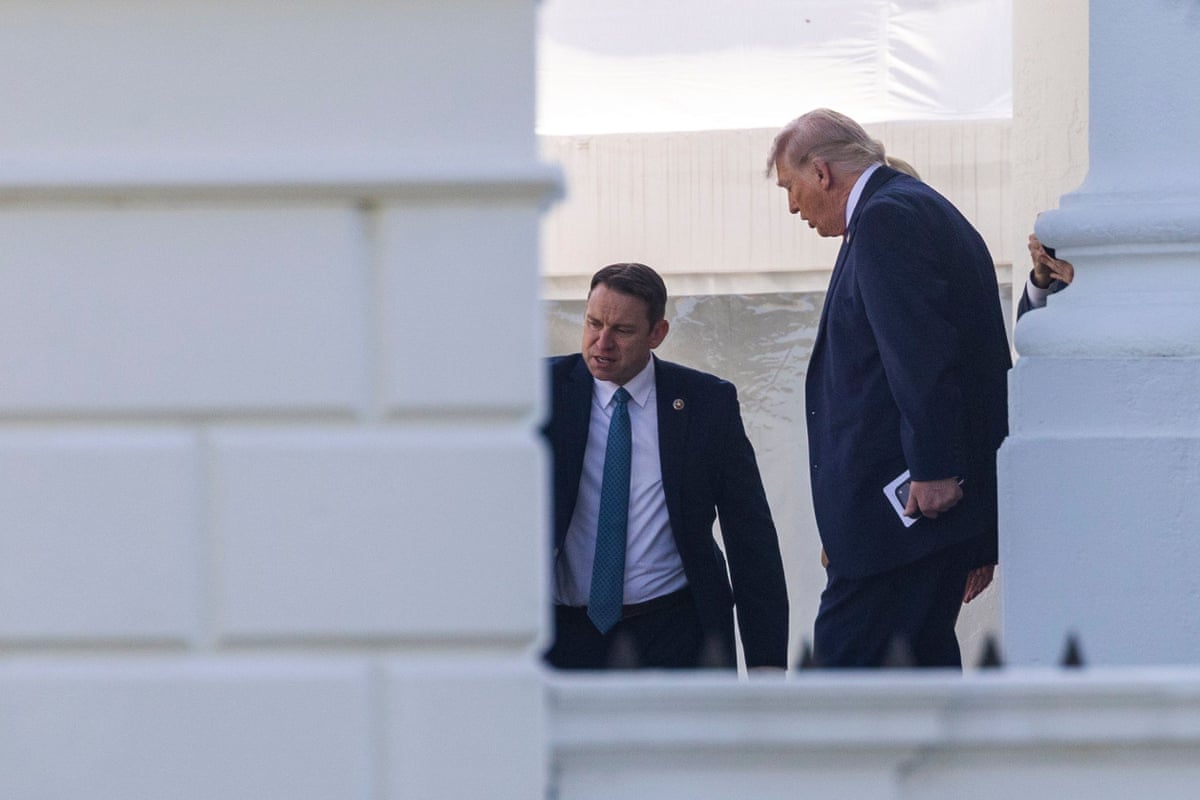
Welcome to our ongoing coverage of the Middle East crisis as Donald Trump prepares to address the nation for the first time since the US-Israel war on Iran commenced.
The president will deliver a prime-time speech at 9pm ET from the White House.
The address occurs amid declining approval ratings for his administration, economic concerns, and escalating diplomatic tensions. Trump is expected to reassure the public that US objectives are being met and that he has a plan to complete the war, which has unsettled the US economy.
Earlier on Wednesday, Trump claimed a significant breakthrough, stating that Iran’s president was seeking a ceasefire. This claim was promptly denied by Iran’s foreign ministry, which accused Washington of making “maximalist and irrational” demands.
Here are additional developments from today:
Iran has rejected Trump’s claim that its leadership requested a ceasefire, describing the statement as “false” and “baseless.” Trump made the claim in a post on Truth Social, stating,
“Iran’s New Regime President, much less Radicalized and far more intelligent than his predecessors, has just asked the United States of America for a CEASEFIRE! We will consider when Hormuz Strait is open, free, and clear. Until then, we are blasting Iran into oblivion or, as they say, back to the Stone Ages!!!”
Trump also said he is “absolutely” considering withdrawing the US from NATO, warning that the issue is “beyond reconsideration” after US allies refused to join the US-Israeli war against Iran. The president’s threats, his most forceful to date, have precipitated the worst crisis in NATO’s 77-year history, according to a former US ambassador.
Meanwhile, in an open letter to the American people, Iran’s president Masoud Pezeshkian stated that relations between Washington and Tehran are “misunderstood” and that Iran is not an aggressor. He said the Iranian people
“harbor no enmity toward other nations, including the people of America, Europe, or neighbouring countries,”and added that portrayals of Iran as a security threat are inaccurate, asserting that Tehran is acting in self-defense rather than aggression.
In Tehran, Kamal Kharazi, a senior foreign policy official and former Iranian foreign minister, was severely injured in an airstrike on his home in the capital. His wife was reportedly killed in the attack. Kharazi, regarded as a moderate politician and veteran policy expert, also served as an adviser to the assassinated former supreme leader Ayatollah Ali Khamenei. Reports indicate that his targeting is viewed as an attempt to undermine diplomatic efforts.