

Artemis II Launches from Florida Coast
NASA's Artemis II mission launched from Florida's coast, carrying its four crew members on a historic journey to the Moon.
A deep rumble accompanied a brilliant white flame that suddenly erupted, momentarily engulfing the entire launch pad as NASA's most powerful rocket ever built ascended into the sky.
The Space Launch System (SLS) rose slowly at first, then accelerated, propelled by two intense pillars of flame that crackled and roared louder until the rumbling became nearly deafening. Observers three miles (4.8 km) from the launch pad felt the sound reverberate through their bodies in amazement.
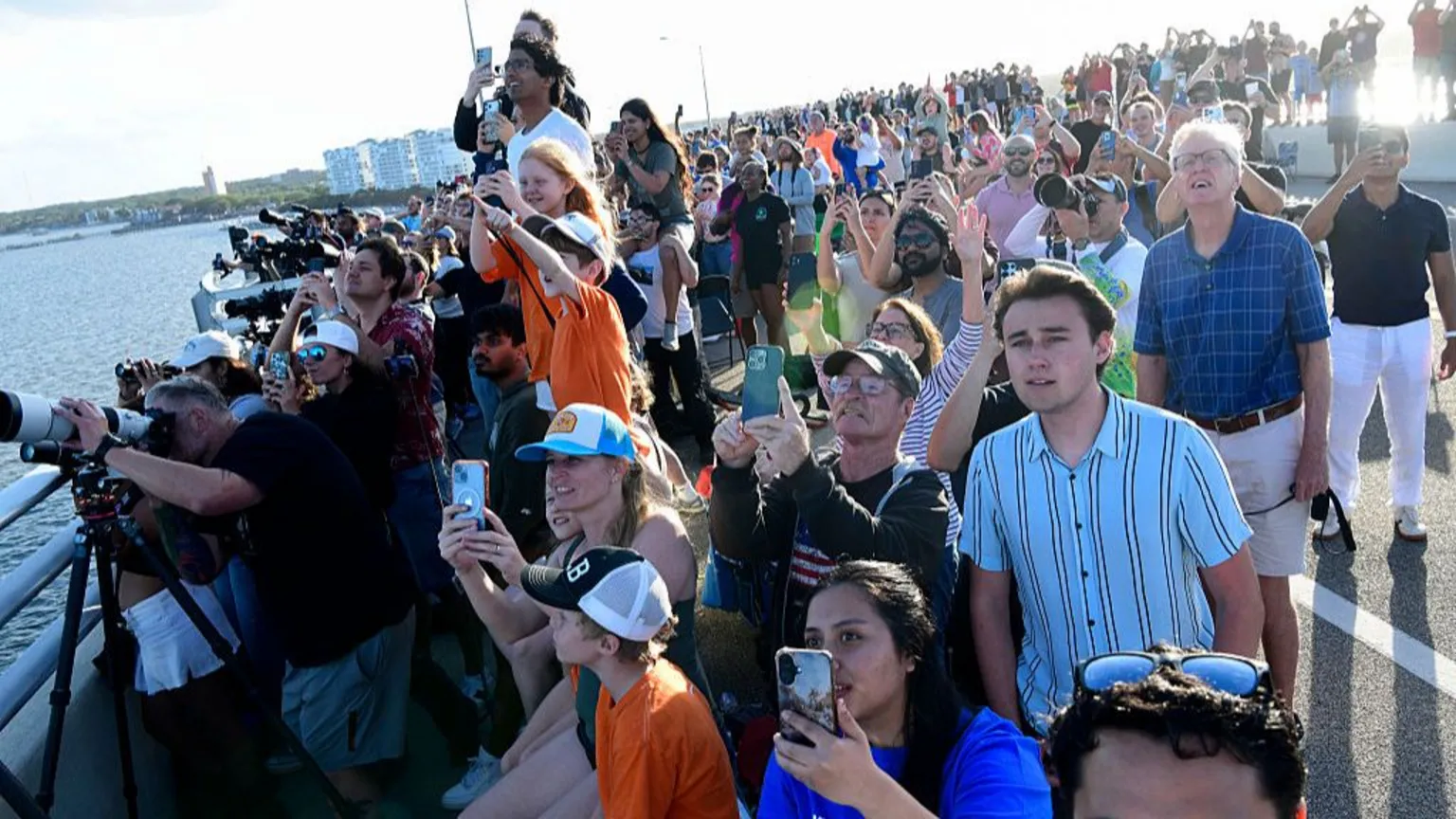
Small cheers arose among those familiar with the mission as the rocket passed the moment of maximum dynamic pressure—one minute and 10 seconds into flight—when the rocket endures its greatest structural stress and any weakness could be catastrophic.
With no structural issues detected, the SLS arced over the Atlantic Ocean like a fiery white angel, leaving a white smoky trail as the sound diminished and the spacecraft disappeared from view, shrinking to a bright star as it pursued the Moon.
Emotional Response at Kennedy Space Center
Following the launch, a wave of euphoria swept through staff at the Kennedy Space Center. One individual described feeling emotional, while another admitted to wanting to cry—a release of tension after months of previous Artemis II launch attempts that were scrubbed for various reasons.
On this night, NASA employees laughed and applauded, celebrating a milestone they had worked toward for years. Although further work remains, they savored this moment of triumph.
Launch Challenges and Countdown
In the hour preceding liftoff, issues arose concerning the launch abort system, designed to eject astronauts and destroy the rocket in case of malfunction. The countdown was paused at 10 minutes while engineers addressed the problem.
The team worked swiftly, but the wait was tense as everyone awaited confirmation that the launch could proceed.

As the countdown resumed, engineers responsible for critical rocket systems called out status checks in a staccato rhythm: "booster, go," "GNC, go," "range, go." Each affirmative response eased tension and heightened anticipation.
"Artemis II, this is launch director," said Charlie Blackwell-Thompson, NASA's first female launch director. "You are go for launch." Commander Reid Wiseman replied, "We go for all humanity."
Though such words might seem clichéd under normal circumstances, they sent a shiver down the spine of observers, signaling that history was about to be made.
Return to Moon Missions at Kennedy Space Center
The Kennedy Space Center, originally built to send astronauts to the Moon, had not launched a lunar mission since Apollo 17 in 1972. Today, it resumed that mission.
The press corps moved outside as clouds that had threatened to cancel the launch dissipated. With the countdown clock restarted, the atmosphere became charged with electric anticipation.
The four RS-25 engines and twin solid rocket boosters ignited, generating over 8.8 million pounds of thrust into the Florida evening sky.
"God Speed Artemis II," Blackwell-Thompson said, echoing words first used in 1962 to send John Glenn, the first American to orbit Earth, on his journey.
A Launch Unlike Any Other
Having witnessed Space Shuttle launches to the International Space Station from Kennedy Space Center, the author noted that while those launches were impressive, surging into space with tremendous speed and noise, the SLS launch was not only more beautiful but carried greater significance.
The moment was filled with emotion for those who watched, perhaps because it symbolized humanity's potential when united, or because it marked the beginning of a new era in space exploration.
In the 1990s, the author had the opportunity to speak with Neil Armstrong, the first person to walk on the Moon in 1969. At a time when human space travel seemed to have stalled, Armstrong smiled and said,
"The reality may have faded but the dream is still there and it will come back in time."
Today marked the return of that dream.
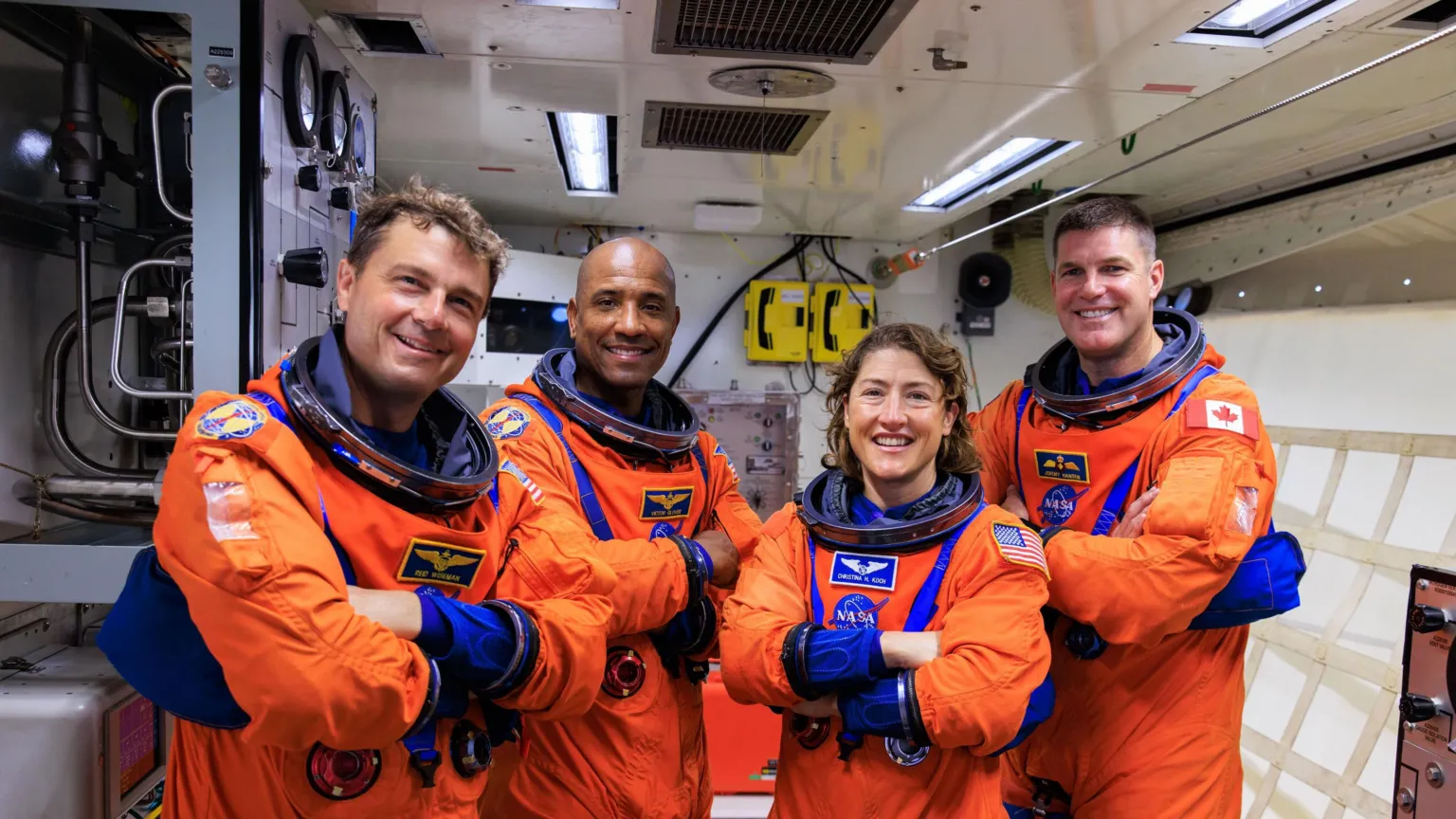
On their way to the Moon: Commander Reid Wiseman, pilot Victor J Glover, and mission specialists Christina Koch and Jeremy Hansen.


