

Anger mounts after Tennessee Republicans redraw maps to erase last Democratic, Black-majority district
Good morning, and welcome to our live coverage. Tennessee’s Republican-controlled legislature approved new redistricting maps on Thursday that eliminate the state’s sole Democratic, Black-majority congressional district. This move comes as GOP lawmakers aim to strengthen their position ahead of the November midterm elections.
The revised map divides Shelby County, which includes Memphis—a majority-Black city with a significant history in the civil rights movement—into three separate districts favoring Republicans.
The district being removed in the Memphis area has been represented by Rep. Steve Cohen, Tennessee’s only Democratic member of Congress. With this change, all nine of Tennessee’s congressional districts now lean Republican.
Republican House Speaker Cameron Sexton stated that the new districts were drawn based on population and political considerations rather than racial data.
However, Democrats rejected these assertions, arguing that splitting Memphis effectively denies the Black community congressional representation.
“These maps are racist tools of white supremacy at the behest of the most powerful white supremacist in the United States of America, Donald J. Trump,” said state Rep. Justin Pearson, a Black Democrat from Memphis who is running for the US House.
Democrats contend the redistricting effort, which sparked intense protests, is a deliberate attack on the civil rights movement’s hard-won gains for equal representation in a state historically shaped by slavery and segregation.
The redraw follows a landmark US Supreme Court ruling last week that invalidated significant portions of the Voting Rights Act. This ruling removed federal restrictions that had limited states from drawing congressional districts that politically disadvantaged Black voters.
Similar redistricting efforts are underway in other Republican-led southern states including Louisiana, Alabama, and South Carolina. Tennessee Governor Bill Lee, a Republican, is expected to sign the new map into law imminently.
US to start revoking passports of parents who owe more than $2,500 in child support
The US State Department announced it will begin revoking passports of Americans who owe over $2,500 in child support payments.
The revocations will start on Friday and initially target those owing $100,000 or more—approximately 2,700 American passport holders, according to the Associated Press.
The State Department explained that passport revocation is intended to support the welfare of American children by enforcing consequences for child support delinquency under existing federal law. It advised:
“Any American with significant child support debt should arrange payment to the relevant state or states now to prevent passport revocation. Once a passport is revoked, it may no longer be used for travel. Eligibility for a new passport will only be restored after child support debt is paid to the relevant state child support enforcement agency and the individual is no longer delinquent according to HHS records.”
This passport revocation authority stems from a rarely used provision in Bill Clinton’s 1996 Personal Responsibility and Work Opportunity Act, which linked benefits to work requirements. The law has faced criticism for increasing deep poverty. Typically, this provision has been applied to prevent individuals with child support debt from renewing or applying for passports.
Meanwhile, in Alabama, Republicans have requested federal judges to lift an order requiring the state to maintain a second district where Black voters are the majority or nearly so. This district enabled the election of Rep. Shomari Figures, a Black Democrat, in 2024.
Republicans seek to implement a 2023 map, previously rejected by a federal court, that could enable them to reclaim Figures’ district.
Currently, Black residents constitute about 48% of the district’s voting-age population, according to the Associated Press. Under the 2023 map, this would decrease to approximately 39%. Republicans hope federal courts will reconsider the case following the recent Supreme Court ruling, which found that the Louisiana district represented by Democrat Cleo Fields relied excessively on race.
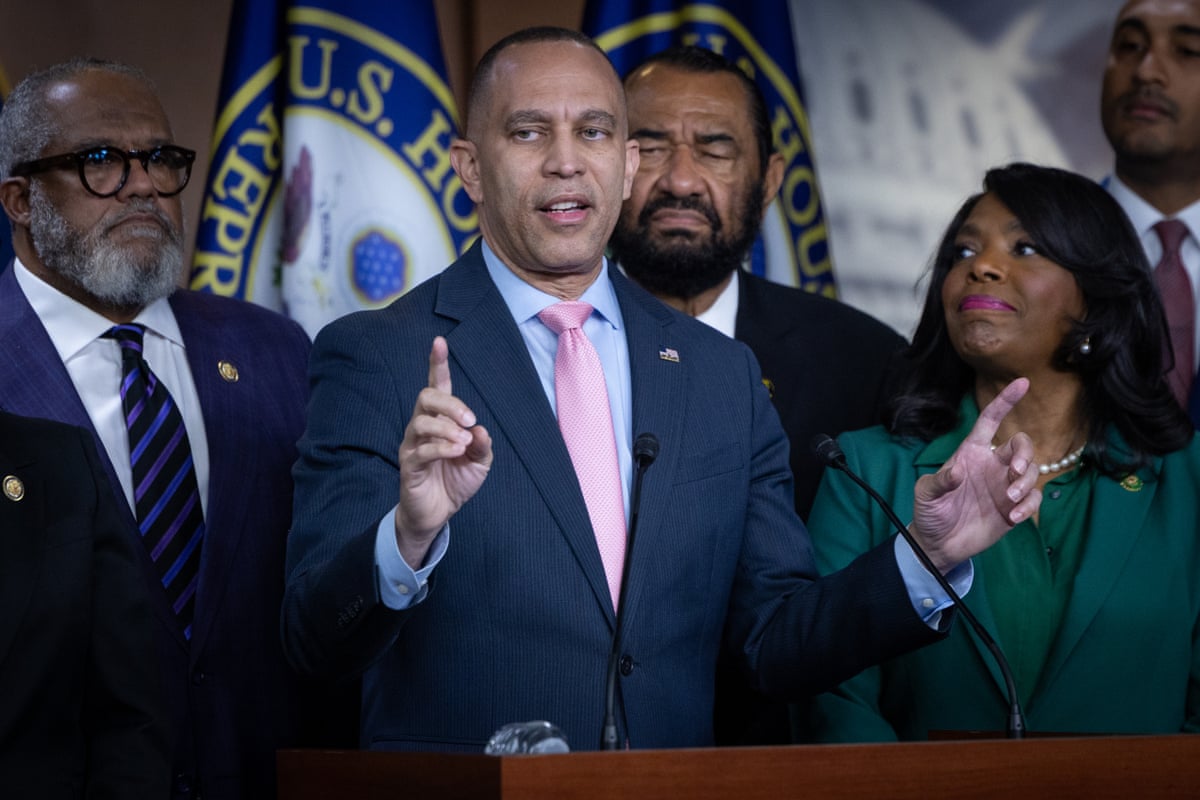
Impact of Supreme Court ruling on minority voting power
Here are details on the significant impact of last week’s US Supreme Court decision on the voting power of racial minorities, provided by my colleague:
“The US Supreme Court ruled that Louisiana must redraw its congressional map in a landmark decision that effectively undermines a major section of the Voting Rights Act.
In a 6-3 decision along partisan lines, the court invalidated Section 2 of the Voting Rights Act, the last powerful provision of the 1965 civil rights law that prevents racial discrimination in voting. Section 2 has long been used to ensure minority voters receive fair treatment in redistricting.
‘Allowing race to play any part in government decision-making represents a departure from the constitutional rule that applies in almost every other context,’ Justice Samuel Alito, a conservative, wrote for the majority opinion. ‘Compliance with section 2 thus could not justify the state’s use of race-based redistricting here. The state’s attempt to satisfy the middle district’s ruling, although understandable, was an unconstitutional racial gerrymander.’”
The court’s decision marks a major shift in US civil rights law, granting lawmakers the ability to draw districting plans that diminish the influence of Black and other minority voters.
When asked on Wednesday whether states should redraw congressional maps following the ruling, former President Donald Trump responded, “I would.” In dissent, Justice Elena Kagan stated the court had effectively accomplished a “demolition of the Voting Rights Act.”
You can about this ruling here.
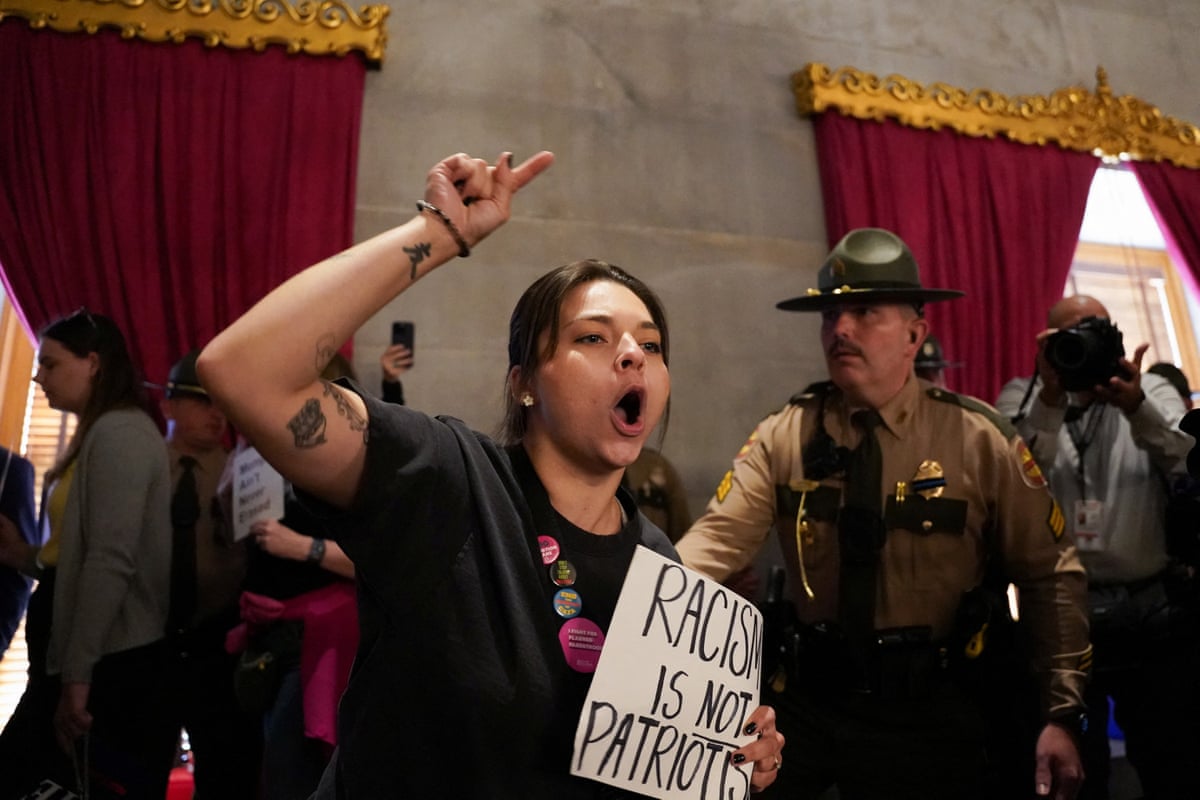
Protests at Tennessee state capitol
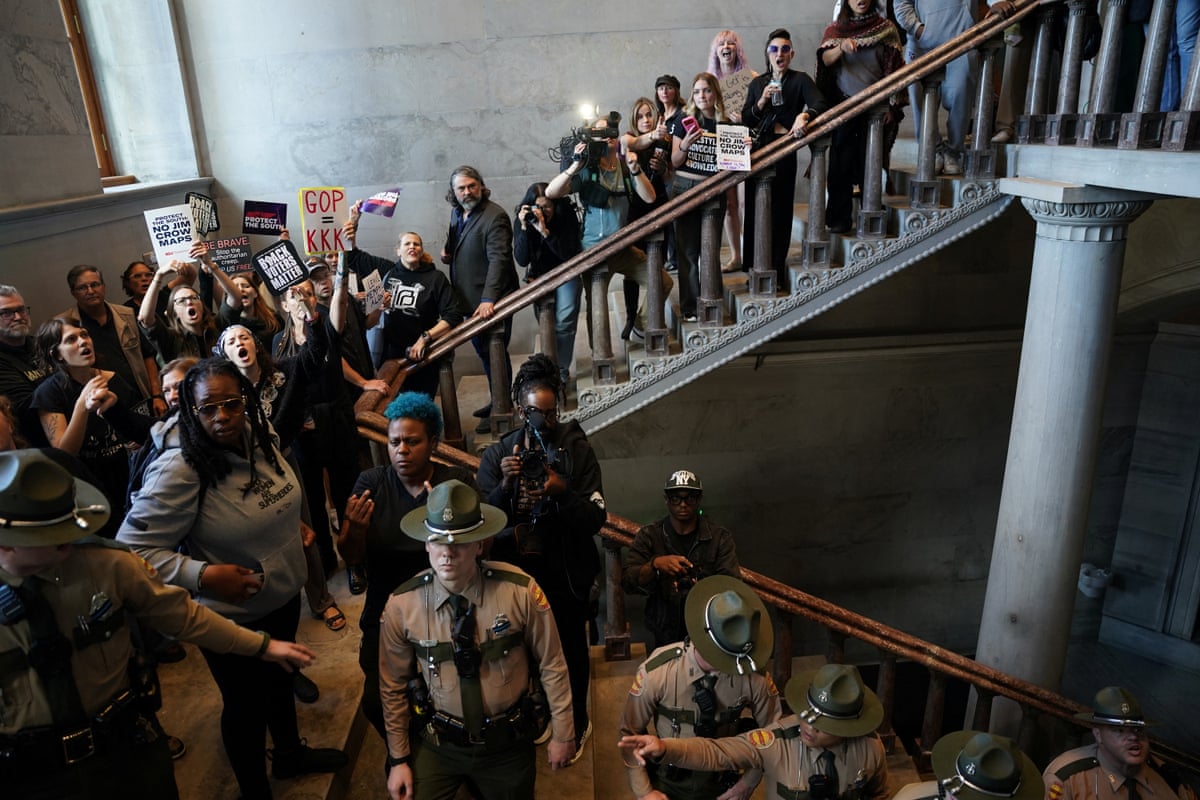
At the Tennessee state capitol, numerous protests occurred in response to the legislature’s decision to redraw the state’s congressional map, which dismantled the state’s majority-Black and only Democratic district.
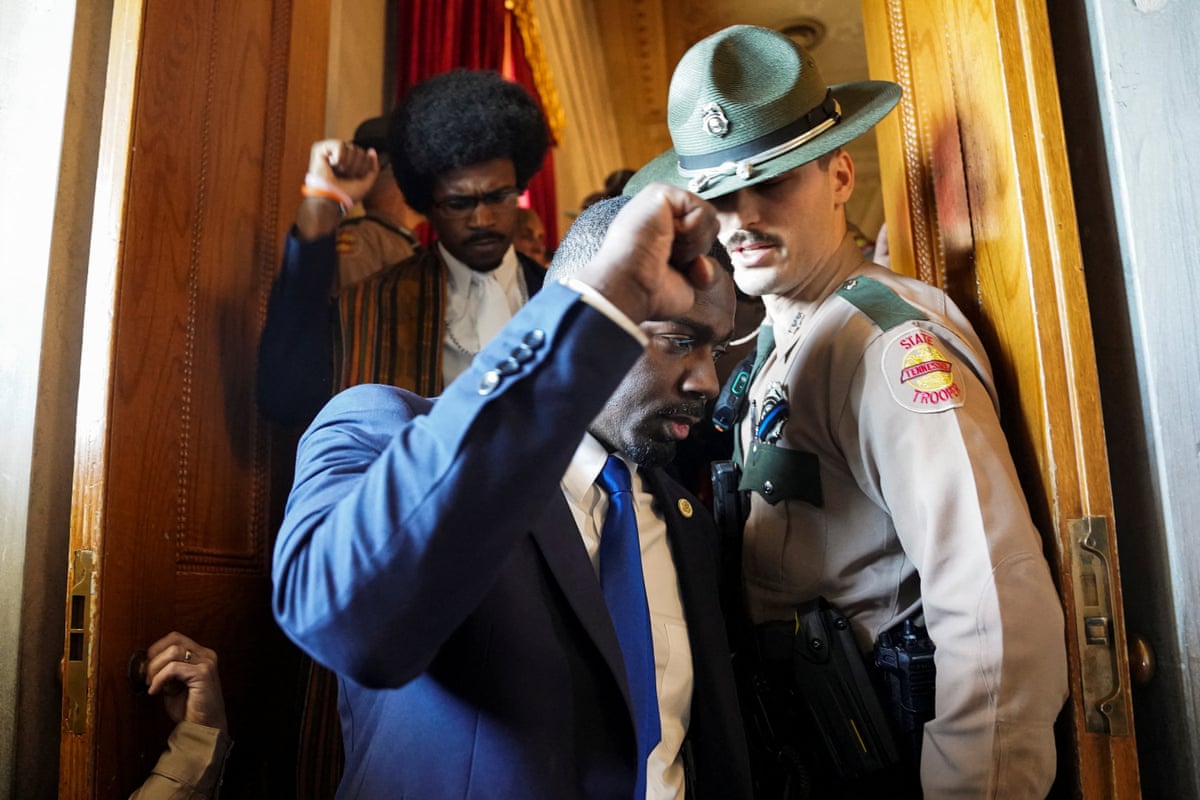
Democratic state representative Justin J. Pearson and his brother KeShaun Pearson were removed from the House gallery after participating in a silent sit-in protesting the Republican redistricting efforts.
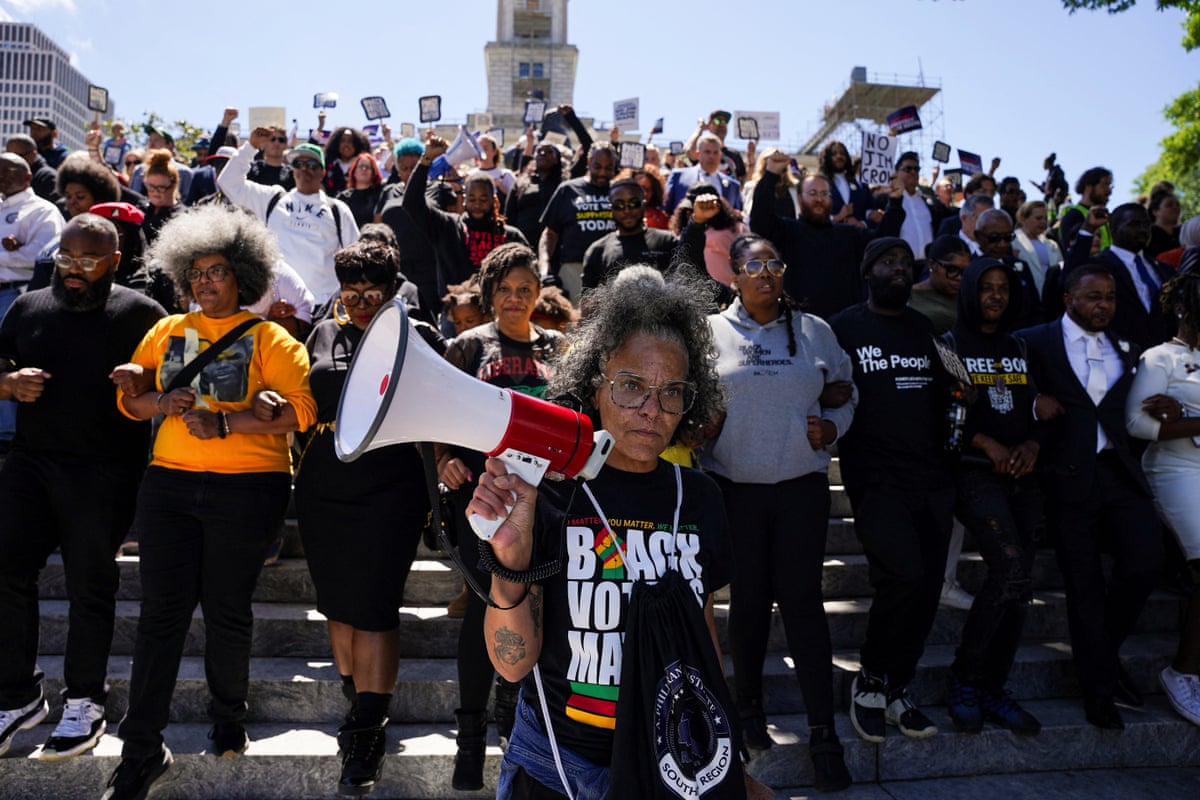
Demonstrators were seen walking down stairs outside the Tennessee state Capitol following the passage of the new congressional map on 7 May 2026.
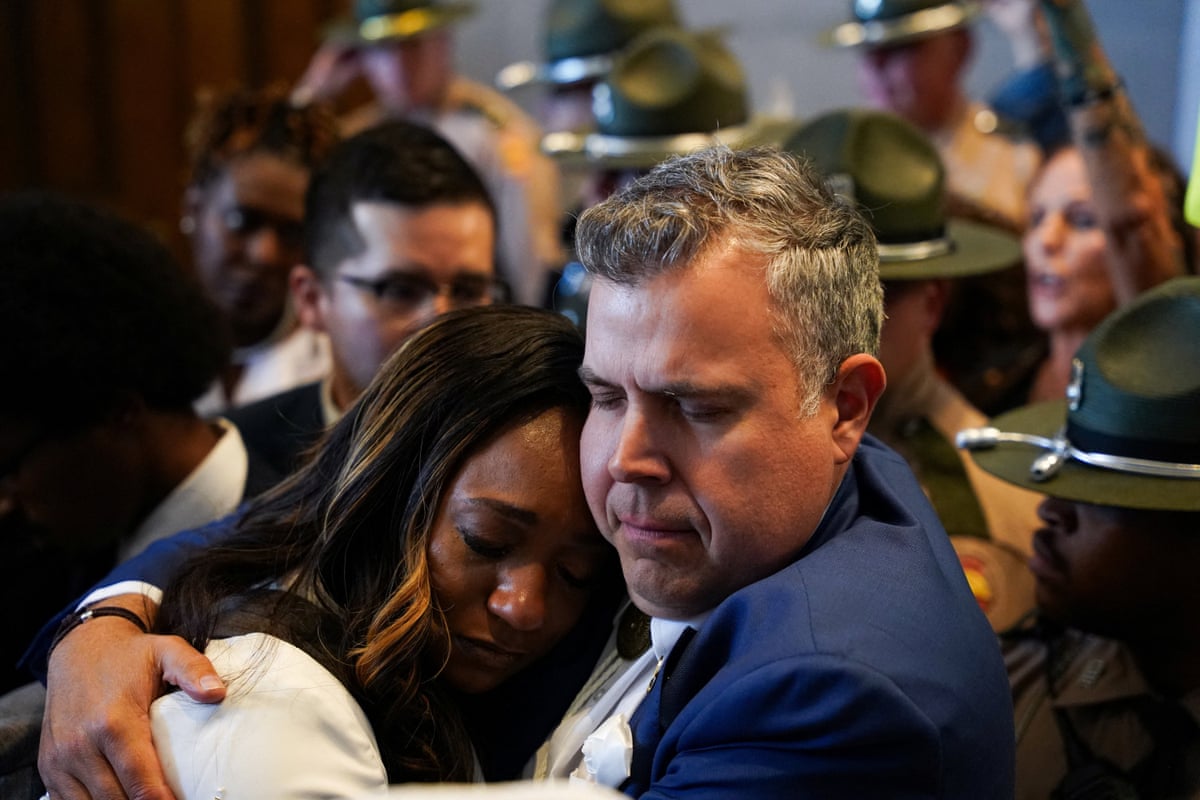
Democratic Senator London Lamar of Memphis and Democratic Tennessee State Representative Jason Powell embraced on the day the new congressional map was passed.
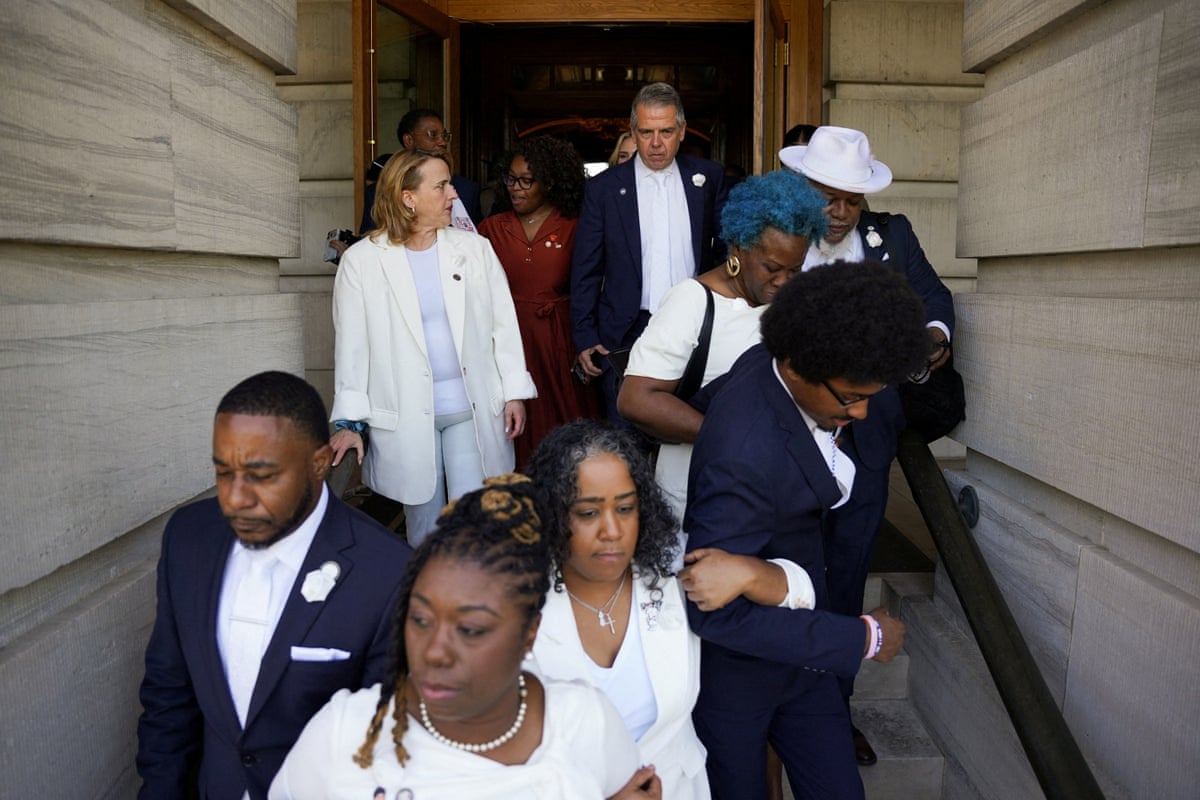
Democratic state House representatives and senators left the Tennessee state Capitol after the Republican majority passed the new congressional map.

Speaker of the Tennessee House of Representatives Cameron Sexton was observed looking down on the house floor on the final day of the special session in Nashville on 7 May 2026.


