

Rex Heuermann Sentenced to Life for Eight Murders
Rex Heuermann, identified as the Gilgo Beach serial killer, who admitted to the brutal murders of eight women, was sentenced to the maximum penalty on Wednesday.
Heuermann will serve three life sentences for first-degree murder, along with 25 years to life on four second-degree murder charges, all to be served consecutively.
The sentencing hearing featured emotional and intense statements from victims' family members, who described the profound and lifelong impact of their losses.
In April, Heuermann acknowledged that he strangled and bound his victims before disposing of their remains along the remote beaches of Long Island.
"You are a disgusting and despicable, small man, if you're a man at all. And you're a coward," said Judge Timothy Mazzei as he imposed the maximum sentence in a Riverhead, Long Island courtroom."Get him out of here."
The courtroom responded with cheers following the judge's remarks.
Heuermann, dressed in a dark suit, blue shirt, and grey tie, made a brief statement before sentencing, accepting responsibility but conceding that his words now held "no meaning." When asked by the judge if he felt "a little bit sorry," he replied, "yes."
Details of the Murders and Case Timeline
The murders occurred between 1993 and 2010, but the investigation took over a decade to resolve.
Initially pleading not guilty, Heuermann eventually admitted to the murders of Melissa Barthelemy, 24; Megan Waterman, 22; Amber Costello, 27; Maureen Brainard-Barnes, 25; Jessica Taylor, 20; Valerie Mack, 24; Sandra Costilla, 28; and Karen Vergata, 34.
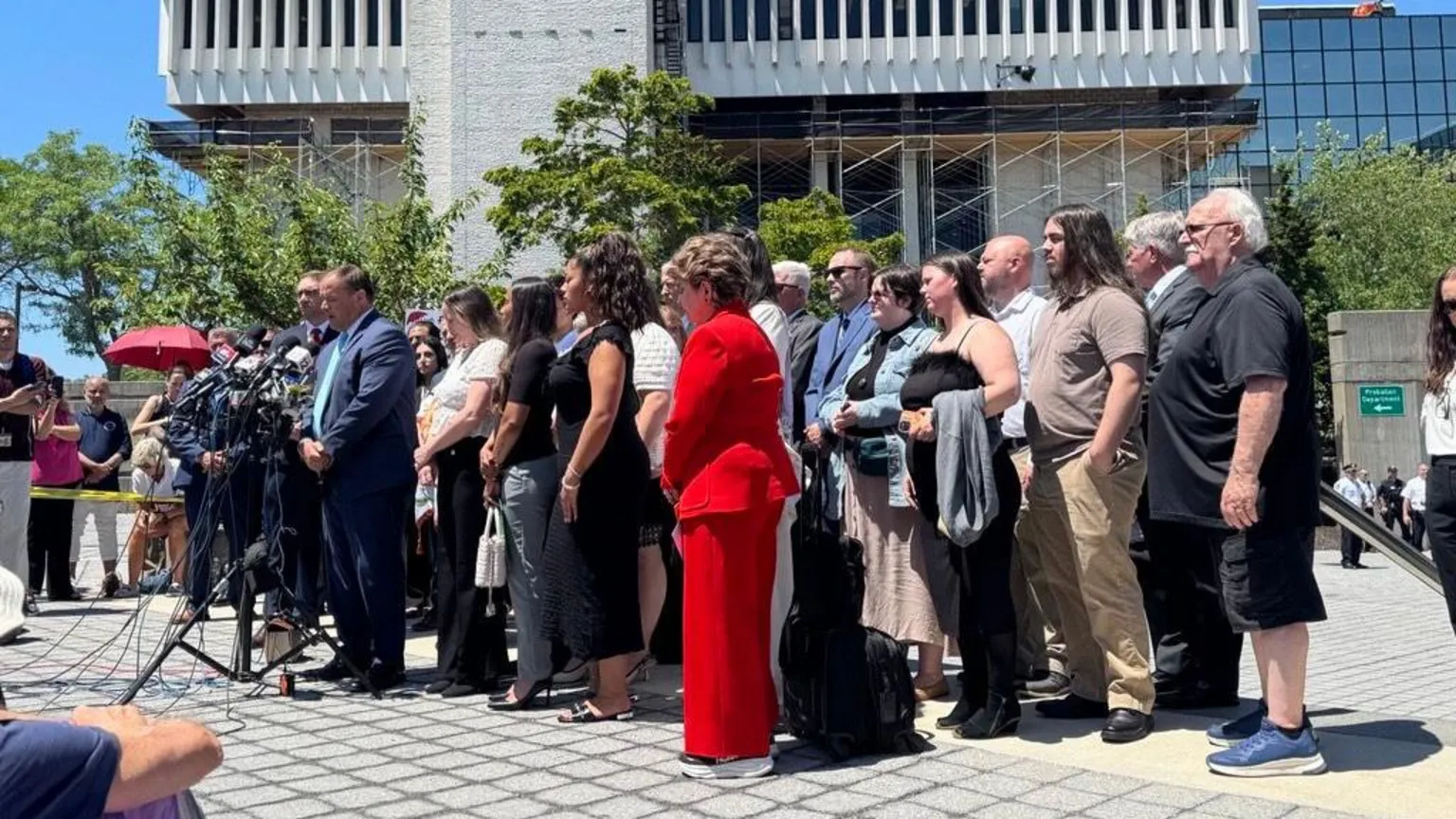
Following the hearing, Suffolk County District Attorney Ray Tierney commended the victims' families, stating,
"I want them to get their revenge by going on to have wonderful lives…now it's time for them to heal,"
said Tierney.
Victims' Families Speak Out
The hearing began with passionate statements from the families of the victims.
Amanda, sister of Melissa Barthelemy, recounted the disturbing phone calls Heuermann made to her family after killing her sister, describing how he allowed her sister's body to "rot" and admitted to raping her. She was only 15 at the time.
Addressing Heuermann directly, she said,
"You can look at me when I'm talking to you. It's been 17 years since we last spoke."
For the first time during the hearing, Heuermann, who had been staring blankly ahead, turned briefly toward the podium before looking away again.
Amanda continued,
"The things I'd do to you are worse than what you've ever done to anyone,"
she said, eliciting audible gasps in the courtroom.
"Save me a spot in hell because I'll see you there."
Jessica Taylor's cousin recalled the trauma of receiving calls that parts of her cousin's body had been discovered on Gilgo Beach.
"I couldn't wrap my head around the word 'torso',"
she said, repeating the words "headless and handless."

She described Heuermann as "sick, twisted, heartless," and reflected on the 23 years it took to reach this day, saying,
"For a while it felt like this day would never come."
Arrest and Investigation
Heuermann, a 62-year-old architect, married father of two, living in the suburb of Massapequa Park, was arrested in 2023. Suffolk County police apprehended him at his Midtown Manhattan office after linking him to the murders through DNA evidence found on a pizza box.
He was initially charged with the murders of seven women but pleaded guilty in April to an additional killing dating back to 1996. Although many victims were missing for years, the case gained public attention in 2010 when investigators discovered four sets of remains within a quarter mile of each other on Gilgo Beach.
Valerie Mack's father addressed Heuermann during the hearing, saying,
"Mr Heuermann, you have done horrendous things to Valerie's earthly body, but you have not touched the real Valerie."
He added,
"I can only imagine when my day comes and I stand before Jesus, Valerie will be at his side."
Victims' Backgrounds and Family Impact
All of Heuermann's victims are believed to have been sex workers at the time of their deaths, with some contacted by him through advertisements on Craigslist.
Several victims had young children, now adults, who spoke at the hearing.
Nicolette Brainard-Barnes, daughter of Maureen Brainard-Barnes, acknowledged her mother was a sex worker, which she said led to her name being "slandered."
"Like every sex worker, my mother was an entire human being,"
she said.
Nicolette was only seven when her mother disappeared and described the uncertainty she faced, saying,
"I had to wonder where she was. I was a little girl and I needed my mom."
She reflected on how her mother's absence shaped her life, stating,
"She was young at heart, but she was also just young. Now I'm nearly two years older than she will never be."
Liliana Waterman, daughter of Megan Waterman, was four years old when her mother's body was found. She said she learned about the crime details from the internet at age nine.
She recalled asking her grandparents about the meanings of the words "prostitute" and "pimp," and wondered if her mother was scared or if it was her fault.
The sister of Maureen Brainard-Barnes became emotional while speaking about her loss, saying,
"Nothing could have prepared me for the day Maureen didn't come home."
She described the impact as,
"This was not only a destruction of life, this has become a lifelong devastation of a family."
Investigation Challenges and Resolution
Police investigated the deaths for over a decade and had received a tip that, when acted upon, led to the arrest of the killer within weeks.
The Suffolk County Police Department initially did not involve federal investigators, and the investigation's leadership faced separate obstruction scandals. In 2022, under new leadership, Suffolk County Police established a task force combining federal and local law enforcement, which identified Heuermann within six weeks.
The breakthrough came from a 2010 description provided by Amber Costello's roommate, who had an encounter with a client. The roommate described a large man resembling "an ogre" driving a first-generation Chevrolet Avalanche, an uncommon vehicle.
Families of the victims have criticized the police for insufficiently aggressive investigations, attributing delays to the victims' status as sex workers. Some Long Island residents expressed horror at the prolonged wait for justice.


