

Trump delays Clayton's nomination for intelligence director to push Congress on voter ID bill
President Donald Trump announced a delay in the confirmation of federal prosecutor Jay Clayton as the head of the US intelligence community, aiming to compel Congress to advance a voter ID bill that currently lacks sufficient support for passage.
In a social media statement issued hours before Clayton’s scheduled confirmation hearing, Trump declared he would retain Bill Pulte, a senior US housing official, as acting director of national intelligence.
Both Democratic and Republican lawmakers had opposed Trump’s initial choice of Pulte, citing his lack of intelligence experience and concerns over his use of the role to target the president’s perceived adversaries. This opposition led Trump to nominate Clayton last week.
The Republicans agreed with Dumocrats to remove very fair, and talented, William Pulte, from serving as Acting DNI in return for getting FISA approved by the Dumocrats. However, the Republicans moved so fast with the hearings of the Great Jay Clayton, current U.S. Attorney for the Southern District of New York, that Pulte would be gone before the Dumocrats would vote on FISA. Now, the Dumocrats are saying they will vote against FISA — So, the Republicans wound up having fulfilled their commitment, but Dumocrats broke the Deal.
Trump further explained that the newly nominated U.S. Attorney, Jamie McDonald, must be confirmed and receive blue slips. Due to Republican opposition to blue slips, Trump expressed concern that McDonald’s approval might be delayed. Consequently, he did not want to remove Clayton from his current role until McDonald was confirmed. Trump also linked the approval of the FISA legislation to the passage of the "Save America Act."
Not complicated, actually, the Republicans fell into a trap. Regarding the approval of our Great Patriot, Jay Clayton, we are cancelling the Senate Hearing RE: DNI today, and will not be going forward until Jamie McDonald is approved to be U.S. Attorney. In the meantime, Bill Pulte will remain as the Acting Director of National Intelligence.
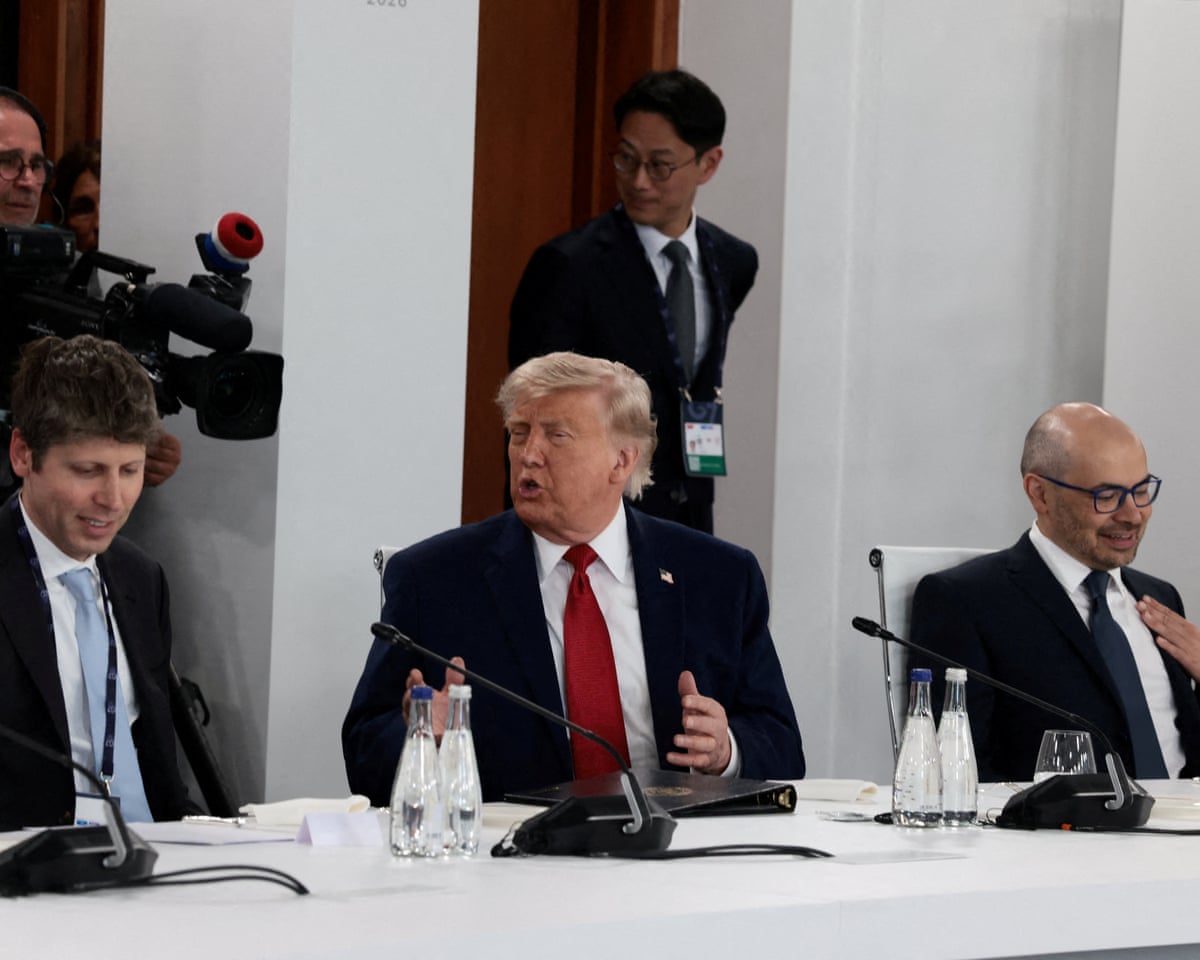
Meanwhile, at the G7 summit, leaders met with technology CEOs, including OpenAI CEO Sam Altman, DeepMind CEO Demis Hassabis, and Anthropic CEO Dario Amodei, for a working lunch focused on the future of artificial intelligence. President Trump was nearly an hour late to the first working session on the summit’s final day in Évian-les-Bains.
Upon arriving, Trump stopped at the head of the table and joked, "I’m the boss." He also invited the press to stay for the closed meeting, stating, "It’s okay with me." Trump complained about the room temperature and inquired about air conditioning, to which French President Emmanuel Macron responded affirmatively.
A senior White House official told NBC News that Trump’s tardiness was due to "very important calls with people back in the States," which occurred between 3:30 and 4:30 a.m. Eastern Time.
Iran memorandum of understanding is 'not final', says Trump
Two days before an anticipated accord to end hostilities between the US and Iran, President Trump warned Tehran that he was prepared to resume military action if Iran failed to meet its obligations.
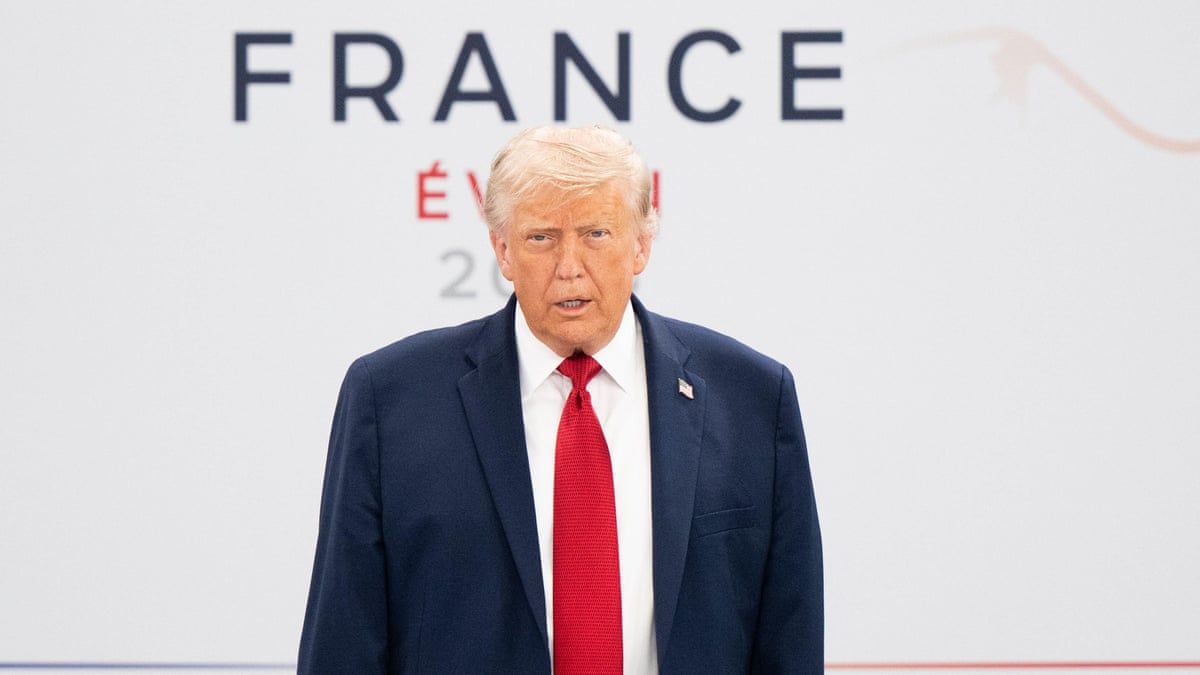
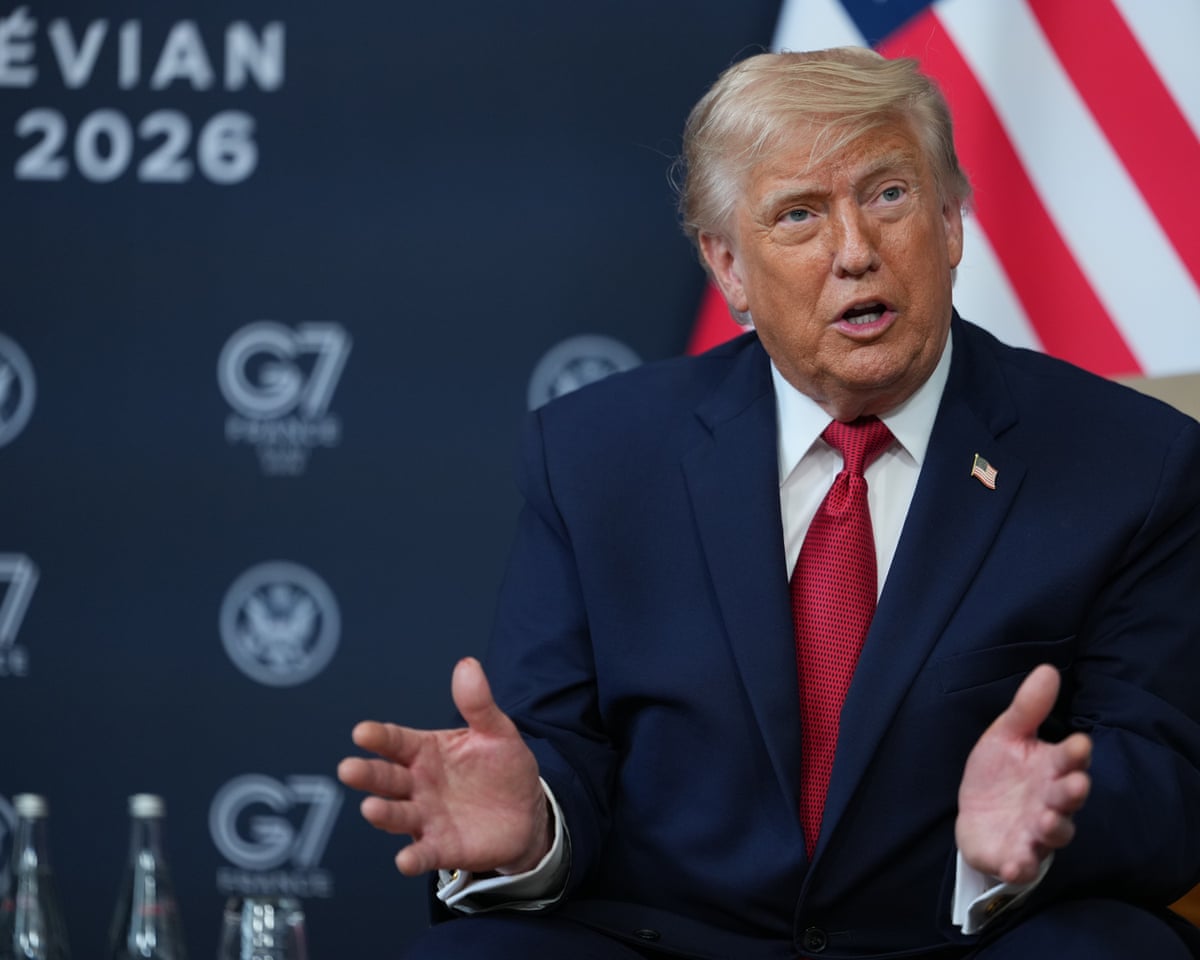
Speaking at the G7 summit, Trump described the agreement expected to be signed in Switzerland as a memorandum of understanding rather than a final deal.
No it’s not final. It’s a memorandum of understanding,
he said, adding,
If I don’t like it we will go back to shooting at them.
Trump further emphasized,
If they don’t behave, we’ll go right back to dropping bombs right smack in the middle of their head.
He described the deal as "very strong," noting that while details were not widely known, most people appeared satisfied with it.
January 6 defendants pursue millions in claims through obscure federal process
Defendants involved in the January 6 Capitol attack who assaulted police officers are seeking millions in compensation through an obscure federal process with limited oversight. This mechanism provides the Trump administration a method to compensate individuals responsible for violence, despite the discontinuation of the "anti-weaponization fund."
The defendants are utilizing the Federal Tort Claims Act (FTCA), which permits individuals harmed by the government to file claims for monetary damages. The Department of Justice holds full discretion over whether to settle these claims, offering a potential avenue to reward those involved in the January 6 events.
Payments would be drawn from the judgment fund, a perpetual appropriation authorized by Congress and the same source intended for Trump’s proposed $1.8 billion fund. All defendants seeking compensation have received pardons from Trump.
The "anti-weaponization fund" faced bipartisan opposition after Trump reached a settlement with the Internal Revenue Service. Lawmakers expressed concern that individuals convicted of assaulting law enforcement officers on January 6 might receive compensation. Senator Josh Hawley (R-MO) remarked,
If you’ve been convicted of assault on a cop ... doesn’t seem to me like people who are victims.
While the fund appears stalled, FTCA claims and lawsuits may provide alternative routes for payouts.
Rupa Bhattacharyya, former director in the civil division’s tort branch at the Department of Justice and current legal director at Georgetown Law’s Institute for Constitutional Advocacy and Protection, warned,

It risks turning the judgment fund into exactly the sort of slush fund that the ‘anti-weaponization’ was going to be. If the treasury department is not going to enforce the restrictions on the use of the judgment fund, which is to settle impending or imminent lawsuits where there’s some risk of liability, then there’s no limit on what you can use that judgment fund money for, so long as someone files a bogus claim.
The Department of Justice agreed earlier this year to settle FTCA claims filed by Michael Flynn, former national security adviser, and another Trump foreign policy adviser.
Senate deliberations on Clayton's nomination
Republicans are advocating for swift Senate confirmation of President Trump’s nominee for Director of National Intelligence, Jay Clayton. Democrats, however, have indicated they will await Clayton’s nomination hearing before deciding on their course of action.
Clayton, the US attorney for Manhattan, was nominated less than a week ago amid controversy over Trump’s temporary appointee, Bill Pulte, who lacks national security experience. Some Republicans expressed concern that Pulte could misuse intelligence to target political opponents.
Clayton’s nomination was met with relief from both parties. Although lacking extensive national security experience, he is broadly respected by Democrats and Republicans alike.
Democrats plan to scrutinize Clayton thoroughly during the Senate Intelligence Committee hearing. Senator Ron Wyden (D-OR), a senior committee member, stated,
I favor a full vetting... a thorough examination of all of the issues.
Senate Democratic leader Chuck Schumer (D-NY) said Democrats would decide on how to proceed following the hearing.
Senate Majority Leader John Thune (R-SD) and other Republicans urged Democrats to waive Senate rules to allow a vote on Clayton this week. Thune described Clayton as "eminently qualified," noting his experience handling intelligence matters as a US attorney.
Public views on civil liberties amid political tensions
A recent AP-NORC poll reveals that most Americans believe civil liberties such as the right to vote, free speech, and freedom of religion remain central to American identity. However, opinions are more divided regarding the right to bear arms, and only about one-third or fewer Americans feel these rights are secure from threats.
The survey, conducted from April 16 to 20 before the Supreme Court’s recent ruling affecting the Voting Rights Act, highlights a persistent consensus on the importance of personal freedoms, alongside significant concerns about the nation's direction as it approaches its 250th anniversary.
Trump-backed candidate wins Georgia primary to face Jon Ossoff
Donald Trump’s endorsed candidate, US Representative Mike Collins, won the Republican primary runoff in Georgia to challenge Democratic Senator Jon Ossoff in the upcoming midterm election.
Collins defeated former college football coach Derek Dooley and will face Ossoff, who has served in the Senate since 2021 and gained attention for his legislative efforts this year.
Collins, a trucking executive and former member of the "Freedom Caucus," has been in the House since 2023. His father, Mac Collins, served in the House from 1993 to 2002. Collins is known for his anti-abortion stance, controversial social media posts, denial of the 2020 election results, and defense of January 6 rioters.
Dooley, the son of University of Georgia football coach Vince Dooley, has a law degree and a coaching background, including three losing seasons at the University of Tennessee. He was endorsed by outgoing Governor Brian Kemp.
In the gubernatorial race, billionaire healthcare executive Rick Jackson won the GOP nomination over Trump-backed Lieutenant Governor Burt Jones. Jackson will face Democratic candidate Keisha Lance Bottoms in November following a contentious campaign marked by libel suits and legal challenges to Georgia election laws.
Trump criticizes Netanyahu and other political developments
At the G7 summit in France, Donald Trump criticized Israeli Prime Minister Benjamin Netanyahu, stating that Netanyahu "has to be more responsible with respect to Lebanon."
Meanwhile, the Republican-led Senate narrowly failed to advance a Democratic war powers resolution directing the president to end hostilities with Iran, with a vote of 48-47.
The Department of Justice announced charges against five men accused of plotting an attack targeting government officials at a White House UFC event on Sunday.
FBI Director Kash Patel reportedly surprised and angered US Secret Service officials by prematurely announcing the alleged plot on social media before approximately ten suspects had been arrested.


