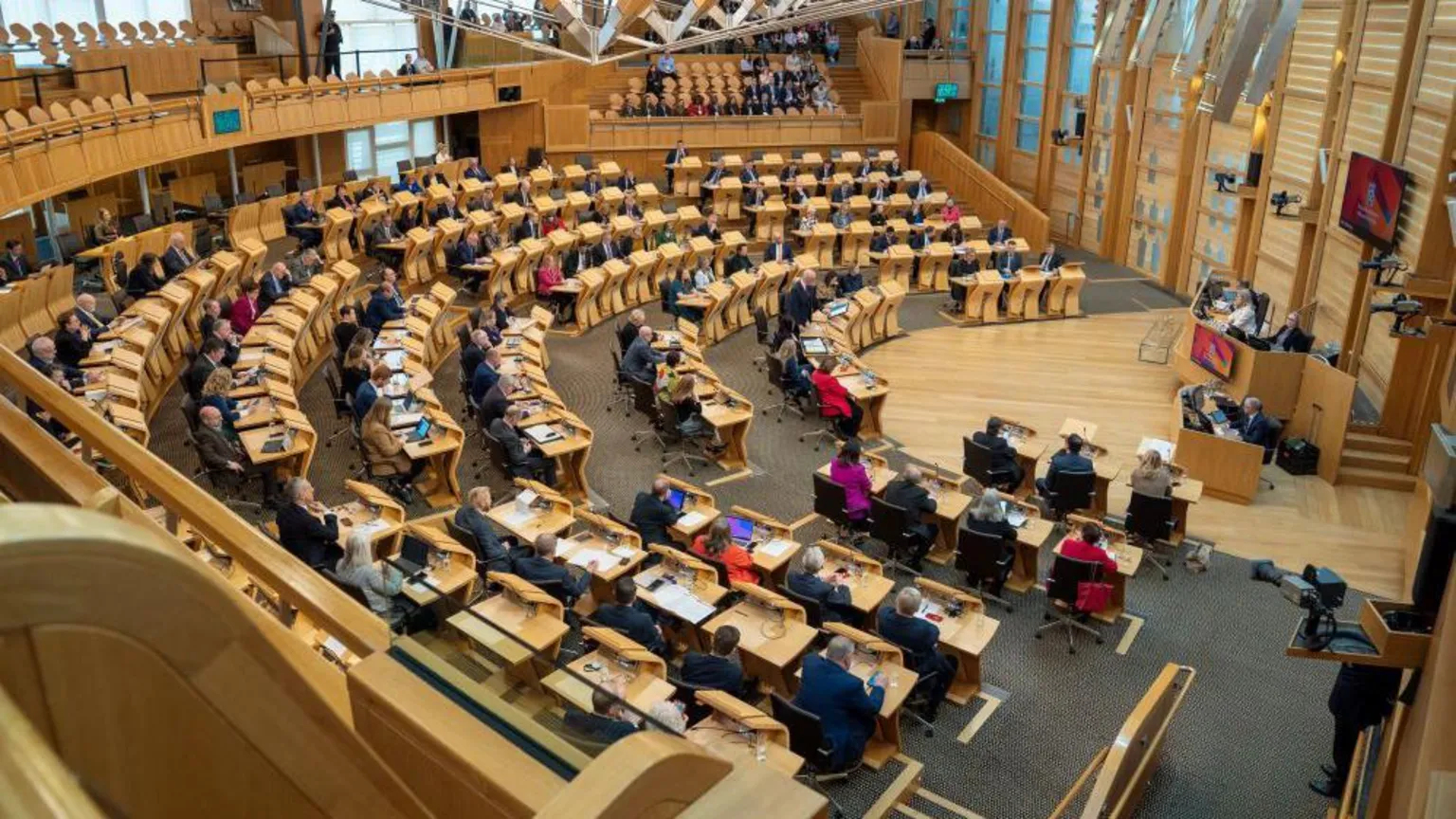
About the 2026 Scottish Parliament Election
Approximately four million voters in Scotland will participate in the election scheduled for May 2026 to select the seventh Scottish Parliament.
The previous election was held in 2021 amid the coronavirus pandemic.
When is the Scottish election?
The Scottish Parliament election is set for Thursday, 7 May 2026.
Polling stations will open at 07:00 and close at 22:00.
In total, 129 Members of the Scottish Parliament (MSPs) will be elected. The parliament is commonly referred to as Holyrood, named after the district in Edinburgh where the parliament building is located.

Who can vote in the Holyrood election?
Eligibility to vote requires residency in Scotland and registration on the electoral roll. Voters must be aged 16 or older on election day and must not be legally disqualified from voting, such as those serving prison sentences exceeding 12 months.
Eligible voters include British or Irish citizens, as well as citizens of other countries residing in Scotland who either have permission to enter or remain in the UK or do not require such permission.
How do I register to vote?
Voter registration can be completed online.
The deadline for registering to vote is 20 April 2026.
For postal voting, the registration deadline is 21 April, and for proxy voting, it is 28 April.
How does voting work?
Each voter receives two ballot papers. The first ballot is to elect a constituency MSP who will represent their local area. The second ballot is for the regional vote.
Constituency MSPs are elected via a first-past-the-post system, where the candidate with the most votes in each constituency wins.
In the regional ballot, voters cast their vote for political parties rather than individual candidates.
Regional seats are allocated using a formula that considers the number of constituency seats a party has won. This system ensures that the overall composition of the parliament reflects the proportion of votes each party receives in the regional ballot.
When will we know the results?
Previously, vote counting began immediately after polls closed at 22:00 on election day, with results announced overnight and into the following morning.
For this election, counting will commence on Friday morning.
The first results are expected around lunchtime, with the majority declared by the evening.
What does the Scottish Parliament do?
The modern Scottish Parliament was established in 1999.

MSPs debate and enact laws on devolved matters transferred from the UK Parliament. These include key areas such as education, health, and transport.
Holyrood also controls certain taxes, including the setting of income tax bands and rates, as well as some welfare policies.
The UK Parliament at Westminster retains authority over reserved matters, typically those with UK-wide or international implications, such as defense, foreign policy, and immigration.
How many MSPs are there?
The Scottish Parliament consists of 129 MSPs.
Of these, 73 represent local constituencies.
The remaining MSPs are elected from eight regions covering the entirety of Scotland, with each region electing seven MSPs.
This structure means that each person in Scotland is represented by eight MSPs: one constituency MSP and seven regional MSPs.
There have been boundary changes for this election, resulting in some constituencies and regions having new names and altered shapes.
You can verify your constituency and region here.
The Scottish Government is typically formed by the party with the most seats or by a coalition of parties.
The government is led by the First Minister, who appoints ministers responsible for departments such as education, health, and finance.
What are the big issues for voters?
A poll conducted for BBC Scotland identified three primary concerns among voters: the economy (including the cost of living), health and social care, and immigration.
Further details on voter priorities can be found here.
What happened last time?
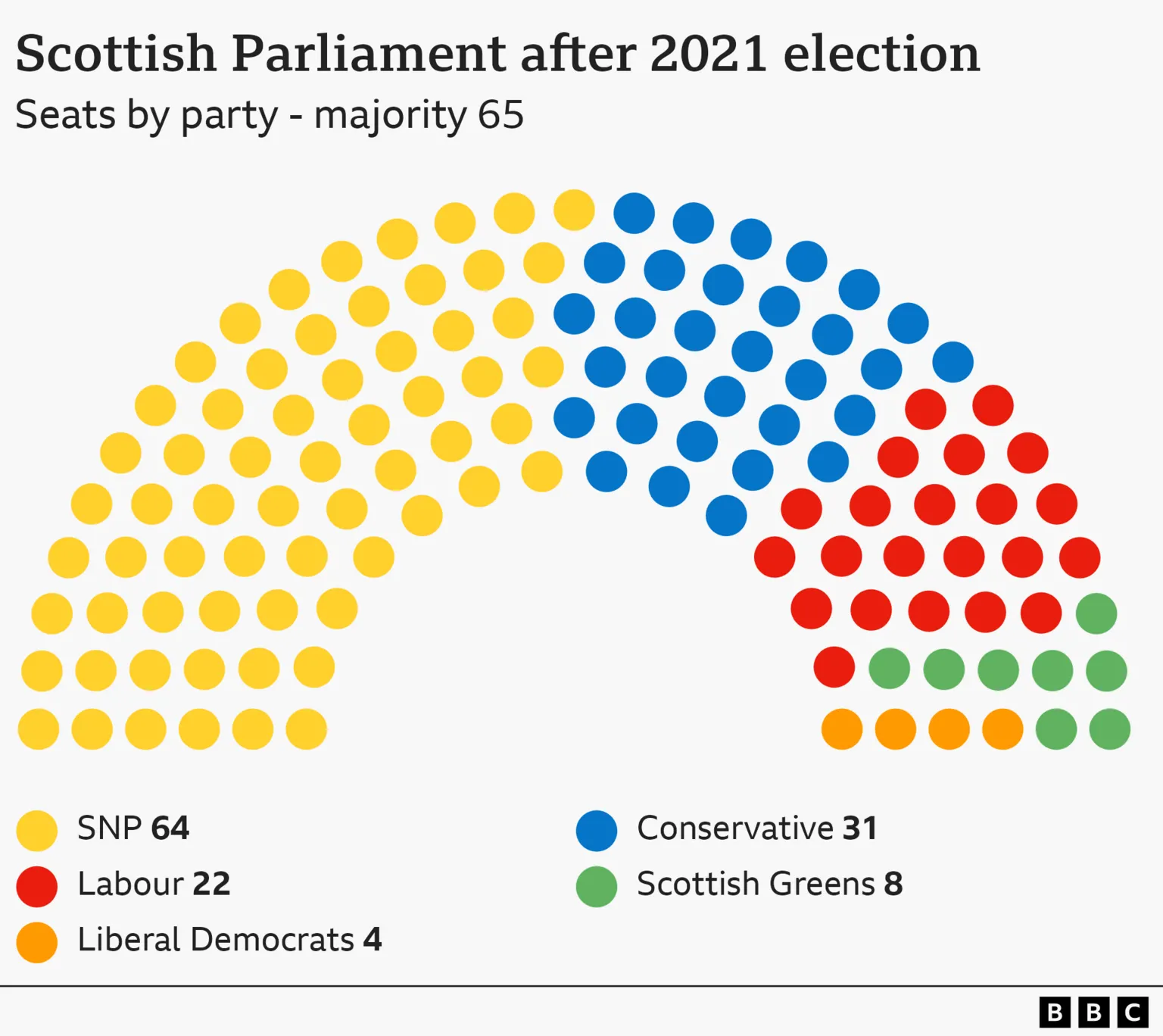
The 2021 Scottish Parliament election took place on Thursday, 6 May, during ongoing Covid-19 restrictions.
The Scottish National Party (SNP) won 64 seats, one short of an overall majority but one more than in the previous election.
The Scottish Conservatives secured 31 seats, coming in second.
Scottish Labour won 22 seats.
The Scottish Greens obtained eight seats, and the Scottish Liberal Democrats won four.