

White-tailed Eagles Set for Release in Exmoor National Park
White-tailed eagles, the UK's largest bird of prey, are scheduled to be released across Exmoor National Park following government approval of the next phase in a contentious national reintroduction program.
Up to 20 birds, also known as sea eagles and once extinct in the UK, will be released over a three-year period starting this summer.
However, concerns have been raised regarding the potential threat these predators may pose to local sheep populations. A farmer from Scotland, where white-tailed eagles were reintroduced in 1975, advised that those in Exmoor should oppose the plans vigorously to avoid losing lambs to the birds.
Natural England, which granted approval on Wednesday, emphasized that the reintroduction will be "carefully planned" in collaboration with local landowners.
The eagles, which have a wingspan of up to 2.4 meters (8 feet), have already been observed visiting Exmoor since their release on the Isle of Wight seven years ago. Their range has since expanded along the south coast.
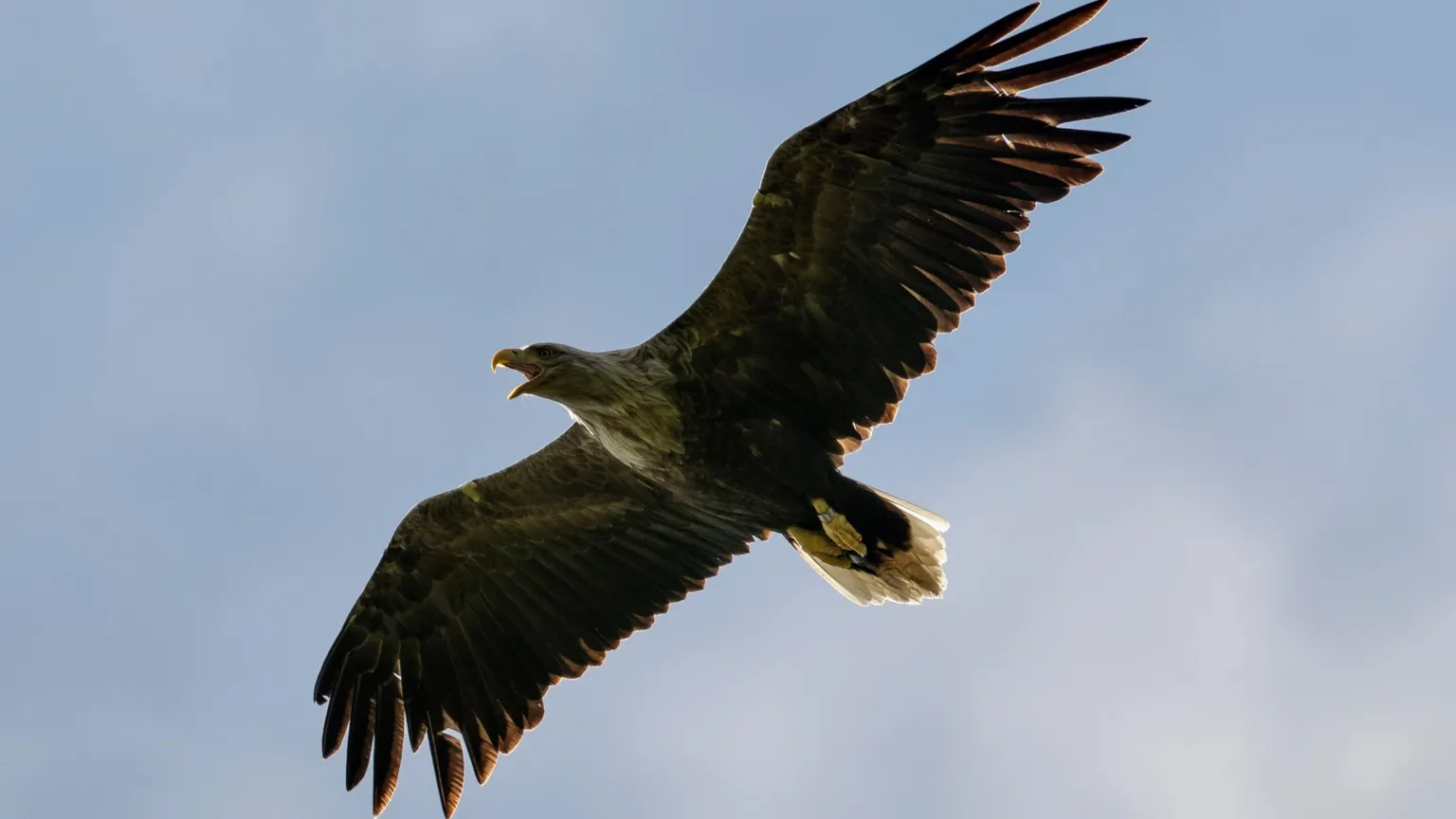
All eagles released in Exmoor will be equipped with satellite tags, enabling the project team, led by Forestry England and the Roy Dennis Wildlife Foundation, to monitor their locations and study their progress.
Steve Egerton-Read, white-tailed eagle project manager at Forestry England, expressed hope that the release would contribute to increasing the population and facilitate their spread across southern England.
Ali Hawkins, senior ecologist with Exmoor National Park Authority, stated that the project's supporters are "committed to continuing to work with farmers and other stakeholders, to support them in adapting to this species fledging on Exmoor once again."
Historical Context and Reintroduction Efforts
White-tailed eagles were once widespread throughout Britain and Ireland but disappeared by 1918 due to habitat loss and human persecution.
The first successful reintroduction began in 1975 on the Isle of Rum, located in Scotland's Inner Hebrides. Since then, additional reintroduction schemes have been initiated, though their return has not been universally welcomed.
Some Scottish farmers report losing tens of thousands of pounds annually in livestock due to eagles preying on vulnerable lambs.
Ricky Rennie, a fourth-generation farmer at Garvachy Farm near Minard, Argyll, has experienced the impact of white-tailed eagles since 2018.
In 2024, his worst year, he estimates that two-thirds of his lambs were lost to the eagles, with annual losses reaching up to £30,000.
"If they're coming in naturally, there's not much you can do about it, but if they're trying to introduce them, I'd be fighting it tooth and nail - because they will eventually put farms out of business," he said.
Andrew Connon, president of the National Farmers' Union Scotland, emphasized the importance of learning from the Scottish experience, stating:
"Any Exmoor release must learn from Scottish experience and ensure that farmers are supported within their existing farm systems to embed strong safeguards for livestock from the outset."
Monitoring and Support Measures
Lamb predation is being closely monitored in Scotland, and farmers receive some financial assistance to manage and mitigate risks to their flocks.
There remains disagreement between many farmers and conservationists regarding the extent to which white-tailed eagles kill lambs versus scavenging carcasses of already dead animals.
A recent survey conducted by the National Farmers' Union (NFU) among farmers and land managers in Cumbria, North Yorkshire, and Durham found that 85% of respondents opposed a proposed reintroduction.
A spokeswoman for the National Sheep Association (NSA) expressed concerns regarding new white-tailed sea eagle releases.
The NSA has called for a comprehensive impact assessment of white-tailed eagle reintroductions, considering farm viability and mental health, before proceeding with further releases.
NSA chairman Peter Delbridge, a sixth-generation farmer on Exmoor, told the BBC:
"We don't want to reach the situation where the genie is out of the bottle and we're experiencing losses but because they are a protected bird we won't be able to deal with it ourselves."
Government Oversight and Future Plans
Natural England, the government’s wildlife licensing authority, stated it will "closely monitor" the implementation of the Exmoor reintroduction.
Matthew Heard, Natural England's national delivery director, said the approved licence:
"Supports a carefully planned reintroduction, grounded in strong evidence and built on collaboration with local communities and land managers."
He added:
"This moment has been a long time in the planning and shows what can be achieved when ambitious partnerships, good science and positive engagement come together."
How to Recognise a White-tailed Eagle
White-tailed eagles are notable for their large size and broad wings, which have earned them the nickname "flying barn doors." Their wingspan can reach up to 2.4 meters (8 feet), making them the largest birds of prey in the UK.
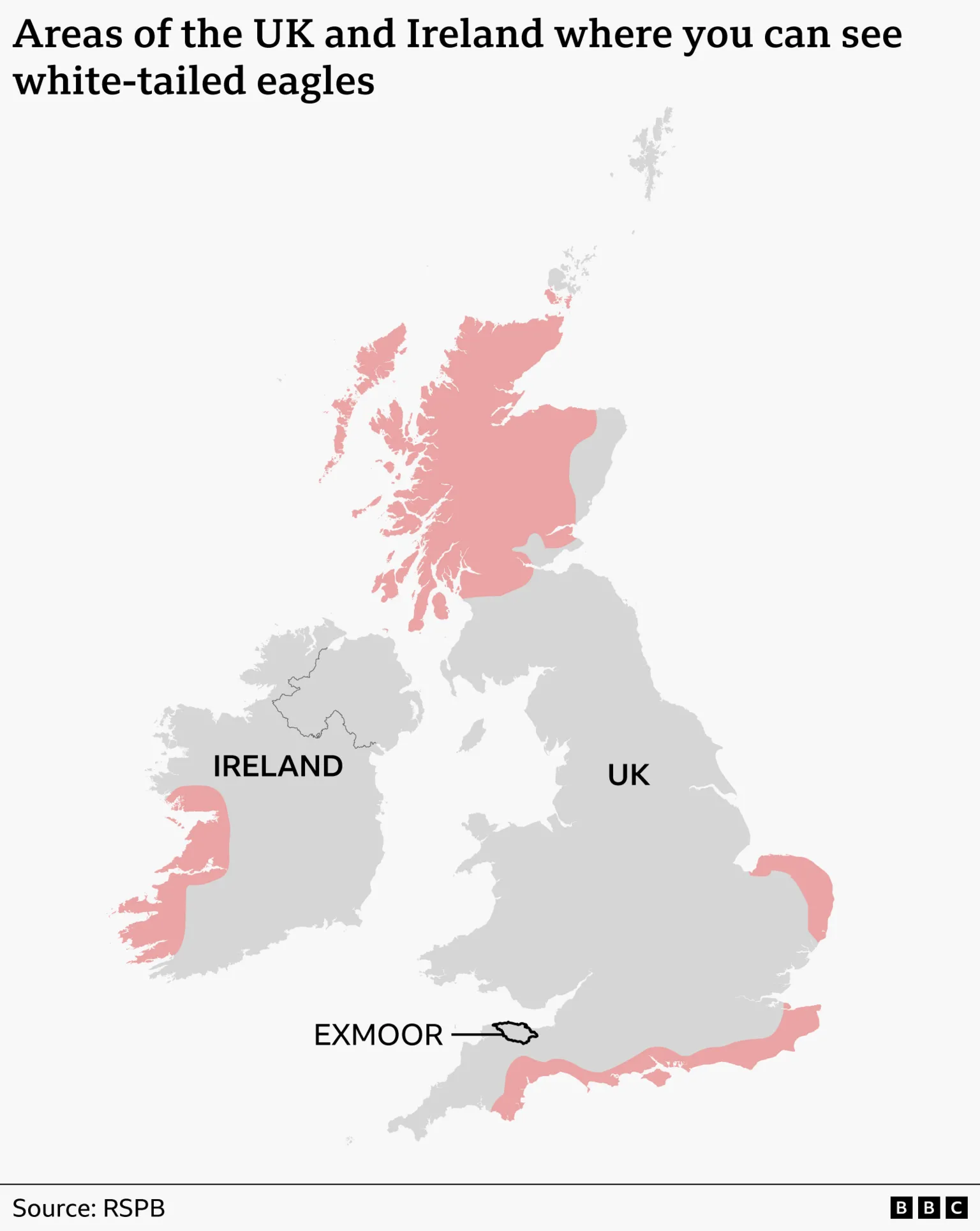
They are primarily found in Scotland, particularly the Highlands and the Hebrides, with populations also present along the Norfolk coast and the south coast from Kent to Devon in England. In Ireland, they inhabit areas along the west coast from Kerry to Galway.
Their presence is marked by their distinctive soaring flight and large size, making them a remarkable sight in the skies of the UK and Ireland.


