

Why is Starmer under pressure from his own MPs?
Sir Keir Starmer is striving to remain prime minister after four ministers resigned and over 80 Labour MPs demanded his immediate resignation or a clear timetable for his departure.
He stated his intention to "get on with governing," and more than 100 Labour MPs have signed a statement supporting his premiership.
Labour's poor performance in the largest elections since its 2024 landslide victory has intensified scrutiny of Sir Keir's leadership. The party lost nearly 1,500 councillors in local elections across England amid a surge for Nigel Farage's Reform UK, with the Greens also eroding Labour's support.
Labour was also ousted from power in Wales, ending a century of political dominance, and secured only 17 of 129 seats in the Scottish Parliament, marking its worst result at a Holyrood election.
The BBC is aware of more than 80 Labour MPs calling for Starmer to resign or set a departure timetable.
Jess Phillips resigned as safeguarding minister, telling Starmer that
"deeds, not words matter". Communities Minister Miatta Fahnbulleh and Victims Minister Alex Davies-Jones also resigned.
Home Secretary Shabana Mahmood is among those urging Starmer to announce a leaving date. Backbencher Catherine West is reportedly collecting signatures from MPs who want the prime minister to step down by September.
How would a leadership challenge work and who could stand?
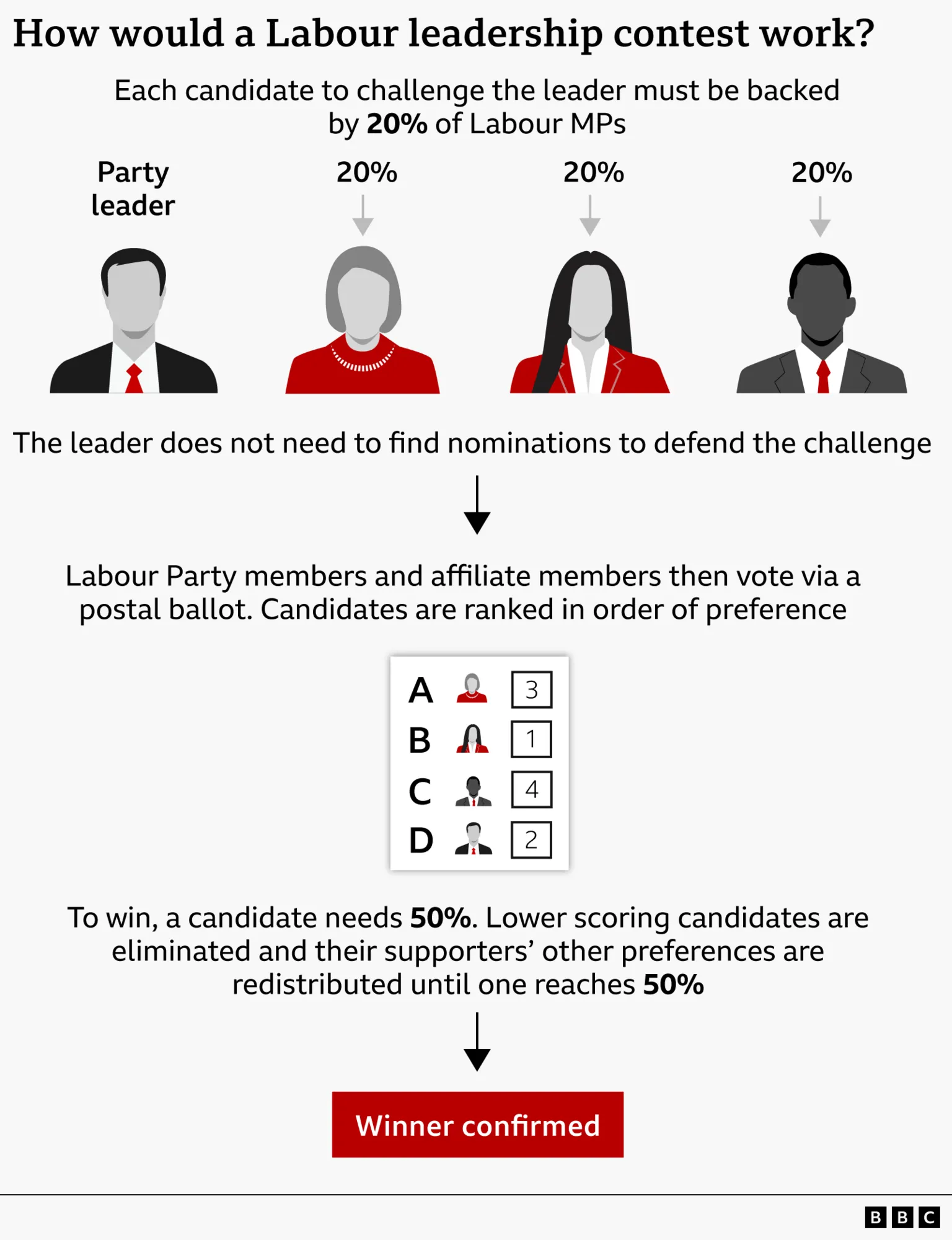
MPs dissatisfied with Starmer could initiate a leadership election by securing the backing of 20% of Labour MPs. With 403 Labour MPs, this means 81 supporters are required.
Once triggered, other candidates may join if they also have 81 MP backers. Starmer would automatically appear on the ballot if he chooses to contest.
He would remain prime minister throughout the contest. Notably, no Labour prime minister has ever faced a formal leadership challenge from their MPs.
How does the vote to choose a Labour leader work?
Party members and affiliated trade union supporters vote by ranking candidates in order of preference, marking one for their favorite, two for second choice, and so forth.
If a candidate obtains more than 50% of first-preference votes, they win outright. Otherwise, the candidate with the fewest votes is eliminated, and their voters’ preferences transfer to their next choice. This elimination continues until a candidate surpasses 50%.
The timetable for the leadership ballot is set by Labour's National Executive Committee (NEC). In 2020, candidates secured nominations before a six-week ballot period.
That contest was triggered when Jeremy Corbyn announced his resignation following Labour's 2019 general election defeat.
Who could stand to replace Starmer as Labour leader and prime minister?
Potential challengers include Greater Manchester Mayor Andy Burnham, former deputy prime minister Angela Rayner, and Health Secretary Wes Streeting.
Burnham, who has openly expressed leadership ambitions, cannot enter a contest without being an MP. Earlier this year, the NEC blocked his attempt to stand in the Gorton and Denton by-election, citing the "disproportionate" cost of a mayoral election to replace him.
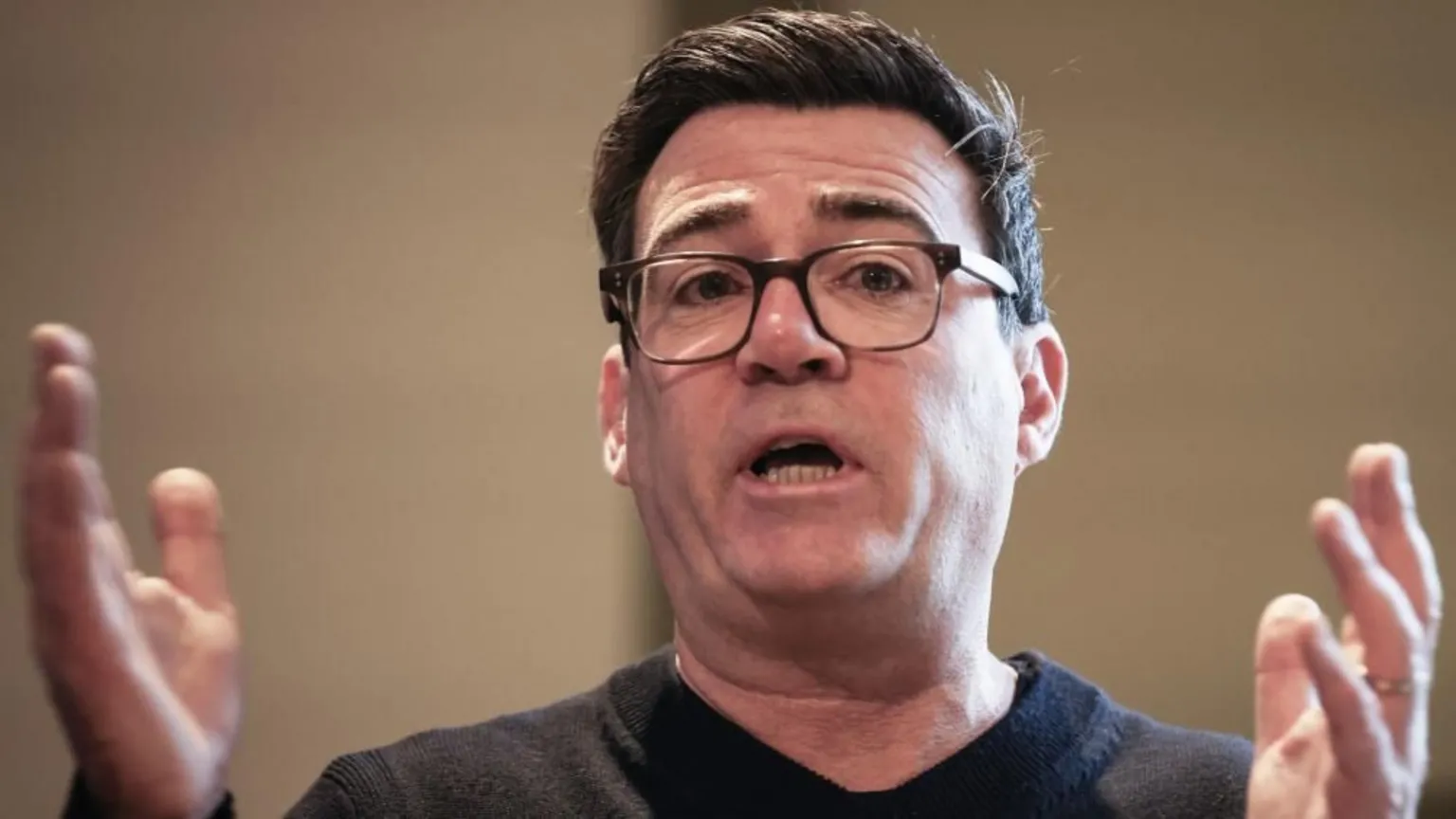
Burnham's supporters hope to delay any leadership contest until he returns to Parliament.
Rayner, favored by some on Labour's left, recently called for regional mayors to gain more economic powers and advocated raising the minimum wage, warning that
"We are in danger of becoming a party of the well-off, not working people".
Rayner resigned as deputy prime minister last September after it emerged she had underpaid stamp duty on an £800,000 flat in Hove. She is reportedly awaiting the outcome of an HMRC investigation, which could complicate a leadership bid.
Streeting supported Starmer after the election losses but did not rule out standing. Some view this as his best opportunity before Burnham's potential return.
Streeting has been linked to Peter Mandelson, whose appointment as British ambassador to the US—despite connections to convicted sex offender Jeffrey Epstein—raised questions about Starmer's judgment.
What would happen if Starmer resigns or sets a timetable to leave?
Prime ministers serve until they resign. Starmer has told the cabinet he intends to prove his
"doubters" wrongand will not
"walk away".
If he changes course, he could remain in office during a transition before handing over to a successor, who would become both Labour leader and prime minister.
If Starmer resigned immediately, a cabinet member would serve as caretaker prime minister, following party rules. The cabinet would decide, consulting the NEC. Deputy Prime Minister David Lammy would not automatically assume the caretaker role.
A leadership contest would follow.
Could the opposition force a general election?
The winner of a Labour leadership election would automatically become prime minister without a general election.
However, the prime minister must maintain the confidence of the House of Commons, meaning majority support among MPs.
If the opposition leader, currently Conservative Kemi Badenoch, introduces a no-confidence motion, parliamentary time would be allocated for debate and vote. The motion requires a simple majority to pass.
A successful vote usually triggers a general election.
Given Labour holds 403 of 650 Westminster seats, several Labour MPs would need to support such a motion, which is highly unlikely.


