

Fuel Shortages and Rising Prices Affect Northern Ireland Drivers
Last weekend, lorry driver Rod Quaite encountered a diesel shortage when he stopped at a supermarket forecourt to refuel. During his work travels across Northern Ireland, he has observed fuel prices increasing, with the extent of the rise varying by location.
This situation has become increasingly common following recent geopolitical events, including attacks by the United States and Israel on Iran and Iran's retaliatory strikes across the Middle East.
NI has investigated the current situation at fuel pumps, examining whether shortages exist and if panic buying is occurring.
Why Are Fuel Prices So High?
Data released by the Consumer Council on Thursday indicated that the average price per litre of petrol in Northern Ireland was £1.345, while diesel averaged £1.496.
Comparatively, on 5 March, the average prices were £1.262 for petrol and £1.338 for diesel.
On 12 March, Magherafelt in County Londonderry recorded the highest petrol price at £1.399 per litre, while Omagh in County Tyrone had the highest diesel price at £1.648 per litre.
Since the onset of the conflict, Brent crude oil prices, which serve as the global benchmark, have increased from $73 per barrel to $106 as of 9 March.
Brian Donaldson, chief executive of the Maxol Group, which operates petrol stations throughout Northern Ireland, explained that approximately 20% of global oil shipments pass through the Strait of Hormuz, meaning any disruption there immediately affects prices.
"While most of our product supply comes through the UK, the global nature of the oil market means we will not be insulated from significant price increases," he said.
"On a regional level, retail pump prices adjust as new deliveries replace existing stock.
"Over the past 12 days, cost prices have risen by 11.38p a litre excluding VAT for petrol and 22.38p a litre excluding VAT for diesel."
It is important to note that over 50% of the pump price for both petrol and diesel is attributable to UK government taxation.

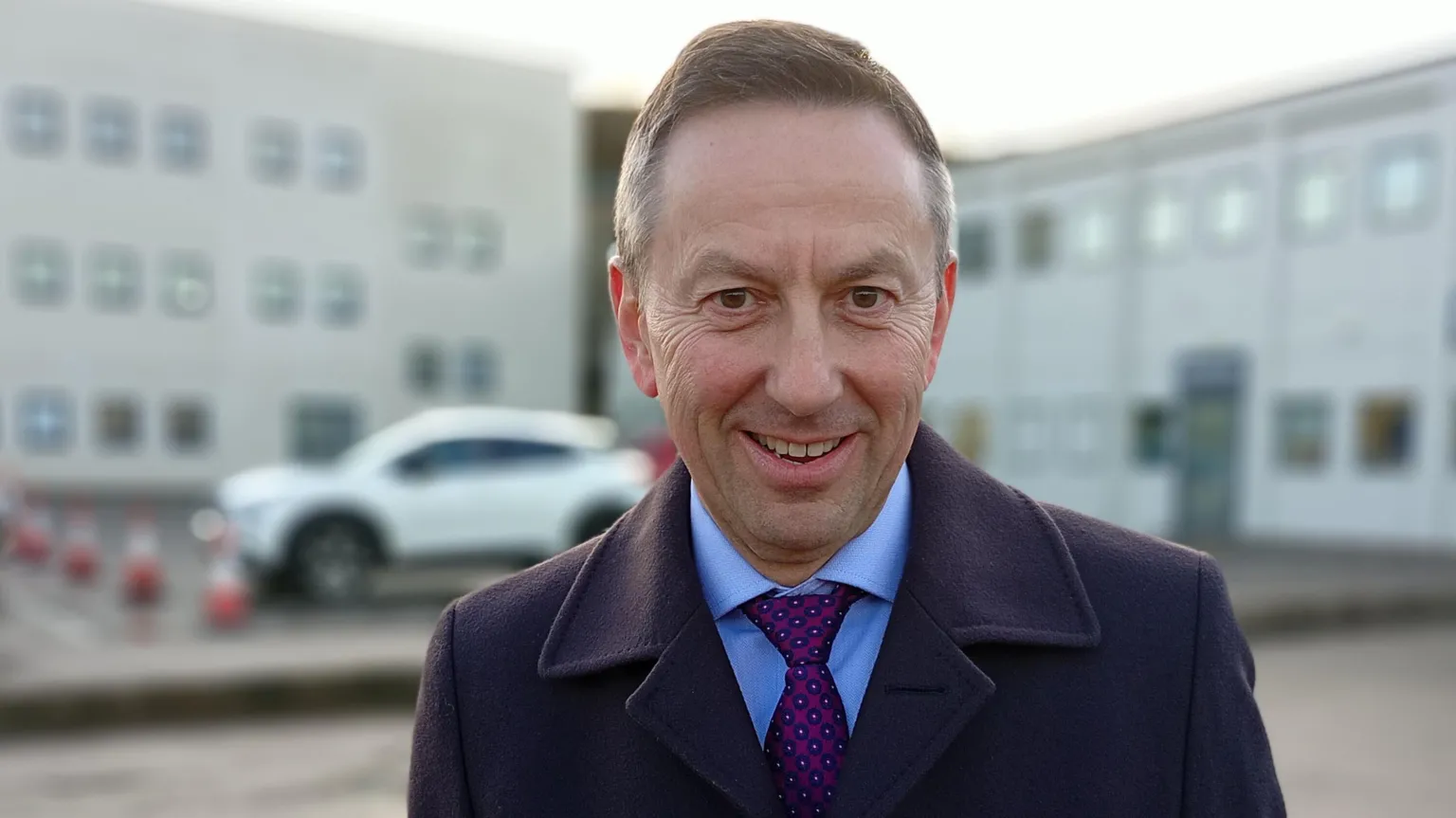
Is Northern Ireland Facing a Fuel Supply Shortage?
Donaldson confirmed that there are no current supply issues for petrol or diesel.
"The supply chain remains robust, and sufficient product is available to meet the current high level of demand," he stated.
"Unlike previous price shocks or disruptions, such as Russia's invasion of Ukraine, which led to the banning of Russian refined products, particularly diesel, and created a situation where product was physically unavailable within the supply chain, the current situation is primarily a pricing issue."
The Irish Petrol Retailers Association (IPRA) echoed this view, reporting no shortages at retail outlets.
"Belfast and Derry terminals are well stocked with product being made available across all grades presently," said IPRA's David Blevings.
Is Panic Buying Occurring?
The Consumer Council indicated that it has no specific evidence of panic buying of petrol or diesel.
Donaldson noted a short-term increase in demand during the first week of the conflict.
"This appeared to be driven more by consumers anticipating potential price increases rather than panic buying in response to fears of supply shortages," he explained.
The Consumer Experience
Rod Quaite, a lorry driver residing in Broughshane near Ballymena, County Antrim, shared his observations with NI regarding regional price variations.
"The further down towards Enniskillen you go, the dearer it's getting - the cheapest I saw was £1.64," he said.
"What I can't understand is why diesel's been hammered so much and petrol isn't.
"Yes, petrol's gone up a bit, but it's gone up nowhere near as much as diesel.
"It'll not be long until it's hitting £2 a litre."
Despite the price increases, Quaite has not altered his driving habits.
"I don't drive very much out of work, I get enough driving at work, but I like to keep the tank full for emergencies," he said.
"I'm not the best paid person in the world, but I'm in the position where I can afford it."

Andrew McCusker, who lives near Rathfriland in County Down, uses a fuel price comparison website to identify the cheapest fuel options.
"You could go to one petrol station and it could be X price for petrol and then you go a mile down the road and it could be 10p, 15p a litre dearer," he remarked.
"You just ask yourself why is that the case?"
He considers himself fortunate that his daily commute is only 10 miles each way.
"As of now I'm OK just travelling by car, the car just gets me from point A to point B," he said.
"But if we face the possible scenario where the fuel really does go up - let's say petrol goes up to £1.80 or £1.90, will I consider looking at public transport and see if it's maybe a little bit cheaper? Yeah that is one scenario."

Are Fuel Prices Being Regulated?
The Competition and Markets Authority (CMA) has announced plans to increase monitoring of petrol and diesel prices across the United Kingdom to ensure fair market practices.


