

Assessing the Impact of the Iran Conflict on the UK
How significant will the repercussions of the Iran conflict be on the UK?
"Insanely profound," answers one government source. "Huge," says another.
This raises the question: what measures will the prime minister and chancellor implement in response?
This week, Prime Minister Sir Keir Starmer emphasized that working families remain a priority. There is a possibility of a severe surge in energy costs.
Are we heading towards another substantial government financial intervention to support families and businesses amid this crisis?
Government Response Planning
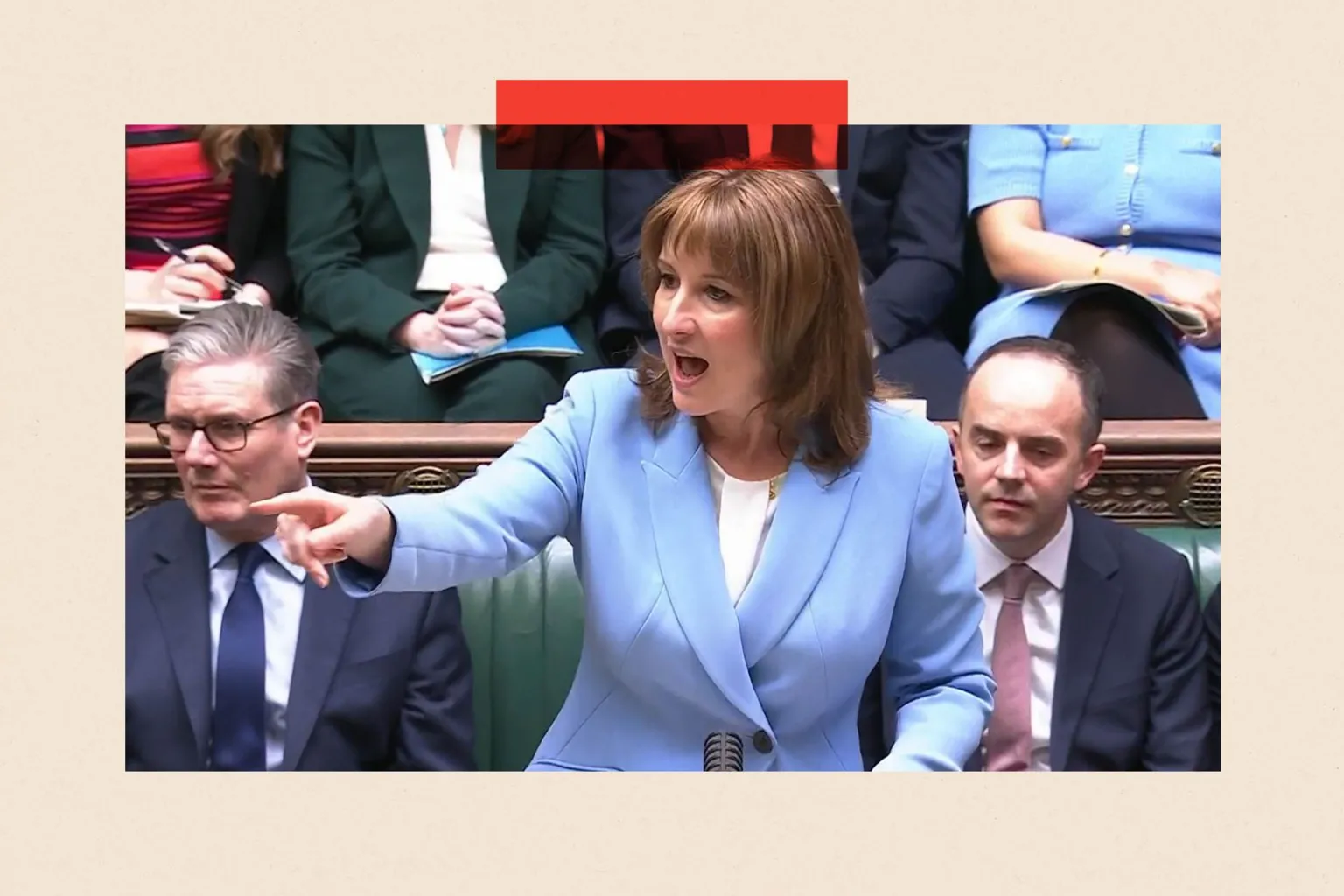
Following the missile attacks two weeks ago, Chancellor Rachel Reeves shifted her focus from preparing the Spring Statement to strategizing the potential economic effects of the Middle East conflict and possible government responses.
Given the war rendered her planned statement obsolete before printing, Reeves promptly instructed a senior official to establish an Iran response board. This board comprises ministers, advisers, and senior Treasury civil servants.
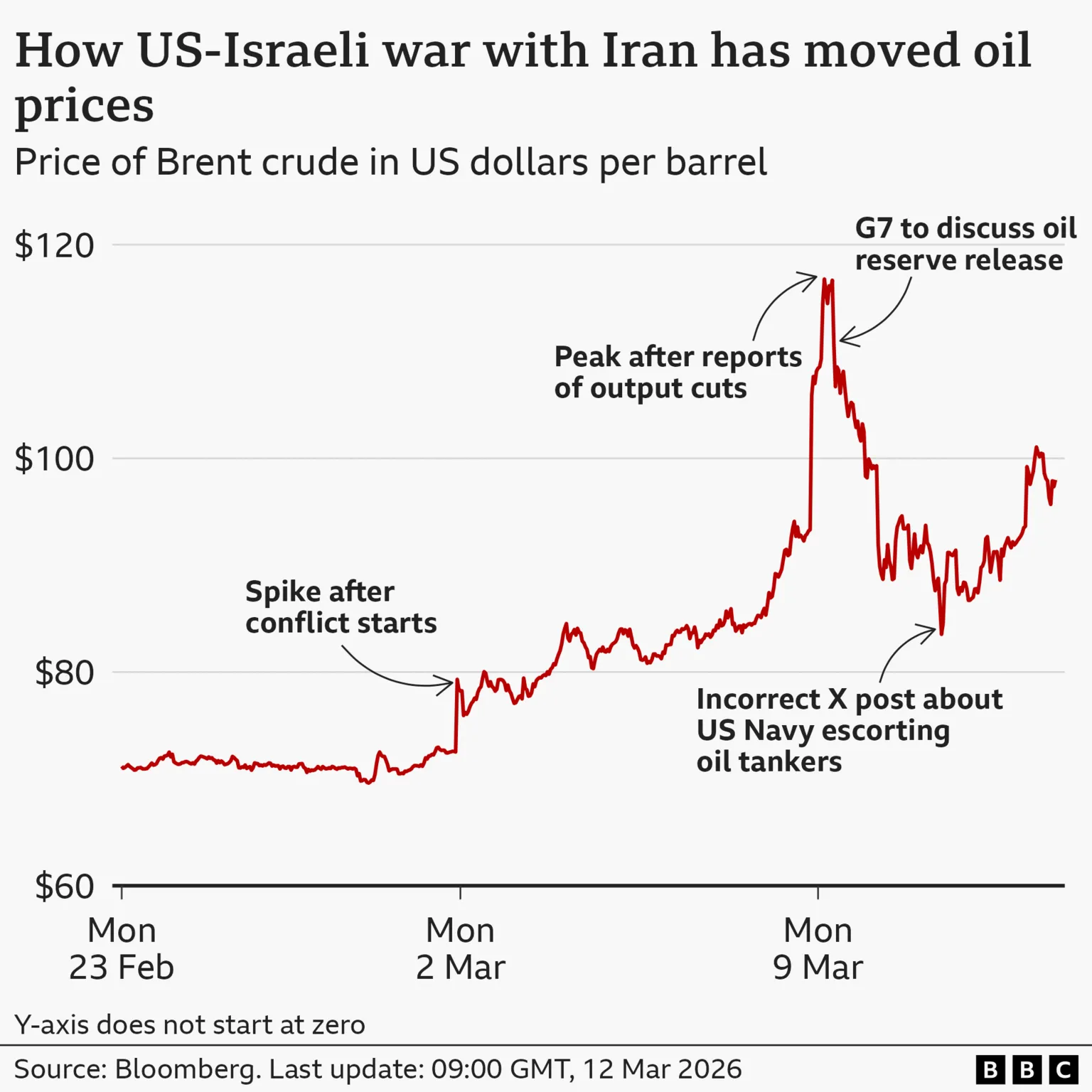
The board's mandate is to devise strategies to shield the economy from the worst impacts of the war and rising oil prices, including protecting families from escalating energy bills.
There is significant concern about how the conflict might hinder the fragile economic recovery.
The immediate priority is managing the cost of energy, a highly sensitive political issue.
The Treasury has already urged competition authorities to closely monitor the energy sector.
Discussions with energy suppliers have taken place, and specific assistance is being planned for the many households reliant on heating oil.
Additionally, ministers have publicly confronted the industry over allegations of price gouging and profiteering.
No one can predict the duration of the war or the persistence of high oil prices. Notably, energy bills for many households are set to decrease for at least three months due to a reduction in the price cap.
However, the government faces the challenge of protecting consumers and businesses if oil prices remain elevated for an extended period.
Historical Context of Government Bailouts
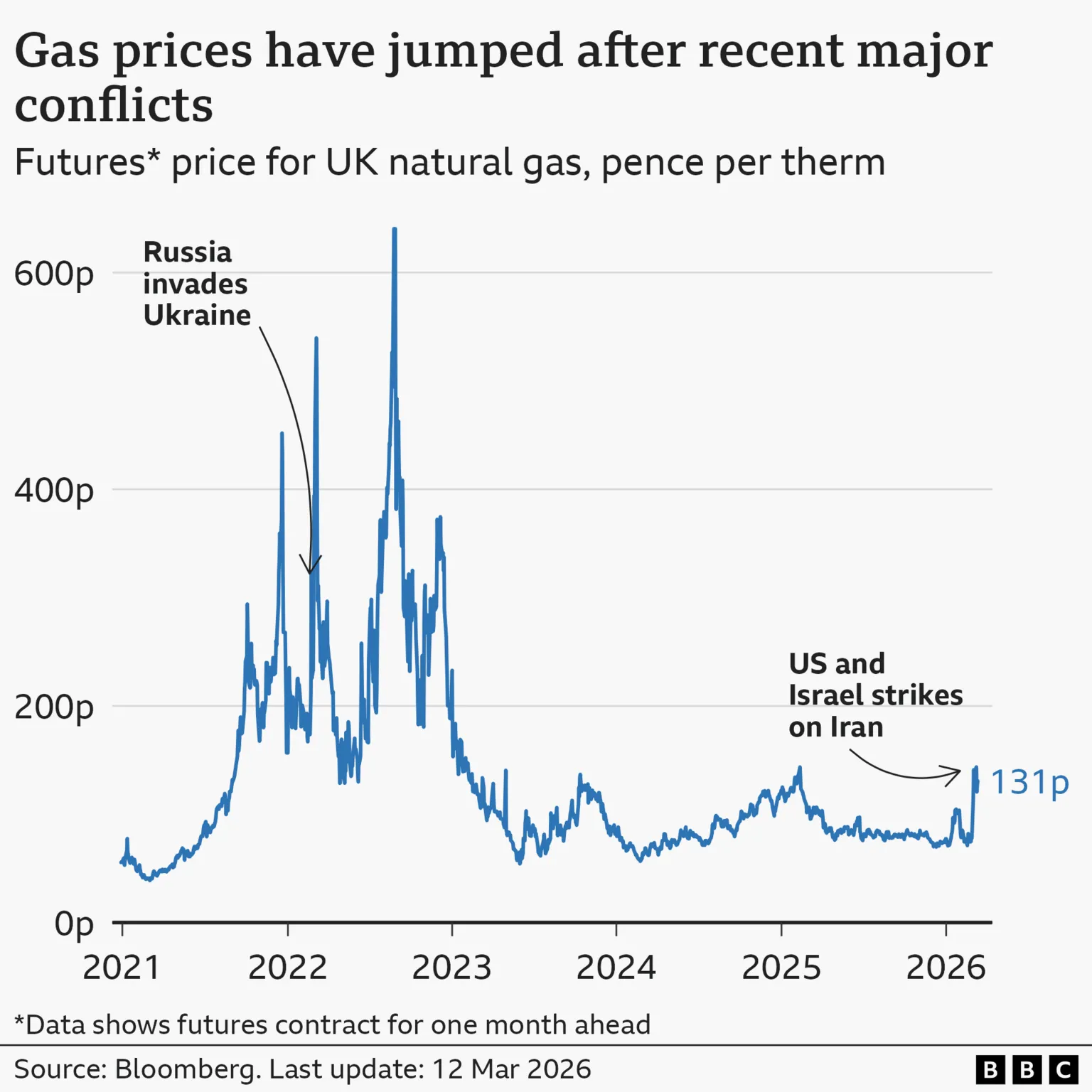
The UK is still managing the financial consequences of Liz Truss's energy bailout four years ago, which was implemented after energy prices surged following Russia's invasion of Ukraine. Prior to that, the government funded furlough schemes during the pandemic, paying wages for over 10 million workers.
Potential Government Intervention
Will the government act? Starmer declared in the Commons this week:
"No matter the headwinds, supporting working people with the cost of living is always top of my mind."
The likelihood of a Labour government, which pledges to assist citizens in managing expenses, refraining from intervention if bills escalate later this year is minimal, especially considering the Conservative government previously covered such costs.
As one government source noted:
"If Truss and Kwarteng did it, then Starmer and Reeves will feel they need to as well."
While officials remain discreet about specific plans, multiple sources agree that if consumers face significantly higher bills, ministers will feel obligated to intervene.
Reeves informed The Times this weekend that the government is "working through different scenarios" for potential action.
On Monday, she is expected to announce detailed support for households dependent on heating oil, involving tens of millions of pounds distributed via local councils.
A source involved in government-industry discussions remarked:
"There was an acceptance there might have to be an intervention."
Learning from Past Interventions
There is a consensus that any forthcoming support should differ from the 2022 bailout. An insider acknowledged the previous scheme was implemented hastily and that current efforts focus on contingency planning rather than immediate action.
Another source stated:
"It can't be the same as last time."
Discussions are exploring targeted financial support for specific families and households.
During the Truss administration, the government opted for universal assistance due to the complexity of targeting aid, resulting in support reaching both the wealthiest and poorest citizens.
Now, efforts are underway to identify those most vulnerable to rising prices and tailor support accordingly.
However, this is complicated. A former No 10 official explained:
"There's no good, clear correlation between wealth and energy bills."
For example, an elderly individual living alone in a large, poorly insulated home with a small income may face higher costs than a larger family with a moderate income residing in a well-insulated flat.
Consideration is also being given to assisting small and medium-sized businesses affected by energy costs, potentially through policy adjustments to improve their energy contracts rather than direct cash payments.
There is pressure to reduce charges on bills that do not directly cover energy costs, such as grid upgrade fees.
However, reducing these charges could negatively impact long-term energy prices and face resistance.
Ministers have not disclosed details of these deliberations.

One government source suggested:
"There could be a scenario where the price cap goes up by just a couple of pounds," adding uncertainty about a "huge £50-a-month spike coming."
Ofgem is responsible for monitoring energy prices and will decide on the next price cap by the end of May.
Thresholds for Government Action
What level of price increase would prompt ministerial intervention?
The government continues to bear the financial burden of pandemic-related support and the energy price surge following the Ukraine conflict.
Officials involved in those decisions reflect on the enduring weight of their choices, which stabilized the economy but added tens of billions to national debt.
Although such large-scale fiscal interventions are not typical conservative policy, those involved felt they had no alternative.
A senior former official who worked with Rishi Sunak recalled:
"The alternative was in the space of about four weeks, northwards of ten million people losing their jobs. They couldn't have found another one because we were telling them to stay at home."
Another participant described the experience:
"It was totally and utterly necessary and right at the time, but we knew there'd just be such a huge adjustment, nationalising a big part of the private sector for a long period of time."
They added it was "uncertain and uncomfortable, you never want to be in government like that."
The government spent approximately £70 billion on the furlough scheme, with research estimating a net cost of £25 billion due to preserved jobs and economic stability.
One former official remarked:
"It was a time of genuine and acute crisis, when people expect government to stand behind them."
Energy Bailout under Liz Truss
Two years later, during Liz Truss's campaign for prime minister, a former No 10 official noted that despite her public stance against handouts, internal modelling showed households earning £50-60,000 would face fuel poverty.
Many businesses, including pubs and nail bars, risked closure without government support.
Upon taking office, Truss promised to cap household bills at £2,500 for two years, with six months of business support.
Officials were uncertain about the ultimate cost. One recalled:
"We had no way of knowing what it cost. Treasury were giving me costs of £40-£150bn. I was like, 'Guys, that's not helpful.' And we had no idea how we would do it."
Another team member recalled Truss stating:
"If the market could swallow hundreds of billions of Covid loans because it felt like the right thing to do, then an energy bailout felt perfectly legitimate."
The alternative was escalating bills, potential blackouts, increased poverty, and social unrest.
The Office for Budget Responsibility initially estimated costs near £80 billion; the National Audit Office later reported £44 billion, highlighting the unpredictability of the scheme's expenses.
One source said:
"You had to do it big or not do it, and the half-arsed version just wasn't going to cut it."
Emergency Measures and Public Expectations
Both major interventions occurred during acute crises. In autumn 2022, typical household energy bills were projected to rise from £1,971 to £3,549 before government action.
There is broad acknowledgment, including from the chancellor, that ministers will act if significant price increases occur.
These decisions have not only increased national debt but also shifted public expectations regarding government support.
One participant in furlough discussions observed:
"The biggest thing was realising the expectation of the state had been reset."
They added:
"If the public assume more of that, then there ought to be a conversation with the country about what they expect less of."
Funding Future Support
Within government, there is ongoing discussion about financing any additional major household support beyond the forthcoming tens of millions for heating oil users.
If oil prices remain high for months, one source predicted:
"Keir will have to decide if the Treasury takes it out of reserves or Ed Miliband will have to decide whether it comes from the companies. Or go round everyone with a begging bowl?"
It is fundamentally the government's role to support the public during acute crises.
However, if such emergencies become more frequent, politicians may need to persuade the public to accept higher costs or reconsider other government priorities.
A former No 10 official remarked:
"Energy has become more expensive, but is it really up to the government to be liable for your bills? A ratchet only moves in one direction."
Nonetheless, a government insider stated:
"If oil price spikes are followed by big rises in household bills, it is inconceivable to imagine a Labour government not helping people out."
Such interventions could significantly impact the public balance sheet and alter the relationship between the public and government, potentially fostering a politics of expectation.
Top picture credits: PA and
BBC InDepth is the home on the website and app for the best analysis, with fresh perspectives that challenge assumptions and deep reporting on the biggest issues of the day. Emma Barnett and John Simpson bring their pick of the most thought-provoking deep reads and analysis, every Saturday. for the newsletter here



