

MPs Accuse Government of Mis-selling Student Loans
Members of Parliament on Westminster's Treasury Committee have accused the government of "mis-selling" certain student loans. However, Ulster University (UU) submitted evidence to the committee arguing that it is "unhelpful and unrealistic" to suggest that increasing tuition fees would result in students paying back more money.
The university highlighted that many students would face "no additional payments if student fees were increased." While the inquiry primarily focused on loans for students in England and Wales, both UU and Queen's University Belfast (QUB) provided written submissions to the committee's inquiry.
How do student loans in Northern Ireland work?
Most students in Northern Ireland take out loans to cover both their tuition fees and living costs through a "maintenance loan."
For the academic year 2026/27, students studying in Northern Ireland will face tuition fees of £4,985 per year. This amount is lower than the £9,790 annual fees paid by students in England and Wales but higher than the €2,500 "student contribution charge" in the Republic of Ireland.
Students can also borrow a maintenance loan of up to £6,471 annually if living with their parents, or up to £8,352 if living independently. Repayments begin after students complete their courses, secure employment, and earn over £26,900 per year. Any outstanding loan balance after 25 years is cancelled.
Most students in Northern Ireland take out a loan to cover their tuition fees and a "maintenance loan" to cover their living costs
What do Northern Ireland's universities say about tuition fees?
The leadership of Northern Ireland's five universities and university colleges has previously advocated for tuition fees to increase by more than £1,000 annually. In 2025, they wrote to the leaders of the five main political parties requesting that tuition fees rise to nearly £6,000 per year.
However, Economy Minister Caoimhe Archibald subsequently ruled out any increase in tuition fees beyond the usual inflation adjustments.
In their submission to the Treasury Committee, both QUB and UU expressed concerns regarding the sustainability of university finances. Ulster University recently announced plans to cut up to 450 jobs.
UU stated that "Northern Ireland's universities are fundamental to the region's economy and societal fabric," but are currently experiencing a "funding crisis."
"The current funding model for higher education in Northern Ireland is no longer fit for purpose,"
the university added.
UU also addressed what it called a "student debt myth," citing modelling by its economic policy centre which suggested that middle-earning graduates and those earning less would face "no additional payments if student fees were increased."
"The public debate tends to focus on total hypothetical debt accrued, as opposed to what students actually end up repaying,"
the university said, adding that this focus "skews the debate in unhelpful and unrealistic manner, creating impediments to constructive HE (higher education) reform."
The submission further noted that concentrating the tuition fee debate around student debt is "often misleading and inflated" compared to the "actual repayment reality, which for many graduates is significantly lower."

They also referenced financial expert Martin Lewis, who has emphasized that students' repayments are determined more by their earnings than by the amount borrowed.
How do students and graduates feel about their loans?
Michael Doherty, who studied finance but now works as a personal trainer, shared his perspective on student loans.
"Student loans felt like 'free money' when I was younger but now those repayments feel like a tax rather than debt,"
he said.
"I decided to go self-employed when I was at uni. I think it was the right decision and worth doing but had I been more aware of how much money that was actually being spent on it, then I probably wouldn't have made that decision,"
Doherty added.
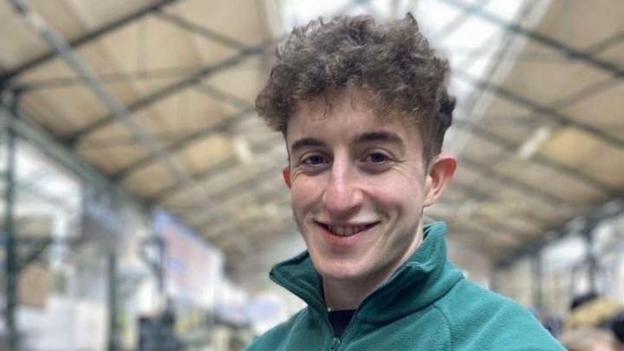
He expressed that university was not a good investment for him as he does not use his degree.
"I see my degree as a fallback as I don't know where things will be in five years and if I'll need it again but to be honest it's just an expensive thing to do as just a fallback, so I wouldn't say it's actually a good investment,"
he said.
Doherty noted that student loans are means-tested, so repayments are proportional to earnings.
"So, if you make a lot more money, you'll pay back more,"
he explained.
"When I was first out of university, working as a personal trainer I wasn't making that much money and didn't pay back anything in my student loan because I wasn't earning enough."
Lauren Marshall, who studied at Ulster University before completing a PGCE at Edge Hill University, estimates her student loan debt to be between £30,000 and £35,000.
"I repay about £150 a month and it feels like a constant burden that is always hanging over your head,"
she said.
"There was no real option not to take out the loan and, without the degree and PGCE, you don't have the qualifications,"
Marshall added.
She said she does not pay much attention to the repayments because they have always been deducted directly from her salary.
"I don't notice it as much coming out of my salary every month simply because it's always been going out and will continue to, probably until the end of my career."

Amy Smith, President of the National Union of Students-Union of Students in Ireland (NUS-USI), warned that any increase in tuition fees would be "catastrophic."
"The reality is that 86.2% of graduates are paying back their student loans each month,"
she said.
"For every young person with a debt larger than a mortgage, any rise will simply add to the psychological and financial burden graduates are already facing."
"This very real debt would also deter potential learners from entering higher education in the first place, while making it harder for people to return to education later in life."

- Phone contract comparisons 'amounted to mis-selling' student loans, MPs say
- Student loans inquiry finds many did not understand terms


