

Minister Leading Disability Benefit Review Assures No Crude Proposals
A review of the personal independence payments (Pip) disability benefit is not expected to include "crude proposals" regarding changes to claimants' payments, according to the minister leading the report.
Sir Stephen Timms told the BBC that his interim review found the benefit was not "fit for purpose" and pledged "fundamental change" in recommendations scheduled for release in the autumn.
The disability minister also highlighted concerns about the "sustainability" of spending on Pip, which is forecast to exceed £41 billion by 2030, as a significant factor in forthcoming decisions.
Background and Scope of the Review
Last year, the UK government commissioned Sir Stephen to assess whether Pip was "fair and fit for the future." His initial report is due to be published on Thursday.
The interim findings conclude that Pip is failing millions of disabled people and the government alike, suggesting a comprehensive overhaul of the assessment system is necessary.
Evidence submitted to the review included testimonies from Pip claimants describing the assessment process as "dehumanising" and a barrier to employment.
The report further notes a sharp increase in the number of Pip recipients in recent years, alongside the projected growth in benefit expenditure.
Understanding Personal Independence Payments
Pip is a benefit available to individuals with long-term illnesses and disabilities who require assistance with additional costs related to living, work, and care.
Eligibility is determined through an assessment where claimants are scored on a zero to 12 scale by a health professional, based on their ability to perform everyday tasks such as washing, dressing, and preparing food.
Speaking to the BBC, Sir Stephen acknowledged that Pip "does a very important job in helping people meet the additional costs of disability." However, he noted that disabled individuals had reported the assessment as "demeaning" and discouraging participation in society.
"We've also found that it hasn't kept pace with changing understanding of health and disability over the last 13 years since the benefit was introduced, so we do think quite fundamental change is needed," Sir Stephen said.
As of April this year, approximately four million claimants in England and Wales were entitled to Pip.
The number of recipients has increased substantially since the benefit's introduction in 2013, driven in part by a rise in claimants citing mental health conditions.

Political Context and Future Prospects
Sir Stephen's review was commissioned by Prime Minister Sir Keir Starmer following the government's unsuccessful attempt to reform welfare last year.
Numerous Labour MPs expressed concern about plans to cut disability and sickness-related benefits to save £5 billion annually by 2030.
Anticipating opposition, the government reversed its position, stating it would not alter Pip rules until the review's conclusions were considered.
The review's recommendations are expected in the autumn, by which time Sir Keir's successor is likely to be in office. Makerfield MP Andy Burnham is widely expected to become the next prime minister.
In a recent interview with LBC, Burnham stated he would not implement "crude cuts to benefit levels that just put people who are struggling in even worse poverty."
Sir Stephen noted that although he has not yet discussed the review with Burnham, he anticipates the former Greater Manchester mayor will "see this process through" if he assumes the premiership.
"The final report will be delivered in the autumn, and I'm not expecting it to contain crude proposals," Sir Stephen said.
"They're going to be very well thought through proposals, thanks to this lengthy and very carefully considered exercise that we've gone through."
Nevertheless, Sir Stephen acknowledged the projected increase in Pip payments represents "government liabilities."
"We're certainly going to be looking fairly at how these decisions are being made, and the question of fiscal sustainability for the benefit is going to be a concern as we reach these decisions," he said.
Claimants’ Experiences and Suggestions for Improvement
Sir Stephen met with a group of disabled individuals at an event hosted by the MS Society, a charity supporting people affected by multiple sclerosis, to discuss the review's findings.
Steve Thomas, diagnosed with MS 12 years ago, shared his experience of undergoing the Pip assessment process to secure an award.
He credited access to the benefit with enabling him to continue working for an additional seven years.
However, he criticized the assessment for demonstrating "a lack of knowledge about the condition."
"They ask questions that are irrelevant and it comes across as they're accusing you of trying to cheat the system," he said.
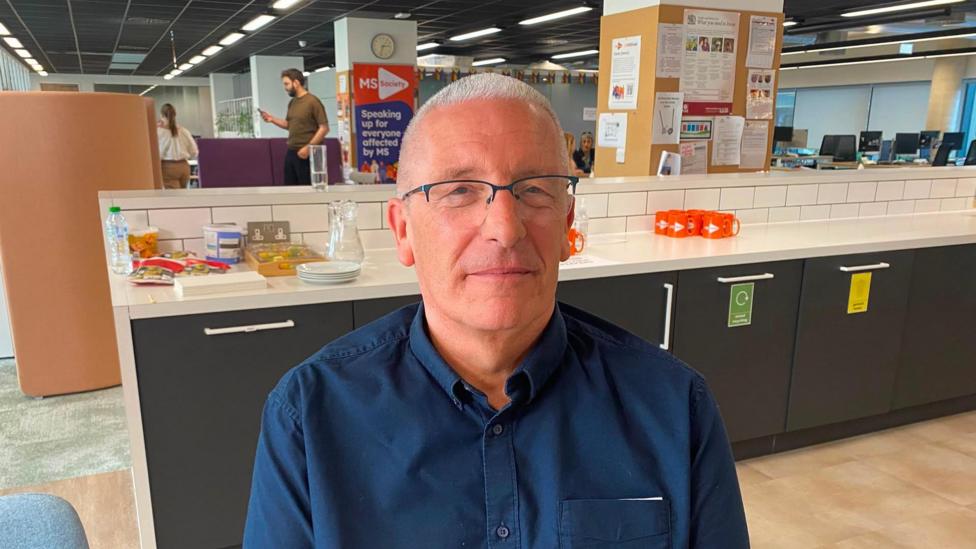
Steve suggested that increasing assessor training and eliminating the appeals system could simplify access to support for disabled people and potentially reduce costs.


