

UK to Experience Continued Heatwave with 35C Temperatures
The UK is expected to endure another day of temperatures reaching 35C, with heatwave conditions anticipated to persist until the end of next week.
On Thursday, temperatures surpassed 34C for the eighth day this year, breaking the previous record of seven days above this threshold, which was set in 1976 and matched in 2020.
This marks the third heatwave of the year, which began earlier this week, notable for its duration and expected to continue into the following week before cooler and more unsettled weather arrives.
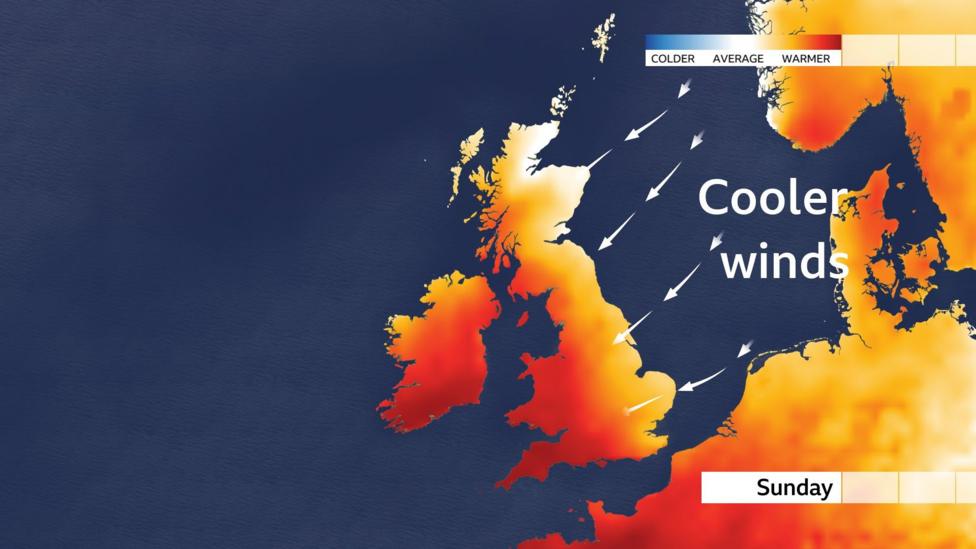
Some relief may occur over the weekend as a north-easterly breeze on Saturday is forecast to bring cooler air from the North Sea. However, certain southern and eastern areas are still expected to experience heatwave-level temperatures.
Amber and yellow heat health warnings issued by the UK Health Security Agency (UKHSA) remain active across large parts of England until 21:00 BST on Sunday.
Where Will It Be Hottest?
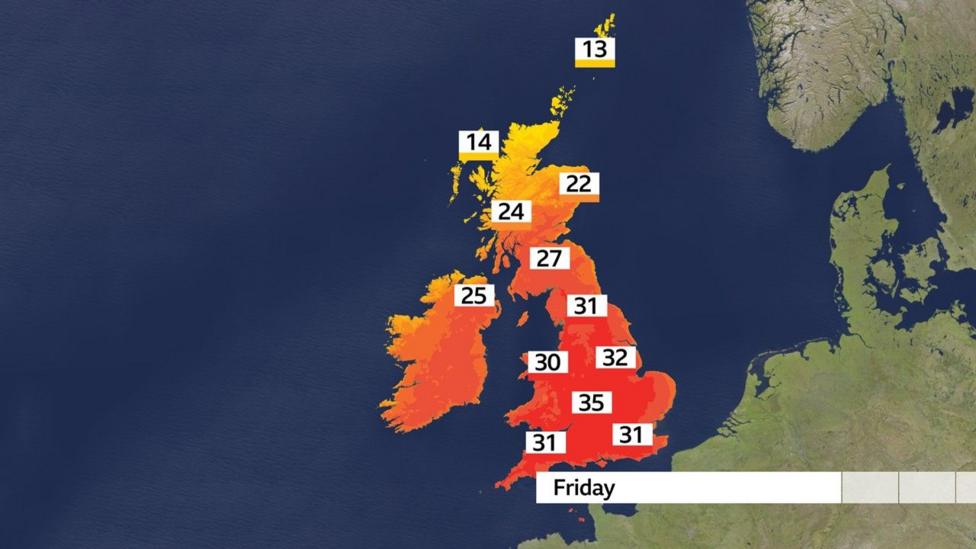
On Friday, highs of 35C are likely.
On Thursday, the peak temperature reached 35.5C at Wisley in Surrey.
Wales recorded 31.3C at Bute Park in Cardiff, Scotland reached 29.3C at Charterhall, and Northern Ireland's highest temperature was 27.5C at Killowen.
On Friday, the focus of the heat will shift westward to areas including Berkshire, Wiltshire, Hampshire, Oxfordshire, and eastern Wales, where temperatures could reach 34 or 35C in some locations.
As high pressure moves northward over the UK, a north-easterly wind is expected to bring a refreshing breeze inland, causing eastern England to experience less intense heat.
Cooler winds from the North Sea will reduce temperatures in some areas on Sunday.
Is This Heatwave Breaking Records?
The current heatwave is not expected to break any daily temperature records. However, on Thursday, the Met Office announced that there have been eight days in 2026 with temperatures reaching or exceeding 34C.
These include two days during the May heatwave, four in June's heatwave, and two so far in the current heatwave, setting a new record for the calendar year and surpassing the previous record of seven days in 1976 and 2020. Another 34C-plus reading is anticipated on Friday.
During June's heatwave, temperatures peaked at 37.7C in Lingwood, Norfolk, breaking the previous June record of 35.6C.

Wales recorded its hottest June day with 35.9C in Cardiff, while Northern Ireland equalled its June record with 30.8C in Castlederg, County Tyrone.
Scotland narrowly missed its all-time June record of 32.2C, set in 1893, with a top temperature of 31.2C at Threave, Dumfries and Galloway.
In the current July heatwave, the highest temperature recorded so far is 35.5C at Wisley in Surrey on Thursday.
Although temperatures are expected to decrease slightly over the weekend, many areas will continue to meet official heatwave thresholds through much of next week.
Comparisons have been drawn with 1976, when the UK experienced 16 consecutive days above 30C, but this record is unlikely to be surpassed.
The highest temperature ever recorded in the UK occurred during the exceptional 2022 heatwave, reaching 40.3C in Coningsby, Lincolnshire.
Heat Health Alerts
Amber heat health alerts have been issued by the UKHSA covering all regions except the north-east of England, where a yellow alert is in place. These alerts are effective until 21:00 on Sunday.
These warnings indicate that significant impacts are likely across health and social care services, especially affecting individuals aged 65 and over, young children, and those with pre-existing health conditions.
"The effect of high daytime temperatures can be exacerbated when they fall very little overnight and do not give our bodies enough time to recover as we try to sleep."
High Pollen Levels
In addition to the heat, many individuals are contending with elevated pollen levels.
Grass pollen is currently dominant, but weed pollen is becoming increasingly prevalent.
Conditions such as high temperatures, light winds, and a lack of rainfall create an environment conducive to pollen accumulation in the atmosphere.
Rain typically helps to clear pollen from the air, but with dry weather expected to continue for several more days, pollen concentrations may steadily increase.
Gentle breezes can transport pollen over long distances from its sources, and an easterly wind is forecast for southern areas starting Friday.
This combination of high pollen levels, warm days, and oppressive nights can be particularly challenging for individuals suffering from hay fever.
- England's warmest June on record following historic heatwave
- 'Extreme' marine heatwave expected for parts of UK
- How hot a 1976-style heatwave would be today


