

Record-Breaking Heatwave Hits UK
The UK experienced its hottest June day on record for the third consecutive day on Friday, with temperatures reaching 37.3C in Suffolk, according to the Met Office.
This surpassed the previous 50-year-old record by more than one degree, underscoring the severity of the heatwave affecting the country this week.
The extreme heat has caused widespread travel disruptions, led to the closure of hundreds of schools, and prompted six NHS trusts to declare critical incidents due to overwhelming patient numbers.
However, the intense heat is expected to subside over the weekend, with a yellow weather warning for thunderstorms issued for Scotland and parts of northern England.

Temperature Records Across the UK
The provisional highest temperature for June was recorded in Santon Downham on Friday, reaching 37.3C.
This broke the previous day’s record of 36.7C in Merryfield, Somerset, which itself followed 36.1C recorded in Gosport, Hampshire, on Wednesday.
Wales recorded a peak temperature of 35.1C in Hawarden, Flintshire, while Scotland's highest temperature was 29.2C in Eskdalemuir, Dumfries and Galloway.
Northern Ireland experienced cooler conditions, with a maximum of 25.6C recorded in Katesbridge, County Down.
All four UK nations have seen their highest temperatures of the year this week, with many areas in England and Wales experiencing "tropical nights" where temperatures remained above 20C overnight.
Heat Warnings and Health Impacts
A red warning for extreme heat, indicating a risk of serious health effects, was in place across London, the east, and south-east England until 21:00 BST on Friday.
Amber heat warnings remain active until Saturday evening for south-west England.
Health services have been under significant pressure due to the heatwave. The NHS has seen a rise in emergency cases related to heat illnesses.
Dr Hilary Williams, clinical vice-president at the Royal College of Physicians, told BBC Radio 4's Today programme, "basic ward infrastructure" had struggled to cope, adding: "The patients are far too hot, we're hearing reports of elderly care wards way over 30C."
She also noted that MRI machines and scanners had been affected by the heat.
The London Ambulance Service (LAS) reported a roughly 50% increase in 999 calls during the heatwave, according to its head, Jason Killens, who expects similar trends nationwide.
Killens stated that LAS had cancelled all non-essential training and meetings to allocate more staff to frontline duties.
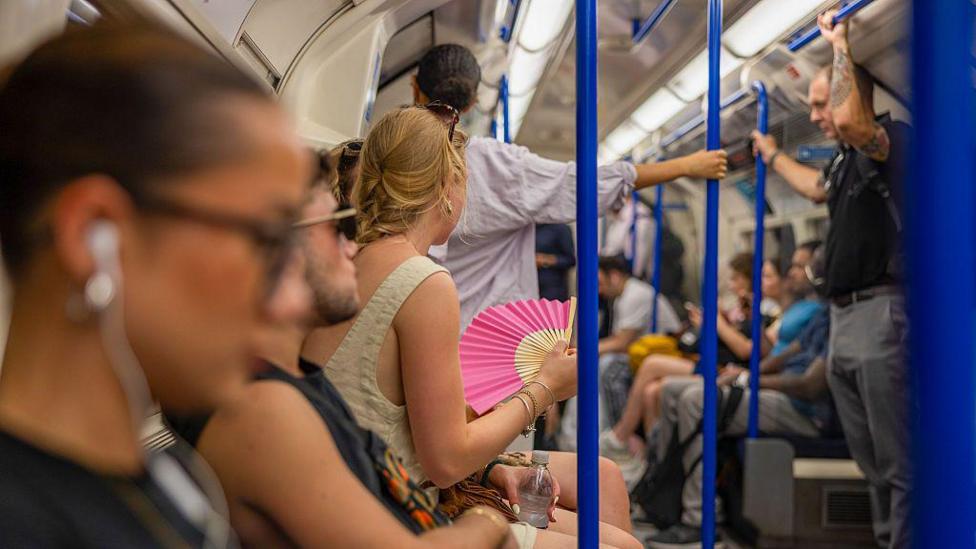
School Closures and Public Safety
At least 600 schools in England either fully or partially closed on Friday due to the heat, following a week in which over 2,000 schools in England and Wales had shut. Exact closure figures remain unavailable.
In Leicestershire, the family of 13-year-old Hayden Jones-Powell, who drowned while swimming in open water during the hot weather, paid tribute to him, remembering his "big smile." Authorities reiterated warnings about the hidden dangers of open water swimming.

Travel Disruptions and Tourist Site Closures
Travel disruptions continued into Friday evening rush hour, with delays and cancellations reported.
Avanti West Coast, Great Western Railway, and Transport for London announced service changes due to the heat.
Several prominent UK tourist attractions closed to visitors, including London's Tower Bridge, Cutty Sark, and Royal Observatory, as well as Marwell Zoo in Hampshire.
Wildfire and Weather Phenomena
Firefighters contained a wildfire in Derbyshire that had affected approximately 200 hectares (990 acres) of land on Tintwistle Moor since Wednesday.
The heatwave, which has also impacted other parts of Europe, was caused by a "heat dome," a high-pressure system trapping heat over Western Europe.
The Met Office noted that the accompanying high humidity worsened potential health risks.
Intense thunderstorms triggered by the heat occurred in some areas, including Edinburgh, where the airport reported significant disruption.
While it is difficult to attribute individual extreme weather events directly to climate change, scientists agree that climate change is increasing the frequency and intensity of heatwaves.
Weather Outlook for the Weekend
Friday night will remain warm in south-east England, with lows around 20C, while northern and western areas will be cooler.
Thunderstorms are forecast overnight in northern Scotland, where a yellow warning is active, along with showers in other parts of the UK and Northern Ireland.
Isolated thundery showers may also occur in eastern England during the early hours.
Saturday will see continued heat in south-east and eastern England, with temperatures potentially reaching 32C and an amber warning in place.
Most other regions will experience cooler conditions, with highs around 27C in northern and western England and Wales, and 23C in Northern Ireland and Scotland.
Isolated thunderstorms are possible Saturday night in south-east and eastern England.
By Sunday, cooler and fresher conditions will prevail across the UK, with temperatures ranging from 16C in northern Scotland to 27C in eastern England.
The cooler weather pattern will persist into next week, with intermittent rain, especially in northern and western areas.


